Logical Reasoning Geometry Worksheets for Ages 3-6
5 filtered results
-
From - To
Discover engaging Logical Reasoning Geometry Worksheets designed for children ages 3-6 at Kids Academy. Our expertly crafted worksheets are tailored to boost young learners' reasoning and problem-solving skills through fun geometric puzzles and activities. By exploring patterns, shapes, and spatial understanding, children develop critical thinking abilities crucial for future academic success. Contrasting figures, identifying relationships, and completing sequences are just a few examples of the interactive challenges available. Perfect for preschool and kindergarten, these worksheets offer a perfect blend of play and education to nurture a lifelong love of learning. Turn geometry into an exciting adventure today with Kids Academy!
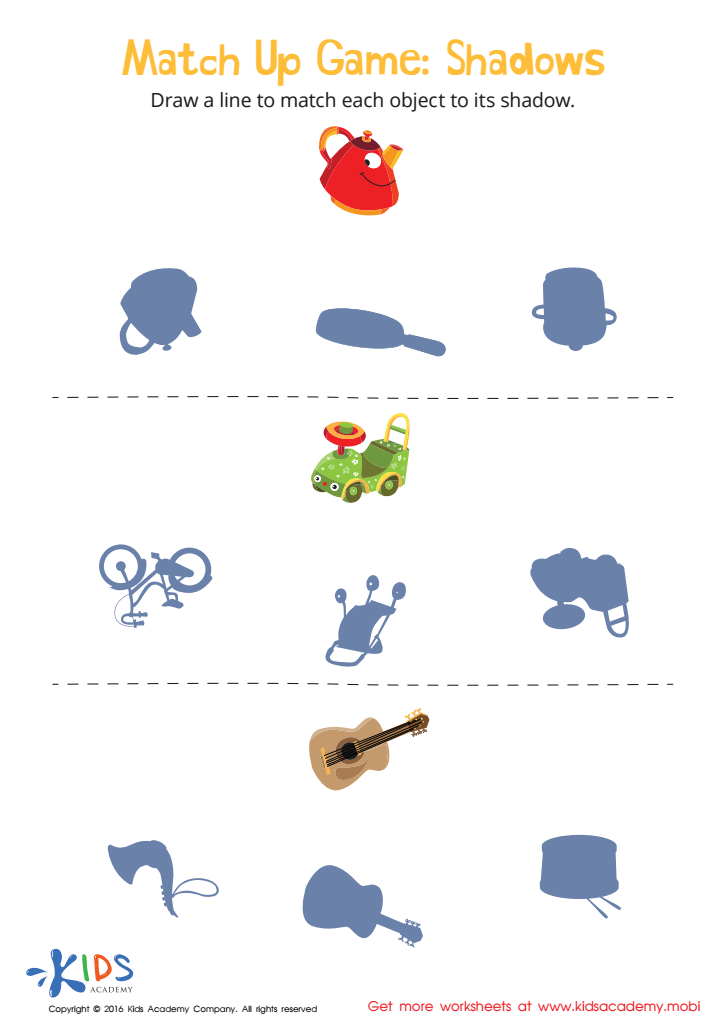
 Assign to My Students











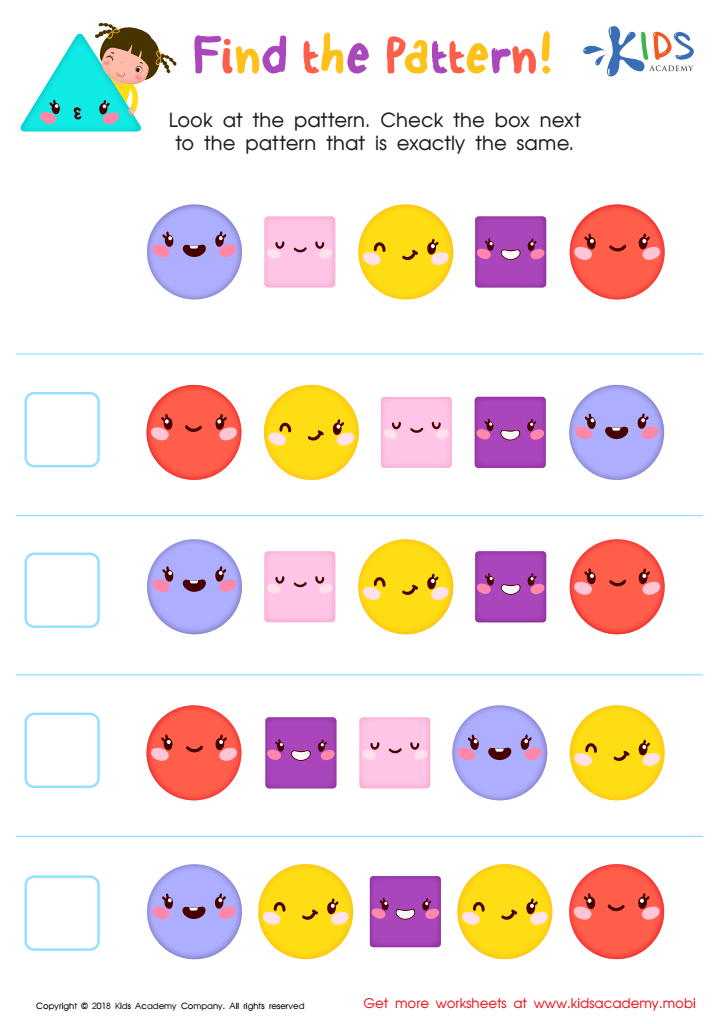
Find the Pattern Worksheet
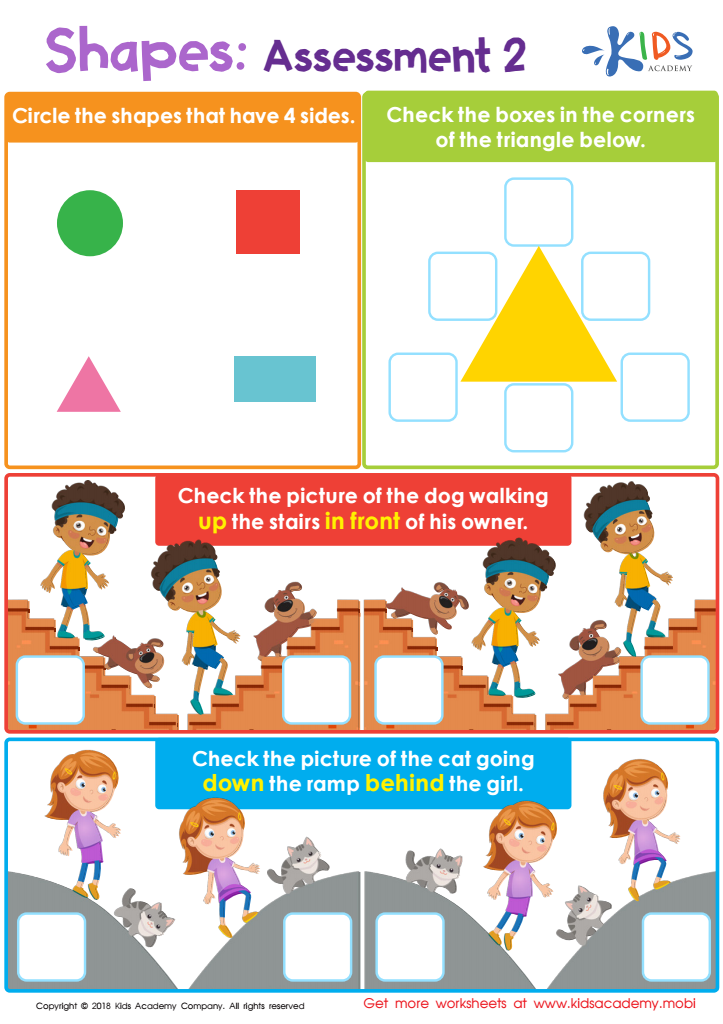
Shapes: Assessment 2 Worksheet
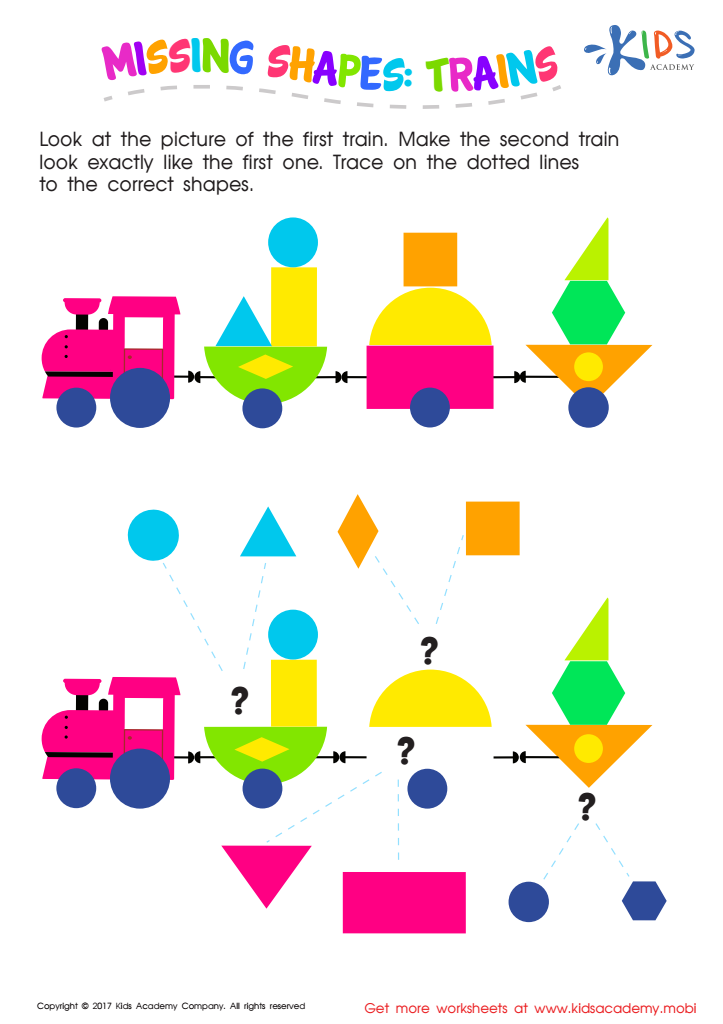
Missing Shapes: Trains Worksheet
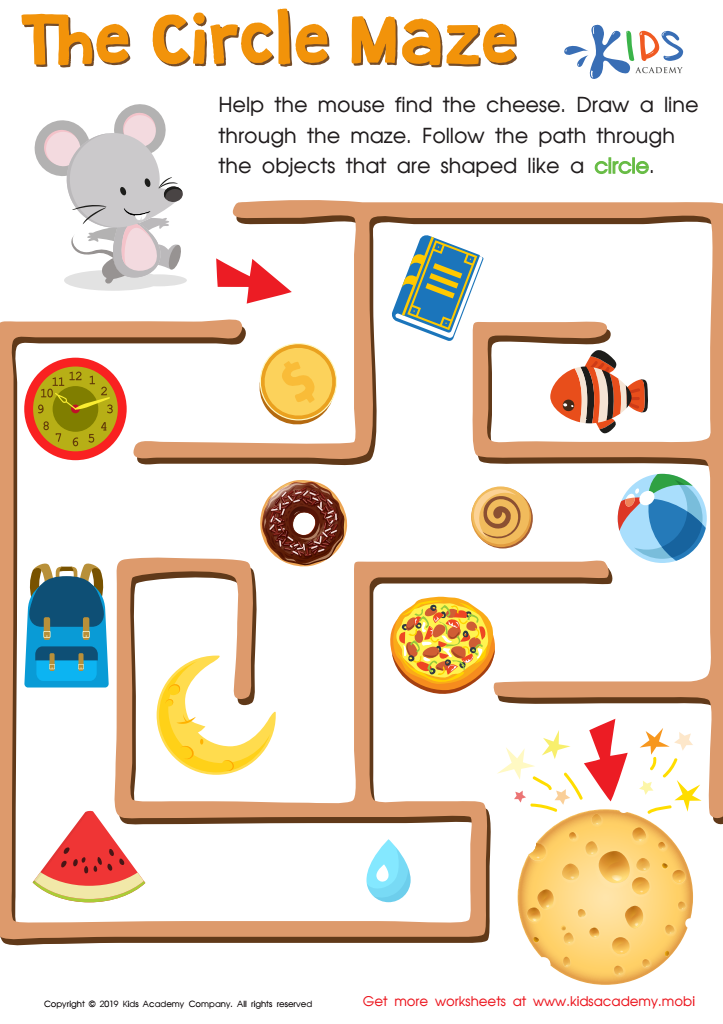
The Circle Maze Worksheet








Logical reasoning and geometry are crucial foundational skills for children aged 3-6 because they significantly contribute to cognitive development and overall learning. For young children, engaging in activities that involve logical reasoning helps build essential problem-solving skills. It enables them to understand patterns, relationships, and sequencing, which are the building blocks for critical thinking and effective decision-making later in life.
Geometry, on the other hand, introduces children to essential concepts like shapes, spatial awareness, and the relationships between different objects. At this young age, children learn best through hands-on experiences, so exploring geometry helps them make sense of the world around them by recognizing and categorizing various forms and structures.
When parents and teachers emphasize logical reasoning and geometry in early education, they not only support the child's mathematical development but also promote other skills such as language, motor skills, and social interaction. For instance, playing with blocks can enhance fine motor skills, while collaborative projects foster teamwork and communication.
In sum, fostering logical reasoning and geometry skills in young children sets a strong foundation for future learning, encouraging cognitive growth, social development, and practical problem-solving abilities. Taking these steps early on gives children a robust platform on which to build as they advance through their educational journey.








