Pattern recognition Geometry Worksheets for Ages 3-6
3 filtered results
-
From - To
Discover our engaging Pattern Recognition Geometry Worksheets designed for children ages 3-6! These interactive worksheets help young learners develop essential pattern recognition skills through fun and colorful activities. Children will explore shapes, colors, and sequences, promoting critical thinking and enhancing cognitive abilities. Our carefully crafted exercises cater to various learning styles, ensuring an enjoyable educational experience. Ideal for classrooms or home schooling, these worksheets provide a solid foundation in geometry while making learning playful and effective. Help your child unlock their potential and foster a love for math with our easy-to-use, printable resources. Start their pattern recognition journey today!
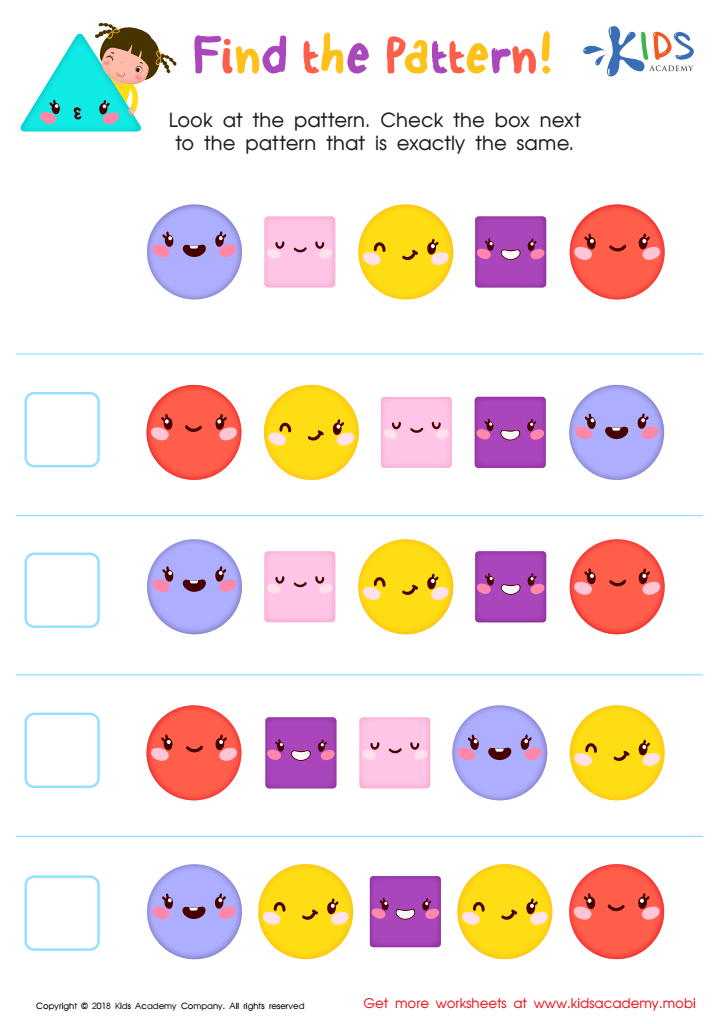
Find the Pattern Worksheet
 Assign to My Students











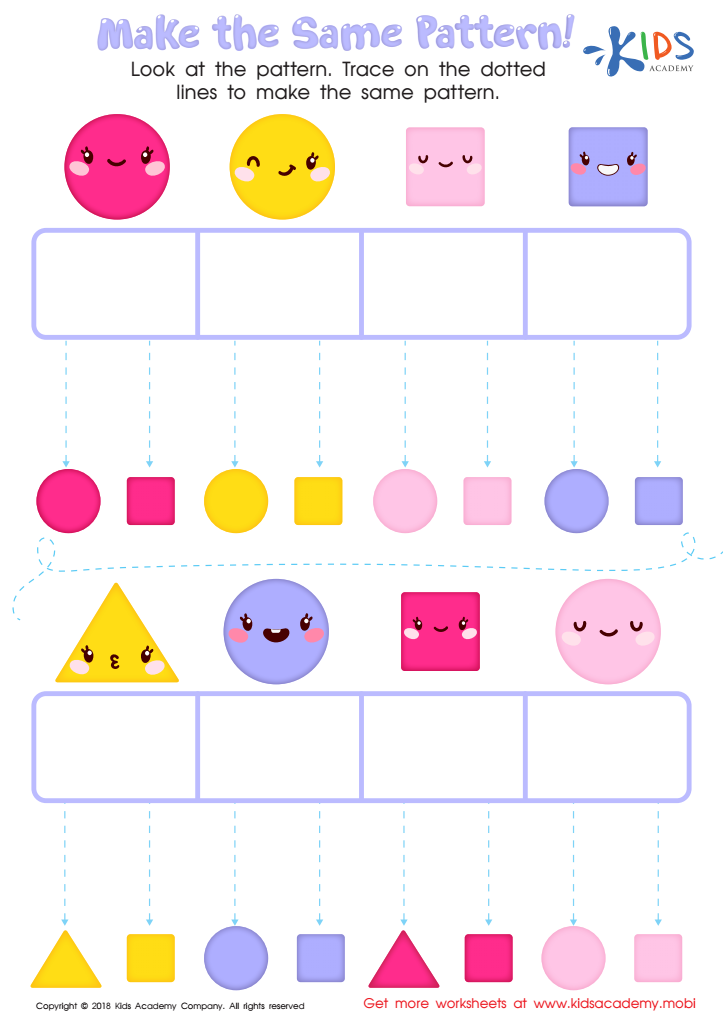
Make the Same Pattern Worksheet
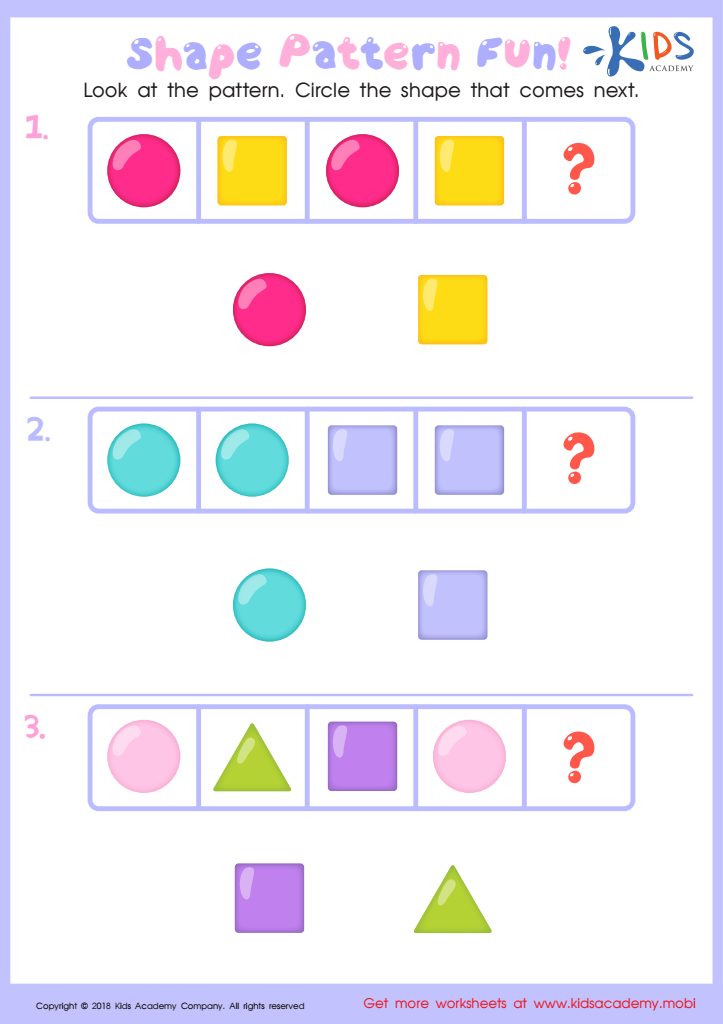
Shape Pattern Fun Worksheet








Pattern recognition in geometry is crucial for children aged 3-6 as it lays the foundational skills necessary for later mathematical understanding. At this early developmental stage, children are naturally curious and keen observers; engaging them in activities that focus on patterns helps sharpen their analytical skills. Recognizing and creating patterns enables young learners to identify relationships and make predictions, which are essential problem-solving skills.
Furthermore, geometry introduces children to shapes, spatial awareness, and the concept of symmetry, enhancing their cognitive development. Recognizing patterns in their environment fosters critical thinking and encourages them to make connections between different concepts, which is vital for their overall learning process.
For parents and teachers, nurturing these skills can significantly impact a child’s future educational journey. Children who develop strong pattern recognition abilities are more likely to excel in mathematics and other STEM fields. Through playful activities, such as block building and sorting tasks, educators and parents can create an engaging learning environment that encourages exploration. Early exposure to pattern recognition in geometry not only helps children understand mathematical concepts but also empowers them to become confident learners and critical thinkers in later stages of education.








