Problem-solving abilities Geometry Worksheets for Ages 3-6
3 filtered results
-
From - To
Unlock your child's potential with our engaging Problem-Solving Abilities Geometry Worksheets for ages 3-6! Designed to develop critical thinking, spatial awareness, and analytical skills, these fun and educational worksheets guide your young learner through various geometry challenges. Each activity encourages children to explore shapes, patterns, and positional concepts, helping them build a strong foundation in early math skills. Colorful illustrations and age-appropriate tasks make learning enjoyable and interactive. Whether at home or in the classroom, these worksheets provide the perfect resource to enhance your child's problem-solving abilities and foster a love of learning!
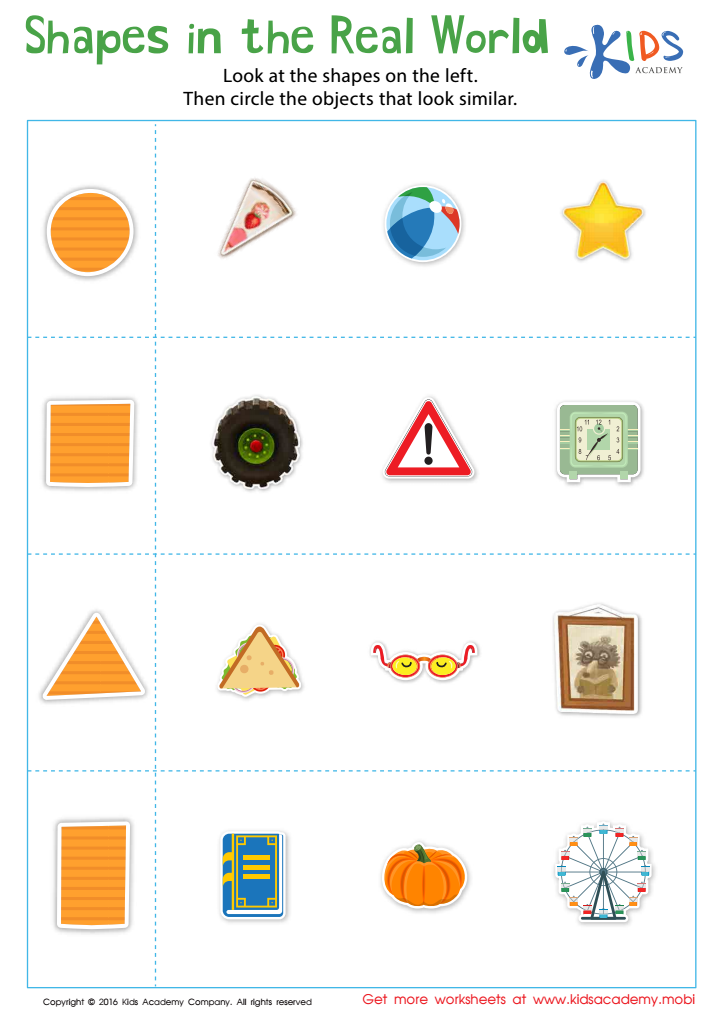
Shapes in the Real World Worksheet
 Assign to My Students











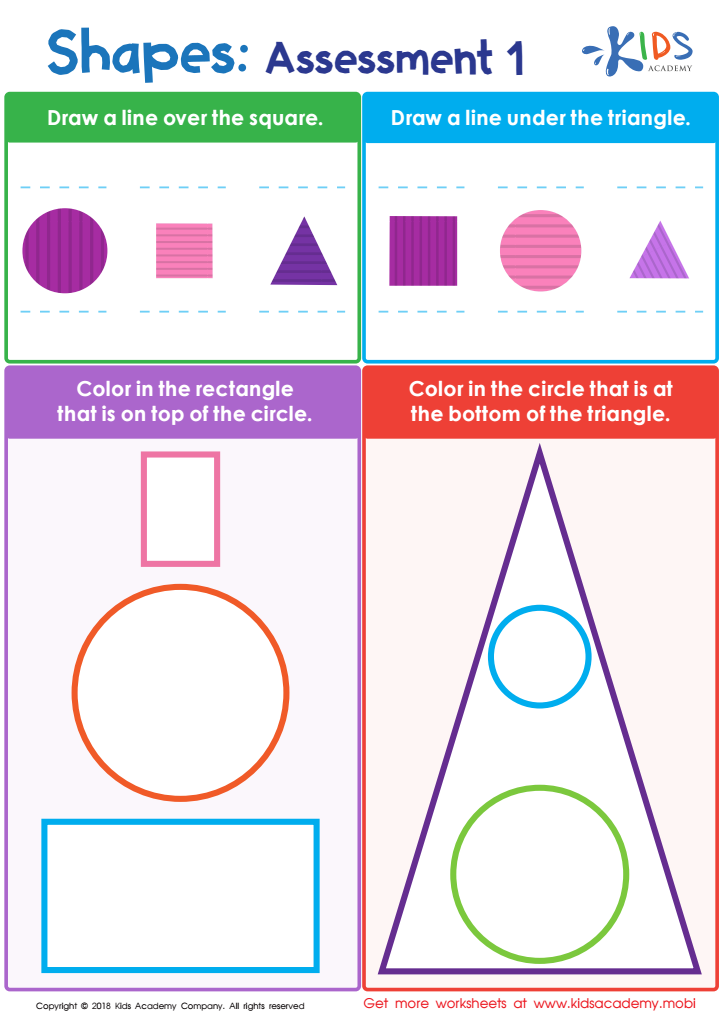
Shapes: Assessment 1 Worksheet
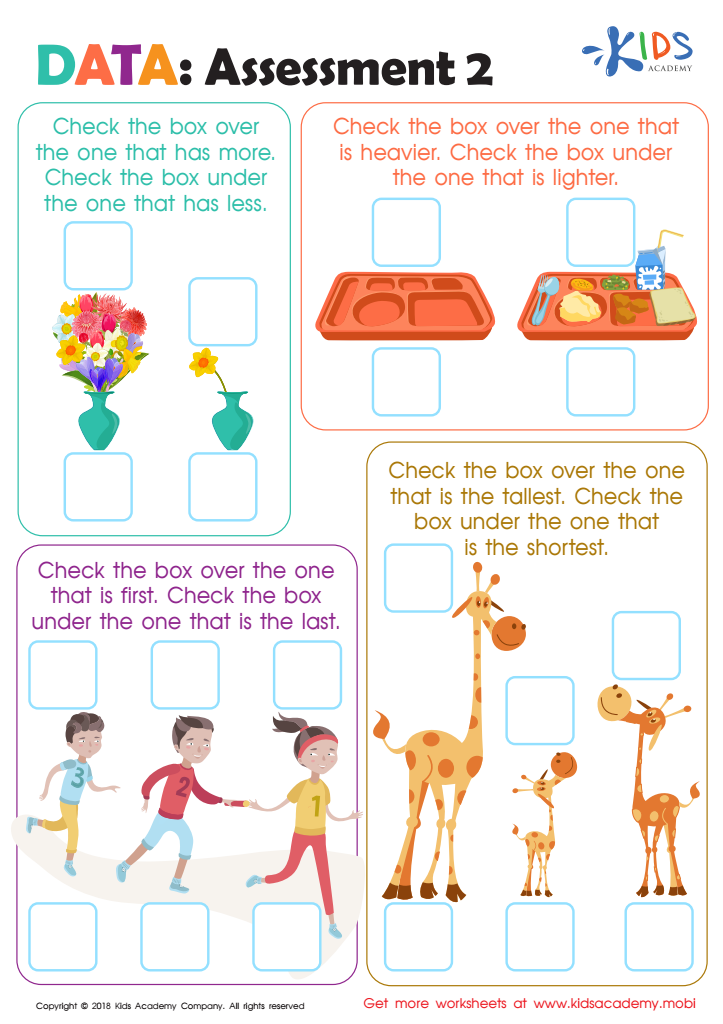
Data: Assessment 2 Worksheet








Parents and teachers should deeply care about fostering problem-solving abilities in geometry for children aged 3-6 because these skills lay the groundwork for critical cognitive development. At this early age, children are like sponges, absorbing information rapidly and forming connections that underpin future learning. Geometry, which involves understanding shapes, sizes, and the properties of space, plays a crucial role in this developmental stage.
First, geometry enhances spatial awareness, helping children grasp concepts of position, direction, and location. This foundational skill not only aids in everyday navigation but is also crucial for later success in subjects like mathematics, science, and engineering. Recognizing patterns and spatial relationships also supports memory and organizational skills.
Second, problem-solving in geometry encourages logical thinking and reasoning. When children manipulate shapes and identify their characteristics, they engage in critical thinking and learn to solve problems step-by-step, fostering patience and persistence. This kind of active learning builds confidence and a positive attitude towards tackling new challenges.
Finally, early exposure to geometry supports language development through the use of descriptive terms like "circle," "square," "behind," or "next to." By discussing and describing their observations, children enrich their vocabulary and communication skills. Overall, prioritizing geometry and problem-solving from an early age helps children develop a multitude of essential skills that are beneficial throughout their lives.








