
Spatial awareness Geometry Worksheets for Ages 3-6
10 filtered results
Difficulty Level
Grade
Age
-
From - To
Subject
Activity
Standards
Unlock your child's potential with our Spatial Awareness Geometry Worksheets for ages 3-6 at Kids Academy! Designed to engage young learners, these fun and educational handouts introduce foundational geometry concepts such as shapes, positioning, and dimensions. Each worksheet enhances spatial awareness, critical for problem-solving and logical thinking. Through engaging activities and colorful designs, children will refine their motor skills and develop a keen understanding of geometry, making learning both enjoyable and effective. Ideal for parents and educators, our worksheets ensure a bright mathematical future for your little ones. Visit Kids Academy to download now!
Favorites
With answer key
Interactive
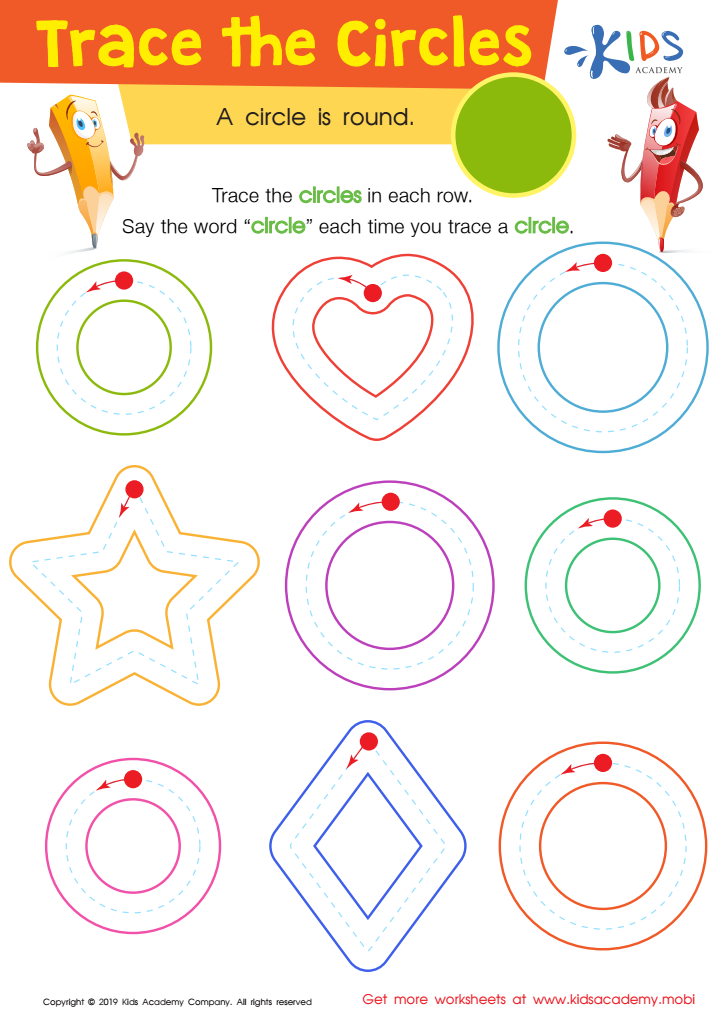
Trace The Circles Worksheet
Preschoolers and kindergarteners love learning shapes! This worksheet provides practice in naming and tracing circles. Students say "circle" each time they trace one. It's a fun way to help kids learn math vocabulary and develop fine motor skills. Enjoy this printable and get ready to master circles!
 Assign to My Students
Trace The Circles Worksheet
Worksheet











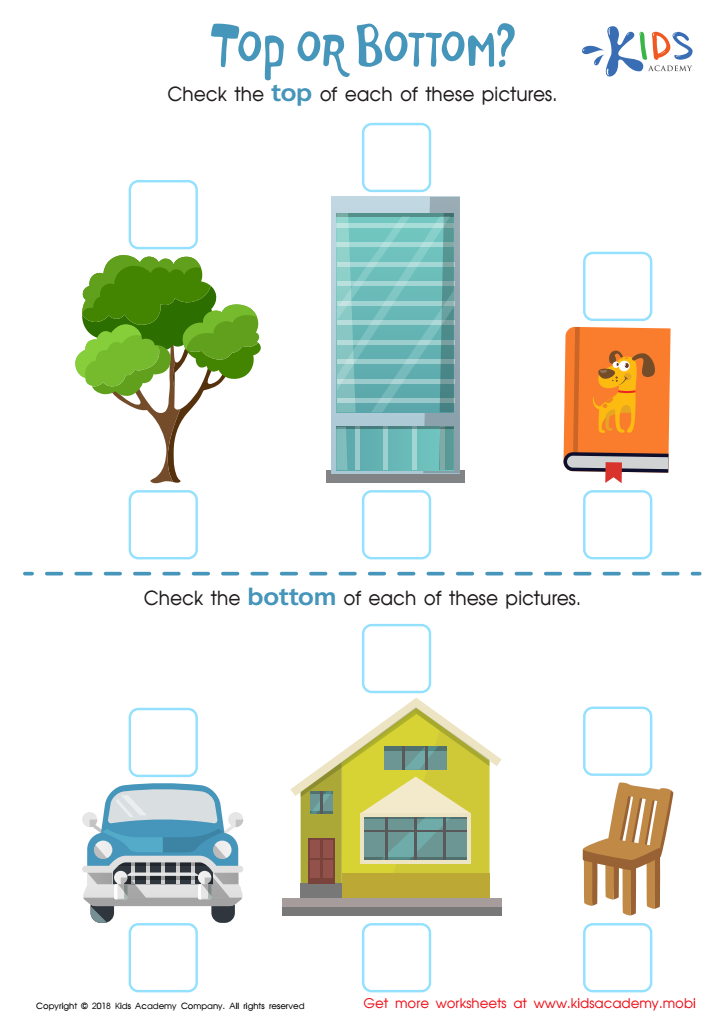
Top or Bottom Worksheet
Help your toddler master orientation and early geometry skills with this free printable worksheet. It tasks children with identifying the top and bottom of familiar images, like cars, to help build their mental map of objects. It may be simple for adults and older kids, but toddlers must learn the words to describe objects and their physical orientation.
Top or Bottom Worksheet
Worksheet
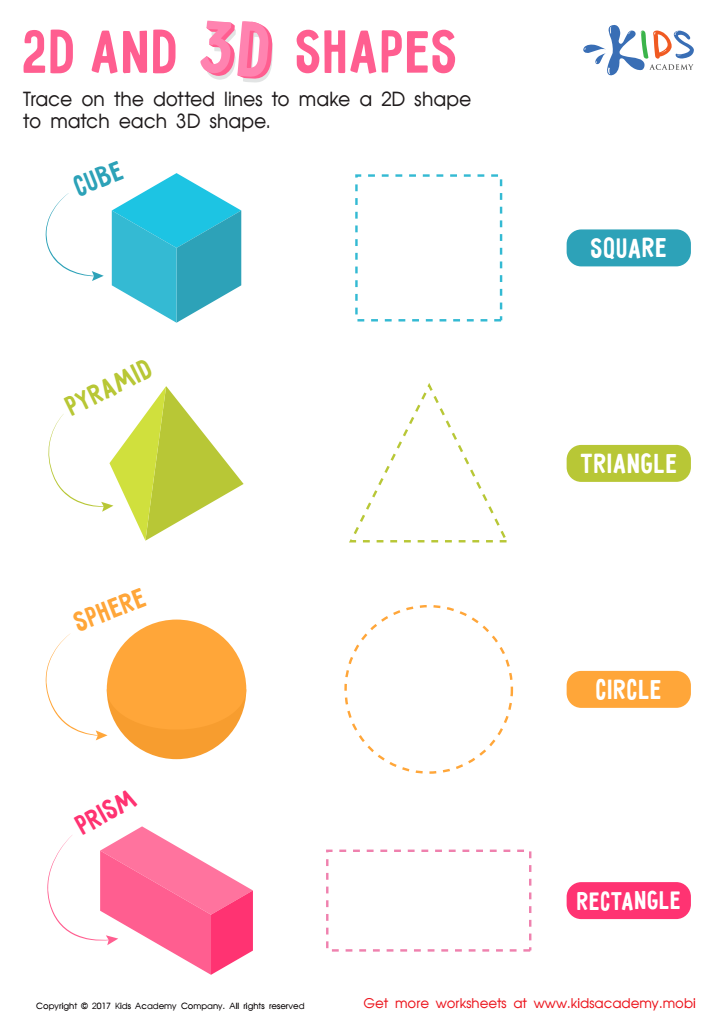
2D and 3D Shapes Worksheet
Introduce your child to 3D and 2D with this traceable worksheet. With dotted lines, help them trace and make a 2D shape for each 3D shape: square, triangle, rectangle, and circle. Show them there's more than one way to draw! You may have taken them to a 3D movie, or they've seen some fantastic 3D art. Now they can wonder no more.
2D and 3D Shapes Worksheet
Worksheet
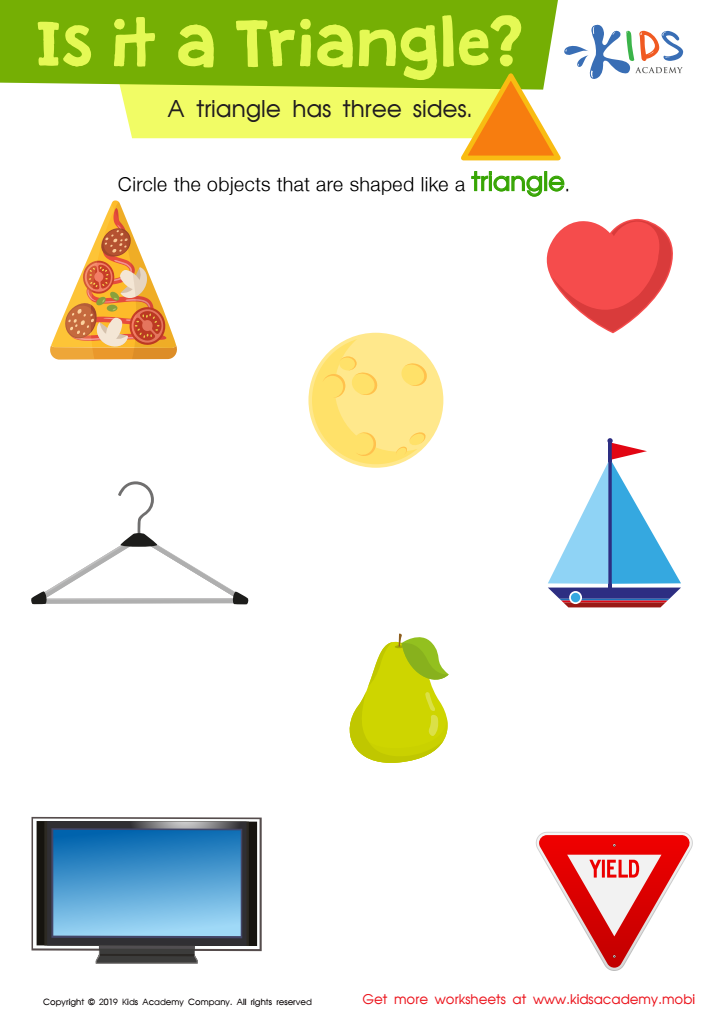
Is It a Triangle? Worksheet
Young kids need to learn to identify basic shapes for math. Show them what a triangle looks like with this fun worksheet. They can look around their environment for everyday objects shaped like a triangle and circle them on the sheet. Download now and start learning what a triangle is!
Is It a Triangle? Worksheet
Worksheet
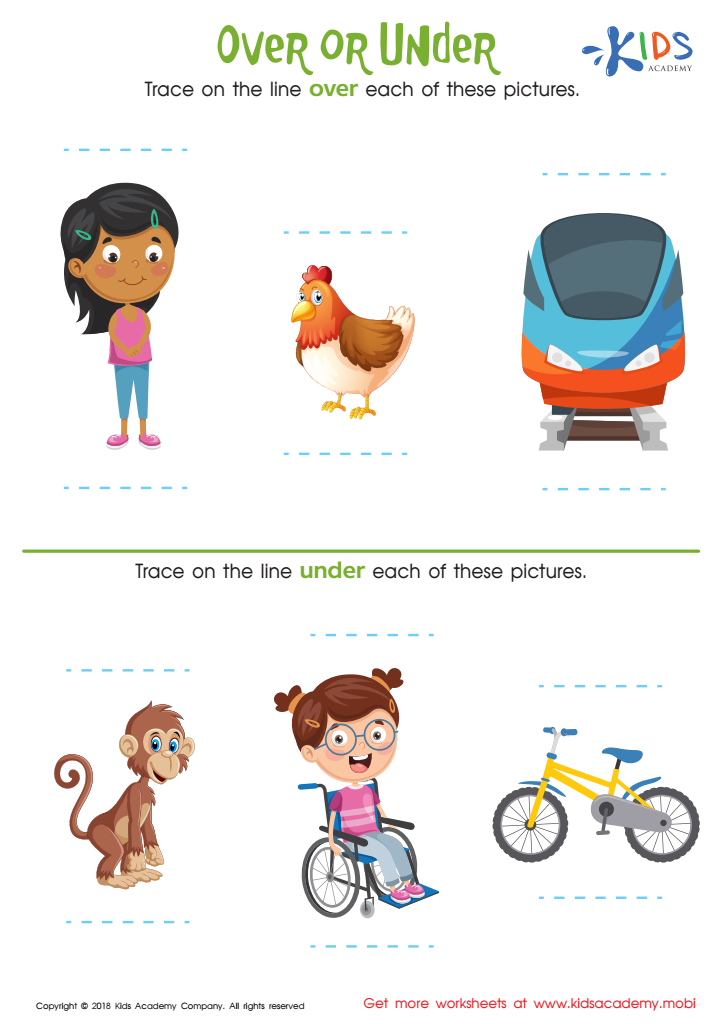
Over or Under Worksheet
Help your toddler grasp prepositions like "over" and "under" with this fun worksheet. Have them trace lines over the pictures on one half and under the pictures on the other, thus practicing basic communication and math concepts. Strengthen your child's understanding and communication skills with this activity.
Over or Under Worksheet
Worksheet
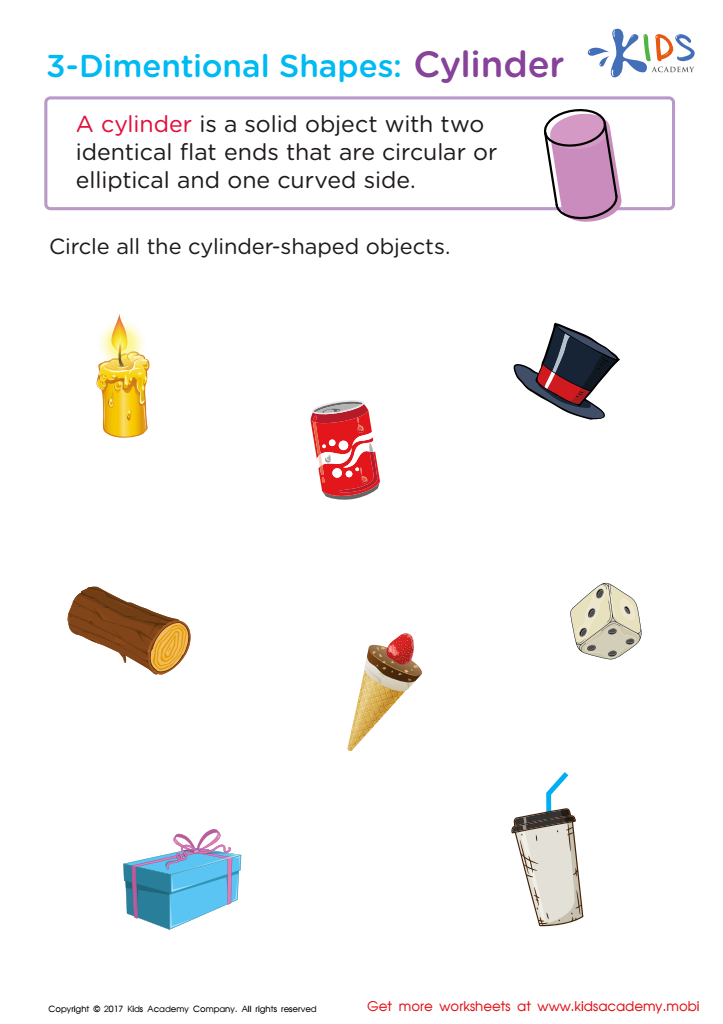
Three–Dimensional Shapes: Cylinder Worksheet
Introduce your toddler to geometry and 3D cylinders with this printable and watch their knowledge grow. It will help them recognize, define, and identify cylinders, as well as differentiate between 3D objects.
Three–Dimensional Shapes: Cylinder Worksheet
Worksheet
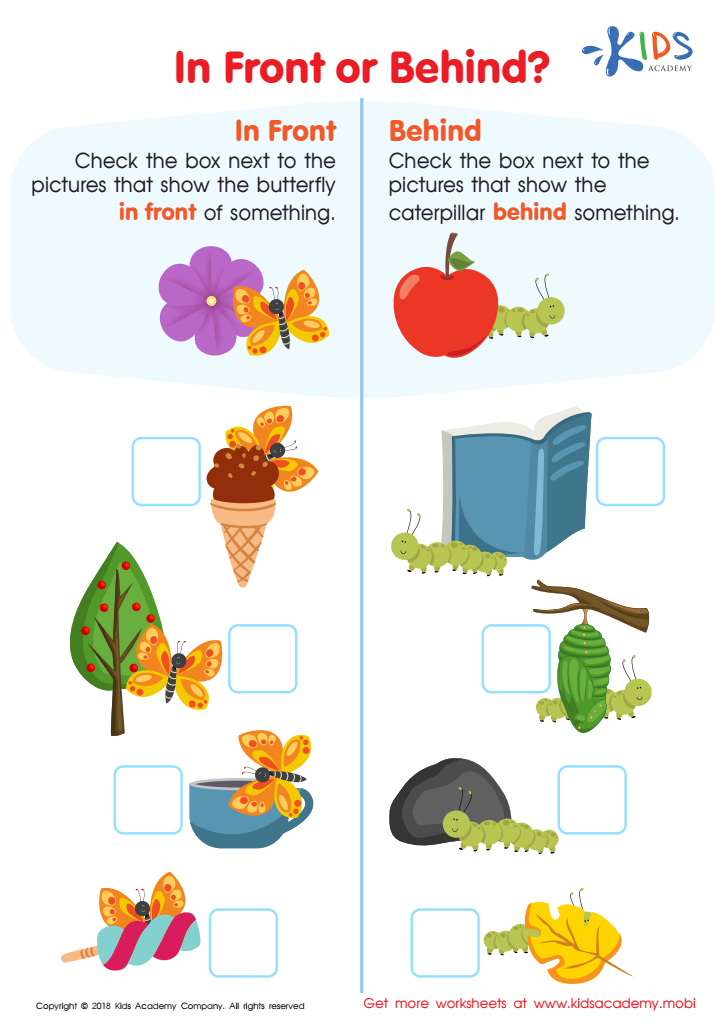
In Front or Behind Worksheet
Hone your child's spatial skills with 'in front' and 'behind'! This knowledge is essential for communication and study. Get them started with this free PDF worksheet - check off the pictures that show the butterfly in front and caterpillar behind!
In Front or Behind Worksheet
Worksheet
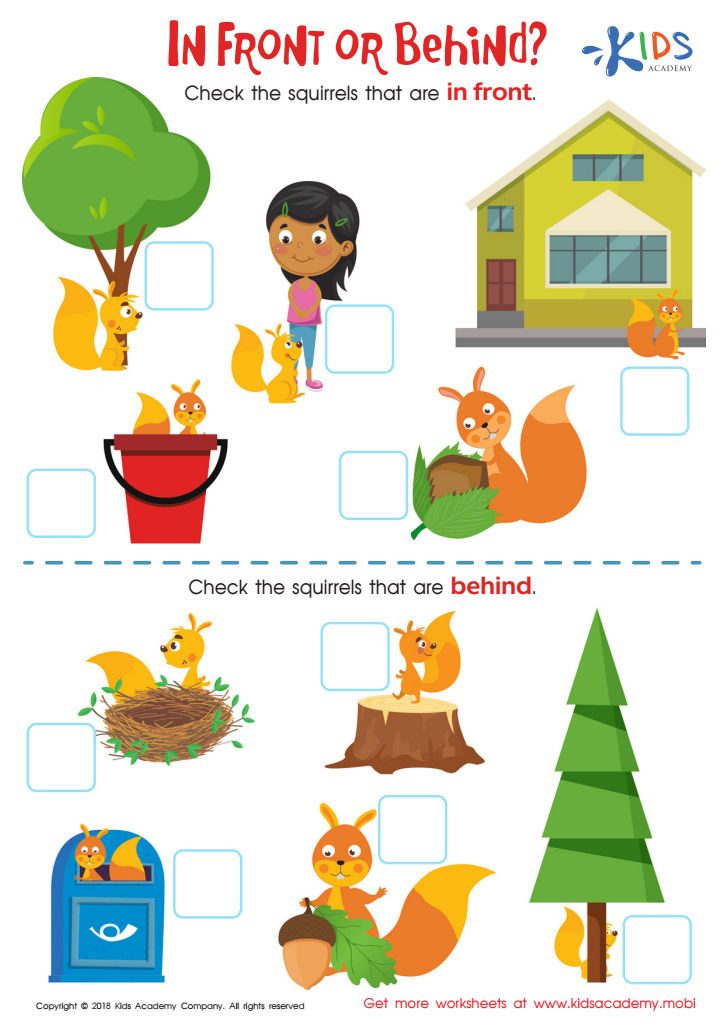
In Front or Behind: Part 2 Worksheet
Teach positional words "front" and "behind" with this fun worksheet! Students identify where the squirrel is in relation to the object - in front or behind. It's a great exercise to practice early geometry skills and understanding object movement.
In Front or Behind: Part 2 Worksheet
Worksheet
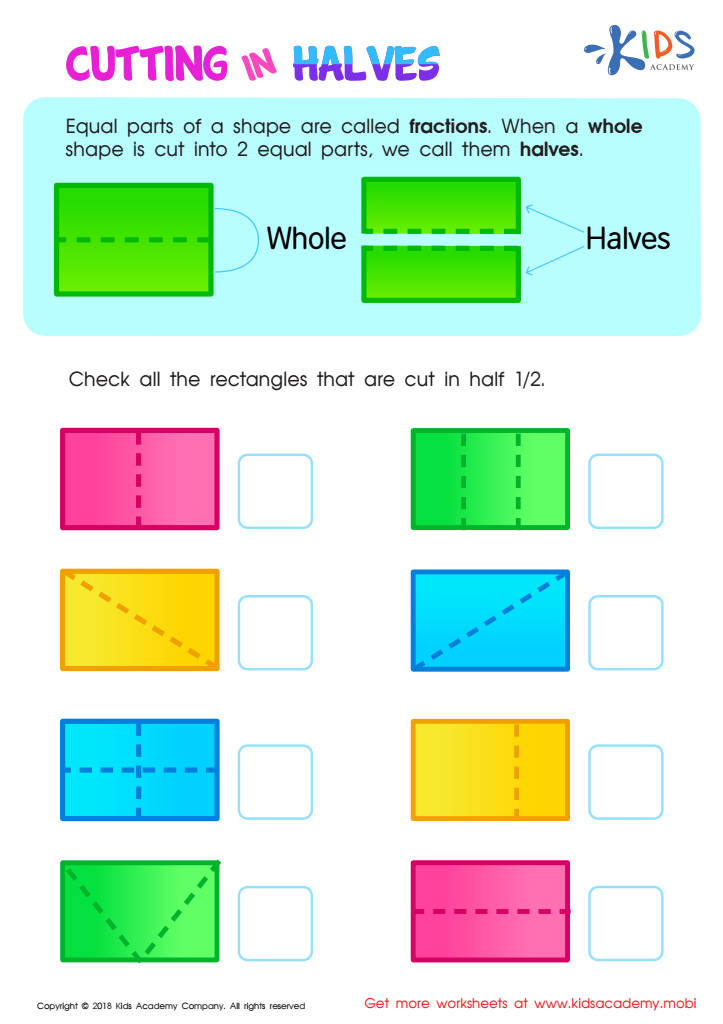
Cutting in Halves Worksheet
Show your child how to divide a whole shape, like a square, into smaller pieces to become fractions. Point out when a shape is divided into two equal parts, it's called a half. Look at the worksheet together, and identify all rectangles that are cut in half (½).
Cutting in Halves Worksheet
Worksheet
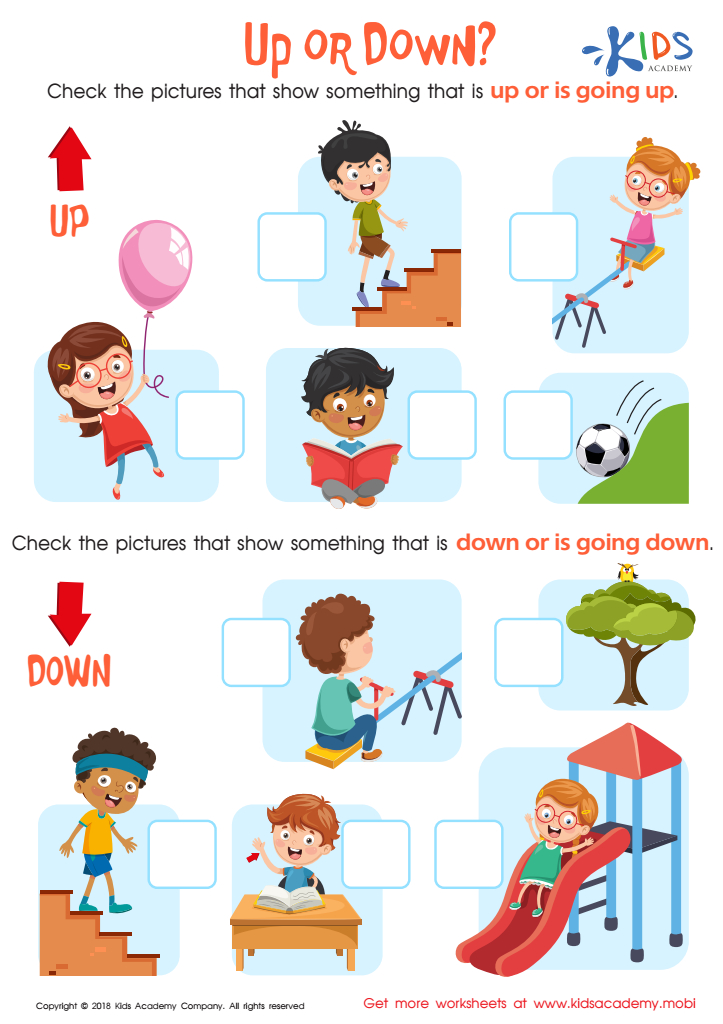
Up or Down Worksheet
Teach your toddlers the concepts of up and down with Kids Academy's vivid worksheet! Use the seesaw analogy to reinforce this language with them and build a strong foundation for future learning. Show them how a balloon can float up but must come back down too.
Up or Down Worksheet
Worksheet
Join Kids Academy for Free
Who is primarily going to use this learning content?








Spatial awareness and geometry are foundational skills that significantly impact a child's overall cognitive development, especially in ages 3-6. During this critical period, children's brains are highly malleable and absorbent, making it an ideal time to nurture these skills.
Spatial awareness involves recognizing and understanding the positions and relationships of objects in space. For young learners, this translates to skills like understanding directions (up, down, in front, behind), distance, and recognizing shapes and forms. Building such awareness aids in developing their fine and gross motor skills, crucial for everyday activities like dressing, writing, and playing.
Introducing geometry in early childhood involves exposing children to shapes, sizes, and patterns. Geometry enhances their problem-solving capabilities and critical thinking by allowing them to make sense of the world around them. Understanding geometric concepts is not only foundational for math learning but also for future success in STEM (Science, Technology, Engineering, Mathematics) fields.
Encouraging spatial awareness and geometry helps foster a child's creativity and imagination, aiding in their ability to construct, navigate, and appreciate their world. Tools like blocks, puzzles, and drawing are practical ways to support this in playful and engaging manners, setting children's academic and life skills groundwork early on. Thus, parents and teachers should actively incorporate these concepts into early education.








