Vocabulary Building Geometry Worksheets for Ages 3-6
3 filtered results
-
From - To
Dive into a world of shapes and words with our "Vocabulary Building Geometry Worksheets for Ages 3-6"! Specifically crafted for young learners, these fun and engaging worksheets promote early math and language skills. Children will explore shapes, spatial vocabulary, and geometry concepts through a variety of activities designed to captivate and educate. By integrating colorful illustrations and interactive exercises, these worksheets make learning both enjoyable and effective. Perfect for home or classroom use, they help develop a solid foundation in geometry while simultaneously expanding a child’s vocabulary. Give your little ones a head start in math with our expertly designed resources!
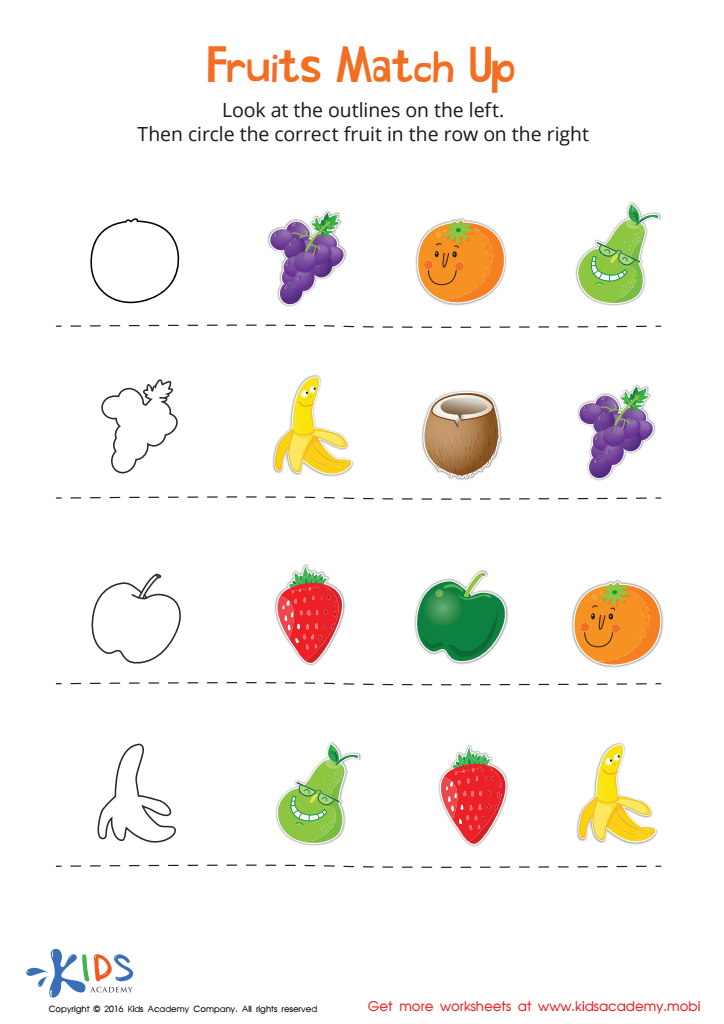
Fruits Match Up Worksheet
 Assign to My Students











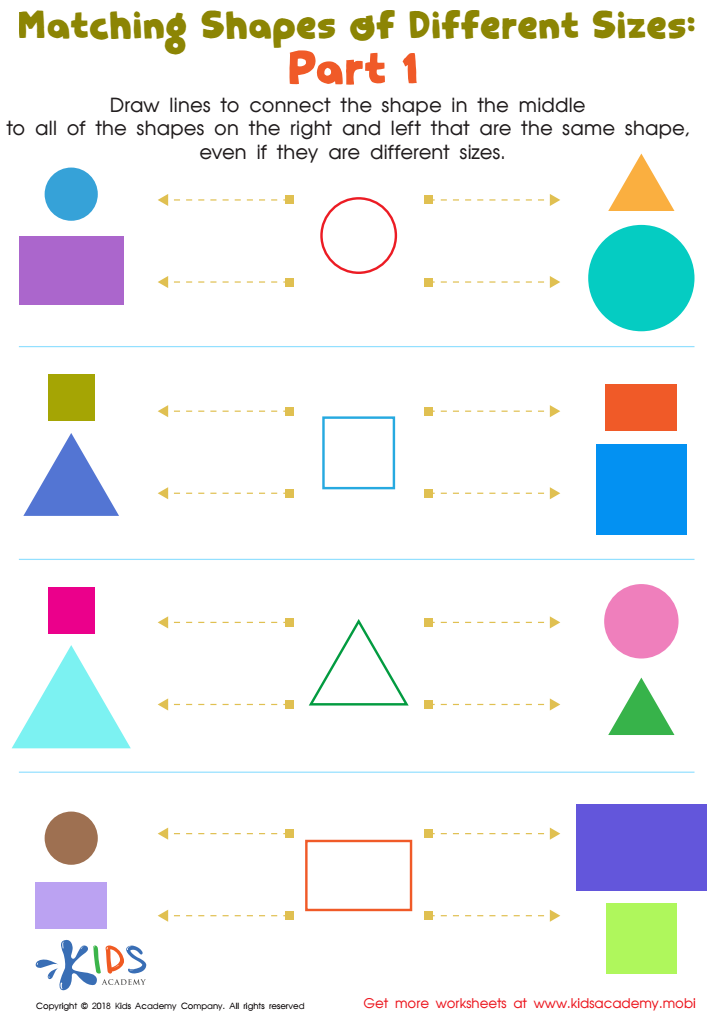
Geometry: part 1 Worksheet
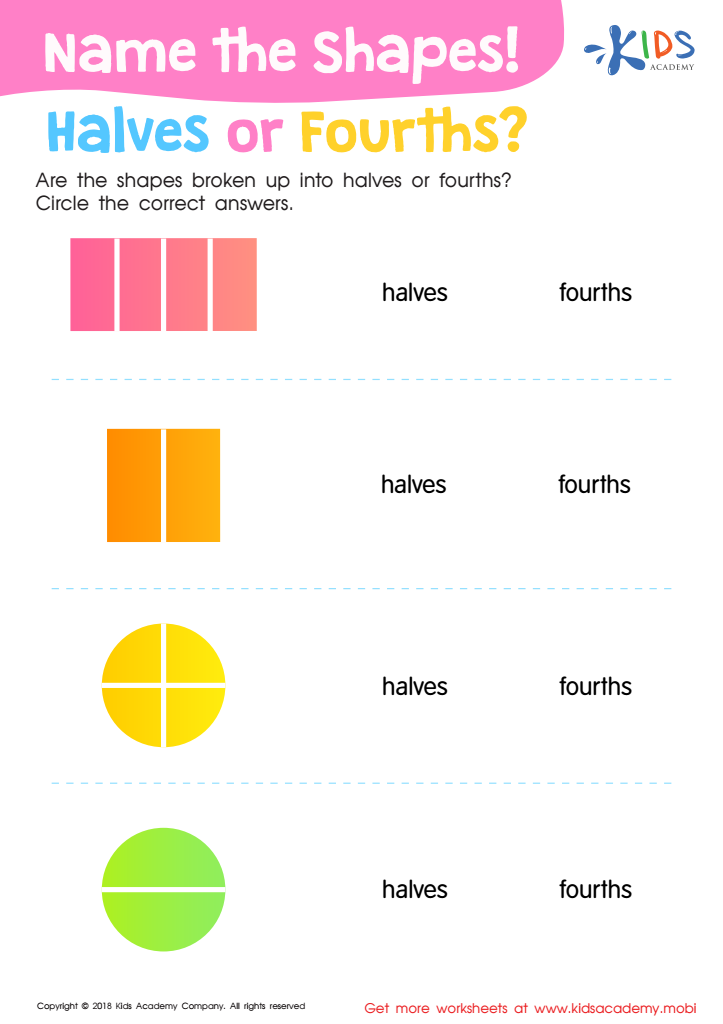
Name the Shapes Halves or Fourths? Worksheet








Vocabulary Building in Geometry for children aged 3-6 is fundamental for their cognitive and linguistic development. At this early stage, young minds are particularly receptive to learning new words and concepts. Introducing geometric vocabulary, such as "circle," "square," "triangle," and "rectangle," enables children to name, identify, and categorize the shapes around them. This not only enhances their observational skills but also lays the groundwork for future mathematical understanding.
Learning geometric terms helps children improve their spatial awareness, which is crucial for navigating their surroundings and understanding relationships between objects. By integrating these terms into daily activities and play, parents and teachers can make learning feel natural and engaging. Simple activities like building with blocks, solving puzzles, or drawing can effectively reinforce these concepts.
Moreover, incorporating geometric vocabulary boosts overall language development. It enriches children's descriptive capabilities and enhances their ability to communicate complex ideas clearly and confidently. Being able to express spatial thoughts accurately fosters critical thinking skills and problem solving abilities, which are essential across all areas of learning and daily life.
In sum, fostering vocabulary in geometry supports a child's multidimensional growth—cognitively, linguistically, and socially, setting a strong foundation for later academic and life success.








