Comparing objects Math Worksheets for Ages 3-6
6 filtered results
-
From - To
Explore our engaging "Comparing Objects" Math Worksheets designed specifically for children ages 3-6! These printable resources foster essential early math skills by helping young learners recognize and compare different objects. Through fun activities that involve sorting, identifying similarities and differences, and understanding concepts like more or fewer, kids will develop critical thinking and observational skills. Our worksheets are visually appealing and aligned with early childhood educational standards, making learning enjoyable. Perfect for both classroom and home use, these worksheets are a great way to encourage young children to master math concepts while building a strong foundation for future learning.
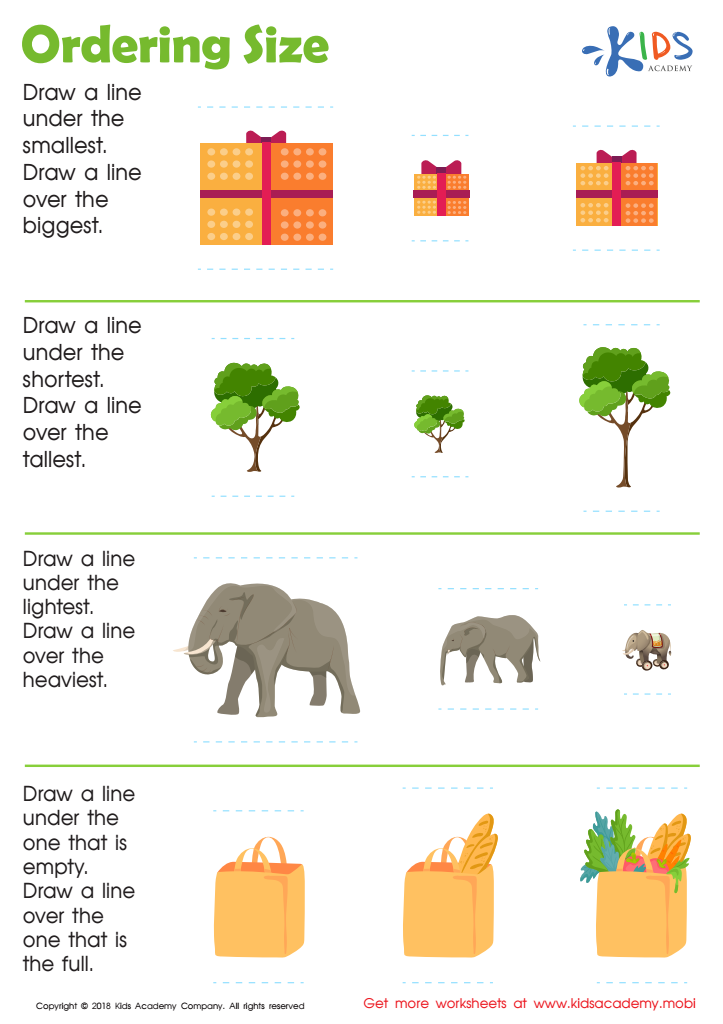
Ordering Size Worksheet
 Assign to My Students
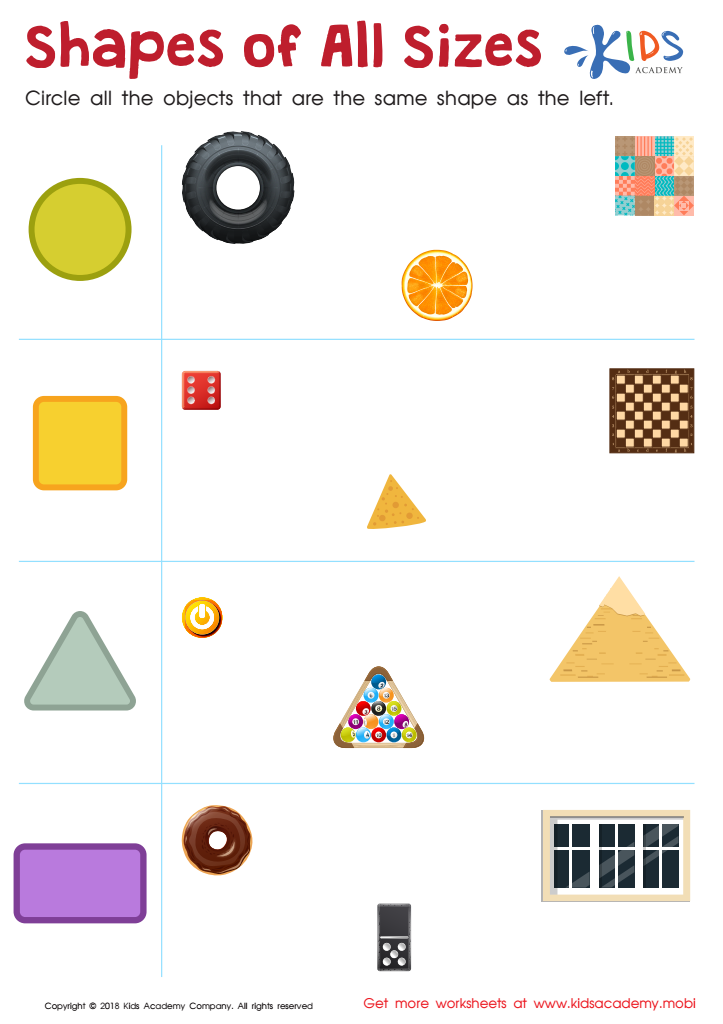
Shapes of All Sizes Worksheet
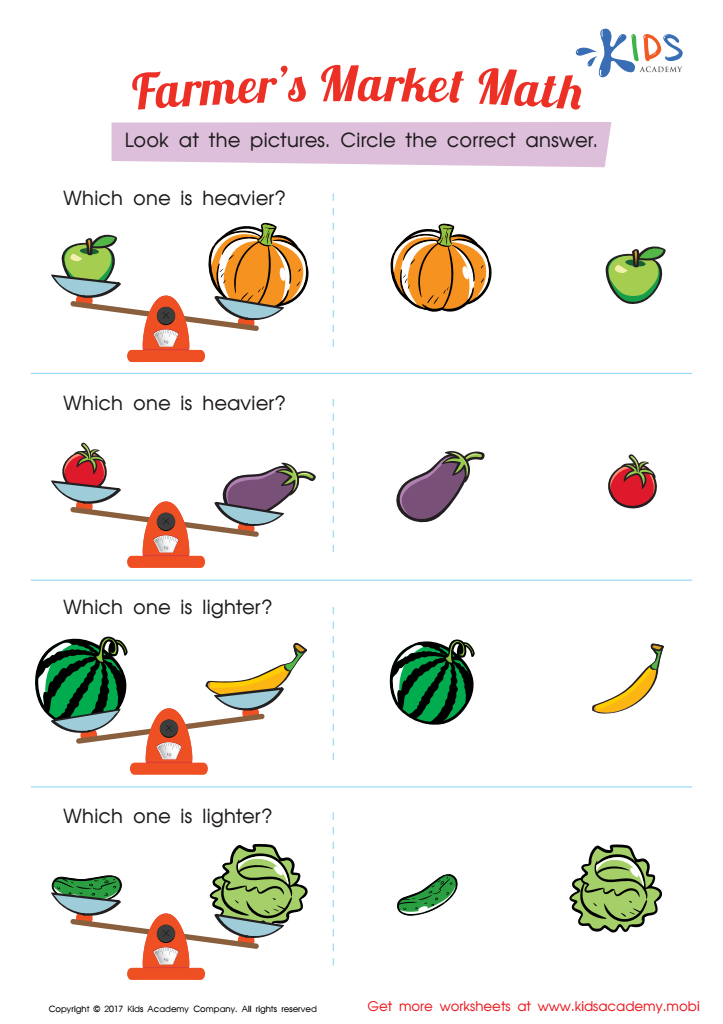
Which One Is Heavier Worksheet
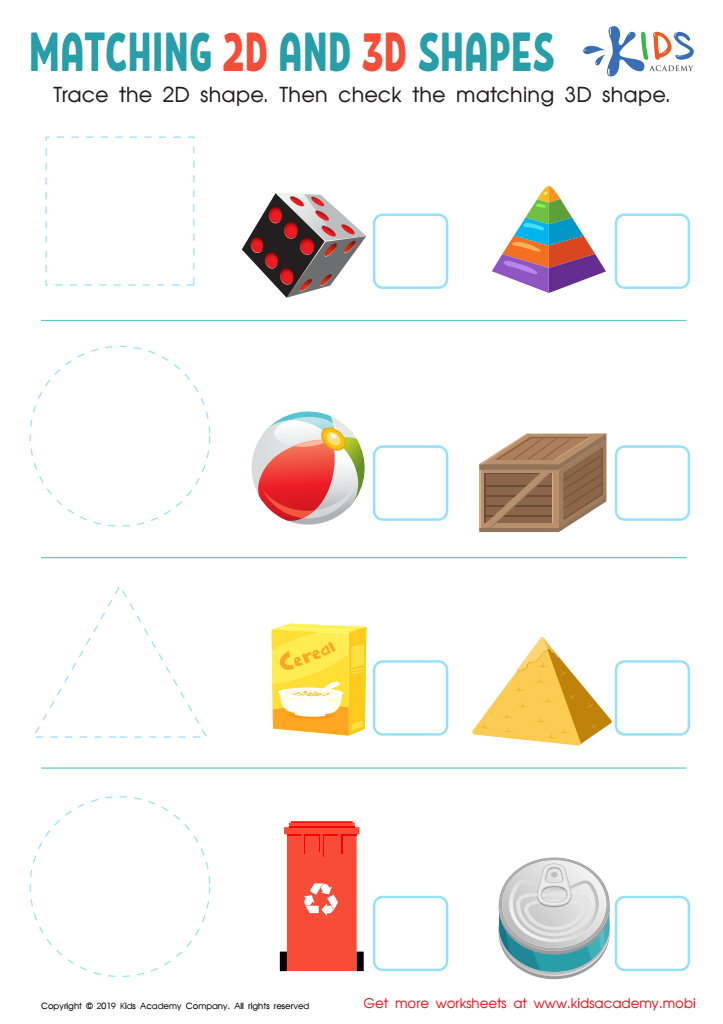
Matching 2D and 3D Shapes Worksheet
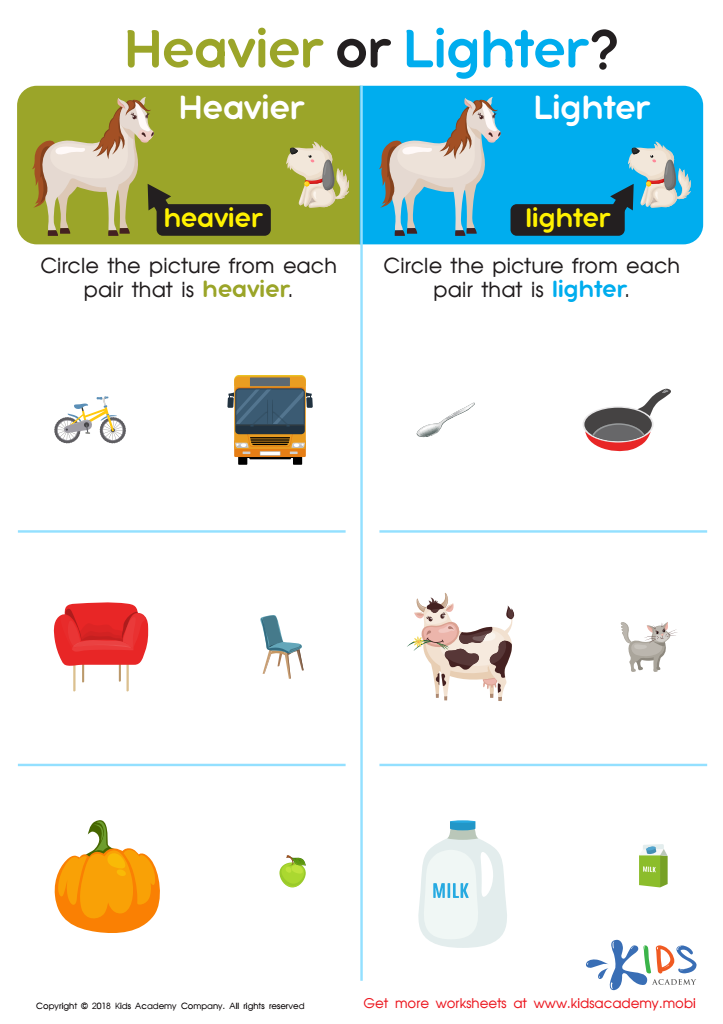
Heavier or Lighter? Worksheet
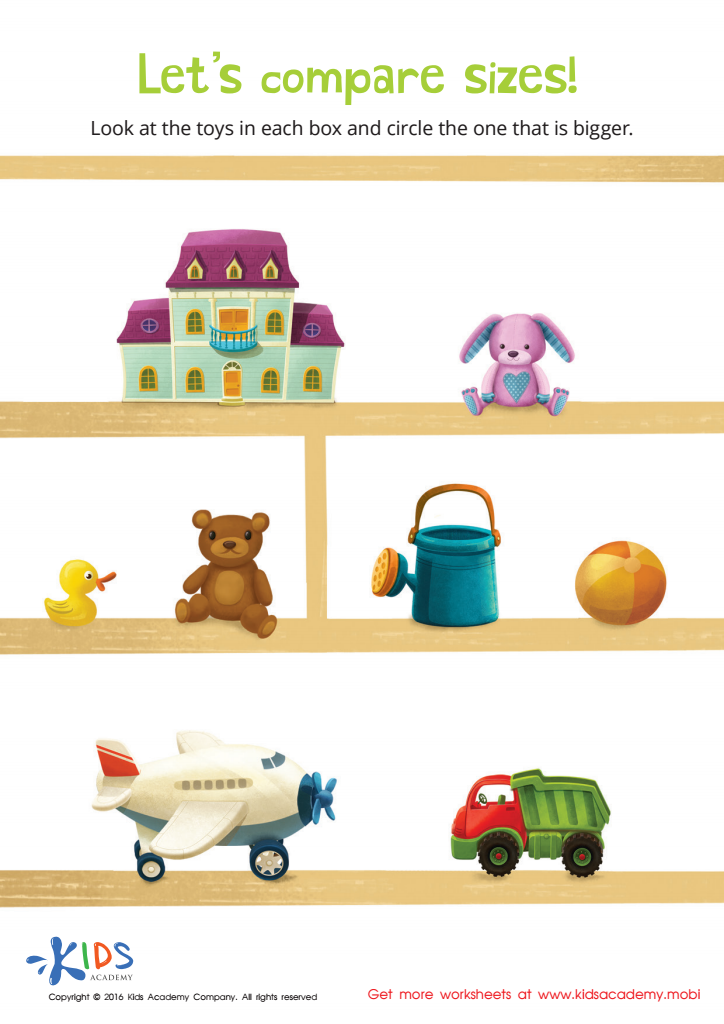
Classifying by Size Sorting Worksheet




.jpg)
Comparing objects in mathematics is a fundamental skill for young children aged 3-6. This early experience lays a crucial foundation for more complex mathematical concepts later in life. When children compare sizes, lengths, weights, and quantities, they develop critical thinking and analytical skills.
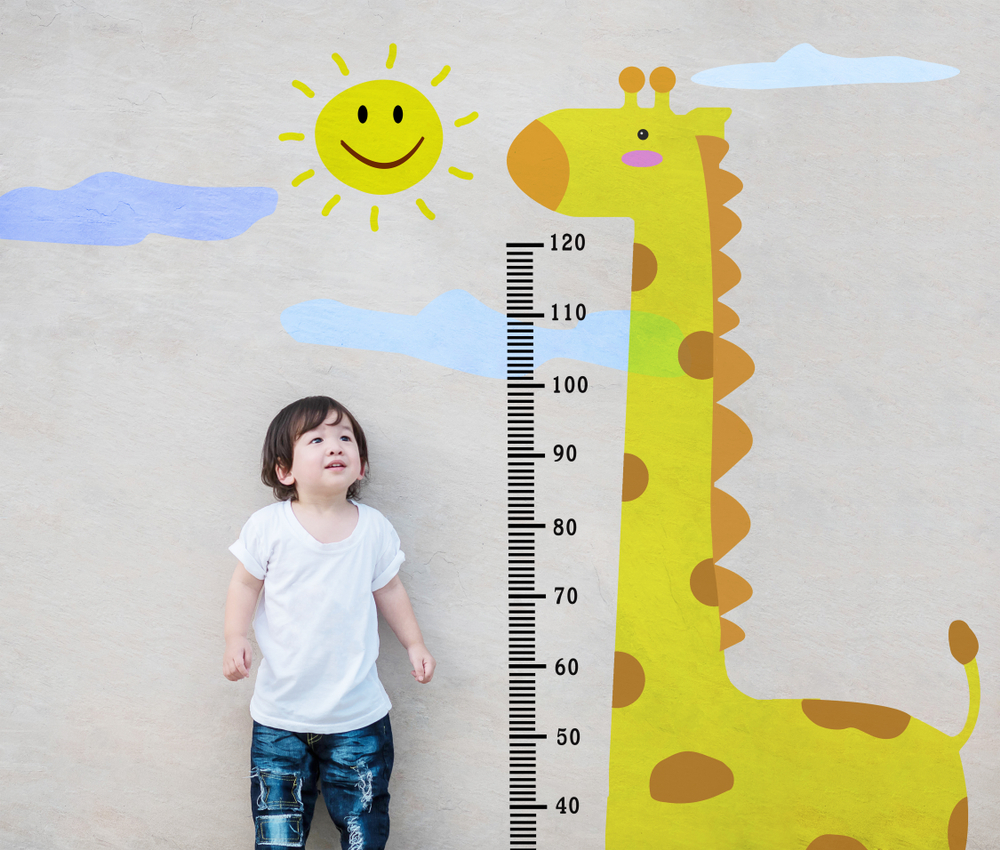
Engaging in comparison activities helps enhance their observational abilities. For example, as children identify which object is taller or heavier, they learn to focus on specific attributes and differences. This not only cultivates cognitive skills but also boosts vocabulary as they learn words related to measurement, such as "bigger," "smaller," "more," and "less."
Additionally, comparing objects fosters social skills. When working in pairs or groups, children often discuss their observations, negotiate answers, and learn to listen to others’ perspectives. This encourages communication skills and teaches teamwork.
For parents and teachers, understanding the importance of comparing objects allows them to create useful, hands-on learning experiences. Simple activities like sorting toys, measuring ingredients while cooking, or playing sorting games can make math fun and relevant. Ultimately, these experiences build a positive attitude towards math and provide children with essential skills needed for their future education.








