
Enhancing logical thinking Math Worksheets for Ages 3-6
4 filtered results
Difficulty Level
Grade
Age
-
From - To
Subject
Activity
Standards
Discover our enriching collection of Math Worksheets designed to enhance logical thinking for children ages 3-6. At Kids Academy, we believe in fostering early cognitive development through engaging, playful activities. Each worksheet is thoughtfully crafted to boost problem-solving skills, improve pattern recognition, and promote critical thinking. Our fun, interactive exercises are perfect for young learners aiming to build a strong foundation in math while enjoying the learning process. Whether at home or in the classroom, these worksheets provide an excellent supplementary tool to nurture logical reasoning and a love for math from an early age. Explore today and watch your child's skills flourish!
Favorites
With answer key
Interactive
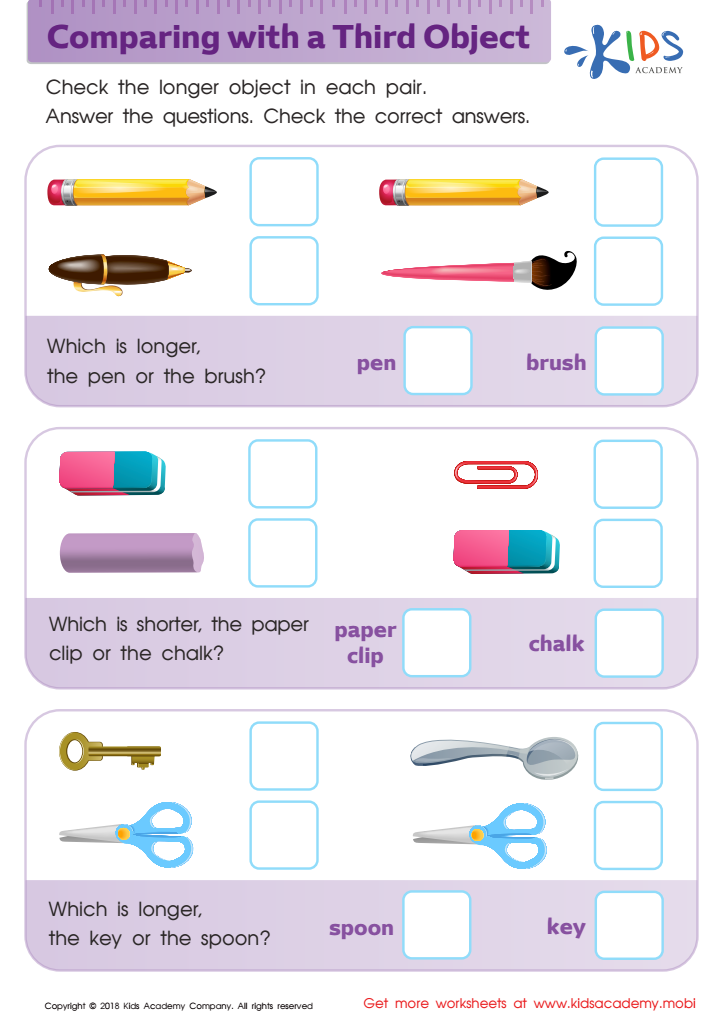
Comparing with a Third Object Worksheet
Help your child master measurement skills with this free downloadable math worksheet! Ask them to compare each pair of objects, checking the box for the longer one. Then, read the question and compare the objects across the pairs before ticking the box and continuing to the next group of pictures.
 Assign to My Students
Comparing with a Third Object Worksheet
Worksheet
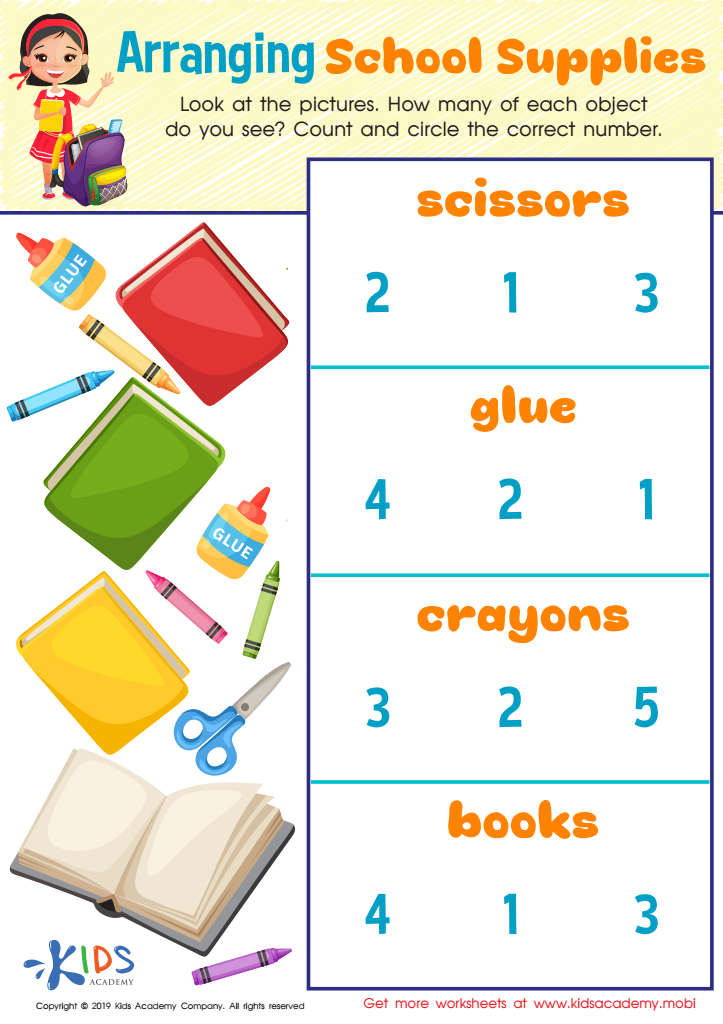
Arranging School Supplies Worksheet
Help your kids identify and count the school supplies in this colorful printout. Ask them to circle the correct number from the options provided. This is an easy and fun way for your child to practice their counting skills and recognize everyday objects.
Arranging School Supplies Worksheet
Worksheet
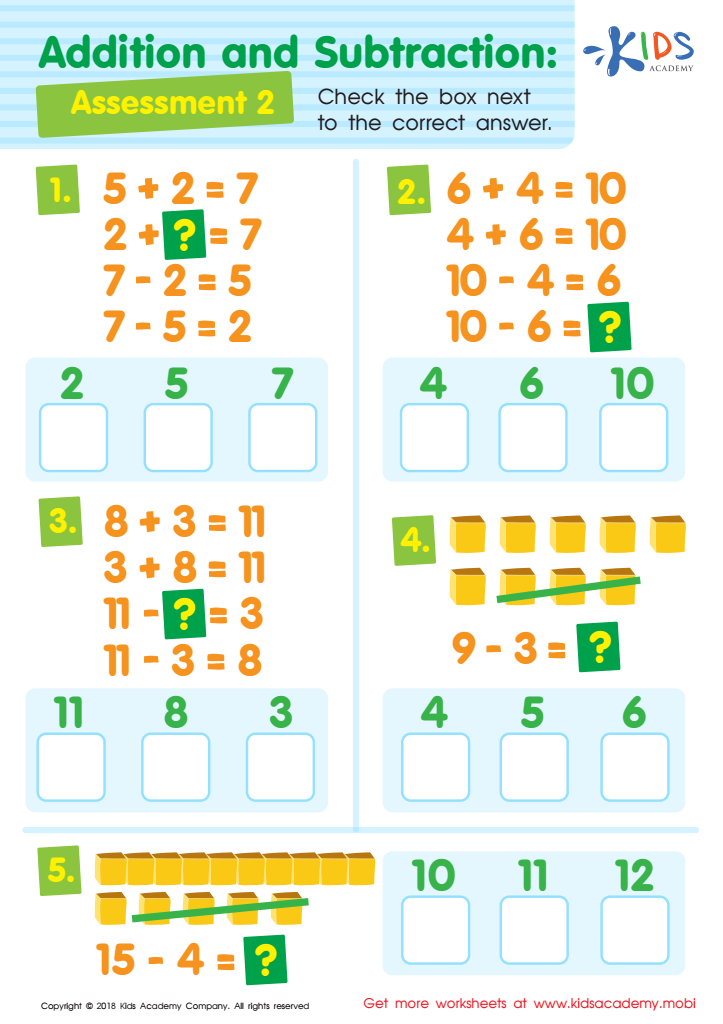
Addition and Subtraction Assessment 2 Worksheet
As your child grows, math problems become harder. To keep their brains active and provide extra help if needed, use this math worksheet. It'll help them become more familiar with equations. Go through each one carefully with your child and have them check the box next to the right answer.
Addition and Subtraction Assessment 2 Worksheet
Worksheet
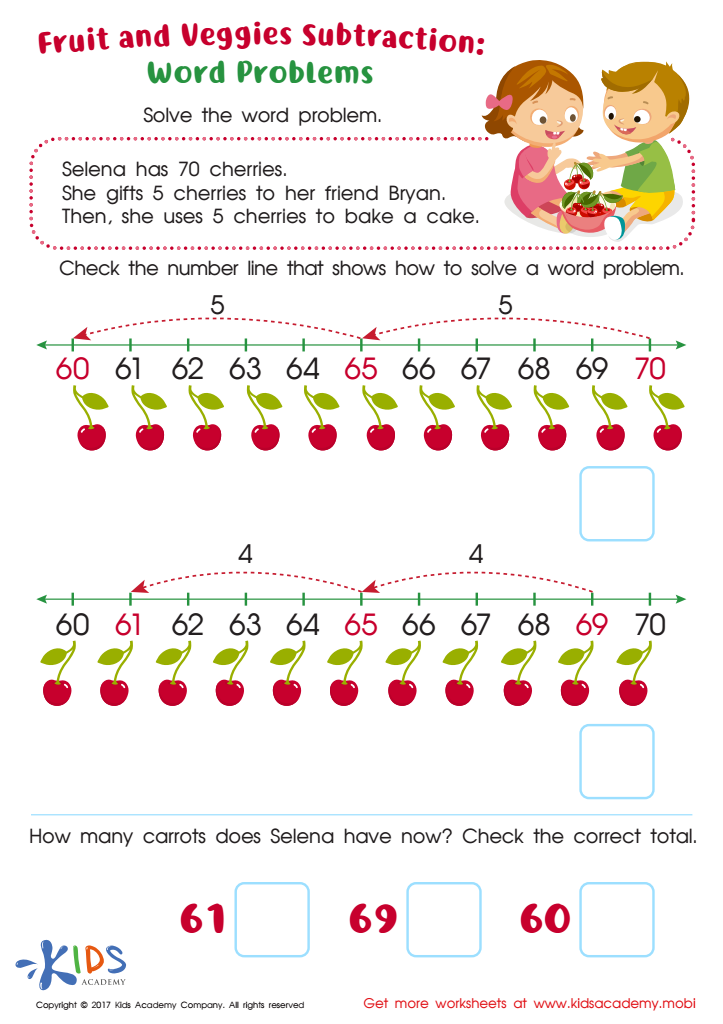
Subtraction Word Problems Free Printable
Try out this free printable subtraction worksheet! Your child can use number lines to solve challenging word problems – it's a great way to boost their problem-solving skills.
Subtraction Word Problems Free Printable
Worksheet
Join Kids Academy for Free
Who is primarily going to use this learning content?


.jpg)





Logical thinking is the foundation for problem-solving skills, and focusing on mathematical concepts for children aged 3-6 sets the stage for a lifetime of critical thinking and analytical ability. During these early years, children's brains are rapidly developing, and they are remarkably receptive to learning. Introducing basic math principles such as counting, patterns, and simple addition or subtraction provides a structured way for children to understand their world.
Mathematical activities help children improve their logical reasoning by teaching them how to categorize, organize, and evaluate information. This cognitive process fosters greater creativity, decision-making skills, and spatial awareness. For instance, recognizing patterns in numbers can translate into a better understanding of routines and sequences, aiding in day-to-day problem-solving.
Additionally, math skills are increasingly recognized as crucial for academic success. Studies have consistently shown that early proficiency in math can lead to better outcomes in various school subjects, including reading and science. Moreover, these skills are not just academic; they prepare children for real-world situations, from sharing toys equally among friends to understanding time and money.
Parents and teachers play a crucial role in this developmental stage. By embedding mathematical thinking into play and daily activities, adults can make learning both fun and relevant, thereby encouraging a natural curiosity and an enduring love for learning.








