
Understanding tally marks Math Worksheets for Ages 3-6
5 filtered results
Difficulty Level
Grade
Age
-
From - To
Subject
Activity
Standards
Discover our engaging "Understanding Tally Marks" math worksheets designed for children aged 3-6! These worksheets introduce young learners to the concept of tally marks, a fun way to count and organize numbers visually. Perfect for reinforcing basic math skills, our resources help children recognize patterns, engage in counting exercises, and develop foundational number sense. With colorful illustrations and interactive activities, kids will enjoy practicing tally marks while building their confidence in mathematics. Explore our printable worksheets to support your child's early math journey and make learning both fun and educational! Start counting with tally marks today!
Favorites
With answer key
Interactive
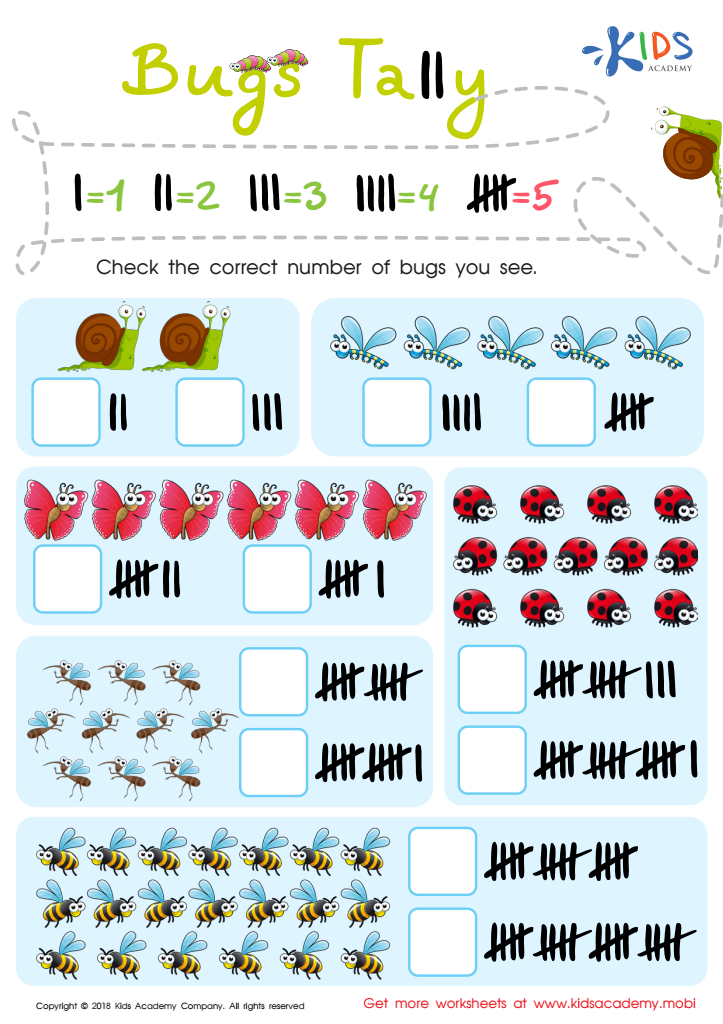
Bugs Tally Worksheet
This fun worksheet uses friendly bugs to help young mathematicians learn numbers and tally marks. They'll gain real-world skills to help with adding, subtracting and counting. Representations will solidify number reasoning, aiding with game playing and more.
 Assign to My Students
Bugs Tally Worksheet
Worksheet
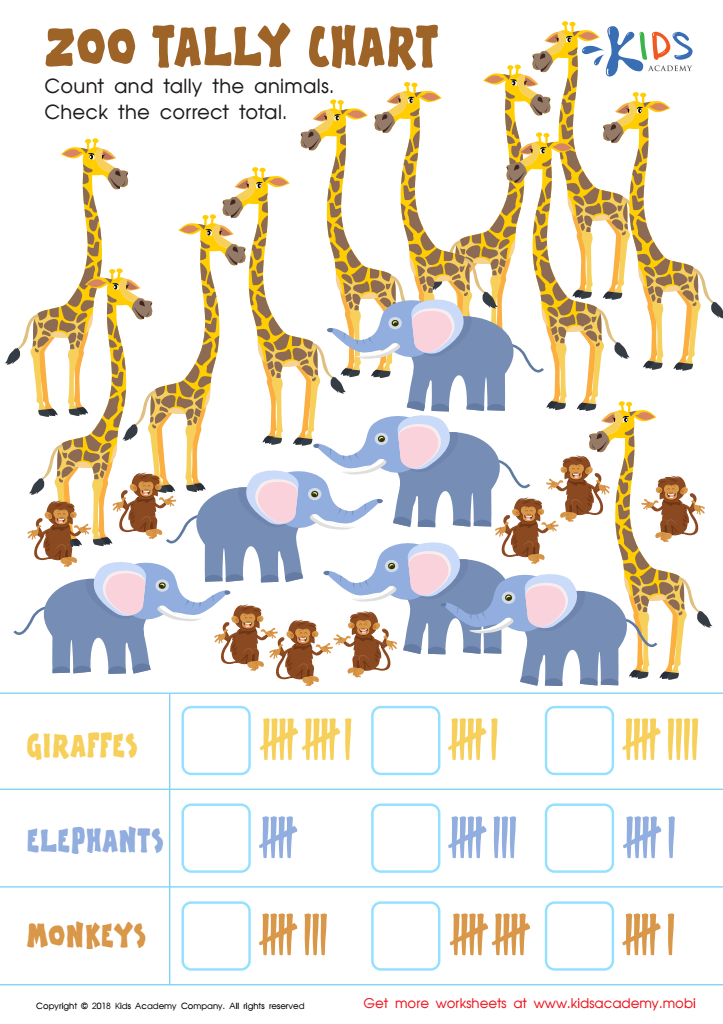
Zoo Tally Chart Worksheet
Your young mathematician will have fun counting and tallying zoo animals on this worksheet! Giraffes, elephants and monkeys - all accurately tallied at the bottom. They will assign values to each animal group to find the answer. It's math but they won't know it - it's a zoo out there!
Zoo Tally Chart Worksheet
Worksheet
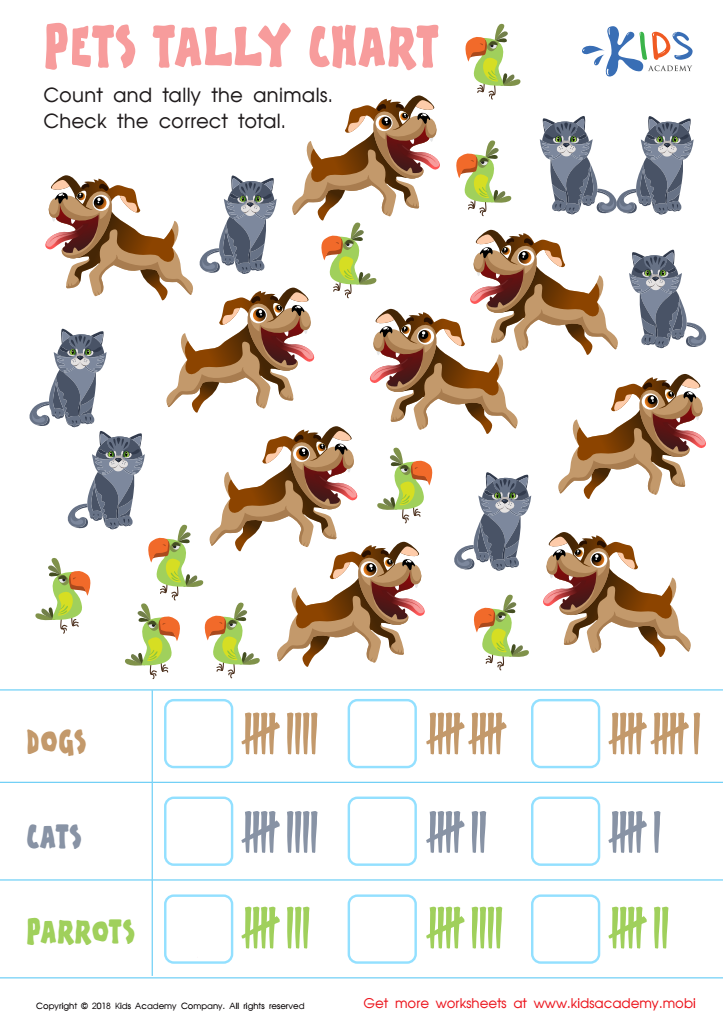
Pets Tally Chart Worksheet
Let your little mathematician count and tally the animals with this fun PDF worksheet. They'll assign value to each pet type and select the correct answer. It's a great way to practice number reasoning and learn how tallying helps keep math organized and efficient when solving equations.
Pets Tally Chart Worksheet
Worksheet
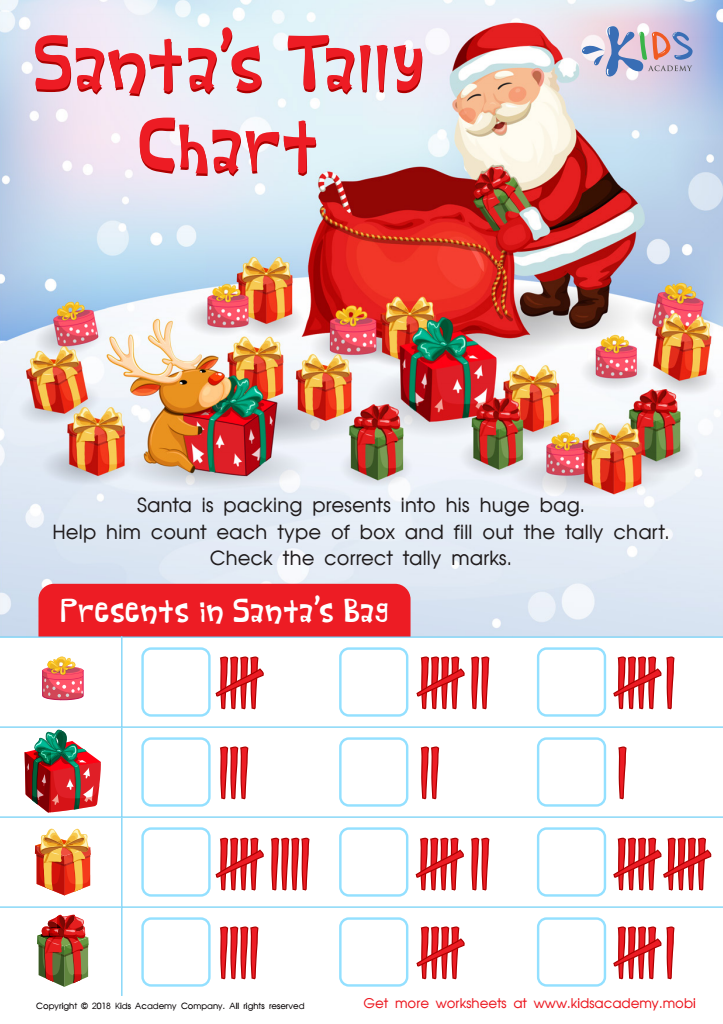
Santa Tally Chart Worksheet
Santa's got a big bag of gifts to count! Kids can help with this fun PDF worksheet, practicing visual recognition and representation skills while they sort and tally the presents. They'll also work on charting as they fill in the tally chart and send Santa off for a happy holiday. Ho, Ho, Ho!
Santa Tally Chart Worksheet
Worksheet
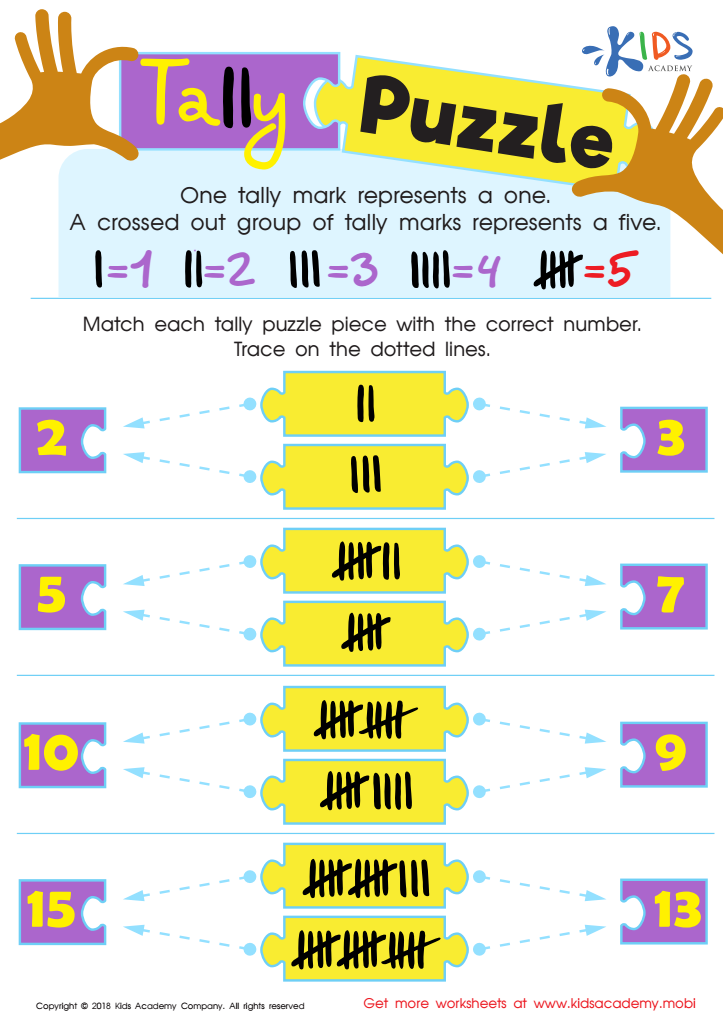
Tally Puzzle Worksheet
Kids love puzzles, and this bright worksheet will let them practice tallies and matching numbers. It teaches them to count and assign values, critical for doing math problems quickly and accurately later. It also leads to strategies like counting by 5s.
Tally Puzzle Worksheet
Worksheet
Join Kids Academy for Free
Who is primarily going to use this learning content?








Understanding tally marks is essential for young learners aged 3-6, as it lays the groundwork for foundational math skills and concepts. Tally marks offer a simple and visual way for children to represent and count quantities, making abstract ideas like numbers more tangible. This skill helps children recognize and categorize data, promoting logical thinking and problem-solving abilities.
Moreover, tally marks introduce concepts of grouping and number sense, where kids can learn to organize information into manageable sections. This can also enhance their understanding of addition and subtraction by visualizing combined or separated groups. Integrating tally marks into learning makes math fun and engaging, fueling children's interest and participation in these early years when curiosity is at its peak.
For parents and teachers, supporting the understanding of tally marks encourages numeracy skills in everyday scenarios, such as keeping score in games, tracking attendance, or simply counting objects around them. It also fosters communication skills as children explain their findings and reasoning. By prioritizing this skill, adults set the stage for lifelong confidence in math, enabling children to explore more complex numerical concepts as they grow. Tally marks are thus a gateway to broader mathematical literacy in these formative years.








