Cognitive Development Matching Worksheets for Ages 3-6
7 filtered results
-
From - To
Enhance your child's cognitive skills with our engaging Cognitive Development Matching Worksheets designed specifically for ages 3-6. These worksheets offer a fun and interactive way for young learners to practice essential cognitive abilities such as memory, pattern recognition, and critical thinking. Each worksheet features vibrant illustrations and relatable themes that captivate young minds, making learning enjoyable. Perfect for a variety of learning environments, these printable resources can be used at home, in classrooms, or during playdates. Help your little ones build a strong foundation for future learning while keeping them entertained and engaged. Start exploring our collection today!
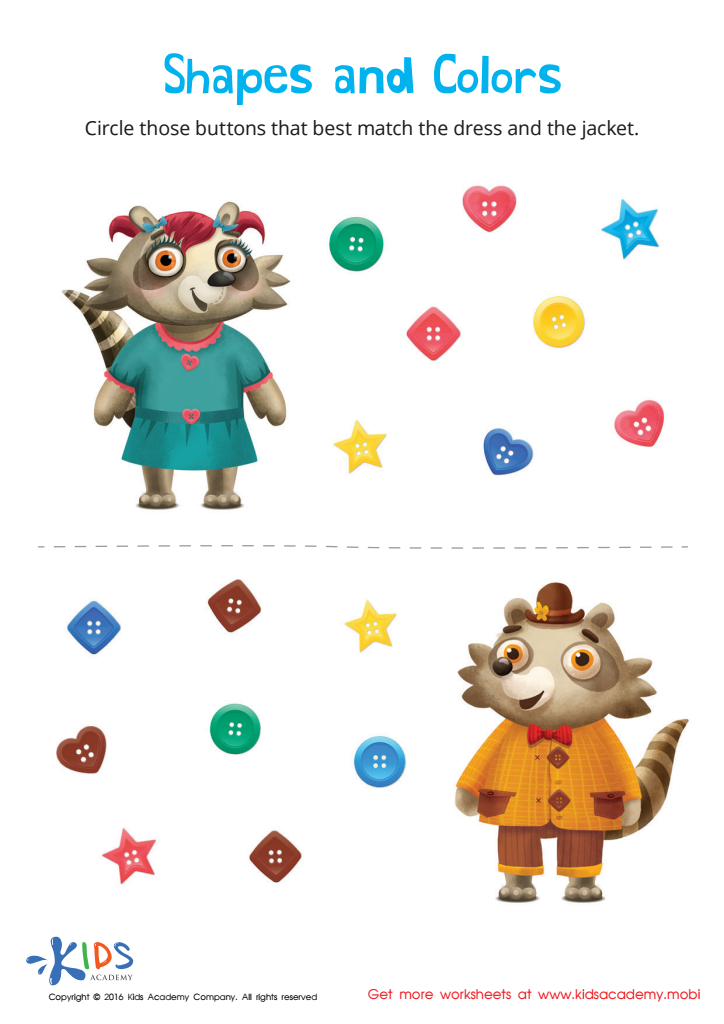
Matching: Shapes and Colors Worksheet
 Assign to My Students
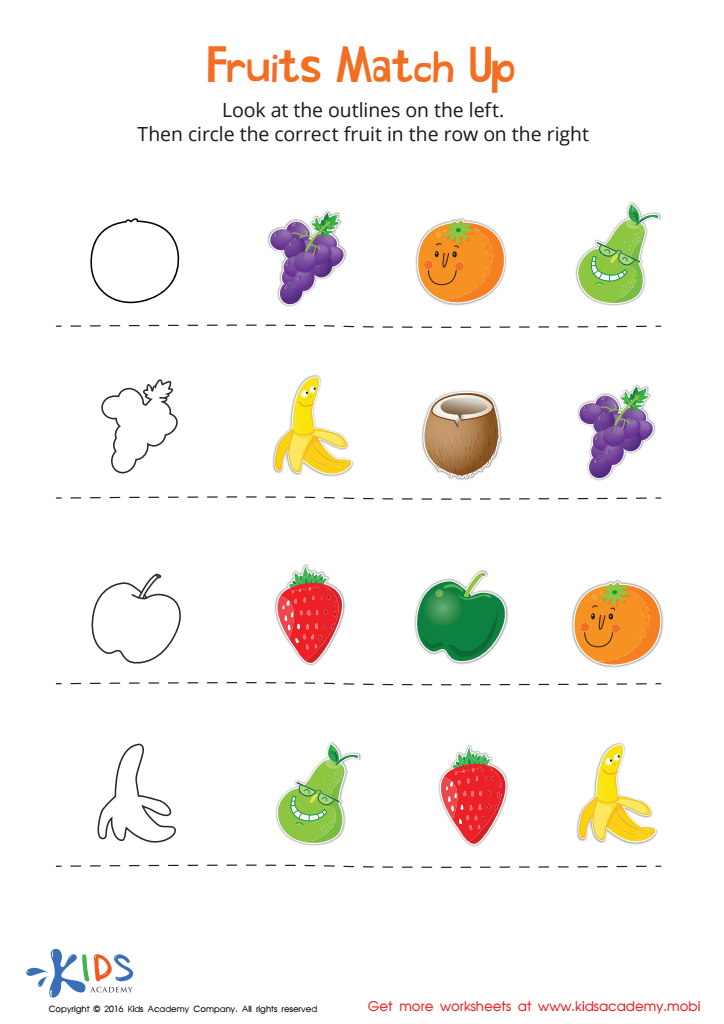
Fruits Match Up Worksheet
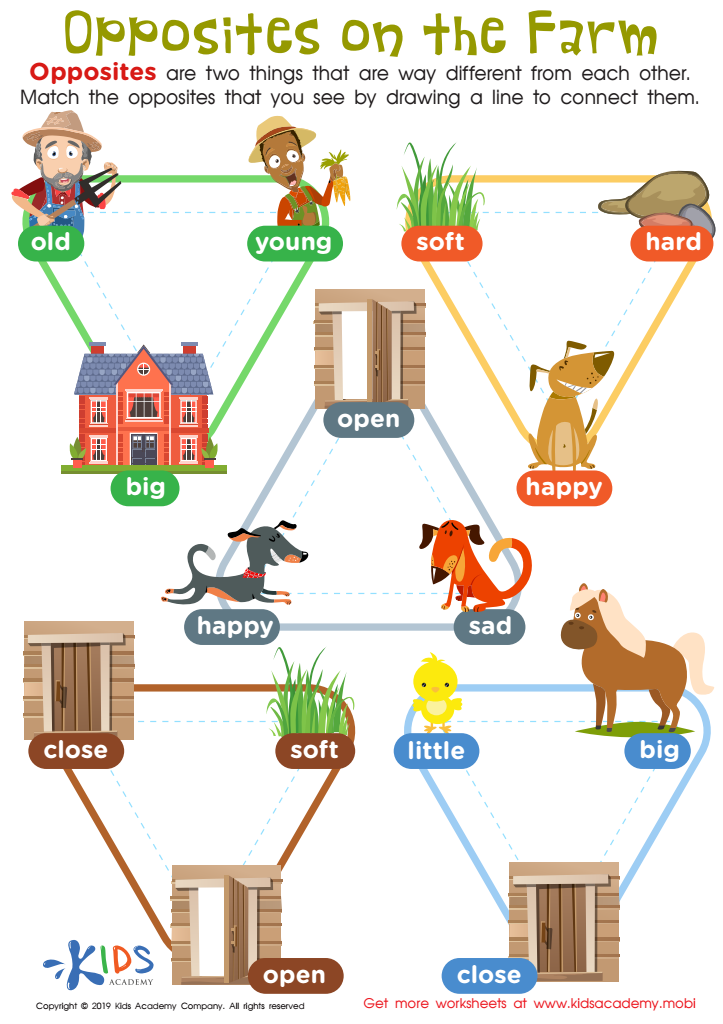
Opposites on the Farm Worksheet
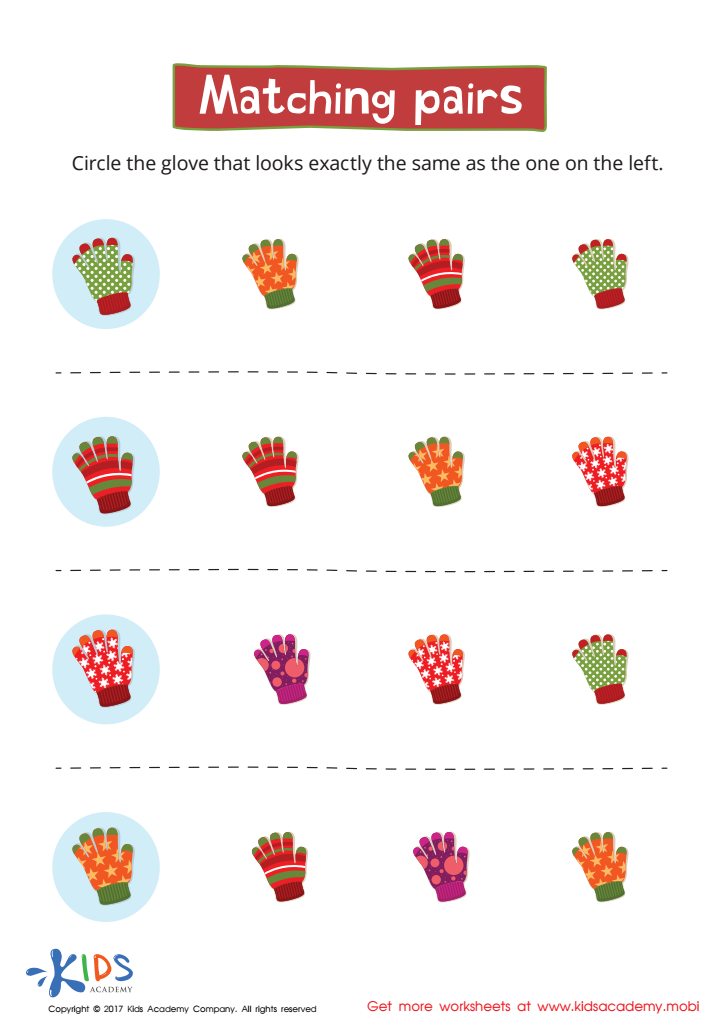
Matching: Matching Pairs Worksheet
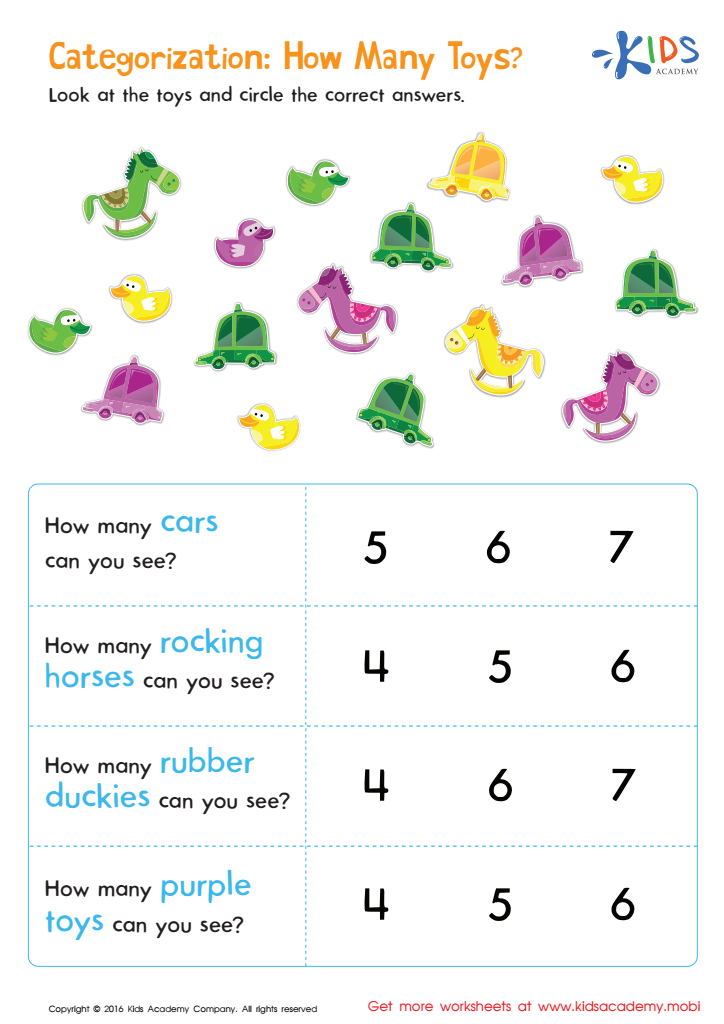
Classifying Toys by Type and Color Sorting Worksheet
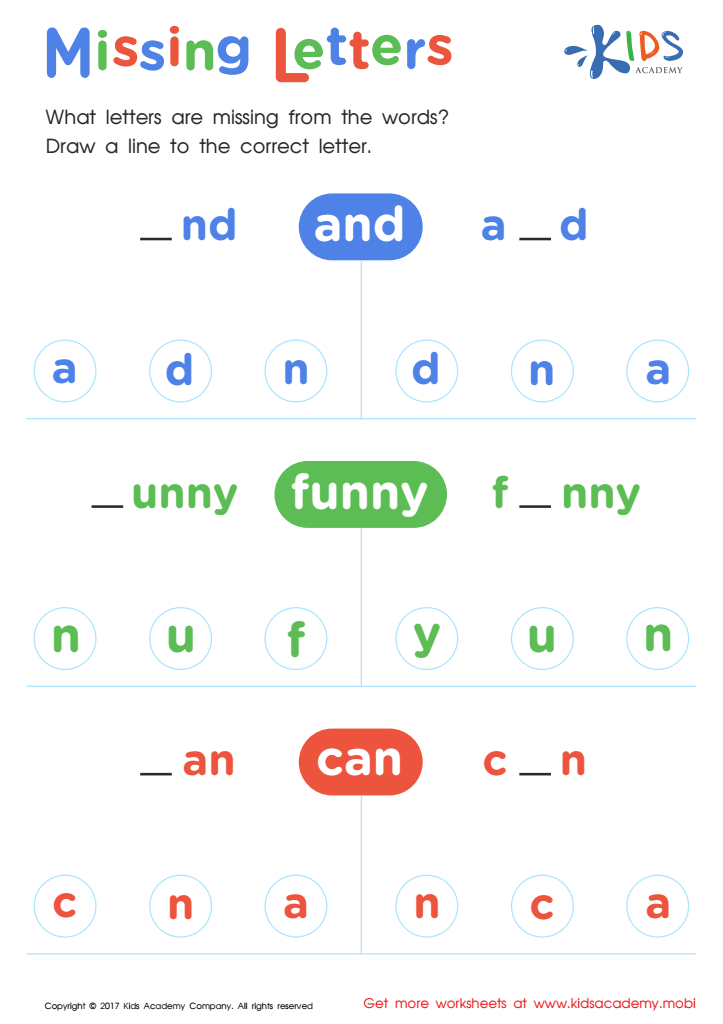
Missing Letters Worksheet
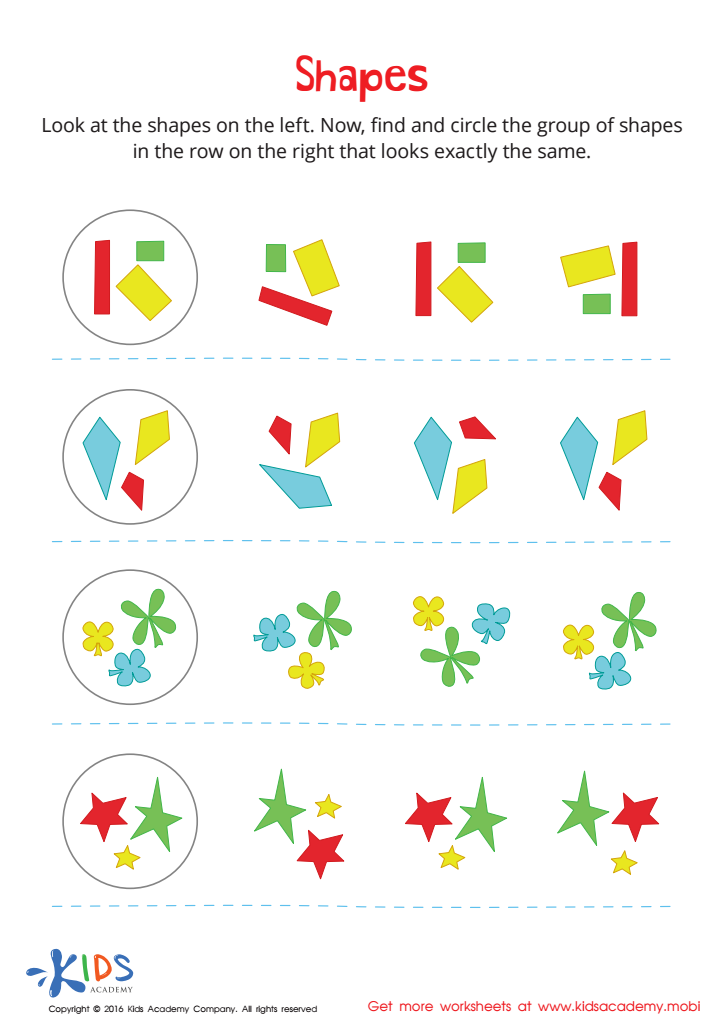
Shapes Worksheet








Cognitive development is a crucial aspect of early childhood education, particularly for children aged 3-6. Parents and teachers should prioritize cognitive development matching to ensure that activities and learning experiences align with the child's developmental stage. This tailored approach supports optimal brain growth, enhancing children’s understanding of the world around them.
During ages 3-6, children undergo significant cognitive changes - they move from simple understanding to more complex thinking, including problem-solving and logical reasoning. When parents and teachers provide age-appropriate activities, such as puzzles, storytelling, and imaginative play, they encourage curiosity and critical thinking. Matching cognitive development levels prevents frustration and fosters a love for learning.
Additionally, cognitive development impacts social skills and emotional growth. Engaging in collaborative activities helps children learn to communicate, share, and resolve conflicts with peers. Understanding developmental milestones enables parents and teachers to recognize where a child stands and identify areas that may need support. By fostering an environment that promotes suitable cognitive challenges, they can help build a strong foundation for future academic success and lifelong learning. Overall, caring about cognitive development matching ensures readiness for school and cultivates a child's innate potential.








