Number Recognition Numbers 11–20 Worksheets for Ages 3-6
10 filtered results
Difficulty Level
Grade
Age
-
From - To
Subject
Activity
Standards
Enhance your child’s number skills with our "Number Recognition Numbers 11–20 Worksheets" designed for ages 3-6. These engaging printables feature fun activities that help young learners identify, count, and write numbers between 11 and 20. Ideal for preschool and kindergarten students, each worksheet offers interactive exercises to reinforce number recognition, improve fine motor skills, and build a strong foundation in early math concepts. With colorful images and easy-to-follow instructions, children will enjoy learning as they trace, color, and count their way to number mastery. Download now to start your child’s journey towards math confidence and success!
Favorites
With answer key
Interactive
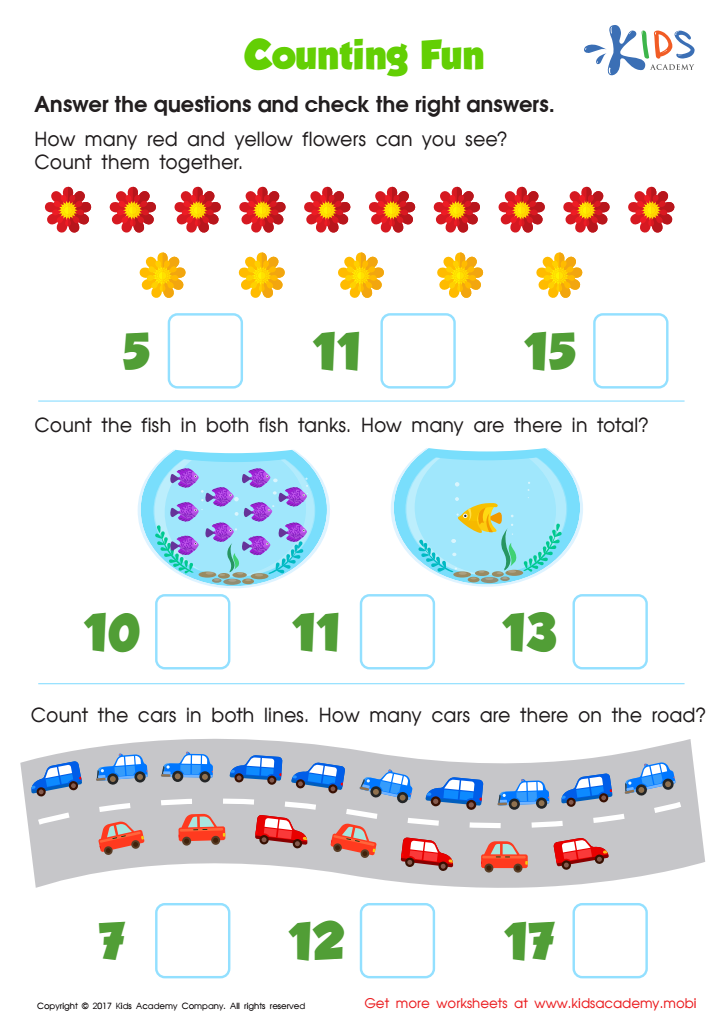
Counting Fun Worksheet
Math and fun can go hand-in-hand with this free PDF worksheet! Bright, colourful illustrations will activate your child's brain, as they count the red and yellow flowers. How many can you see? Count together and write down the total. Make learning and counting fun for your little ones!
 Assign to My Students
Counting Fun Worksheet
Worksheet
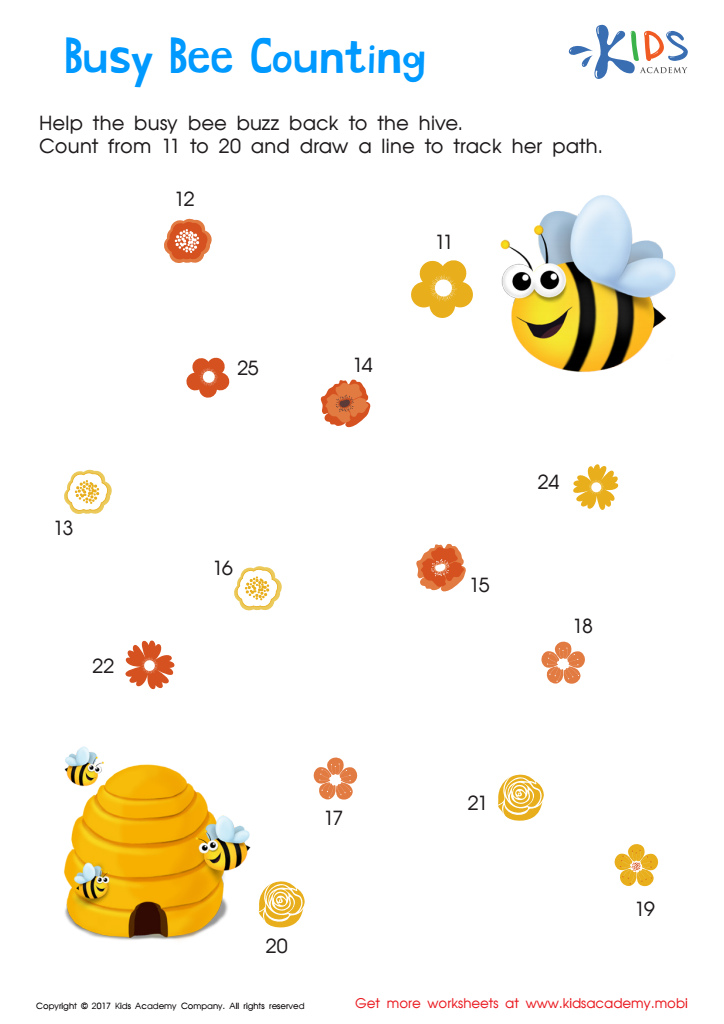
Ordering 11–20: Busy Bee Counting Worksheet
Help your child master counting from 11 to 20 with our connect the dot counting worksheet. Kids will have fun counting, drawing and problem-solving with this vibrant worksheet. With clear directions, adorable pictures and a sense of purpose, your child will develop crucial numeracy skills without even knowing it!
Ordering 11–20: Busy Bee Counting Worksheet
Worksheet
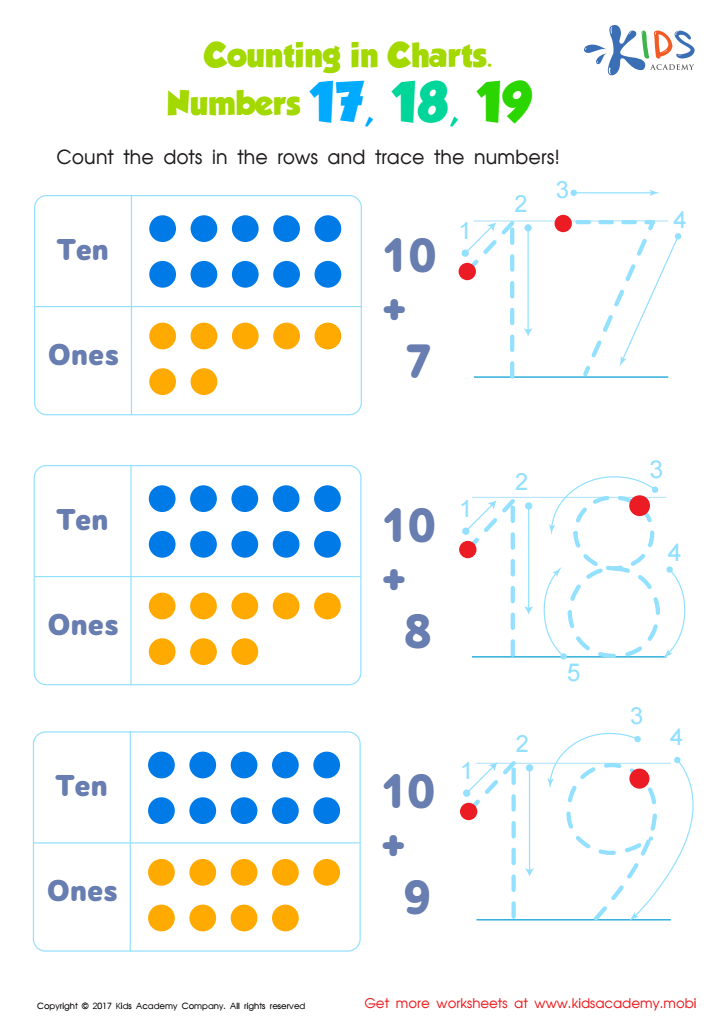
Kindergarten Number Tracing: Counting in Charts Worksheet
Little learners can find big numbers tricky! Help them practice counting and build early math skills, like place value and addition, with this kindergarten number tracing PDF worksheet. Count the dots to solve the problem and trace each answer!
Kindergarten Number Tracing: Counting in Charts Worksheet
Worksheet
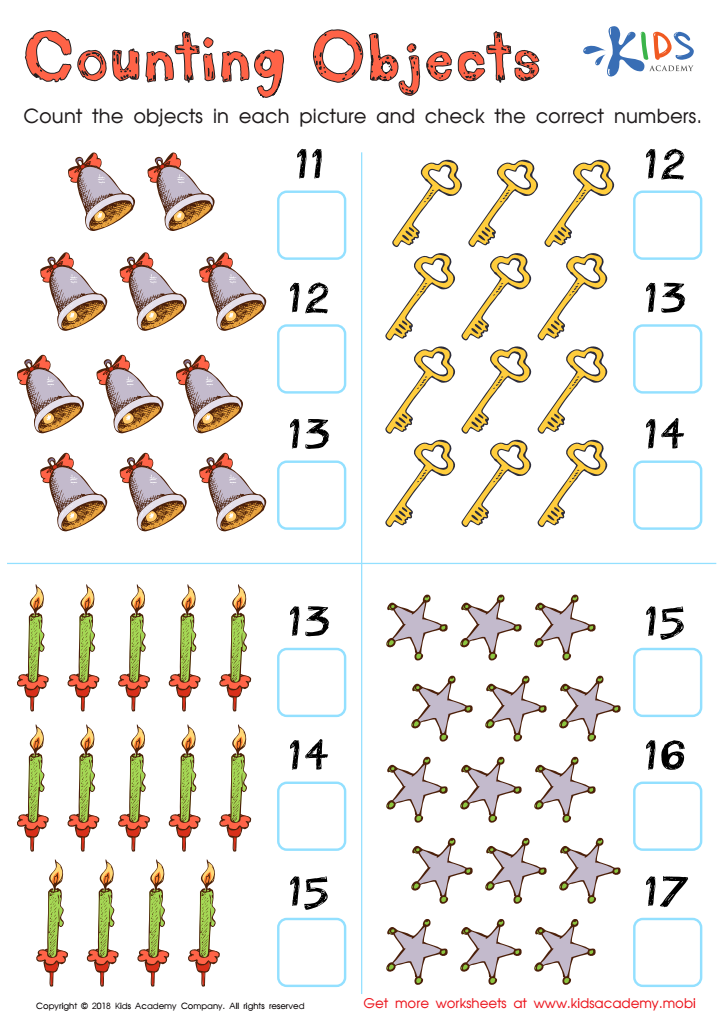
Counting Numbers Worksheet For Kindergarten
This worksheet is a great way to get your child practicing foundational math skills. With bright pictures to count, counting numbers just got a lot more fun! Get them ready for future math success and help them hone their early math skills.
Counting Numbers Worksheet For Kindergarten
Worksheet
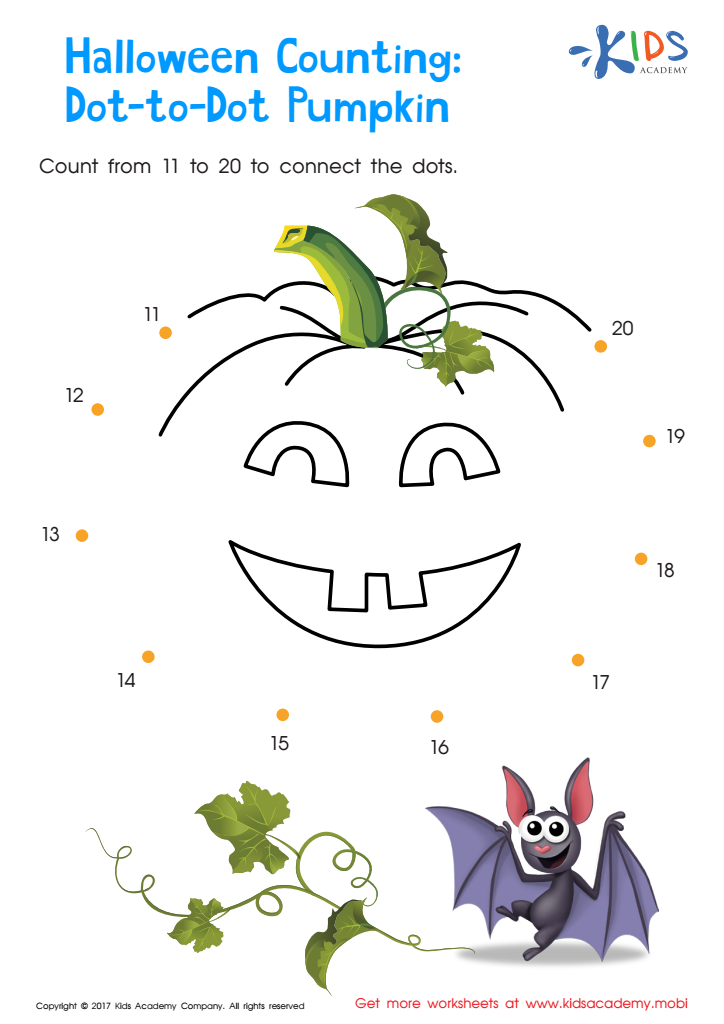
Ordering 11–20: Halloween Counting Worksheet
No matter the time of year, help your child get ready for Halloween with this worksheet. They'll practice counting from 11 to 20, recognizing numbers, and using a pencil to draw. By connecting the dots, they'll create a pumpkin picture, while unknowingly strengthening their early math skills. Print it today for an educational and fun experience!
Ordering 11–20: Halloween Counting Worksheet
Worksheet
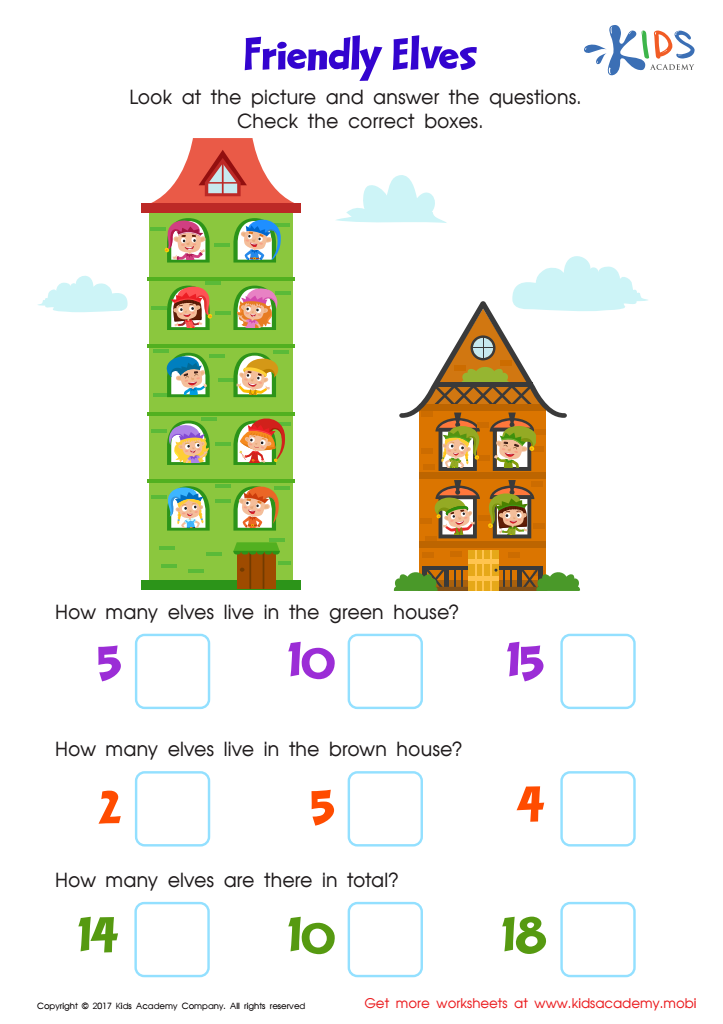
Place Value: Friendly Elves Worksheet
This fun worksheet teaches kids to count elves, answer questions about houses, and practice math! Look at the picture and count the elves in each house. How many are in the green and brown house? Tick the correct answer boxes. Perfect for young learners!
Place Value: Friendly Elves Worksheet
Worksheet
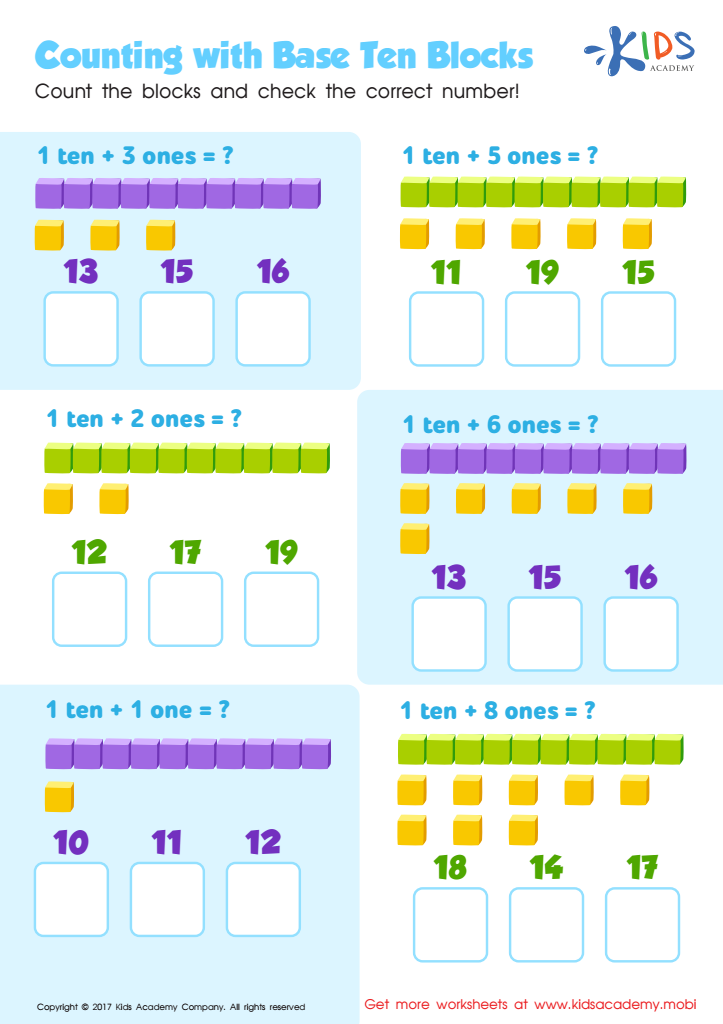
Counting with Base Ten Blocks Worksheet
Math has different levels and gets harder as your child progresses. Don't be surprised when they bring home an algebra worksheet! In this one, they will add 1 tens to varying numbers and fill in the total. This builds their understanding of base tens.
Counting with Base Ten Blocks Worksheet
Worksheet
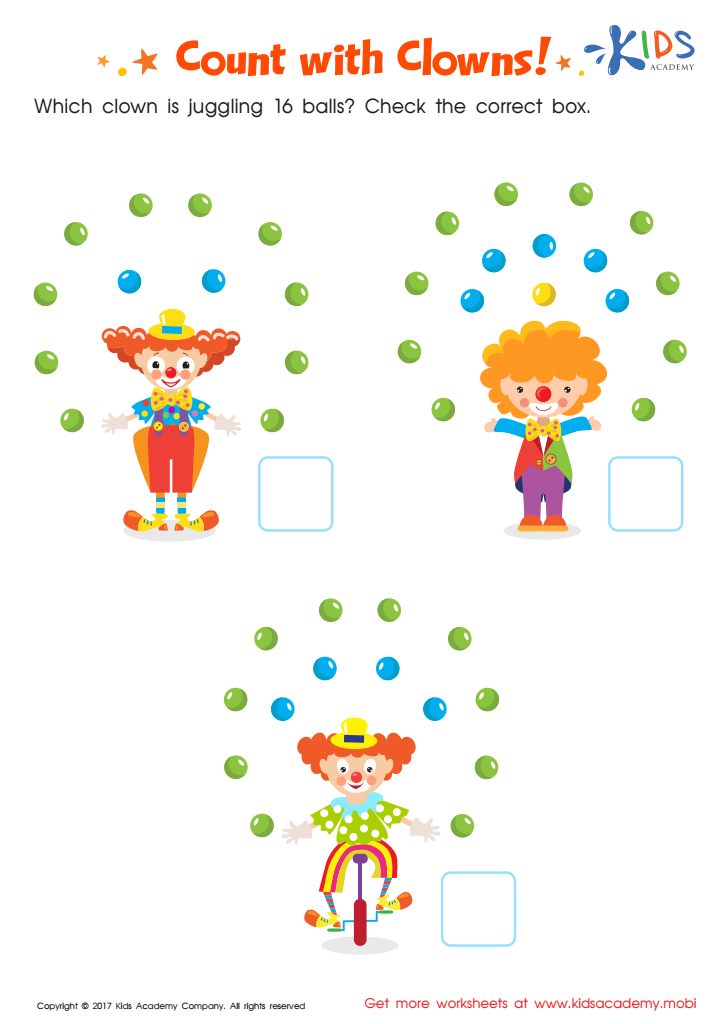
Count with Clowns Worksheet
Math may not be a laughing matter, but this worksheet sure is! Download the PDF and get ready to count balls with the clowns! Your child will have a blast and learn how to count at the same time. It's an easy, fun way to practice math!
Count with Clowns Worksheet
Worksheet
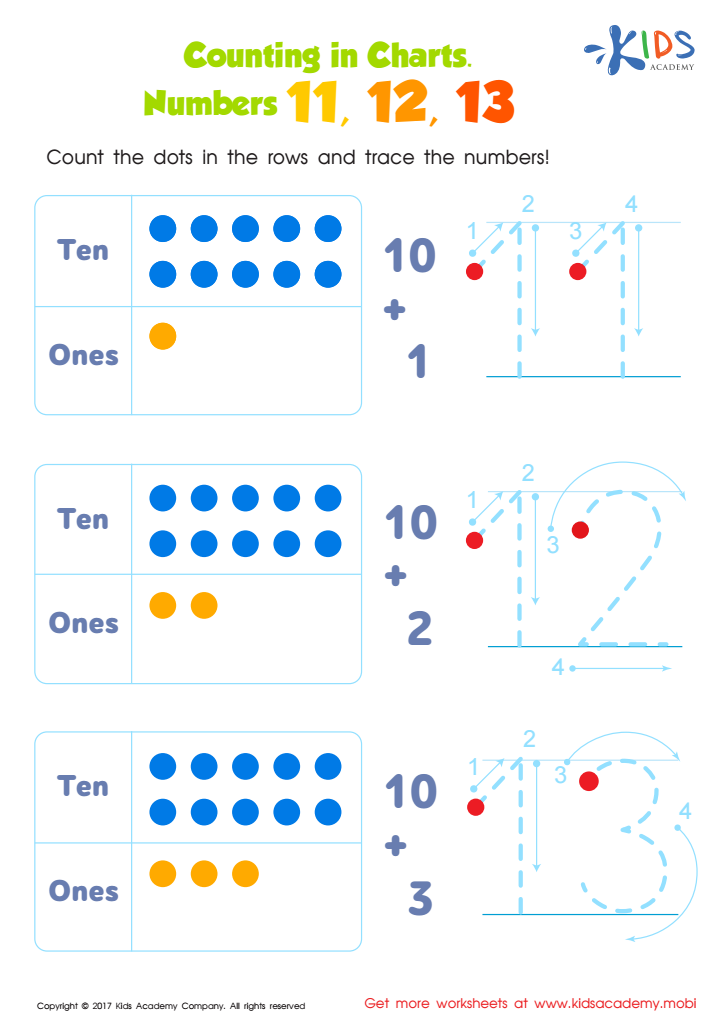
Number Tracing Worksheet For Kindergarten
Help your child develop addition skills and improve number recognition with this easy-to-use worksheet. Have them count the dots and add to solve each problem. Then, trace over the number to complete each row! It's a fun and simple way for kindergarteners to practice their math skills.
Number Tracing Worksheet For Kindergarten
Worksheet
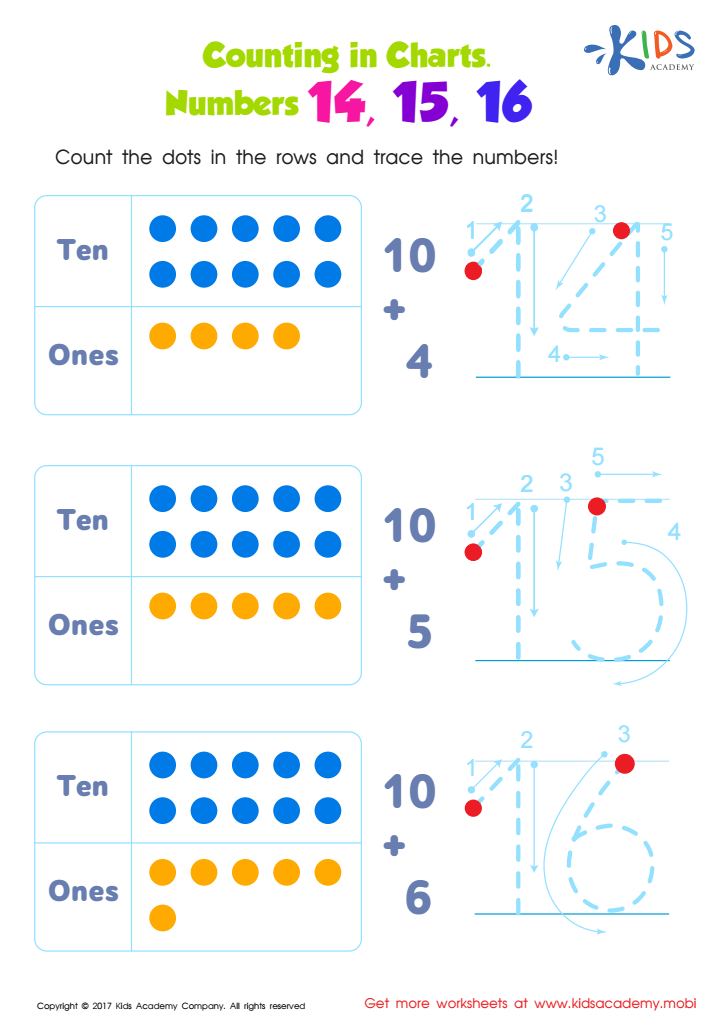
Number Tracing Worksheet
Kids learn math with counters and place value! This handy worksheet helps form a foundation for math skills and number sense! Have your child count the dots and trace the answers to the addition problems. It's a great way to support their math skills!
Number Tracing Worksheet
Worksheet
Join Kids Academy for Free
Who is primarily going to use this learning content?



Number recognition, particularly for numbers 11-20, is an essential building block for young children, typically aged 3-6. As parents or teachers, ensuring children master these numbers sets the stage for more complex mathematical concepts. Initially, children learn numbers 1-10, understanding the basics of counting and quantity. However, recognizing numbers 11-20 introduces them to the concept of 'place value'. For instance, understanding that the number 11 is made up of '1 ten plus 1', and so forth, paves the way for understanding how our number system works.
Additionally, number recognition impacts a child's future mathematical success. Numerical fluency in higher numbers by kindergarten often correlates with better academic performance later on. By becoming familiar with numbers 11-20, children also develop cognitive skills such as memory and pattern recognition, which are crucial for problem-solving.
On a practical level, recognizing these numbers is vital for daily tasks. Whether telling time, cooking with measurements, or following a sequence, comprehension of numbers beyond 10 is indispensable.
Early and consistent exposure to numbers 11-20 through interactive activities, games, and real-life applications brings numerical concepts to life, making learning engaging and effective. Parents and teachers play a key role in fostering this numerical curiosity and competence, building a sturdy foundation for future mathematical learning.