Number Recognition Skip Counting Worksheets for Ages 3-6
3 filtered results
-
From - To
Boost early math skills with our Number Recognition Skip Counting Worksheets, designed specifically for ages 3-6. These engaging and educational worksheets help young learners master the fundamentals of counting by 2s, 5s, and 10s. Bright, cheerful visuals and fun activities make learning enjoyable, while reinforcing number recognition and sequencing—which are crucial for future math success. Ideal for parents, teachers, and tutors, these printable worksheets assist children in developing a robust mathematical foundation. Perfect for in-class or at-home learning, encourage your child to explore the exciting world of numbers today!
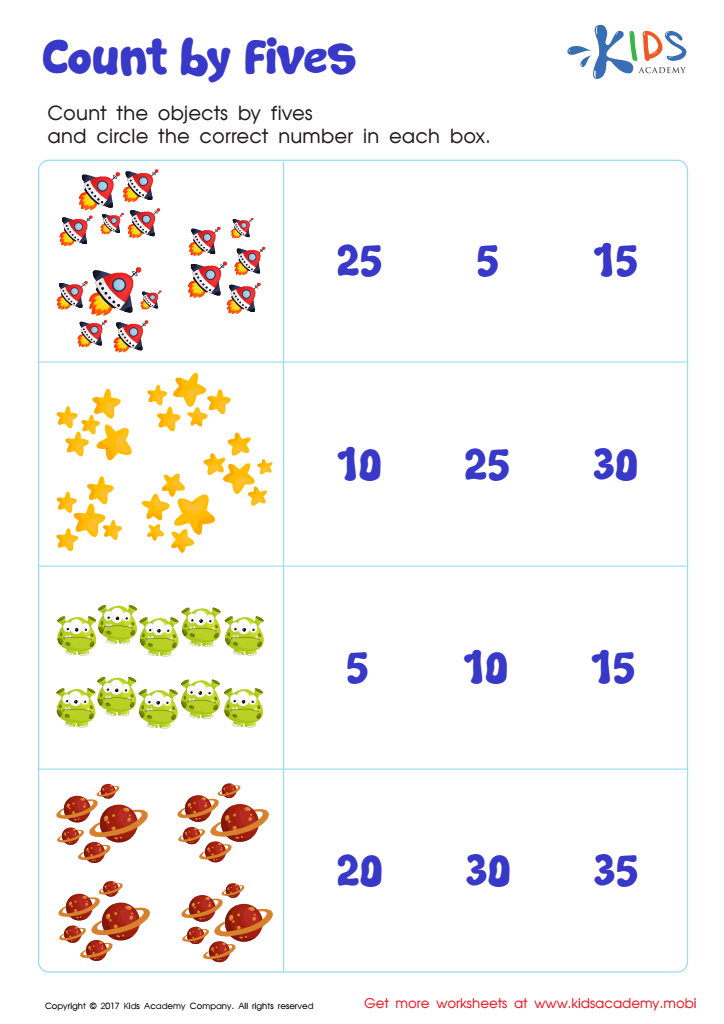
Skip Counting by 5s: Space Math Printable
 Assign to My Students
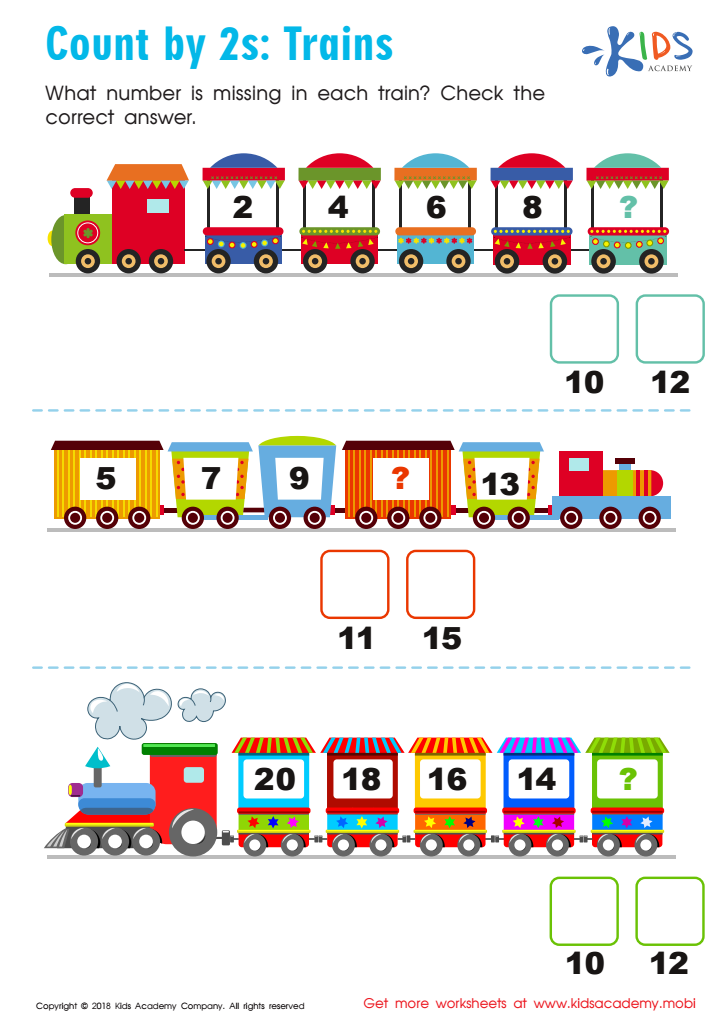
Count by 2's: Trains Worksheet
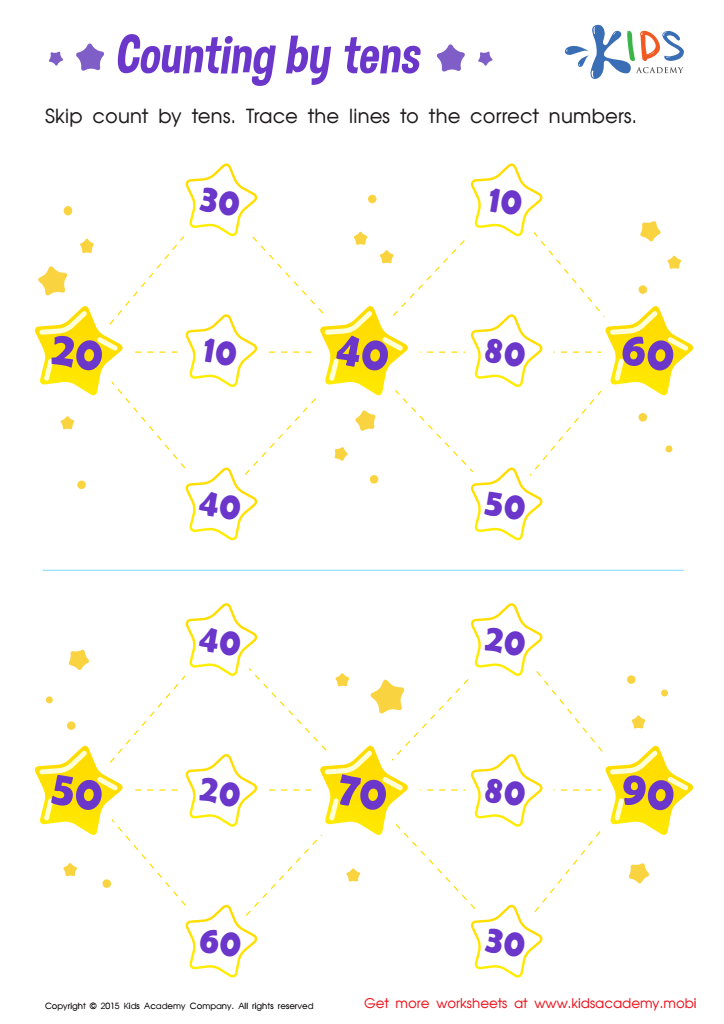
Learn Dozens: Counting by Tens Printable



%20(1).jpg)




Parents and teachers should prioritize number recognition and skip counting for children aged 3-6 because these foundational skills are critical for early math development and overall cognitive growth. Number recognition, the ability to identify and name numbers correctly, forms the basis for all future math learning. It helps children understand that numbers have specific values and can be used in various contexts, such as counting objects, telling time, and solving simple arithmetic problems.
Skip counting, or counting by intervals (such as by 2s, 5s, or 10s), enhances a child’s understanding of number patterns and relationships. This skill is important for developing mental math abilities, which are crucial for more advanced mathematical concepts they'll encounter later, such as multiplication and division. Early proficiency in number recognition and skip counting can also boost children’s confidence in their mathematical abilities, making them more likely to engage eagerly with future math activities.
Additionally, learning these skills can enhance other cognitive functions, such as memory, attention, and problem-solving abilities. When children master these early math skills, they build a strong foundation that supports not only continued academic success but also everyday activities, like sorting and classifying objects, that require logical thinking and pattern recognition. Thus, investing time and effort into teaching these skills can yield long-term educational benefits.








