Sorting Worksheets for Ages 3-6 - Page 2
25 filtered results
-
From - To
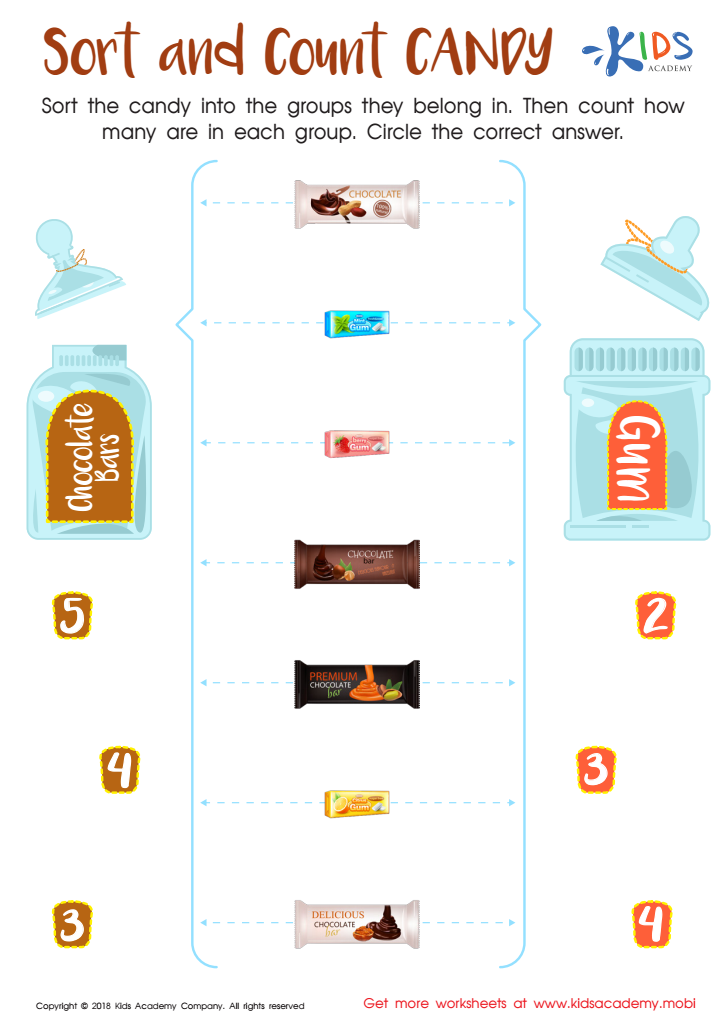
Sort and Count Candy Worksheet
 Assign to My Students







Sorting is a foundational skill for children aged 3-6 as it supports critical aspects of cognitive development. Teachers and parents should value sorting because it lays the groundwork for mathematical thinking and problem-solving. The activity involves categorizing objects based on attributes like color, shape, size, or type, helping children recognize patterns and make logical connections. This kind of classification is not only crucial for understanding math concepts but also strengthens executive function skills, including organizational ability and attention to detail.
Furthermore, sorting exercises enhance vocabulary and language skills. When children describe why they grouped certain items together, they practice using descriptive language and learn new words. This prepares them for more complex communication tasks.
Socially, sorting activities can be collaborative, fostering teamwork and communication between children. They learn to share materials, take turns, and explain their reasoning to others, which are fundamental social skills.
Emotionally, these activities build a child's confidence and independence as they make decisions and see the results of their choices. Encouraging a child to sort helps scaffold their learning in a fun and engaging way, setting a strong foundation for future academic success. Therefore, attention to sorting activities is an investment in a holistic developmental trajectory for young learners.








