Problem-Solving Skills Sorting Worksheets for Ages 3-6
4 filtered results
-
From - To
Discover our engaging Problem-Solving Skills Sorting Worksheets designed for children ages 3-6. These worksheets promote critical thinking and analytical skills as young learners sort objects based on various attributes such as size, color, and shape. By categorizing items, kids enhance their ability to identify similarities and differences, fostering foundational skills essential for future learning. Our user-friendly resources support early childhood educators and parents alike, making learning both fun and effective. Perfect for classroom activities or home practice, these worksheets provide a hands-on approach to problem-solving while encouraging creativity and cognitive development in your little ones. Explore our printable collection today!
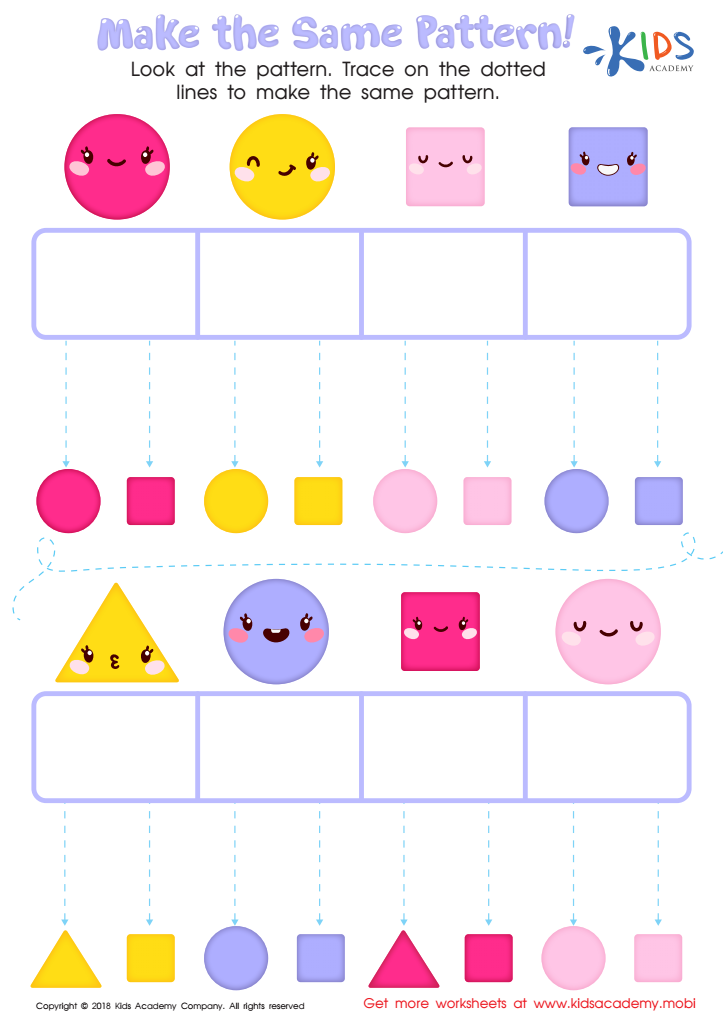
Make the Same Pattern Worksheet
 Assign to My Students
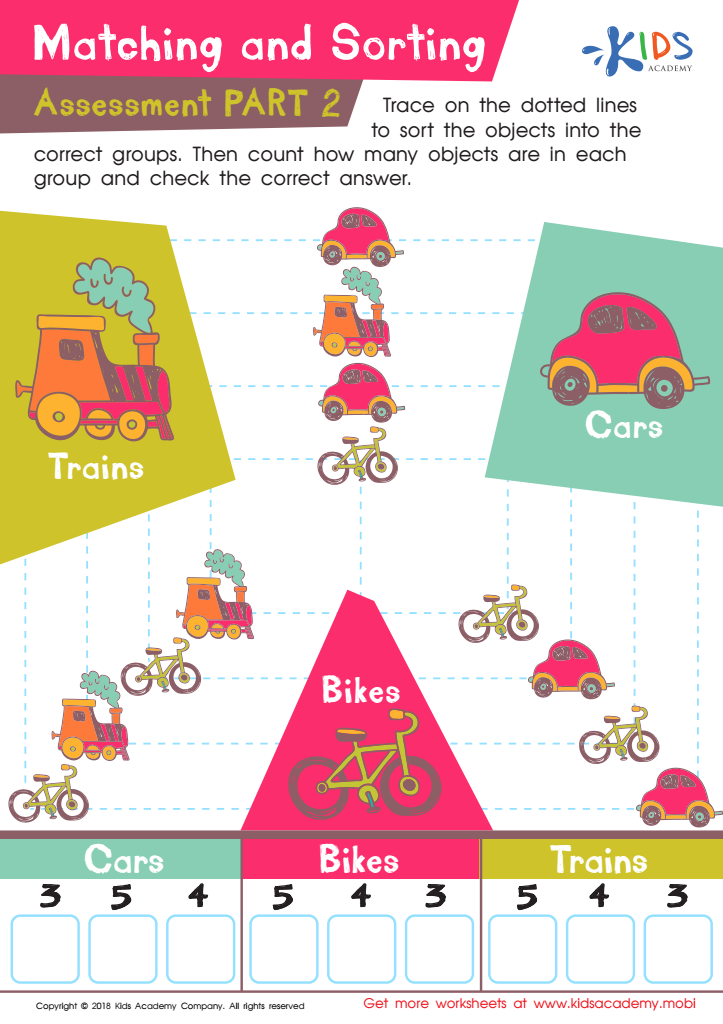
Matching and Sorting for Kindergarten: Assessment 2 Worksheet
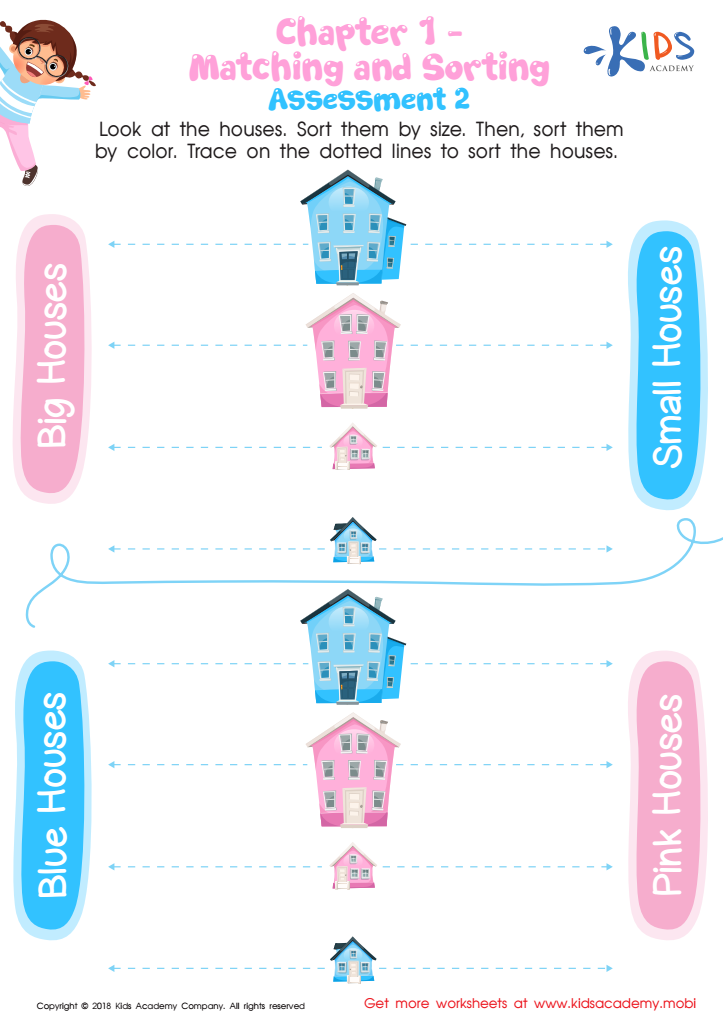
Matching and Sorting for Preschool: Assessment 2 Worksheet
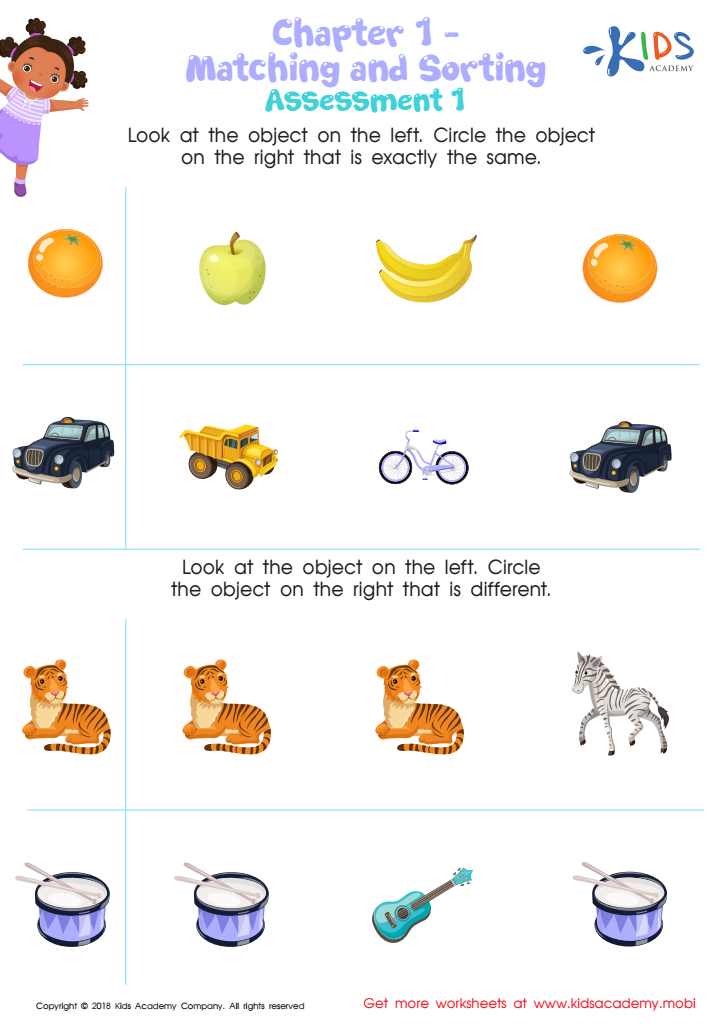
Matching and Sorting for Preschool: Assessment 1 Worksheet







Problem-solving skills are crucial for children aged 3-6 as they lay the foundation for future learning and critical thinking. Engaging in sorting activities enhances cognitive development by encouraging children to make connections and classify objects based on attributes such as size, color, or shape. When parents or teachers involve children in sorting tasks, they foster crucial skills such as observation, categorization, and reasoning.
Moreover, sorting helps develop fine motor skills, as children manipulate various items, promoting hand-eye coordination and dexterity. These activities also encourage language development, as kids describe what they are doing and learn vocabulary related to quantities, comparisons, and classifications.
Additionally, problem-solving enhances social skills when children collaborate with peers in sorting games. As they discuss strategies and cooperate, they also develop essential communication and teamwork abilities. This collaborative spirit not only strengthens their interpersonal skills but also builds their confidence as they learn to navigate challenges together.
Ultimately, prioritizing problem-solving skills through sorting activities in early childhood provides a robust platform for children to thrive academically, socially, and emotionally, embracing a lifelong love for learning and critical thinking. Investing in these experiences now prepares them to tackle complex situations in the future.








