Mathematical reasoning Subtraction Worksheets for Ages 3-6
6 filtered results
-
From - To
Introduce your child to the world of numbers with our "Mathematical Reasoning Subtraction Worksheets for Ages 3-6." At Kids Academy, these carefully crafted activities are designed to help young learners grasp basic subtraction concepts while enhancing their logical thinking and problem-solving skills. With bright visuals and engaging exercises, children will find learning fun and rewarding. Suitable for preschool and kindergarten students, these worksheets aid in building a solid foundation in math. Start your child's educational journey with us and watch their confidence in math soar! Perfect for home or classroom use. Free downloads available.
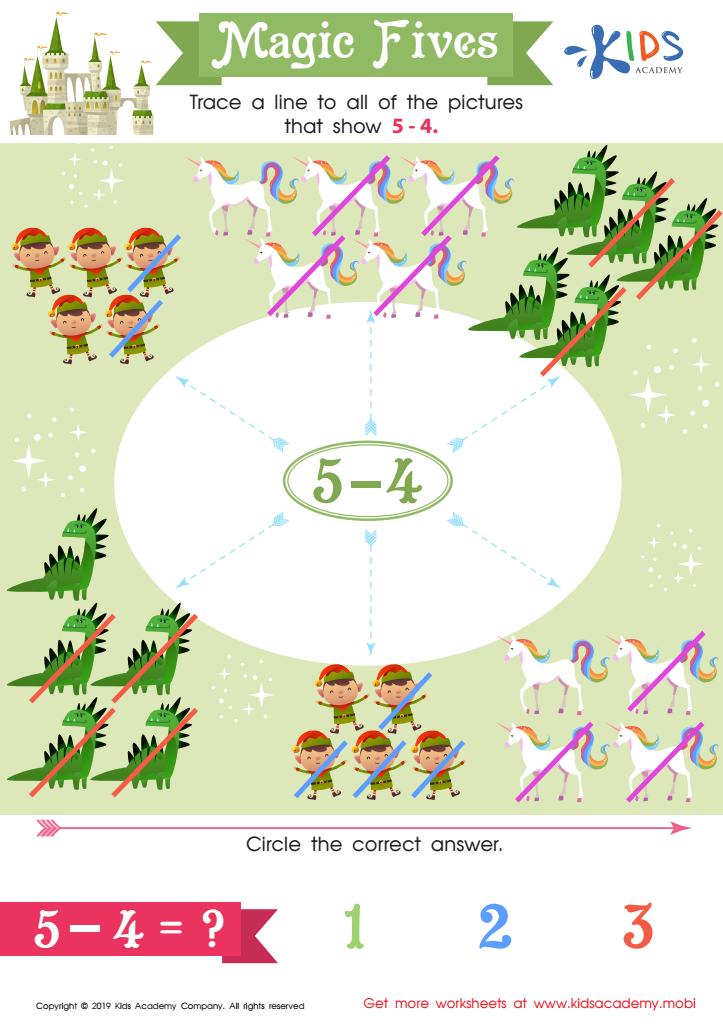
Magic Fives Worksheet
 Assign to My Students
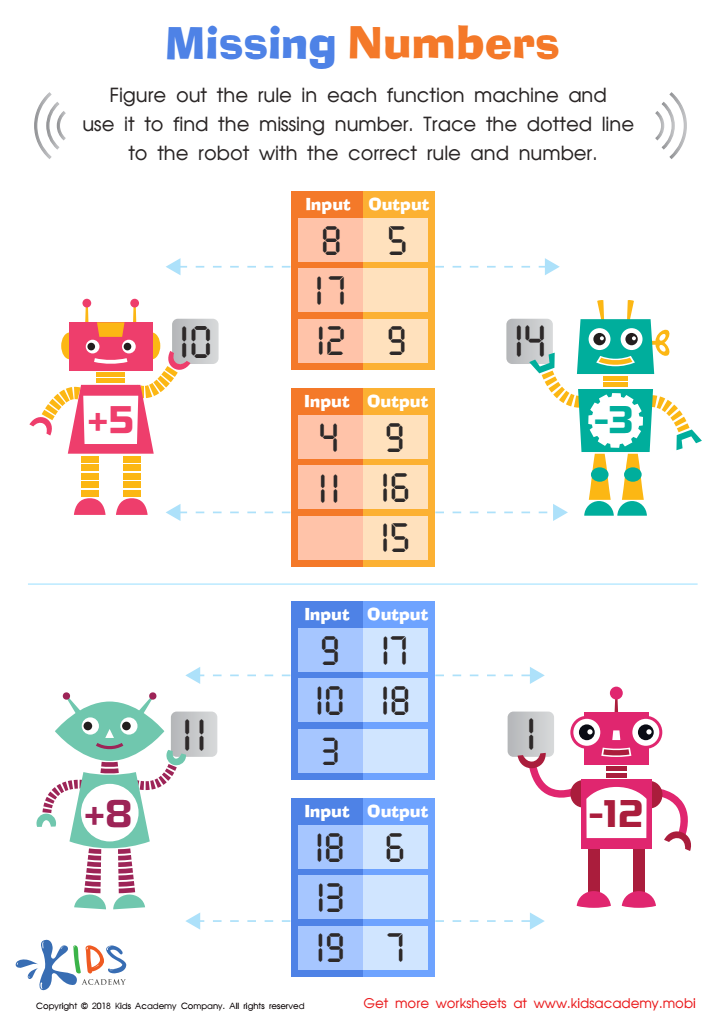
Missing Numbers Worksheet
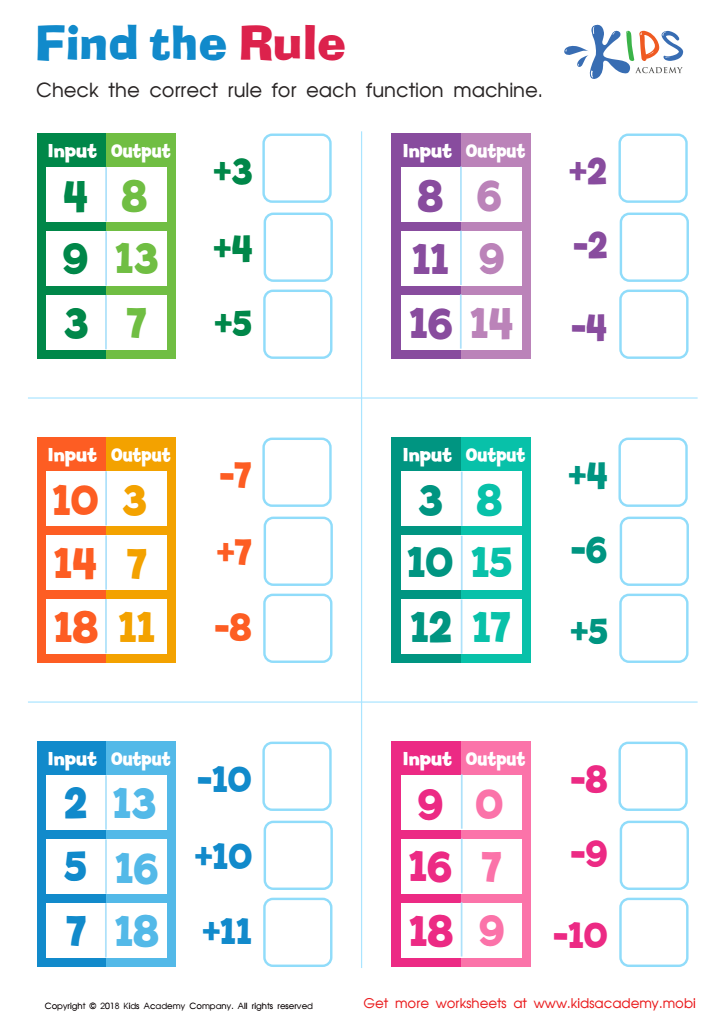
Find the Rule Worksheet
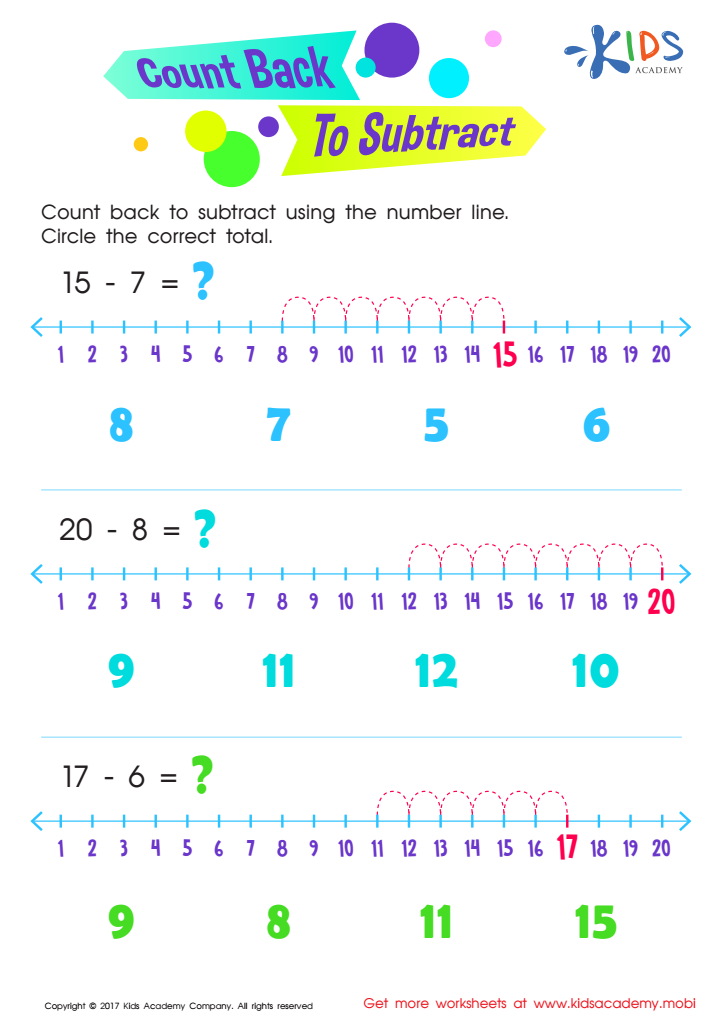
Count Back to Subtract Substraction Worksheet
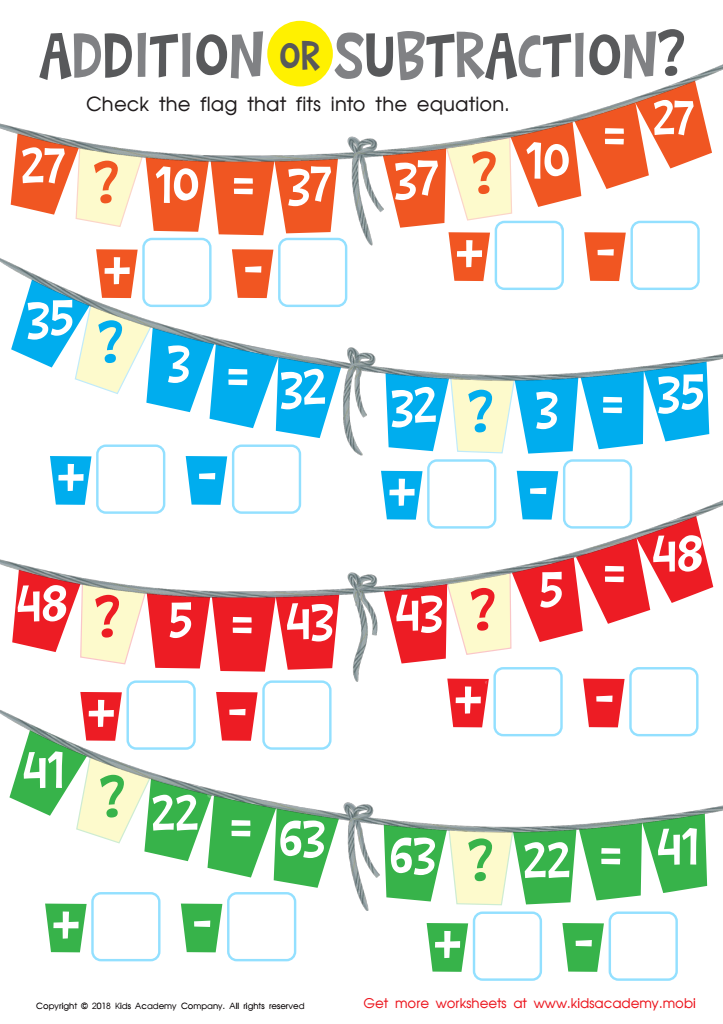
Addition or Subtraction? Worksheet
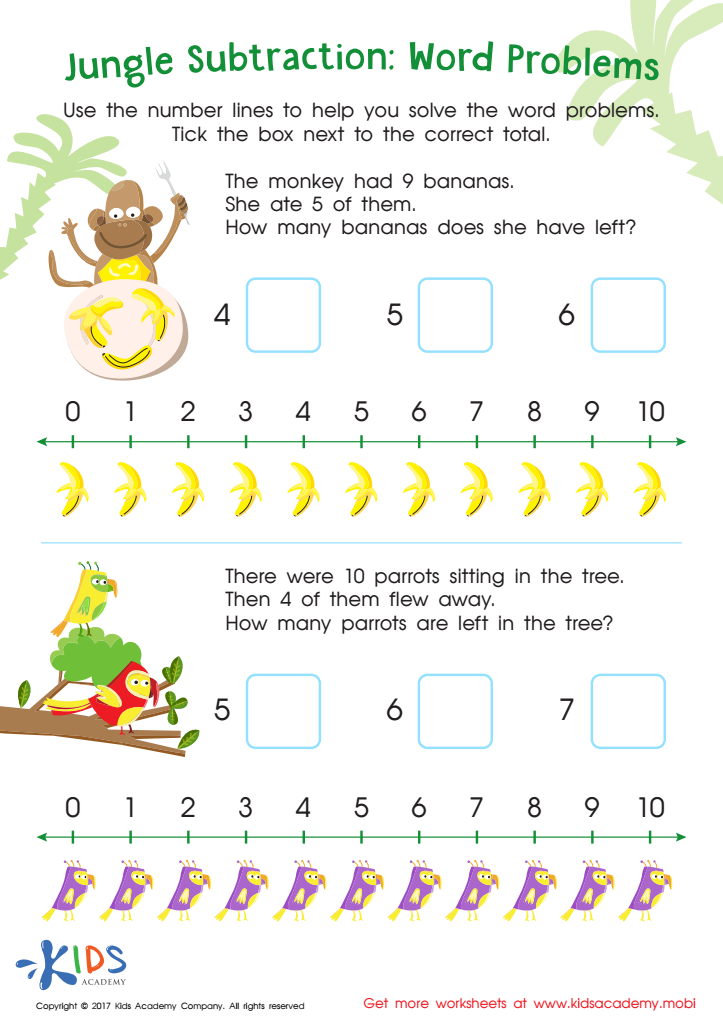
Jungle Subtraction Word Problems Substraction Worksheet








Mathematical reasoning, particularly subtraction, serves as a foundational skill for young children that is integral to their overall cognitive development and future academic success. For ages 3-6, learning to subtract is more than just understanding numbers; it involves grasping concepts such as quantity, difference, and the relationship between whole and parts. These early interactions with subtraction set the stage for critical thinking and problem-solving abilities.
For parents and teachers, focusing on mathematical reasoning through subtraction offers multiple benefits. First, it helps children develop logical thinking by encouraging them to find solutions and understand sequences and results. Second, early familiarity with subtraction builds confidence in handling numbers, which is essential for later mathematics education, including more advanced operations like multiplication and division. Children who master subtraction early on are better equipped to tackle challenges with less frustration, fostering a positive attitude towards learning math.
Moreover, the age of 3-6 is a crucial period for brain development, where children are most receptive to acquiring new skills. Introducing them to early math concepts through engaging, age-appropriate activities like sandpit games, block play, or storytelling involving subtraction helps solidify these concepts. Parents and teachers who actively engage in nurturing this skill are investing in the child's educational foundation, fostering both academic and everyday problem-solving skills.








