Time Worksheets for Ages 3-6 - Page 2
25 filtered results
-
From - To
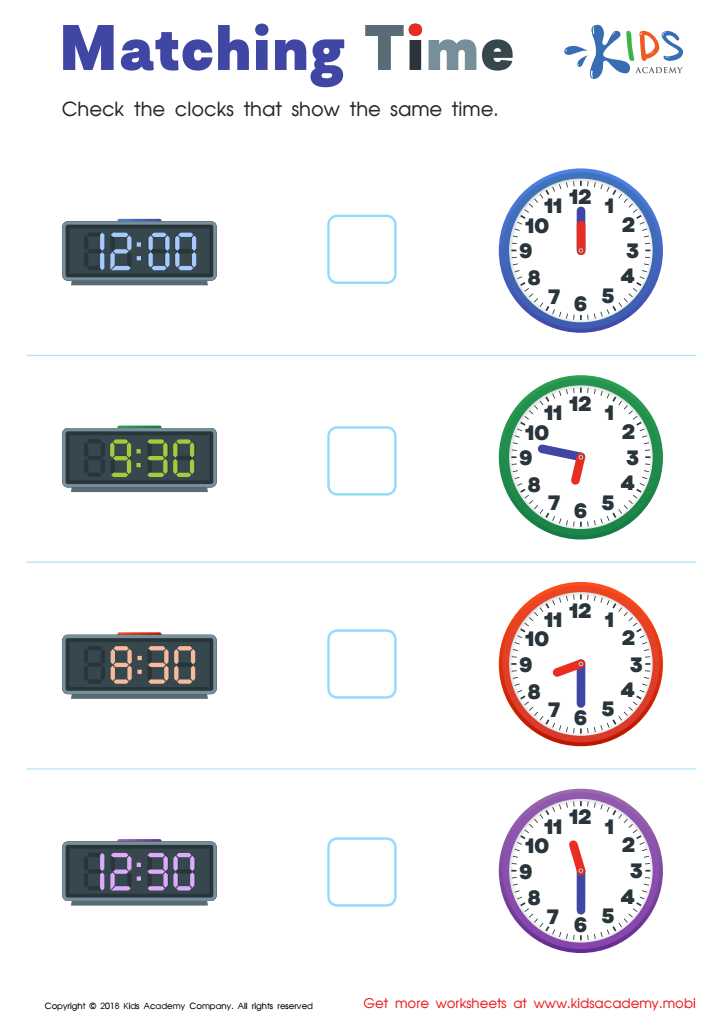
Matching Time Worksheet
 Assign to My Students





.jpg)

Time for Ages 3-6 is crucial for early childhood development, as it lays the foundation for a child's understanding of the world. During this critical period, children begin to grasp concepts of time, such as routines, sequencing, and the relationship between past, present, and future. Parents and teachers should care about this developmental aspect because it aids in fostering a child’s cognitive skills, specifically in problem-solving and planning.
Moreover, an awareness of time helps children navigate daily activities, from recognizing mealtimes to understanding when it's playtime or bedtime. It supports their ability to follow schedules, improving their self-regulation and independence.
Incorporating time-related activities can promote social skills through group games, storytelling, and calendar observations, where children learn to collaborate and communicate effectively. This foundational understanding can also boost literacy and numeracy skills, as children engage with time concepts in real-life contexts.
Ultimately, emphasizing time in early education empowers children with essential life skills, preparing them for future learning and fostering a sense of safety and predictability in their environment. Thus, parents and teachers hold a pivotal role in nurturing these minute nuances as they significantly impact a child's holistic development.








