
Sentence construction Building Vocabulary Worksheets for Ages 3-6
11 filtered results
Difficulty Level
Grade
Age
-
From - To
Subject
Activity
Standards
Enhance your child's language skills with our engaging Sentence Construction Building Vocabulary Worksheets, designed specifically for ages 3-6. These worksheets focus on developing foundational vocabulary and sentence structure, promoting early literacy in a fun and interactive way. Children will enjoy a variety of activities, including word matching, fill-in-the-blanks, and picture associations, all aimed at expanding their vocabulary and improving their ability to form sentences. With colorful illustrations and age-appropriate challenges, these worksheets make learning enjoyable and effective. Give your child the tools they need for successful communication and literacy as they embark on their educational journey!
Favorites
With answer key
Interactive
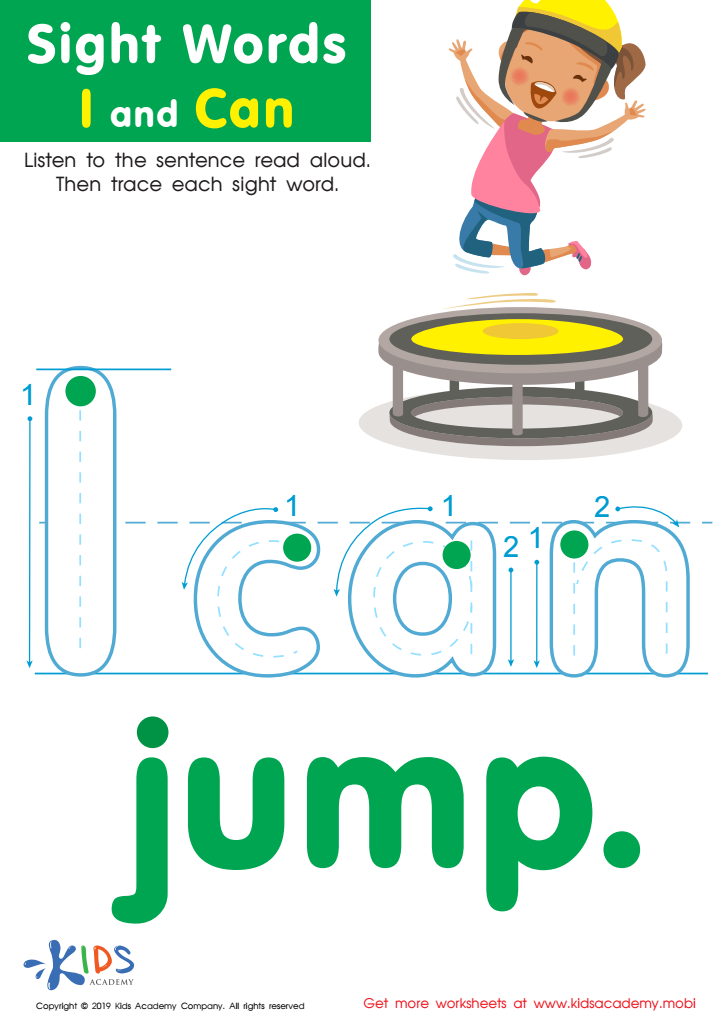
Sight Words I Can Worksheet
Emerging readers can build confidence and improve reading skills with this free worksheet! They'll trace the lines to complete the "I Can" phrase then use the picture clue to decode the last word. This activity encourages reading and writing, and is empowering for kids as they explore all the things they can do!
 Assign to My Students
Sight Words I Can Worksheet
Worksheet











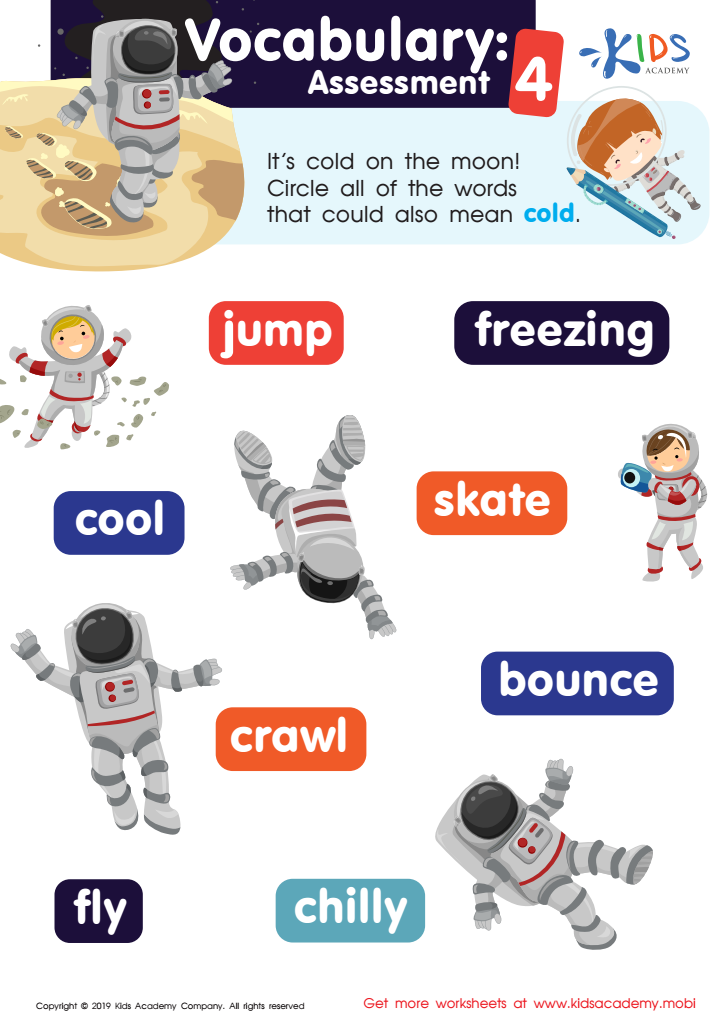
Vocabulary: Assessment 4 Worksheet
Download this free worksheet and have your child explore outer space with our charming astronauts! Help them find the right words to describe the chilly moon. Have fun with synonyms as they circle the right words to match "cold". Let your child's imagination run wild as they discover the wonders of space with this Kids Academy exercise!
Vocabulary: Assessment 4 Worksheet
Worksheet
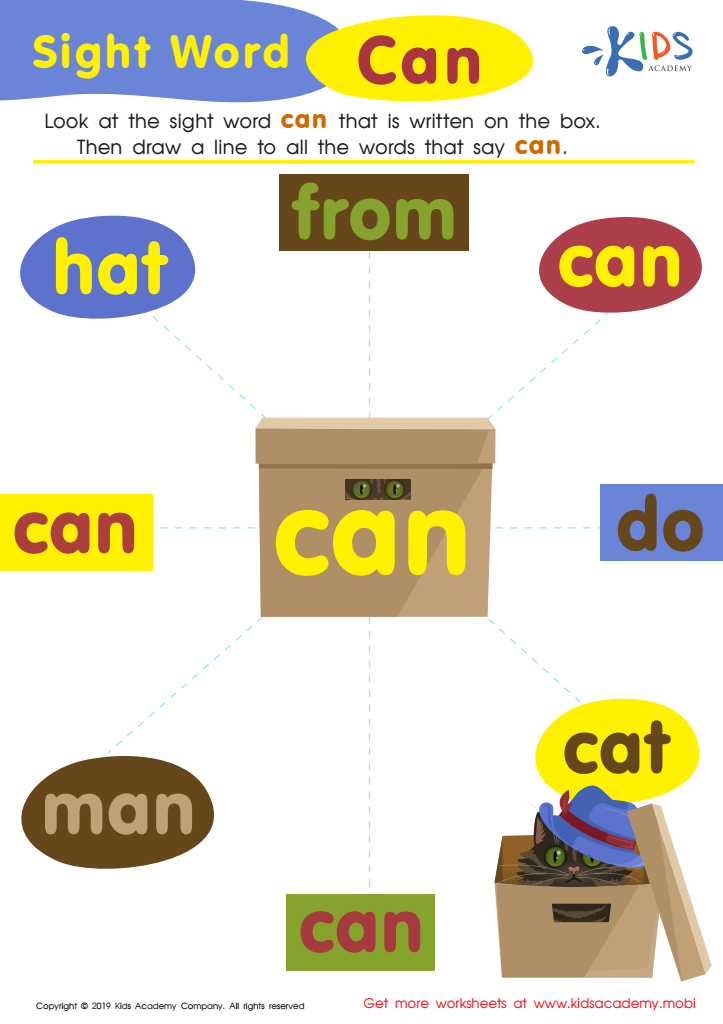
Sight Word Can Worksheet
Learning sight words is key for strong readers. Kids with large word bases find reading simpler, since they don't have to decode words they already know. This free worksheet uses the word 'can' to help kids improve their visual discrimination and refine motor skills, while providing pictures to help them along.
Sight Word Can Worksheet
Worksheet
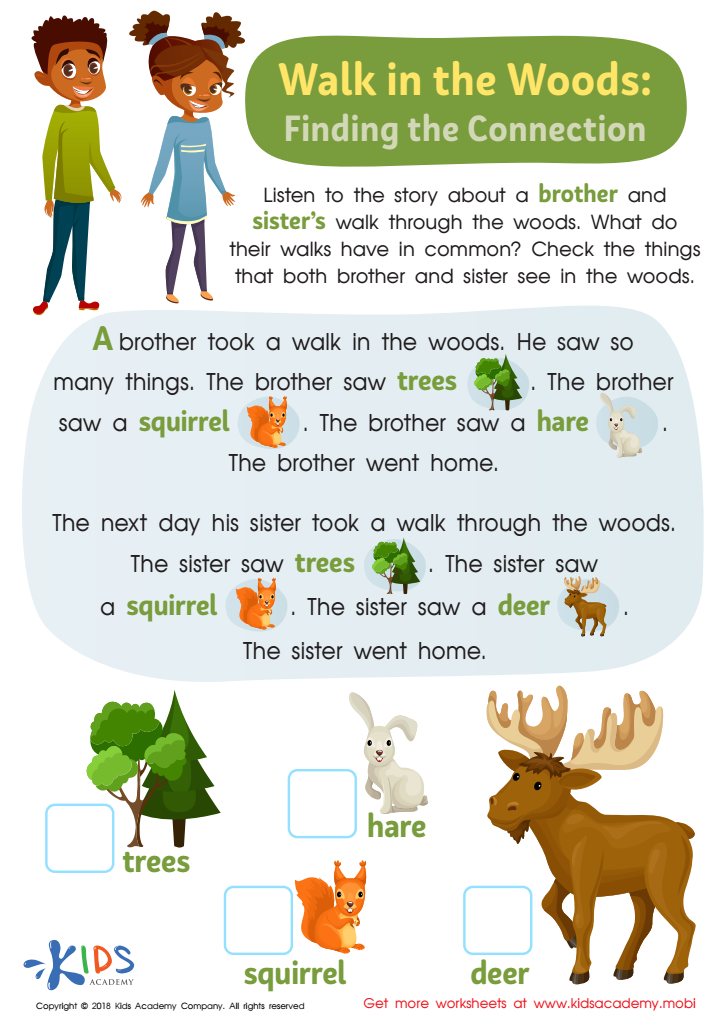
Walk In the Woods: Finding Connections Worksheet
Brother and sister took a walk in the woods to connect with nature and get some exercise. As they went, they noted different things like birds and plants, which they share in this story. Read it to your little ones, and help them check off the items the two saw. It's a great way to learn about nature and enjoy the outdoors.
Walk In the Woods: Finding Connections Worksheet
Worksheet
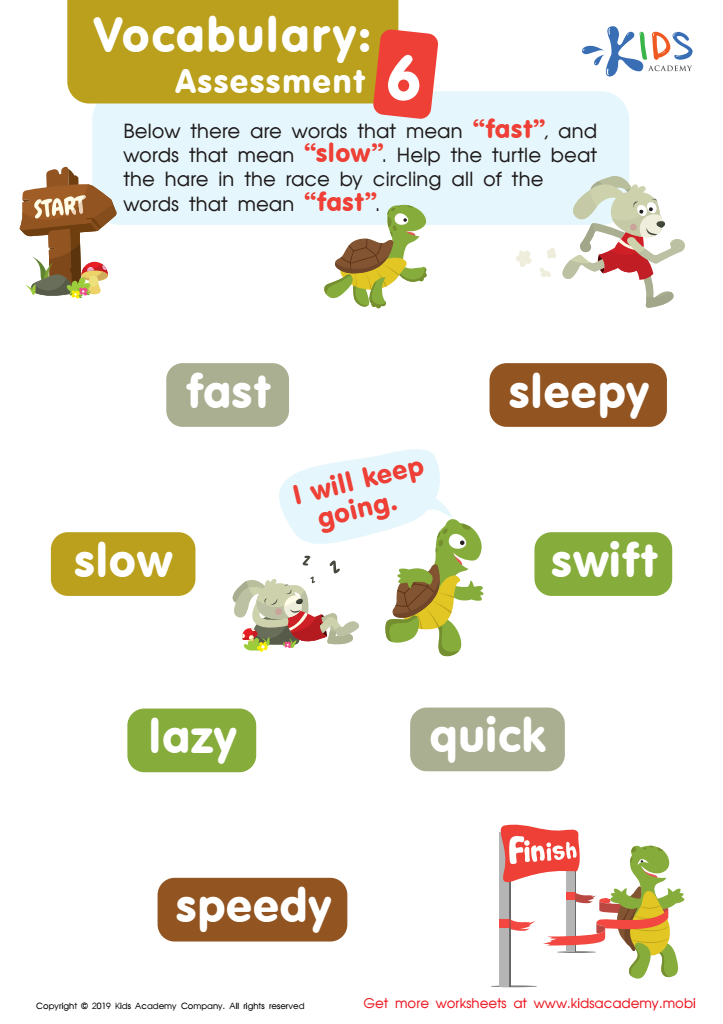
Vocabulary: Assessment 6 Worksheet
Read our turtle a tale of an old classic: the tortoise and the hare! Help him win by circling the fastest synonyms on this printable vocabulary worksheet. Each word is a synonym for either "slow" or "fast". Give our turtle a boost - circle the correct words and complete the page!
Vocabulary: Assessment 6 Worksheet
Worksheet
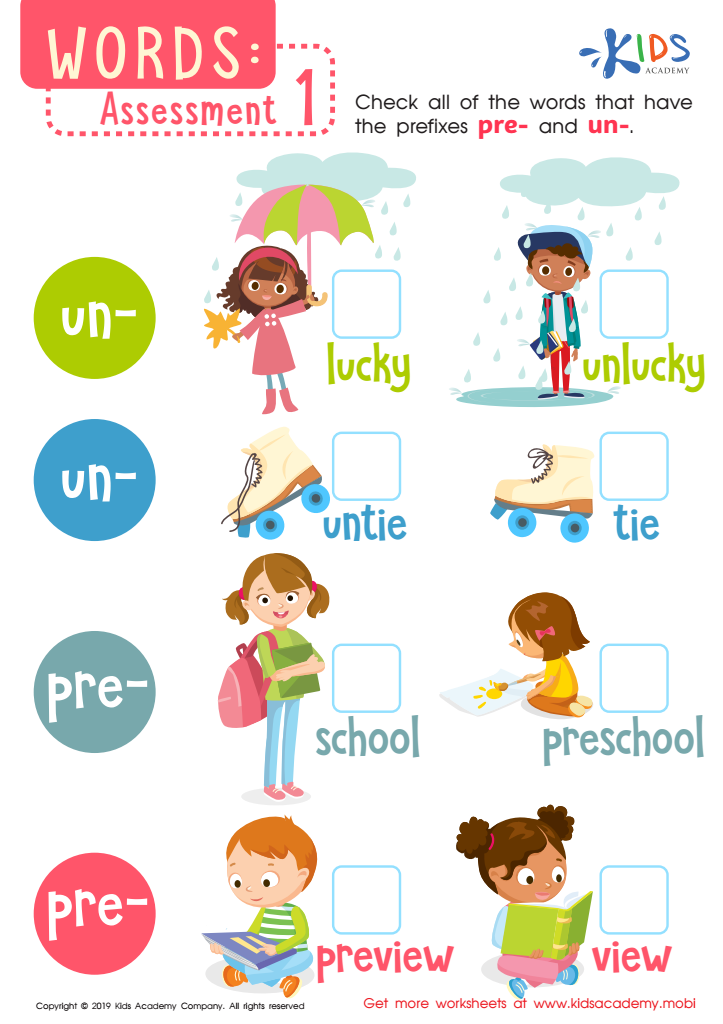
Words: Assessment 1 Worksheet
Help your child develop their knowledge of prefixes and suffixes with Kids Academy! This worksheet can test their understanding of pre- and un-. Have them view the illustrations and read the words to find the targeted prefix in each row. This is a great way to enhance their words and clarify meanings!
Words: Assessment 1 Worksheet
Worksheet
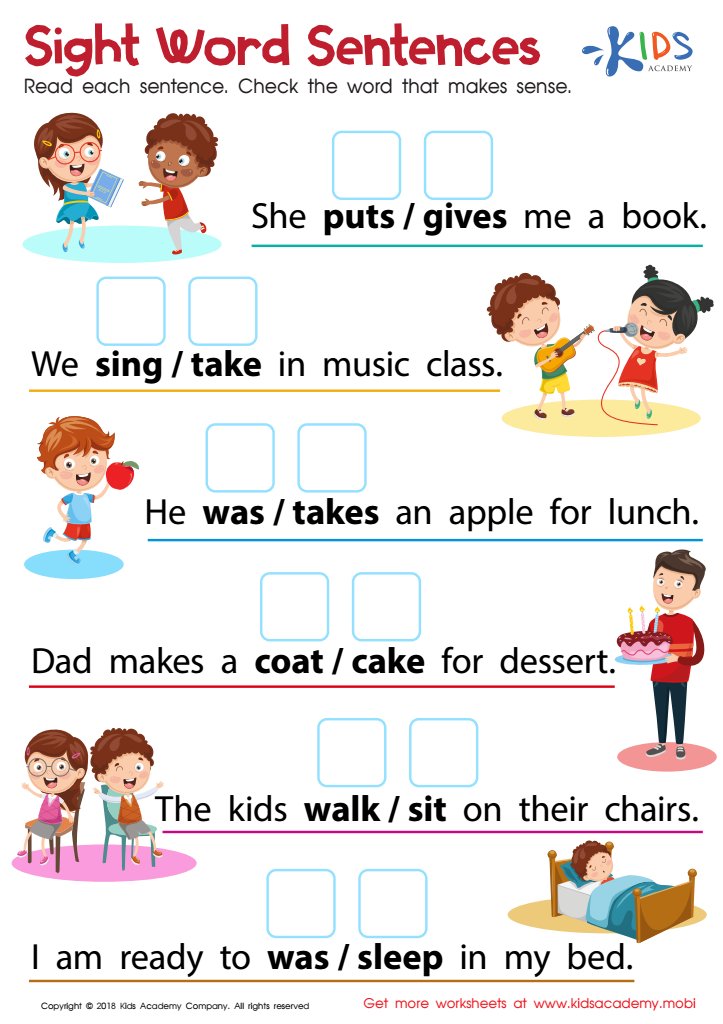
Sight Words Sentences Worksheet
It's important for kids to practice recognizing sight words in print. This PDF provides fun practice with sentences and engaging picture clues. As they work with sight words, they'll become more familiar and automatic. Help your kids build literacy skills!
Sight Words Sentences Worksheet
Worksheet
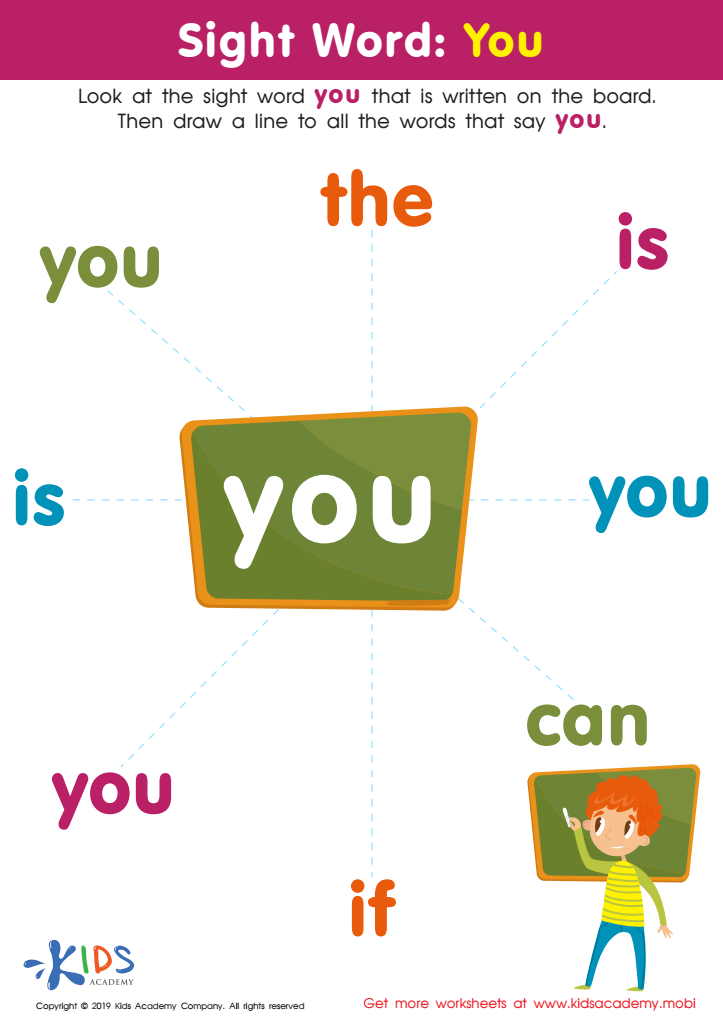
Sight Word You Worksheet
This free worksheet features the word 'you' and helps beginning readers practice visual-discriminatory skills. Using traceable lines and different colored words, it's an easy way to reinforce their identification of the word and build fluency.
Sight Word You Worksheet
Worksheet
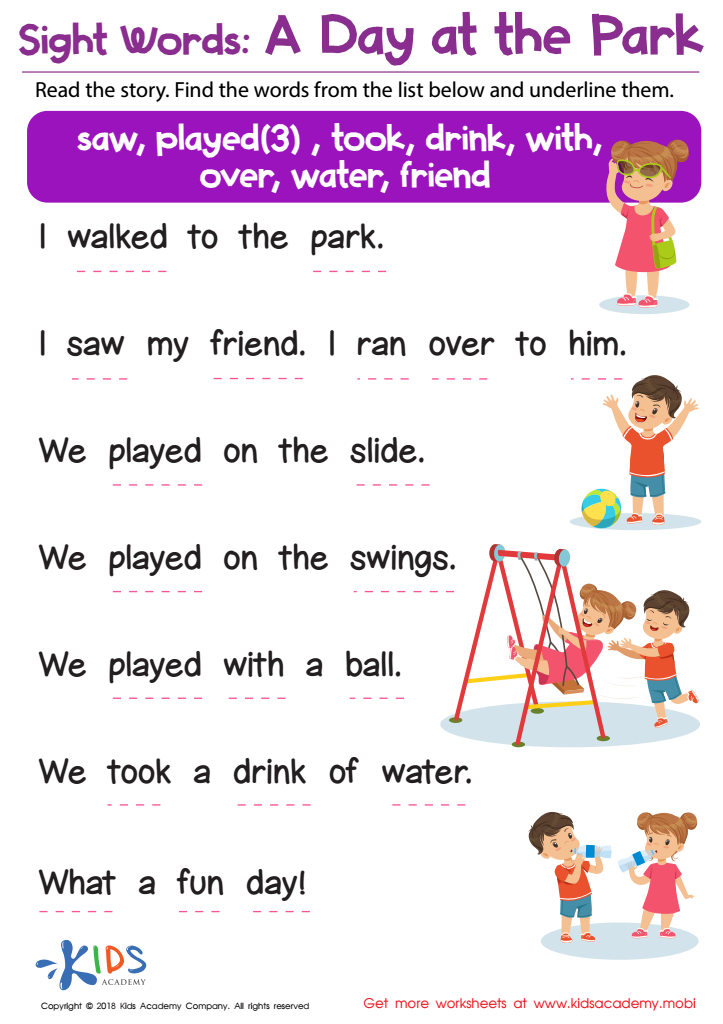
Sight Words: A Day at the Park Worksheet
This worksheet offers kids practice reading sight words in a story. With picture clues and repetitive wording, they'll work with words that can't be sounded out to reinforce their learning. This is an important step in the reading process that helps kids become more confident readers.
Sight Words: A Day at the Park Worksheet
Worksheet
Join Kids Academy for Free
Who is primarily going to use this learning content?



.jpg)




Understanding sentence construction and building vocabulary in early childhood (ages 3-6) is crucial for several reasons. First and foremost, these foundational skills are closely linked to a child's overall language development, which is essential for effective communication and expression. As children learn to construct sentences, they begin to express their thoughts and feelings more clearly, fostering confidence in their communication abilities.
Enhanced vocabulary plays a significant role in a child's cognitive development. A rich vocabulary allows children to explore more complex ideas and engage with various topics, nurturing their critical thinking skills. Additionally, children with a strong vocabulary are often better equipped to understand the content they encounter, be it in books or conversations, enriching their learning experience.
Moreover, early sentence construction and vocabulary development lay the groundwork for literacy. Children who can form sentences and express themselves tend to be more proficient readers and writers as they grow. In social settings, strong language skills also contribute to better peer relationships and conflict resolution.
By prioritizing sentence construction and vocabulary building, parents and teachers are investing in their children's educational success, emotional intelligence, and lifelong communication skills, all of which are vital for their individual growth and future opportunities.








