Answering questions Reading Worksheets for Ages 3-6
3 filtered results
-
From - To
Our Answering Questions Reading Worksheets for Ages 3-6 are designed to boost comprehension skills and inquisitive thinking in young learners. These engaging activities help children develop the ability to answer questions about stories, characters, and settings. With colorful illustrations and simple texts, our worksheets stimulate interest and curiosity, aiding early reading and analytical skills. Perfect for classroom and home use, these exercises also encourage communication and discussion, enhancing both verbal and cognitive abilities. Start your child's educational journey with our expert-crafted materials to establish a solid foundation in reading comprehension and critical thinking.
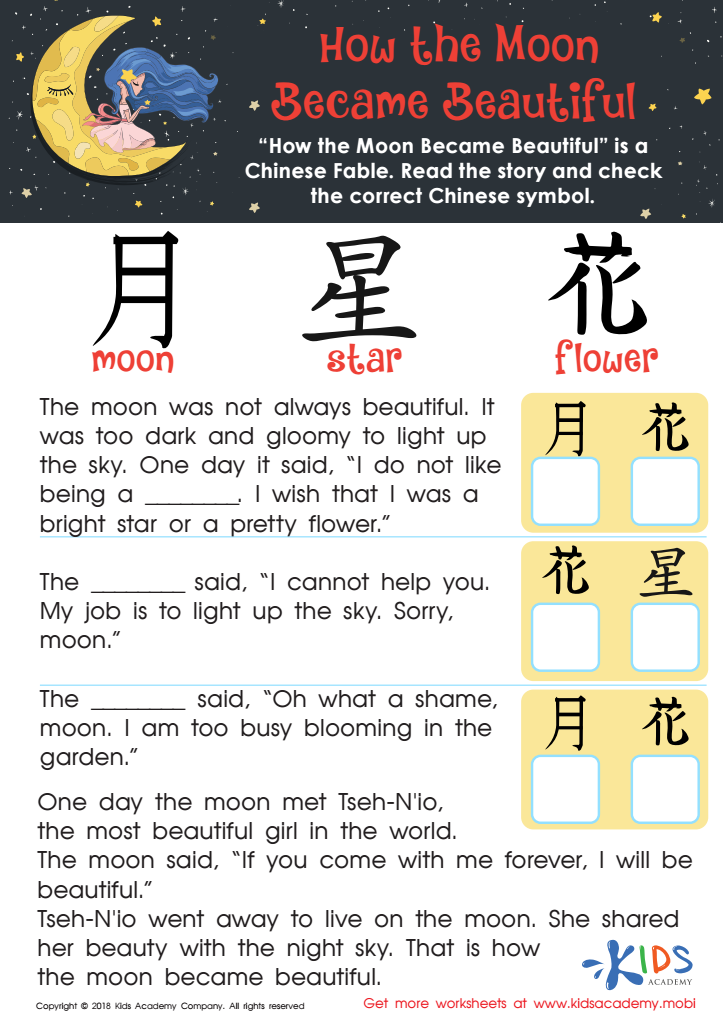
How the Moon Became Beautiful Worksheet
 Assign to My Students
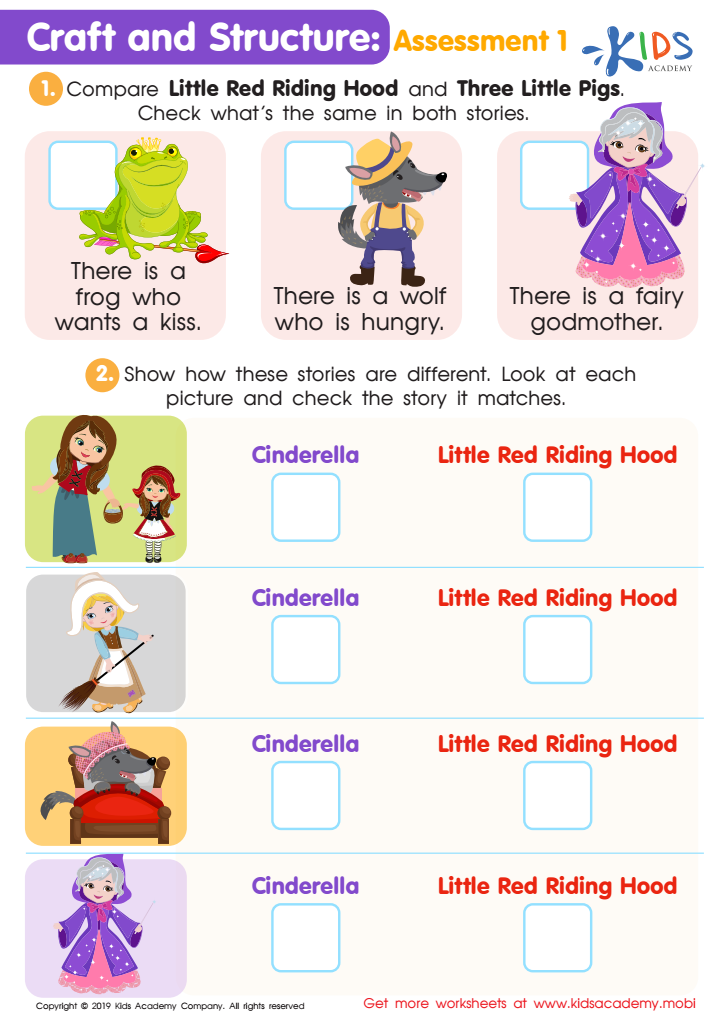
Craft and Structure: Assessment 1 Worksheet
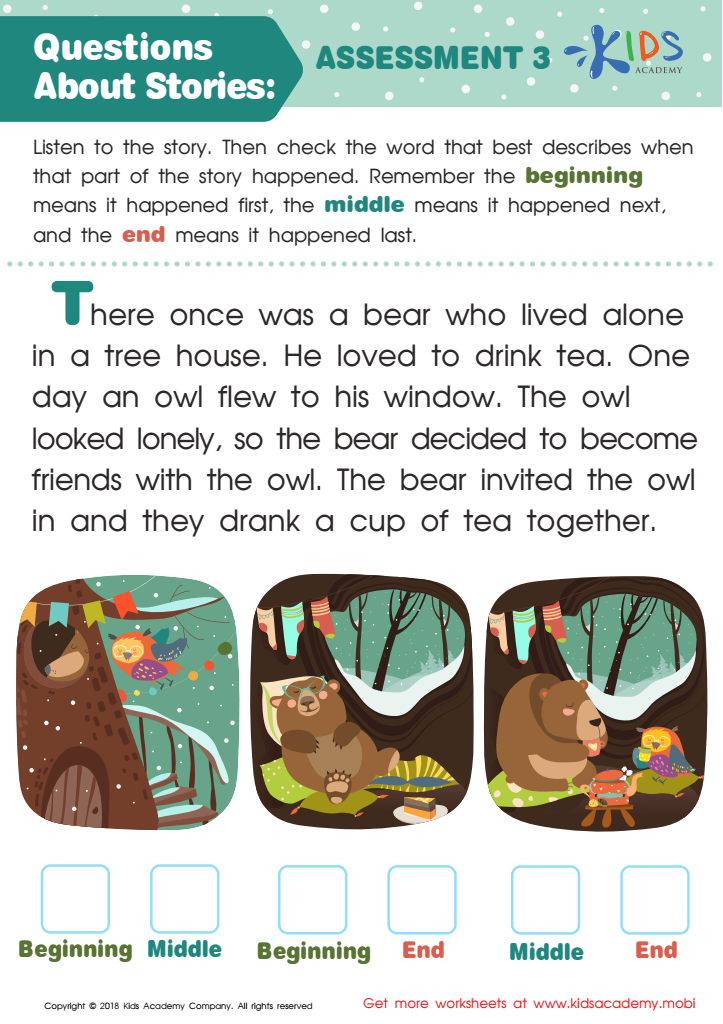
Questions About Stories: Assessment 3 Worksheet








Answering questions is a crucial aspect of reading development for children aged 3-6, and it's essential for parents and teachers to pay close attention to it. At this formative stage, children are just beginning to explore language and understand the world around them. Encouraging them to ask and answer questions about what they read helps to develop their comprehension skills.
When children engage in this process, they are not only practicing how to recall information from stories but also learning to think critically and make connections to their own experiences. This fosters a deeper understanding, rather than just surface-level memorization. Furthermore, asking questions nurtures curiosity and a love of learning. It turns reading into an interactive experience rather than a passive activity.
Parents and teachers can help by posing open-ended questions that stimulate thinking, such as "Why do you think the character did that?" or "What do you think will happen next?" This encourages children to express their thoughts and reason out answers, which is critical for cognitive development. As they articulate their responses, they're also enhancing their language skills, including vocabulary and sentence structure. With strong reading and comprehension skills established early on, children are better prepared for future academic success and a lifetime of learning.








