Categorization skills Reading Worksheets for Ages 3-6
5 filtered results
-
From - To
Enhance your child’s learning experience with our Categorization Skills Reading Worksheets, specifically designed for ages 3-6. These engaging worksheets help young learners develop essential skills in grouping and classifying items, promoting cognitive growth and vocabulary expansion. Using fun and colorful activities, children will sort pictures, identify similarities and differences, and practice critical thinking, all while enjoying the process. Our categorized exercises align with early literacy goals, making them perfect for preschool and kindergarten settings. Explore the world of categorization with your little ones and watch them gain confidence and mastery in these vital foundational skills. Get started today!
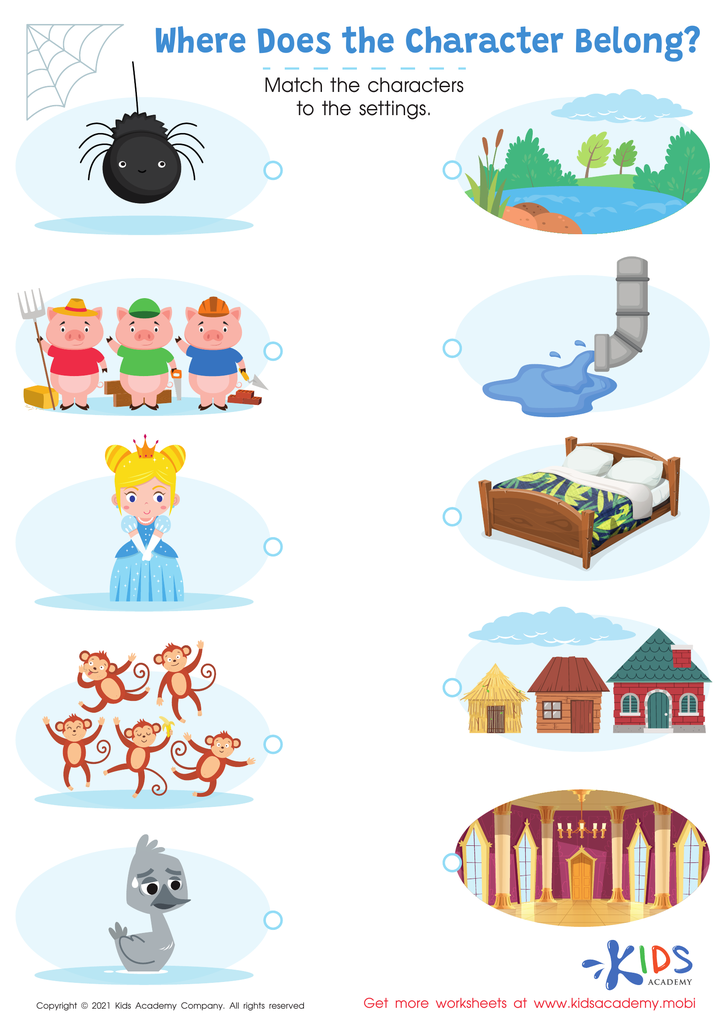
Where Does the Character Belong? Worksheet
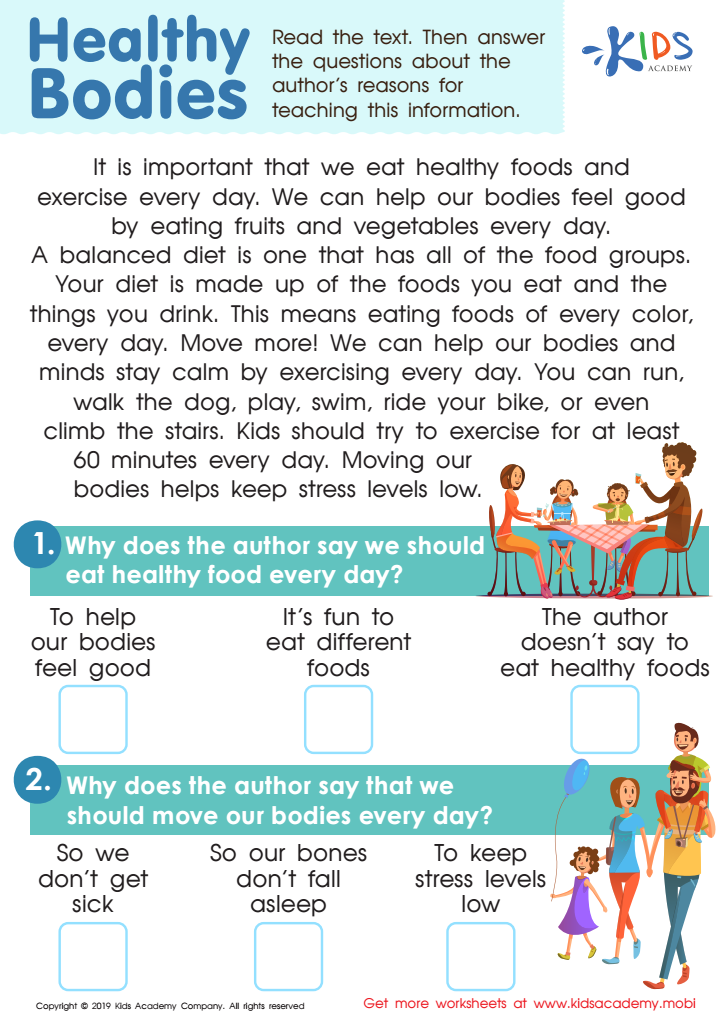
Healthy Bodies Worksheet
 Assign to My Students
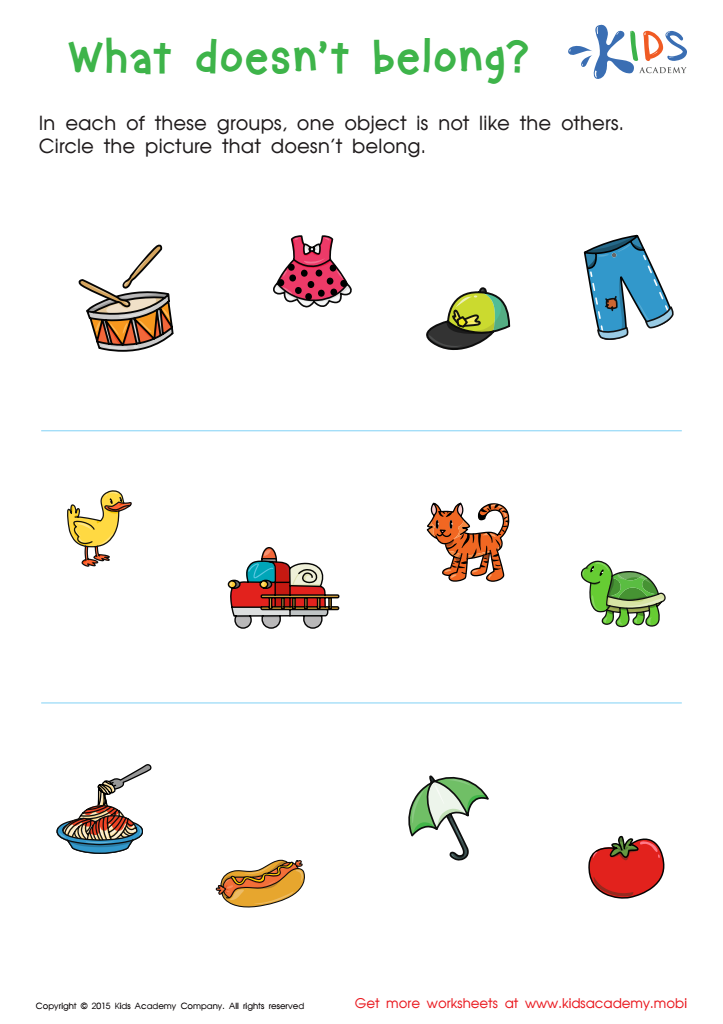
First Words: What Doesn't Belong Worksheet
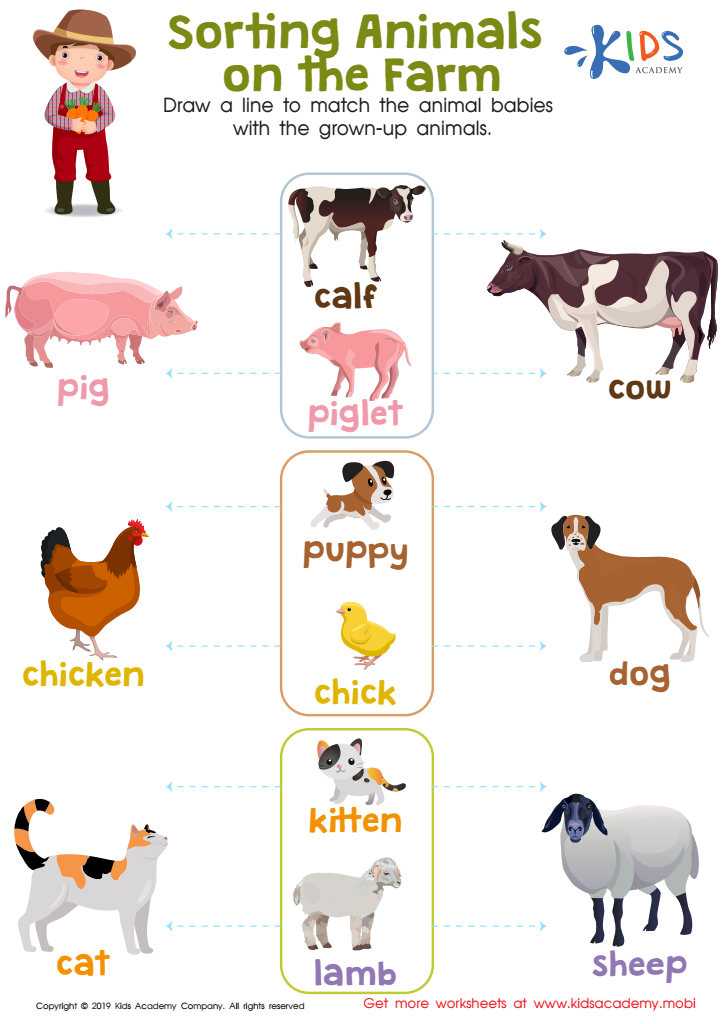
Sorting Animals on the Farm Worksheet
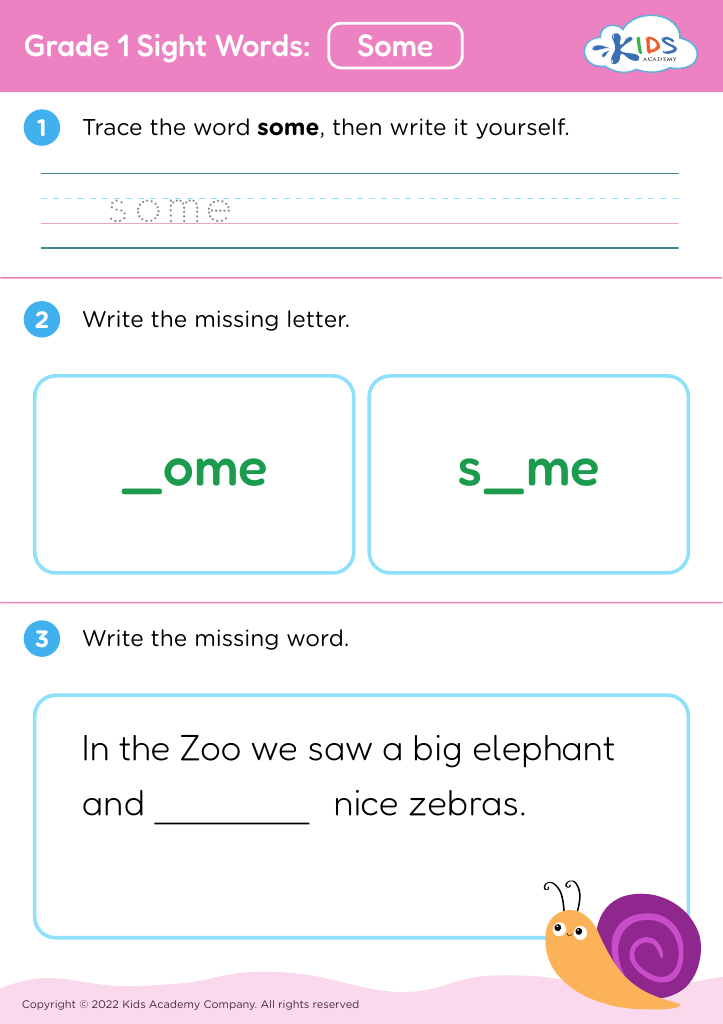







Categorization skills are crucial for early reading development in children aged 3-6. These skills help kids systematically group objects, ideas, and words, forming a foundation for language and literacy. When children successfully categorize, they improve their comprehension and recall abilities, making it easier to understand stories and concepts.
For parents and teachers, fostering categorization skills can lead to richer vocabulary and enhanced critical thinking abilities in children. Early exposure to categorization—whether it's by size, color, shape, or function—encourages analytical skills that are vital not just in reading but across all subjects. This practice also nurtures cognitive flexibility, allowing young learners to adapt their thinking based on new information.
Additionally, children who can categorize effectively are more likely to engage in conversations and express their thoughts confidently. This communication is essential in building social skills and emotional intelligence.
Furthermore, helping children recognize and organize information can bridge learning gaps and pave the way for future academic success. By promoting categorization through playful and engaging activities, teachers and parents can instill a love for learning and encourage independent thinking, ultimately preparing children for lifelong literacy and learning.








