Understanding directions Reading Worksheets for Ages 3-6
3 filtered results
-
From - To
Explore our "Understanding Directions Reading Worksheets" designed specifically for children ages 3 to 6. These engaging worksheets help young learners develop essential reading skills by practicing how to follow simple instructions. Each activity focuses on enhancing comprehension and critical thinking, reinforcing their ability to understand key phrases and action-based commands. With colorful images and interactive formats, children will stay engaged while they learn. Ideal for both classroom settings and home practice, these worksheets serve as a fun way to foster language development and boost confidence in understanding directions. Empower your child’s reading journey today with these valuable resources!
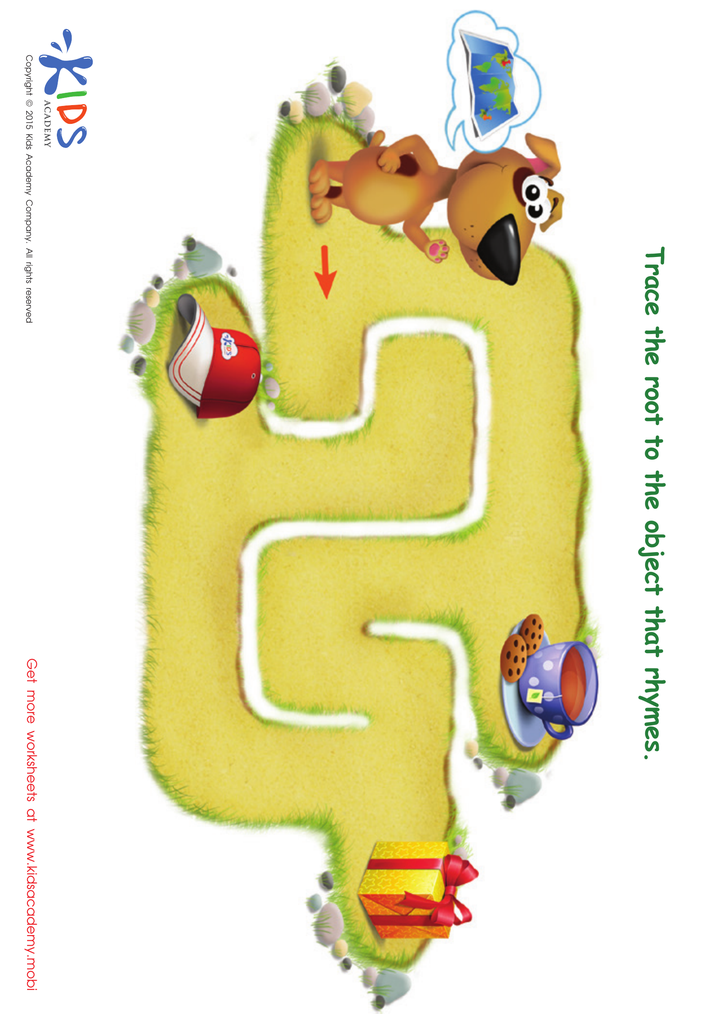
Map Rhyming Words Worksheet
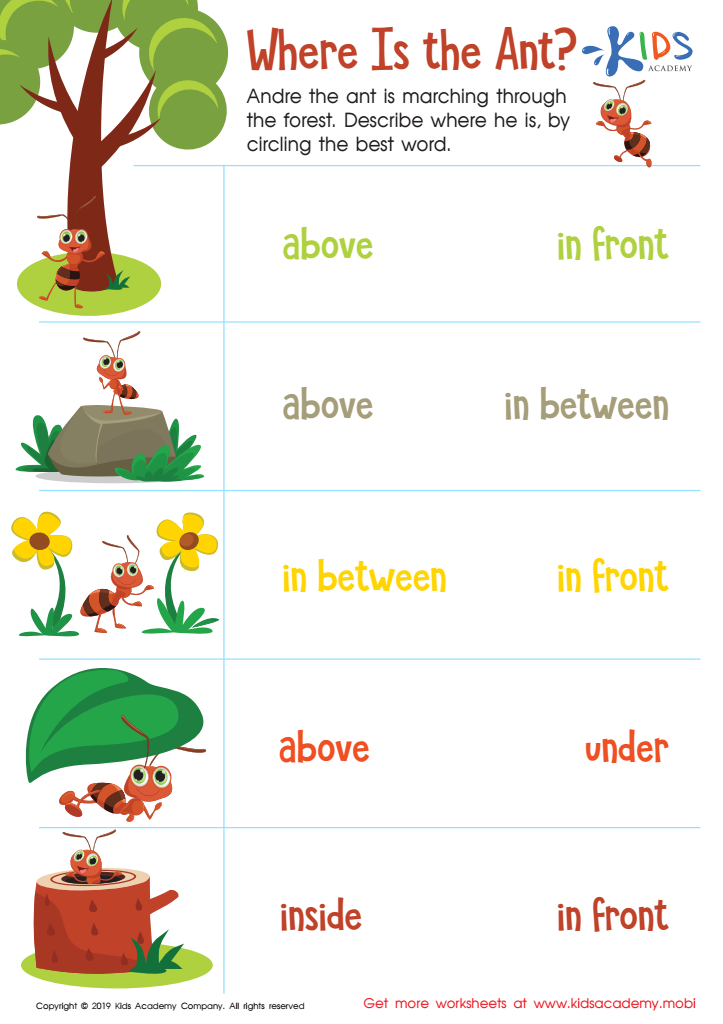
Where Is the Ant? Worksheet
 Assign to My Students
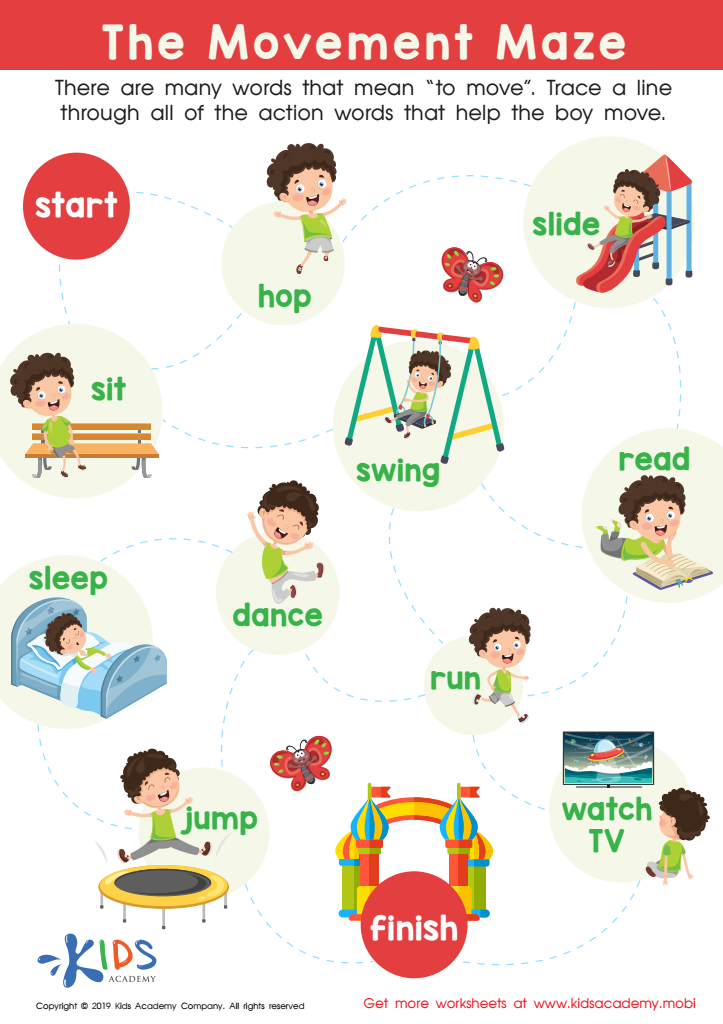
The Movement Maze Worksheet


.jpg)





Understanding directions is a crucial skill for children aged 3-6 as it serves as the foundation for effective communication and cognitive development. At this age, kids are developing language skills, and grasping the ability to comprehend and follow directions enhances their vocabulary and sentence formation.
Parents and teachers should prioritize this skill because it significantly impacts children’s learning experiences. When children can follow directions, they build confidence in their ability to understand both verbal and written instructions, making them more engaged during lessons and activities. This lays the groundwork for future academic success, as following directions is essential in various subjects, including math, science, and reading.
Additionally, following directions fosters independence and problem-solving abilities. As children learn to navigate tasks on their own, they develop critical thinking skills and resilience, setting positive behavioral patterns that will benefit them in school and life.
Moreover, understanding directions cultivates social awareness; children learn to listen to peers and adults, building respectful communication skills. Overall, investing time in helping young children grasp this skill prepares them, not only academically but also socially, for future challenges they will encounter in their educational journeys.








