Vocabulary Building Reading Worksheets for Ages 3-6
16 filtered results
-
From - To
Enhance your child's language skills with our engaging Vocabulary Building Reading Worksheets designed specifically for ages 3-6! These worksheets provide a fun and interactive way for young learners to expand their vocabulary comprehension. Featuring colorful illustrations and age-appropriate activities, children can explore new words through matching exercises, fill-in-the-blank challenges, and picture labeling. Our resources promote language development while fostering cognitive growth and creativity. Perfect for homeschooling or classroom settings, these worksheets will keep your little ones motivated and excited about learning. Boost your child's confidence and reading skills today with our easy-to-use, printable vocabulary building worksheets!
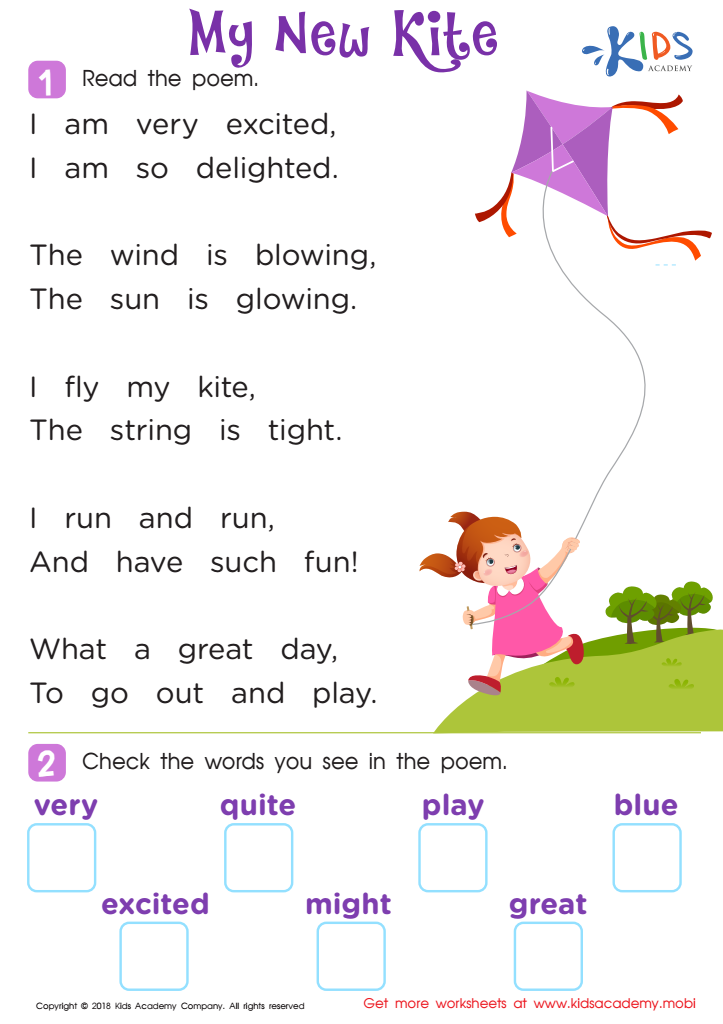
Poem: My New Kite Worksheet
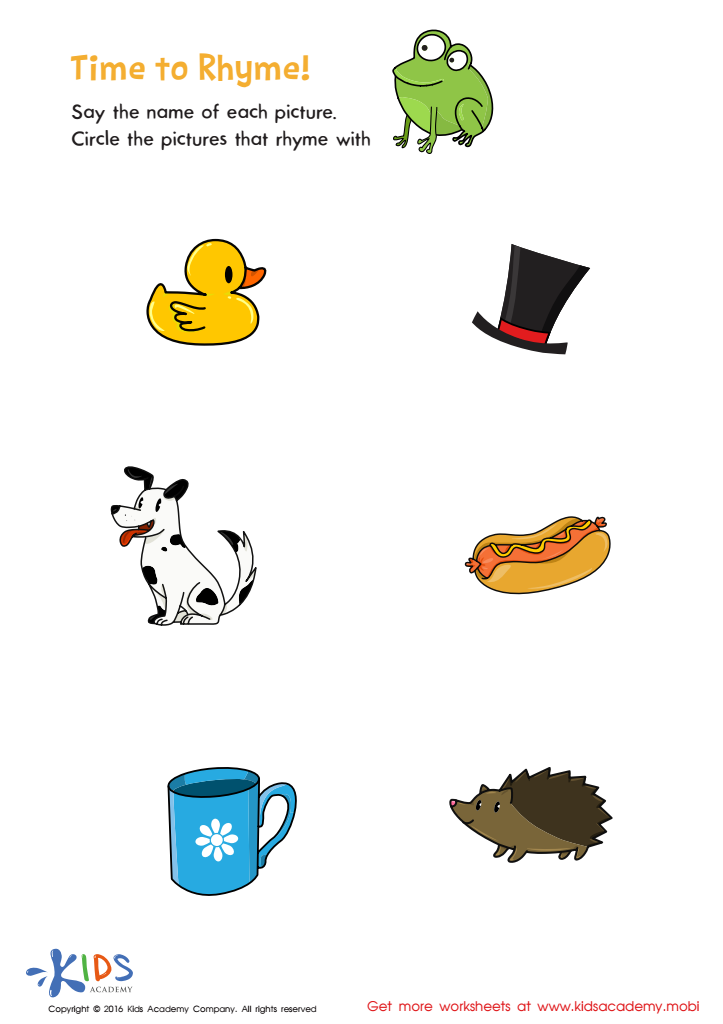
Rhyming Worksheet: Time to Rhyme Rhyming Worksheet
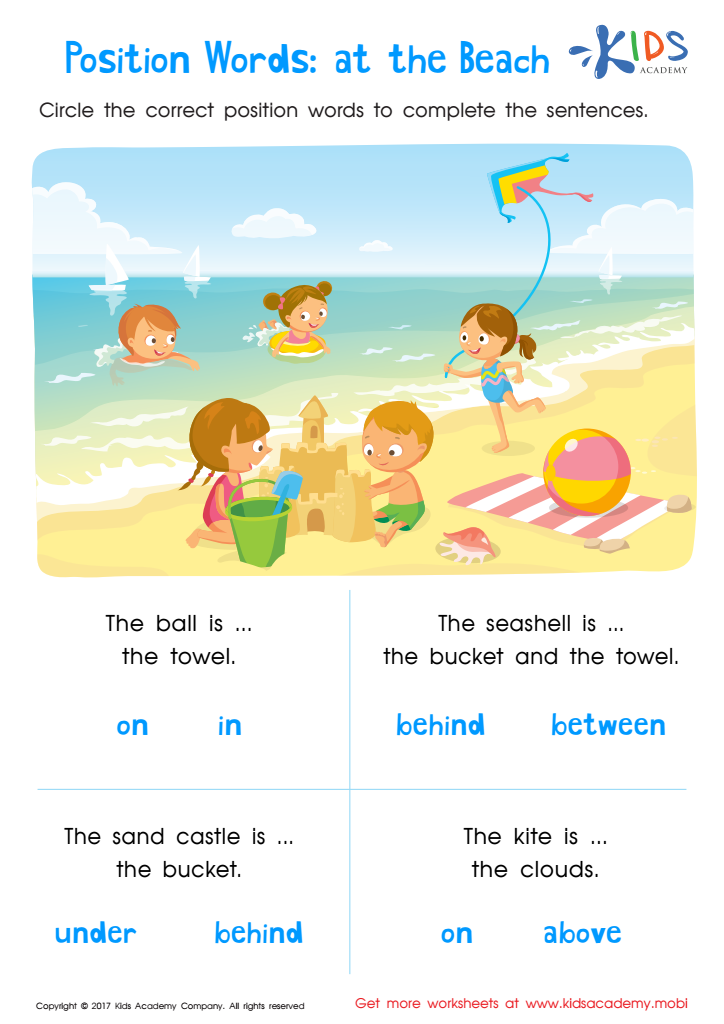
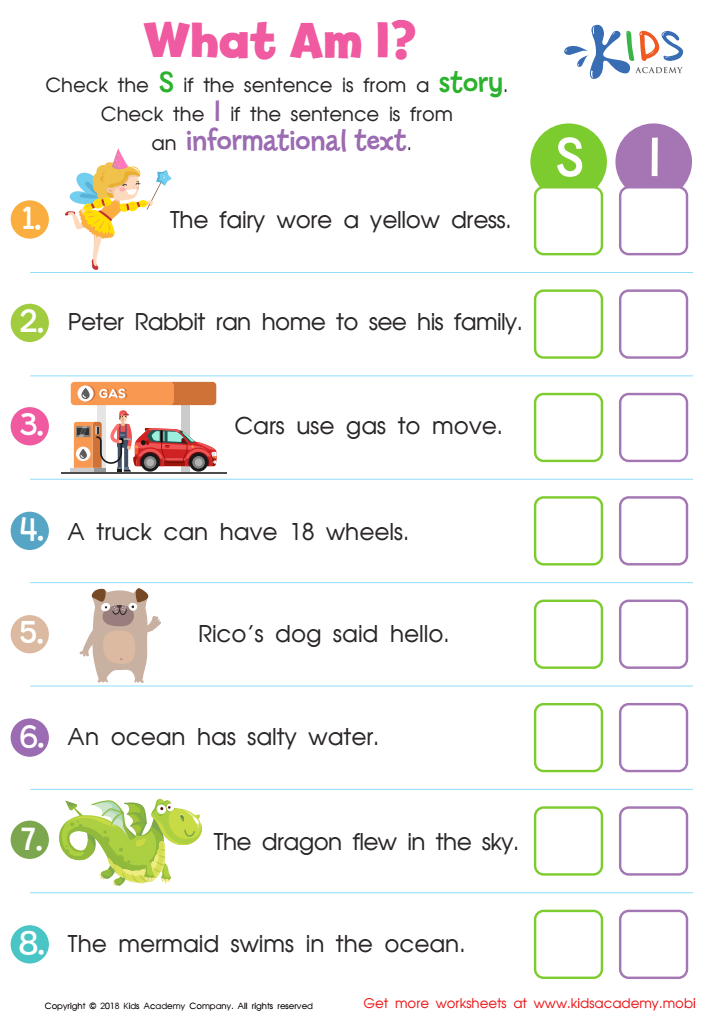
What Am I? Worksheet
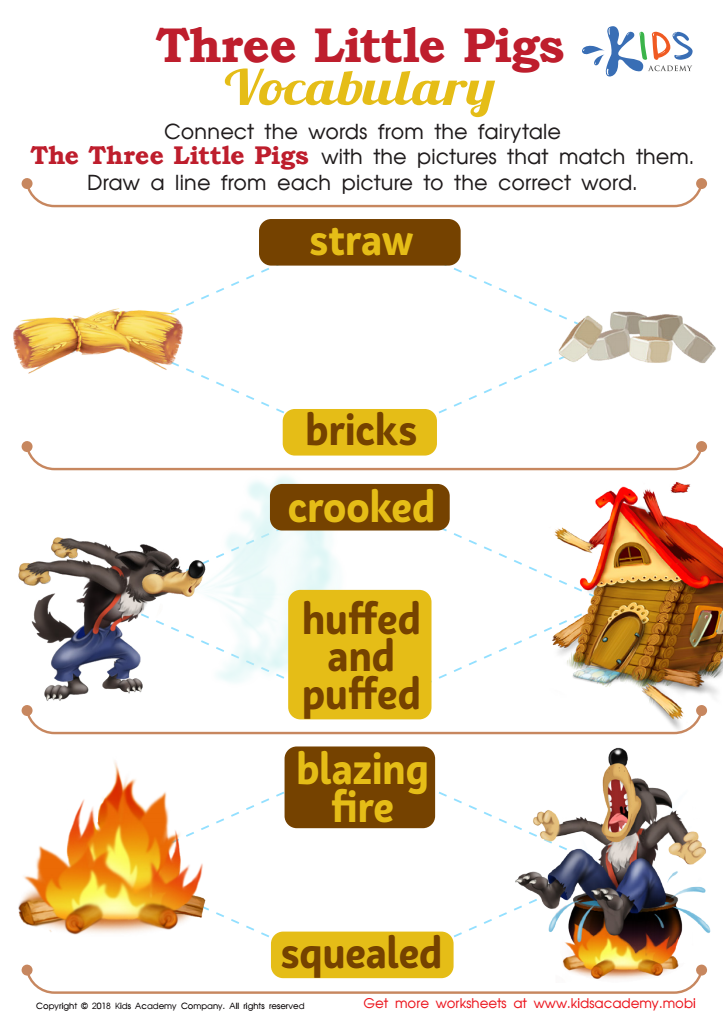
Three Little Pigs Vocabulary Worksheet
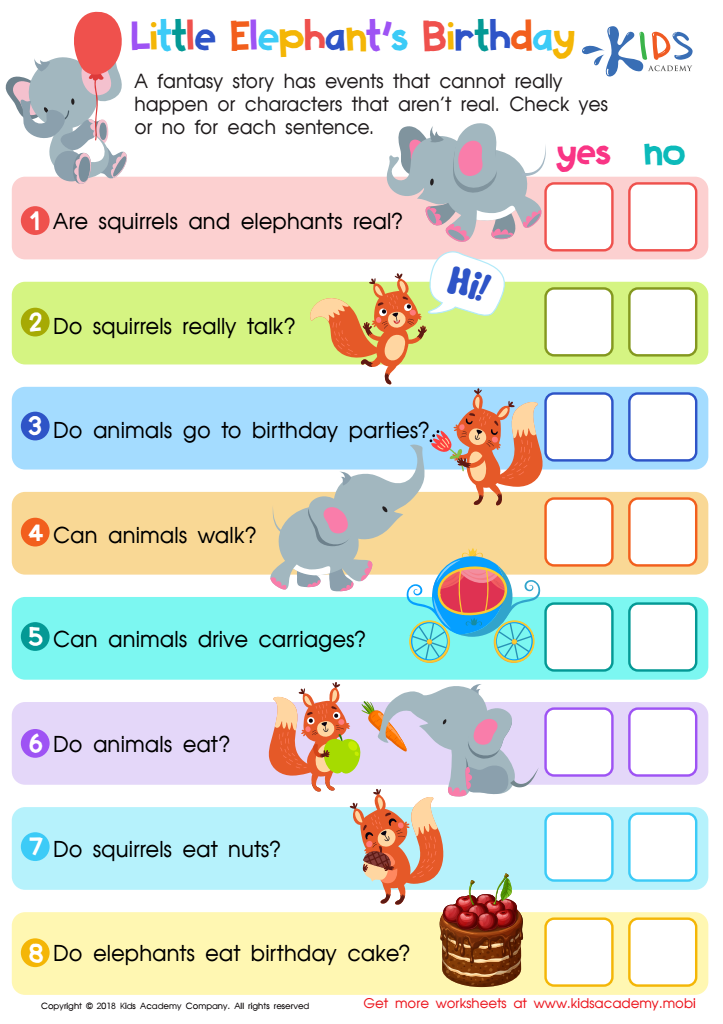
Little Elephant's Birthday Worksheet
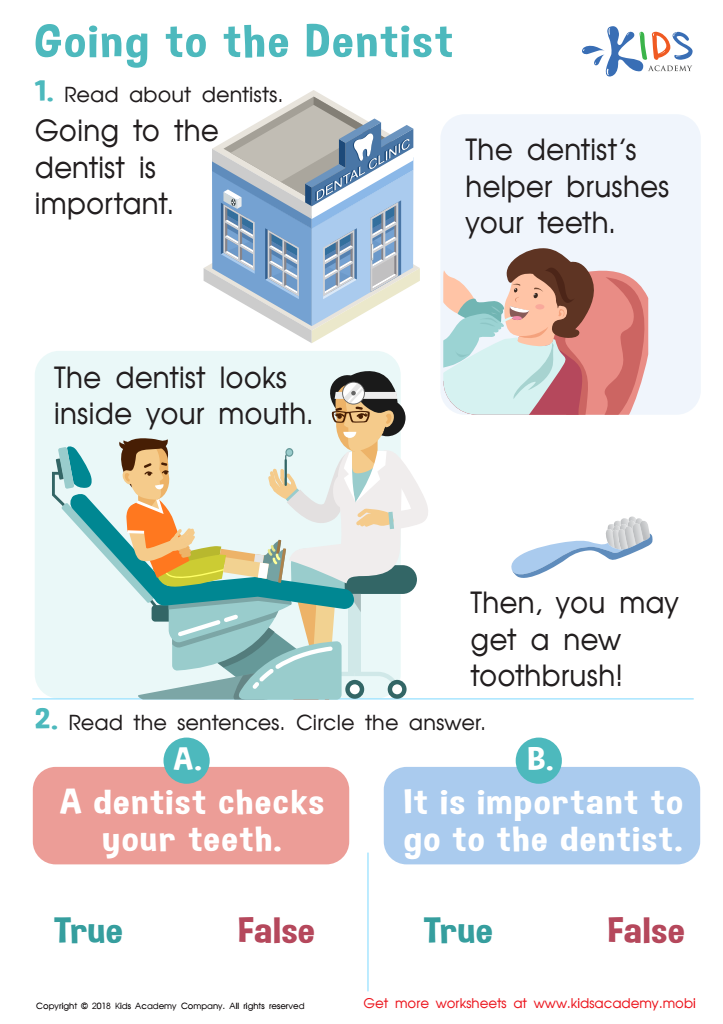
Going to the Dentist Part 2 Worksheet
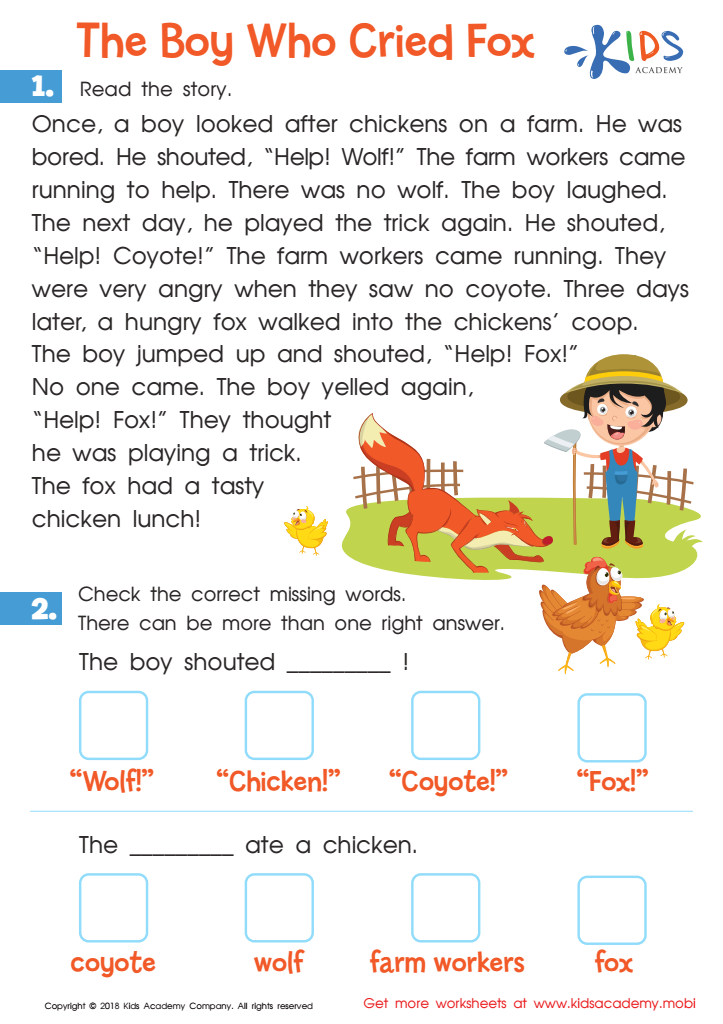
The Boy Who Cried Fox Worksheet
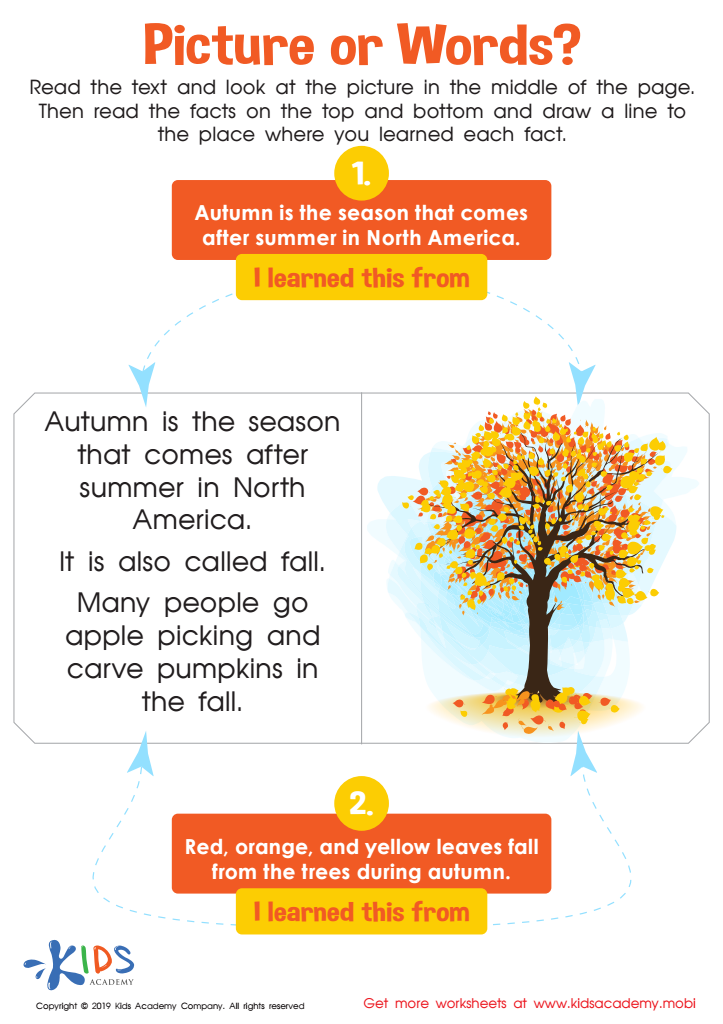
Picture Words Worksheet
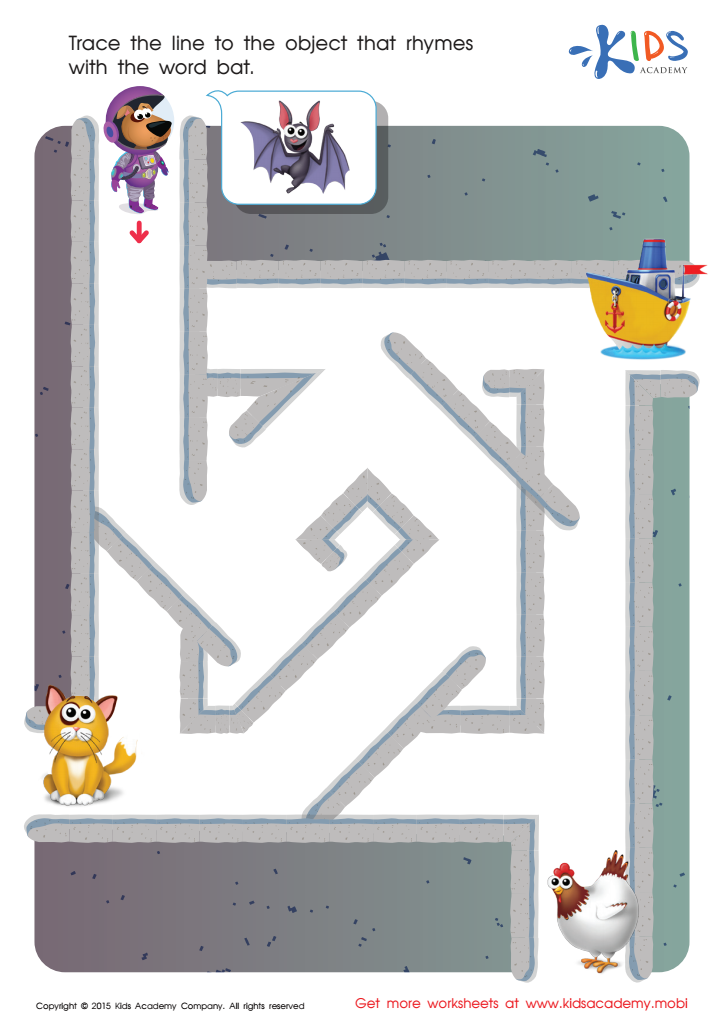
Bat Rhyming Words Worksheet
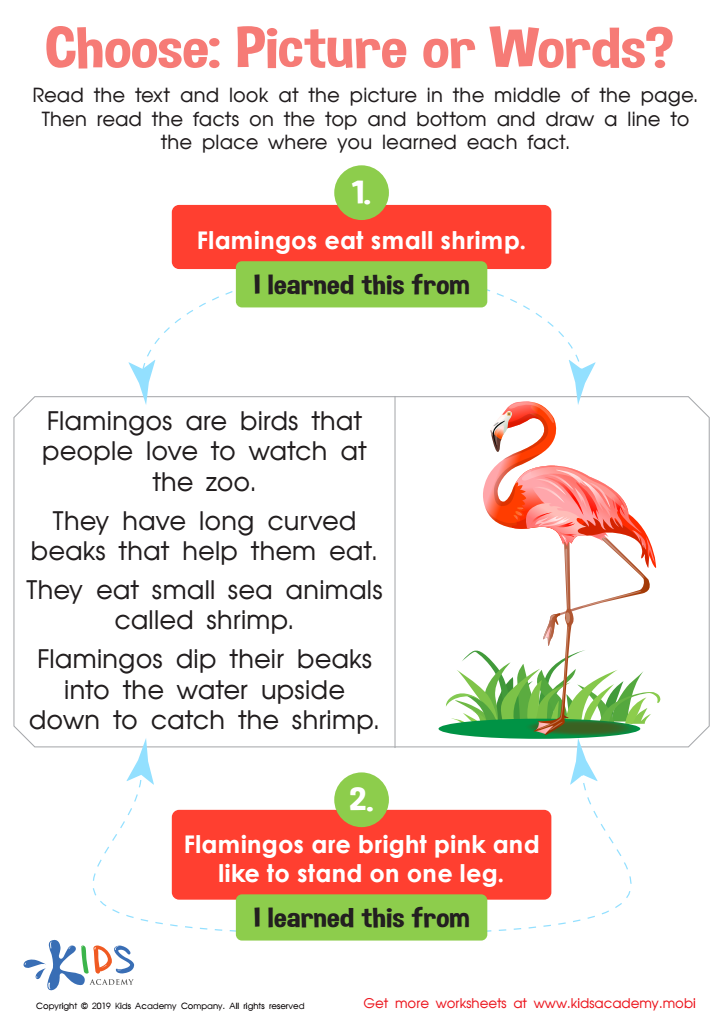
Choose Picture Words Worksheet
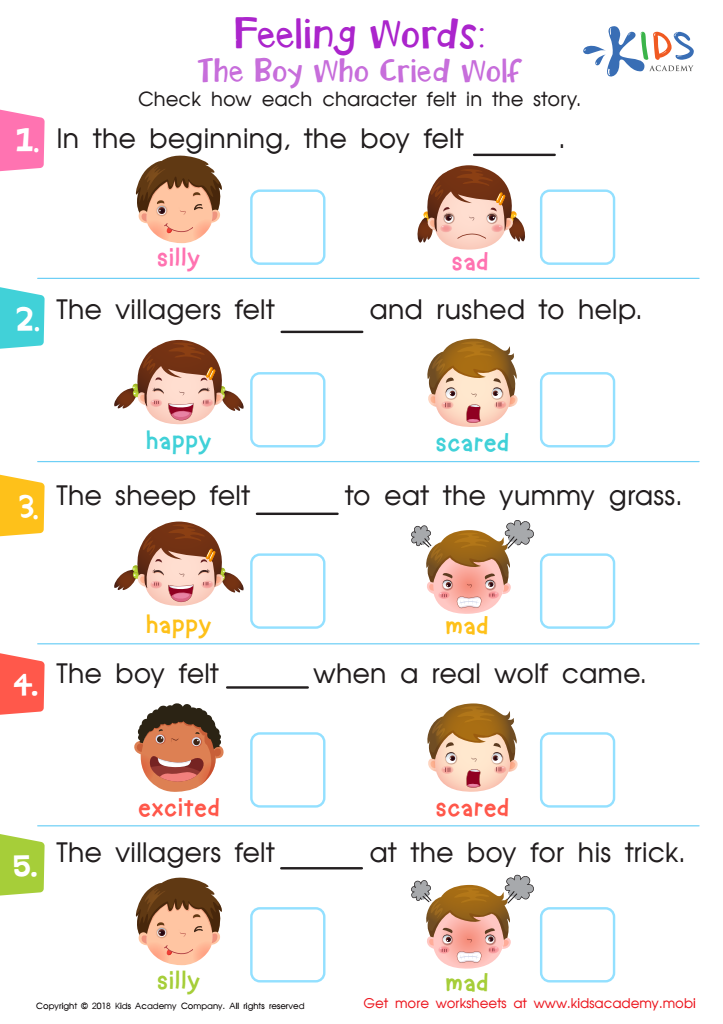
Feeling Words: The Boy Who Cried Wolf Worksheet
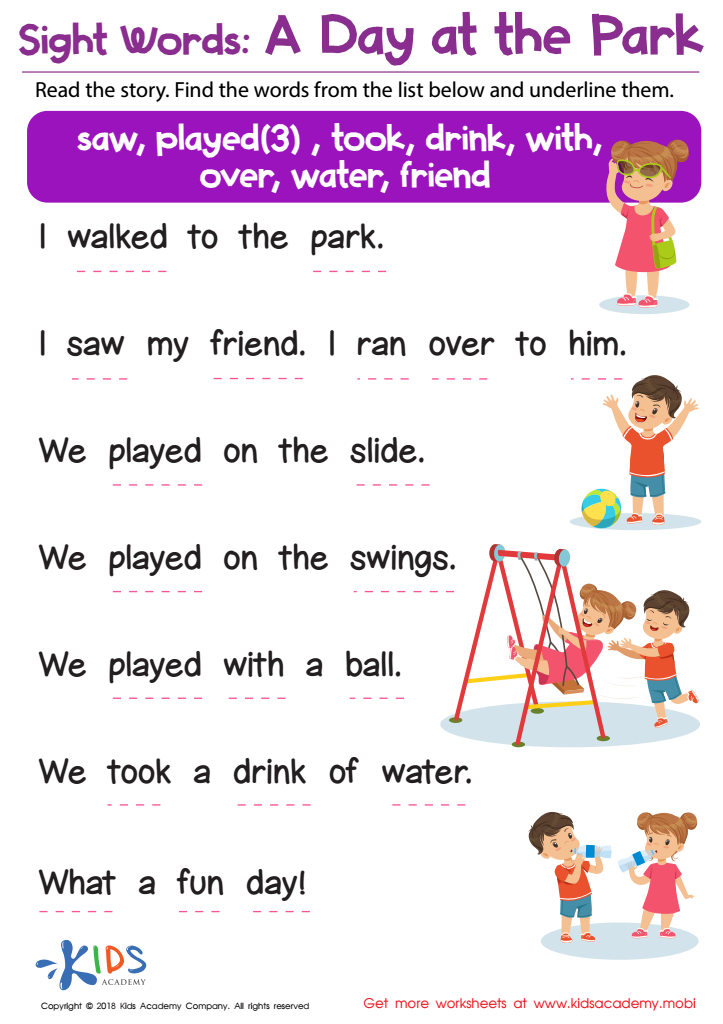
Sight Words: A Day at the Park Worksheet
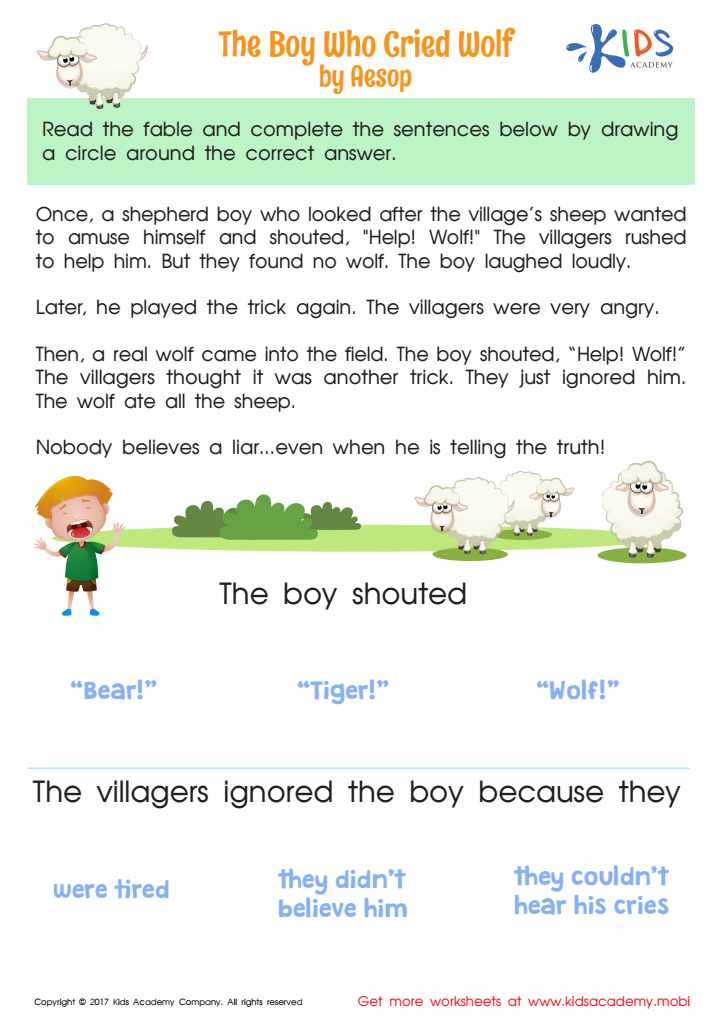
The Boy Who Cried Wolf Worksheet
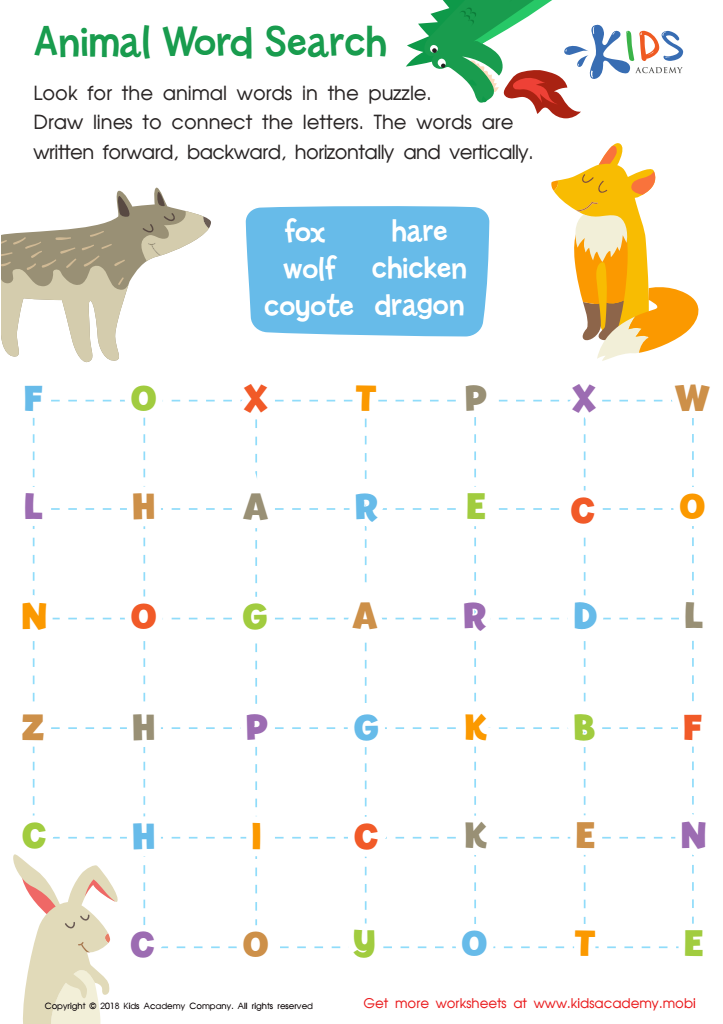
Animal Word Search Worksheet
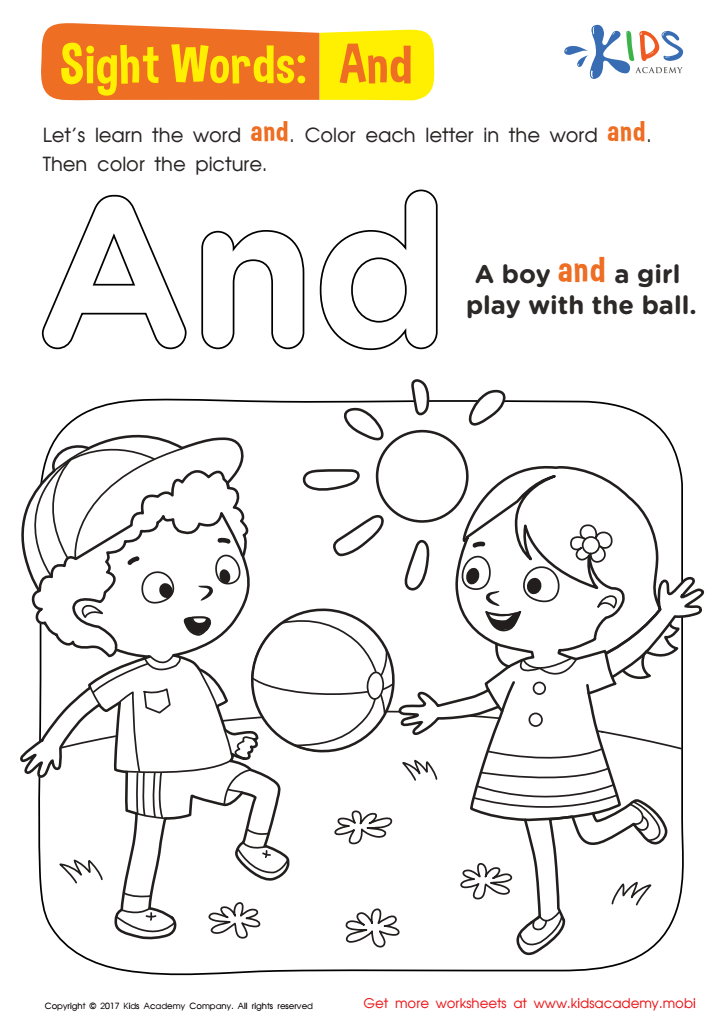
And Worksheet Sight Words Worksheet
 Assign to My Students








Vocabulary building is crucial for children aged 3-6, as it lays the foundation for effective communication and literacy skills. At this young age, children's brains are like sponges, eagerly absorbing language through interactions, stories, and play. A rich vocabulary not only enhances their ability to express thoughts and feelings but also boosts comprehension skills, making it easier for them to understand what they read later on.
Parents and teachers play a pivotal role in this developmental stage. Engaging children in vocabulary-building activities—such as reading aloud, asking open-ended questions, and encouraging imaginative play—can enrich their language use and stimulate cognitive growth. This process enhances phonemic awareness, which is crucial for learning to read and write.
Additionally, a strong vocabulary supports future academic success. As children encounter more complex texts in school, having a robust vocabulary helps them navigate these materials with greater ease. Furthermore, children with a well-developed vocabulary tend to have stronger self-esteem and social skills, as they can articulate their ideas and emotions effectively. Therefore, investing time in vocabulary building at an early age is essential for parents and teachers who want to foster lifelong learners, promote literacy development, and empower children to communicate confidently.








