
Word association skills Reading Worksheets for Ages 3-6
3 filtered results
Difficulty Level
Grade
Age
-
From - To
Subject
Activity
Standards
Enhance your child's early literacy with our engaging Word Association Skills Reading Worksheets designed for ages 3-6. These interactive resources foster vocabulary growth and comprehension by encouraging young learners to make connections between words and their meanings. Each worksheet features fun themes and colorful illustrations, making learning enjoyable and effective. As children engage in word association activities, they develop critical thinking skills and strengthen their cognitive abilities. Perfect for parents and educators, these worksheets provide an excellent way to support your child's reading journey. Explore our collection today and help your little ones build a solid foundation for lifelong learning!
Favorites
With answer key
Interactive
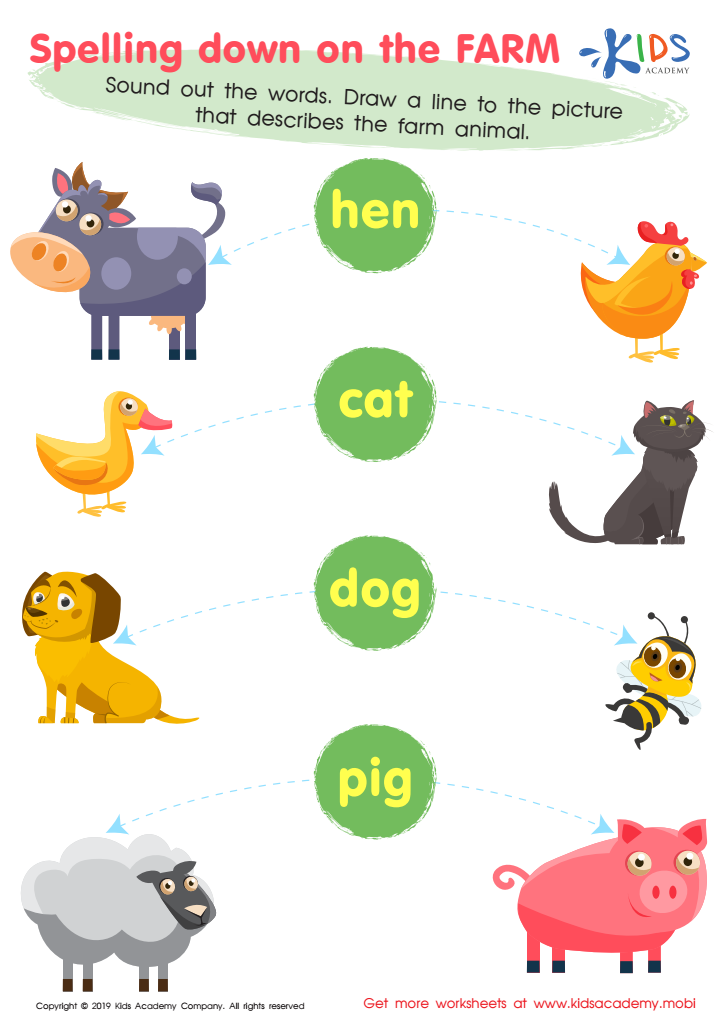
Spelling Down on the Farm Worksheet
Want to help your kids nail their spelling? Introduce them to this farm animal worksheet! Get them to look at the animals in the tracing sheet, name them and then sound out the words. Have them draw a line to the picture that describes it. You'll be surprised at how quickly their skills improve.
 Assign to My Students
Spelling Down on the Farm Worksheet
Worksheet
Join Kids Academy for Free
Who is primarily going to use this learning content?







Word association skills are critical for young children's reading development and understanding. For children ages 3-6, these skills lay the foundation for language acquisition, vocabulary building, and comprehension. Engaging in word association activities helps stimulate cognitive connections between words and the concepts they represent, making language more relatable and meaningful.
When children learn to associate words with images, sounds, and meanings, they enhance their phonemic awareness, which is essential for decoding words as they begin reading. This skill not only improves their reading fluency but also boosts their confidence as they encounter new texts, alleviating frustration associated with reading challenges.
Furthermore, active word association activities encourage social interaction during play and learning, enriching communication skills and nurturing a love for literacy. By fostering a supportive environment where children can explore and experiment with language, parents and teachers contribute to their overall cognitive and emotional development.
Ultimately, prioritizing word association skills in early education enriches children's learning experiences, encourages critical thinking, and sets the stage for future academic success. By caring about these skills, parents and teachers are investing in children's long-term literacy, enhancing their ability to navigate the world around them effectively.








