
Contextual understanding Reading Comprehension Worksheets for Ages 3-6
3 filtered results
Difficulty Level
Grade
Age
-
From - To
Subject
Activity
Standards
Unlock your child's potential with our Contextual Understanding Reading Comprehension Worksheets, specially designed for ages 3-6. These engaging resources help young learners develop essential skills by connecting words to their meanings through relatable contexts. Our worksheets encompass a variety of fun activities, including visually stimulating stories and interactive exercises that enhance comprehension and vocabulary. By exploring familiar scenarios, children will not only enjoy reading but also gain confidence in their understanding. Foster a love for learning with our thoughtfully crafted materials, creating a solid foundation for future literacy success. Start their reading adventure today with our enriching worksheets!
Favorites
With answer key
Interactive
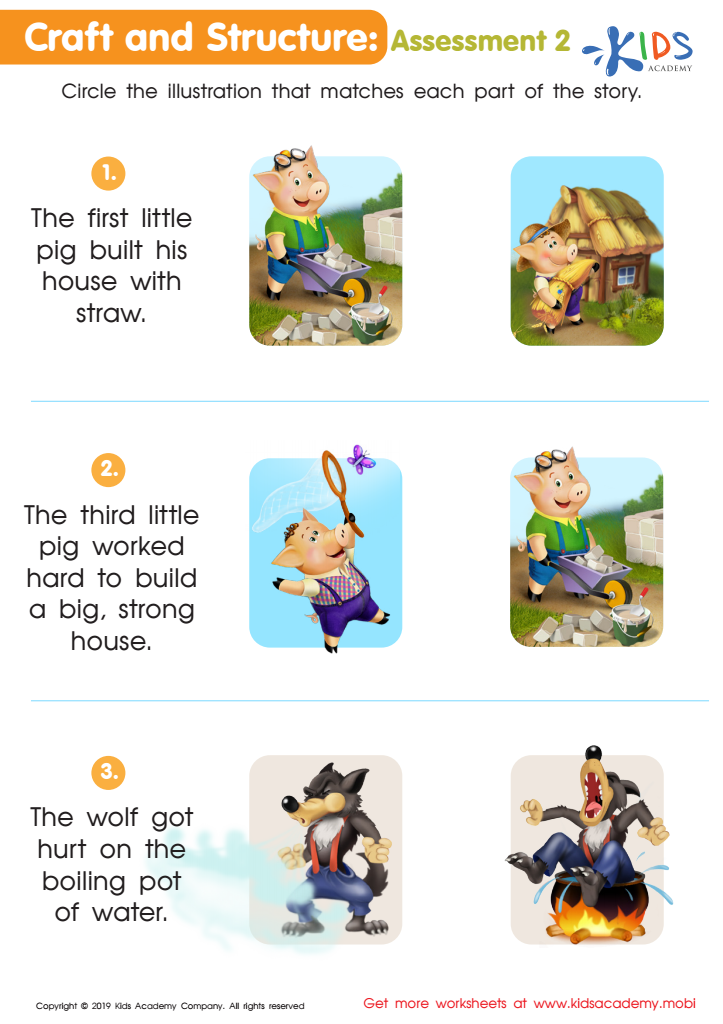
Craft and Structure: Assessment 2 Worksheet 2
This fun printout with colorful illustrations will assess how much your kids pay attention to story time. Go through the pictures and help them circle the ones that match each part of the story. Stimulate their brains and have fun in the process!
 Assign to My Students
Craft and Structure: Assessment 2 Worksheet 2
Worksheet
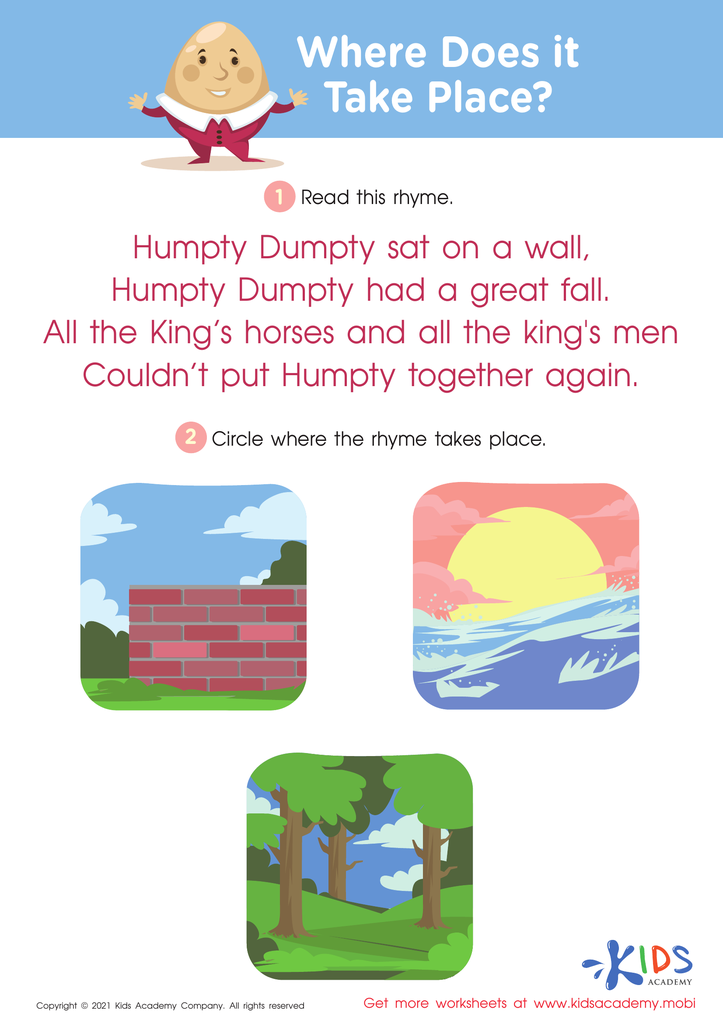
Where Does It Take Place? Worksheet
Original:
The number of children who are enrolled in the school has increased by 10% from the previous year.
Enrollment in the school has increased 10% from last year, with more children attending.
Where Does It Take Place? Worksheet
Worksheet
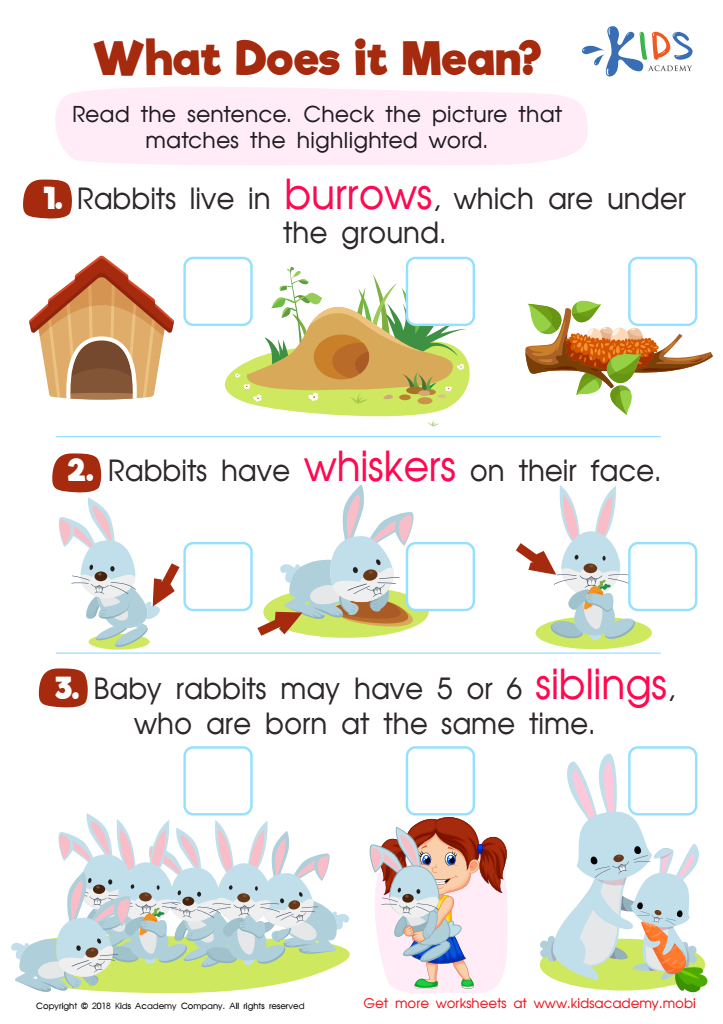
What Does It Mean? Worksheet
Teach your child to use context clues with this engaging Kids Academy worksheet. Read the sentences and find the pink-highlighted word. Use the other words in the sentence to figure out the meaning, then check the box next to the picture that represents it.
What Does It Mean? Worksheet
Worksheet
Join Kids Academy for Free
Who is primarily going to use this learning content?








Parents and teachers should prioritize contextual understanding in reading comprehension for children ages 3-6 because it lays the foundation for successful literacy development. Contextual understanding enables young learners to decode not just words, but meanings and relationships within texts. This skill is vital for encouraging critical thinking, vocabulary acquisition, and overall language development.
At this age, children actively engage with stories and information, making them more receptive to learning when context is emphasized. Recognizing the setting, characters, and plot helps them make connections between the text and their own experiences, enhancing engagement and fostering a love for reading. Activities that stimulate contextual awareness—such as asking open-ended questions, discussing illustrations, or relating stories to real-life experiences—are beneficial.
Moreover, early comprehension skills are correlated with long-term academic performance. Developing these skills promotes better emotional and social understanding, as children learn to interpret feelings and situations in the text. Ultimately, nurturing contextual understanding in young learners not only supports literacy but also equips them with essential skills for effective communication, empathy, and problem-solving as they grow. Educators and caregivers play a crucial role in fostering these abilities, making focused attention on contextual reading comprehension indispensable.








