Pattern recognition Reading Comprehension Worksheets for Ages 3-6
3 filtered results
-
From - To
Enhance your child's learning with our Pattern Recognition Reading Comprehension Worksheets designed for ages 3-6. These engaging activities combine reading and recognition exercises, fostering early literacy skills and critical thinking. Perfectly tailored for young minds, each worksheet helps children identify and predict patterns through fun and interactive stories. Boost comprehension, improve focus, and cultivate essential learning skills with our expertly crafted worksheets. Perfect for classroom use or at-home practice, these resources support your child's educational journey, making learning enjoyable and effective. Discover the joy of learning with our pattern recognition reading comprehension worksheets today!
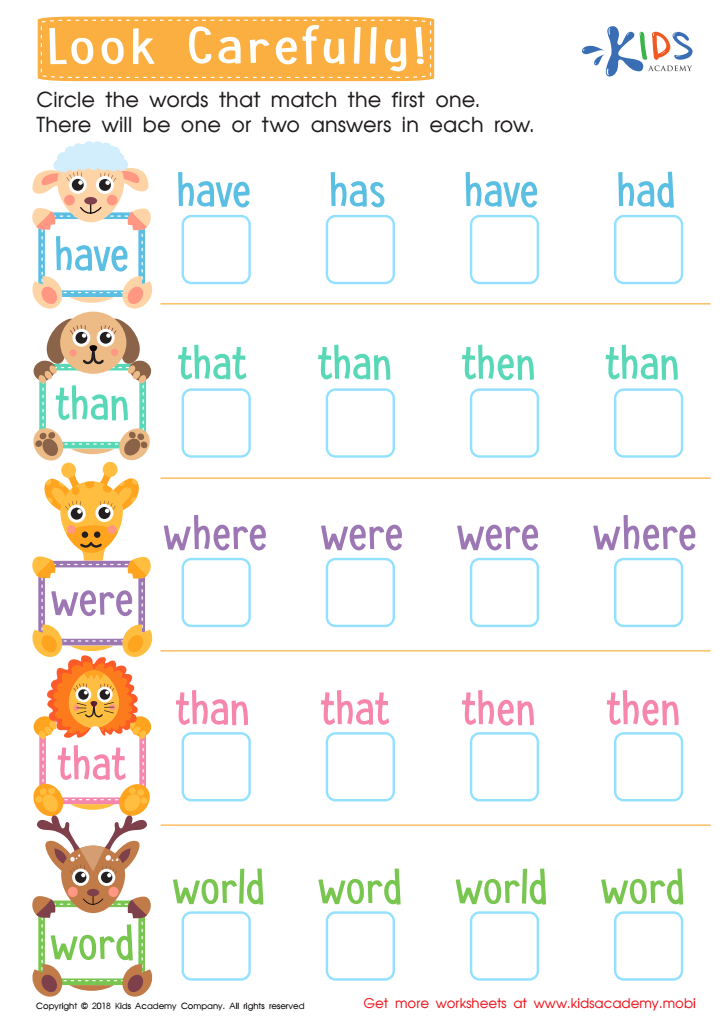
Look Carefully Worksheet
 Assign to My Students
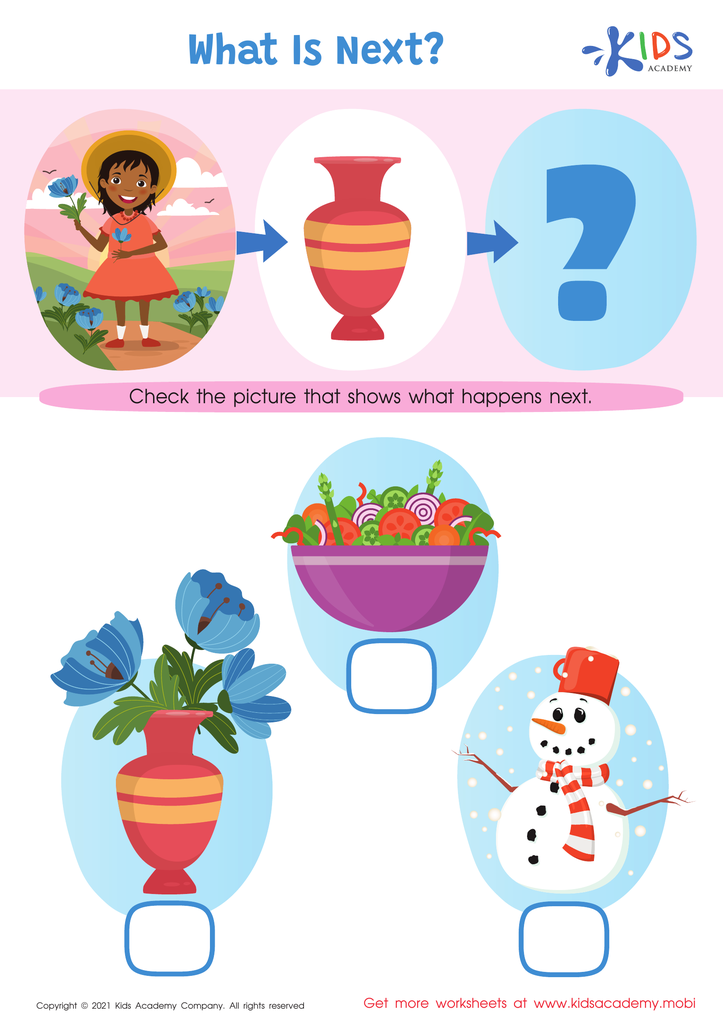
What is Next? Worksheet
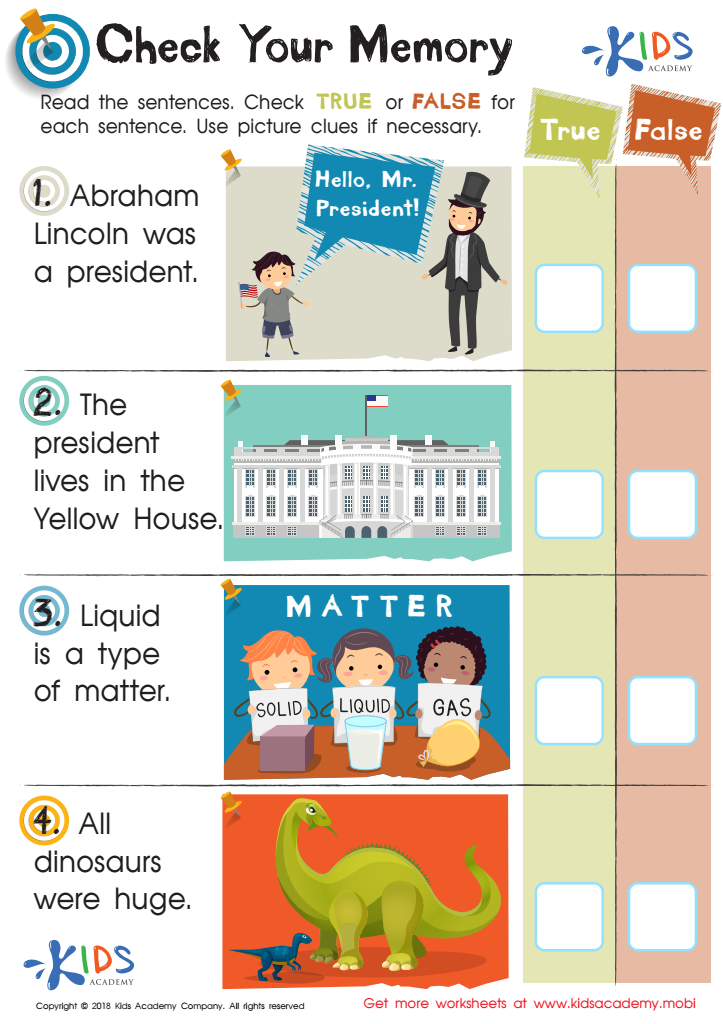
Check Memory Worksheet








Pattern recognition in reading comprehension is a fundamental skill that significantly contributes to early childhood development, particularly for children aged 3-6. During these formative years, children are incredibly receptive to learning new concepts and establishing cognitive frameworks. Understanding patterns allows children to make sense of the world around them, aiding in everything from recognizing letters and sounds to grasping the structure of stories.
For parents and teachers, nurturing pattern recognition in reading comprehension is crucial because it forms the basis for more advanced literacy skills. When children recognize patterns in words and sentences, they can predict what comes next, which enhances their ability to understand and retain what they read. This skill bridges the gap between recognizing words and comprehending texts, a vital transition in early education.
Moreover, pattern recognition supports critical thinking and problem-solving abilities. As children identify and predict patterns, they develop analytical skills that are applicable beyond reading—aiding in subjects like math and science. It also boosts memory retention and attention to detail, which are key for academic success.
In short, investing in pattern recognition activities now not only prepares young children for reading proficiency but also sets a solid foundation for lifelong learning and intellectual growth. Both parents and teachers can support this through engaging and fun learning experiences tailored to these critical years.








