Filters

7 filtered results

Clear all filters
Favorites
With answer key
Interactive

7 filtered results

Difficulty Level

Grade


Enhance your child's language skills with our Vocabulary Development Reading Comprehension Worksheets designed for ages 3-6. These engaging and interactive activities focus on building essential vocabulary through fun exercises tailored to early learners. Each worksheet encourages youngsters to explore words, develop comprehension, and practice critical thinking, all while fostering a love for reading. Ideal for classroom and home use, our resources support diverse learning styles and promote language acquisition in a playful manner. Give your child the foundation they need for academic success; browse our collection and start nurturing confident readers today!

Check out this FREE Trial Lesson on Reading Comprehension for age 3-6!

Compare and Contrast the Experiences of Characters in Familiar Stories

Favorites
With answer key
Interactive
  • 3-6
  • Vocabulary development
  • Reading Comprehension
“The Princess and the Pea” and “Cinderella” Worksheet

“The Princess and the Pea” and “Cinderella” Worksheet

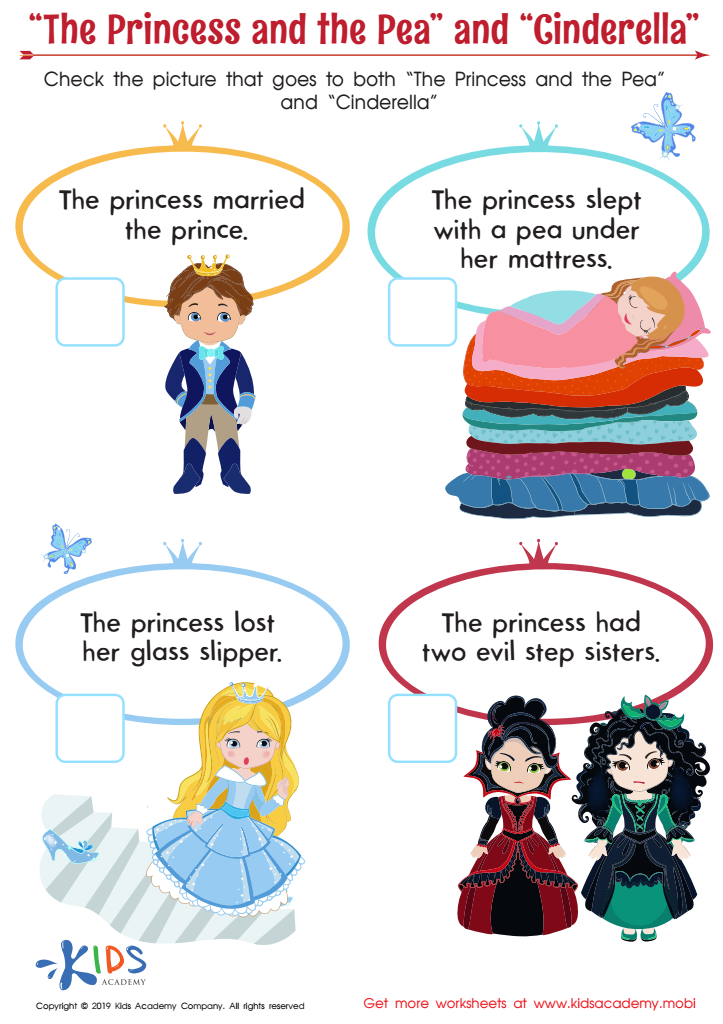
Read "Cinderella" and "The Princess and the Pea" to your little ones. Ask them what their favorite parts were and what similarities they found in the princesses. This worksheet has four pictures of scenes from the stories. Ask your kids which picture goes with both tales.
“The Princess and the Pea” and “Cinderella” Worksheet
Worksheet
The Dentist Worksheet

The Dentist Worksheet

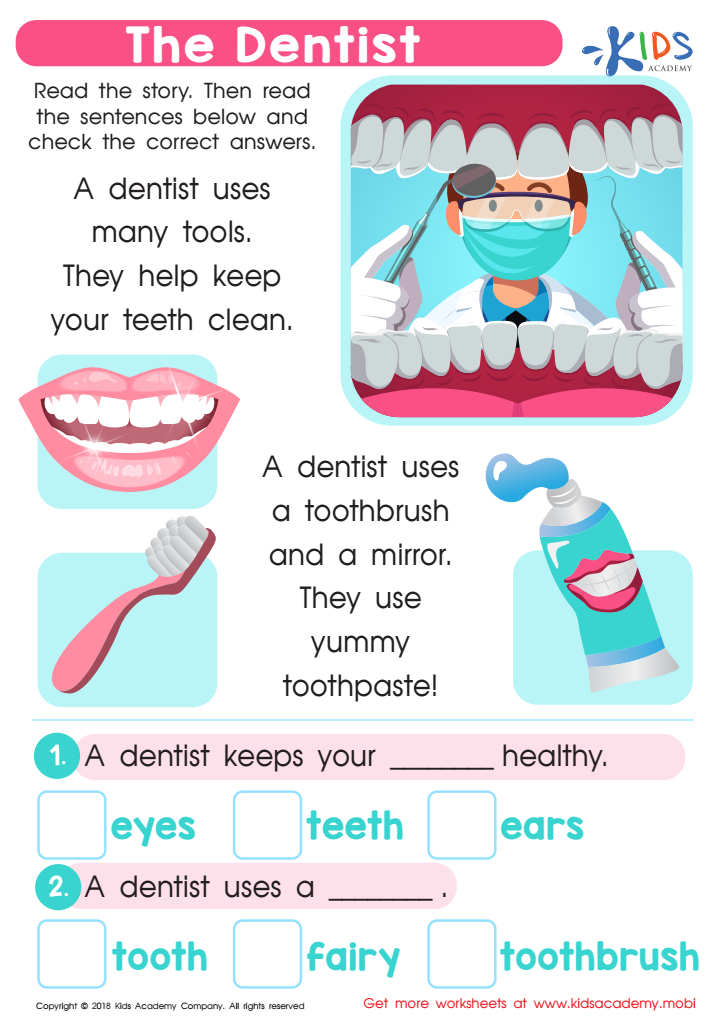
Community helpers are essential for our wellbeing. This vibrant worksheet is a great way to introduce children to the dentist and their tools. They'll read the text, use the pictures and answer questions about what the dentist does and what they use. It's a great way to make the dentist more approachable, as well as help with comprehension.
The Dentist Worksheet
Worksheet
Craft and Structure: Assessment 1 Worksheet

Craft and Structure: Assessment 1 Worksheet

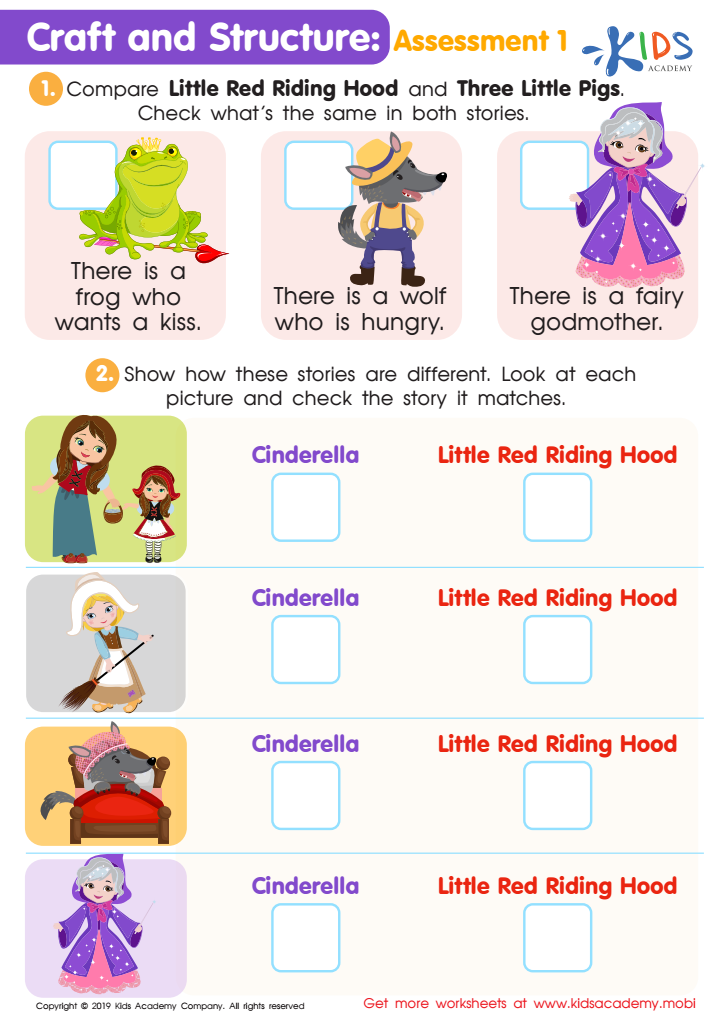
Fairytales are a great way to bond with your kids while teaching them. Popular stories include Little Red Riding Hood and Three Little Pigs. Test how well they understood these two with this assessment worksheet. Ask them to compare the two stories and check what is the same. Doing this will help kids learn new words and sentence construction, as well as teaching them life lessons.
Craft and Structure: Assessment 1 Worksheet
Worksheet
Learn About Vets Worksheet

Learn About Vets Worksheet

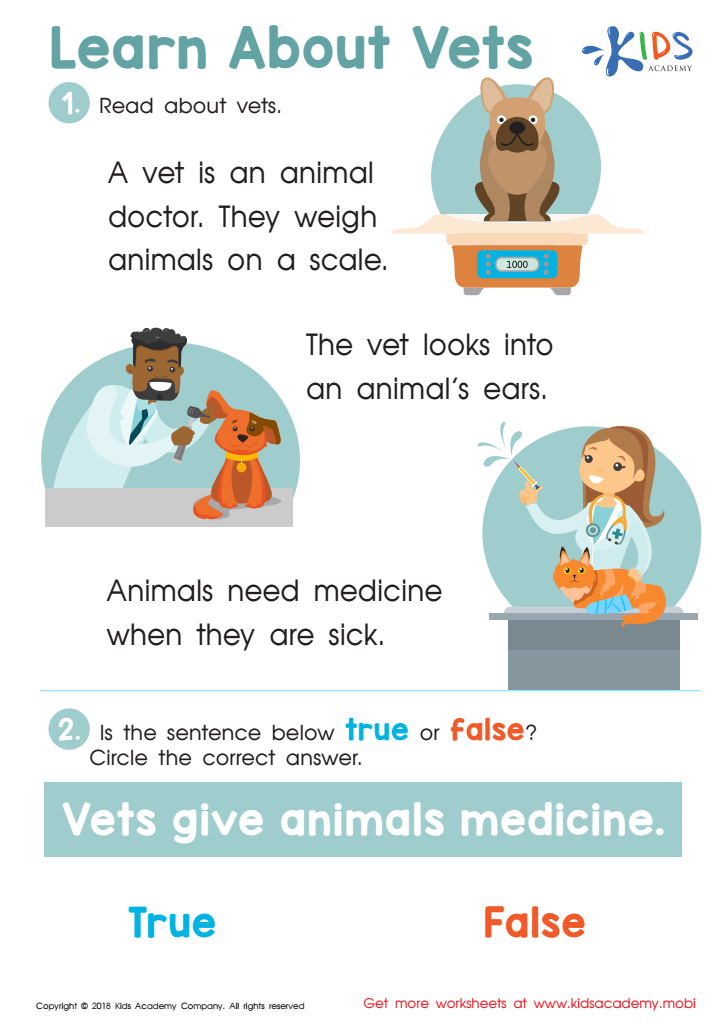
Assess your child's reading comprehension and recall with this ELA worksheet! It reviews interesting facts about vets with brief passages and pictures to help your reader. Ask the question at the bottom to see what they learned. It's a great way to check understanding!
Learn About Vets Worksheet
Worksheet
What is the First Word? Worksheet

What is the First Word? Worksheet

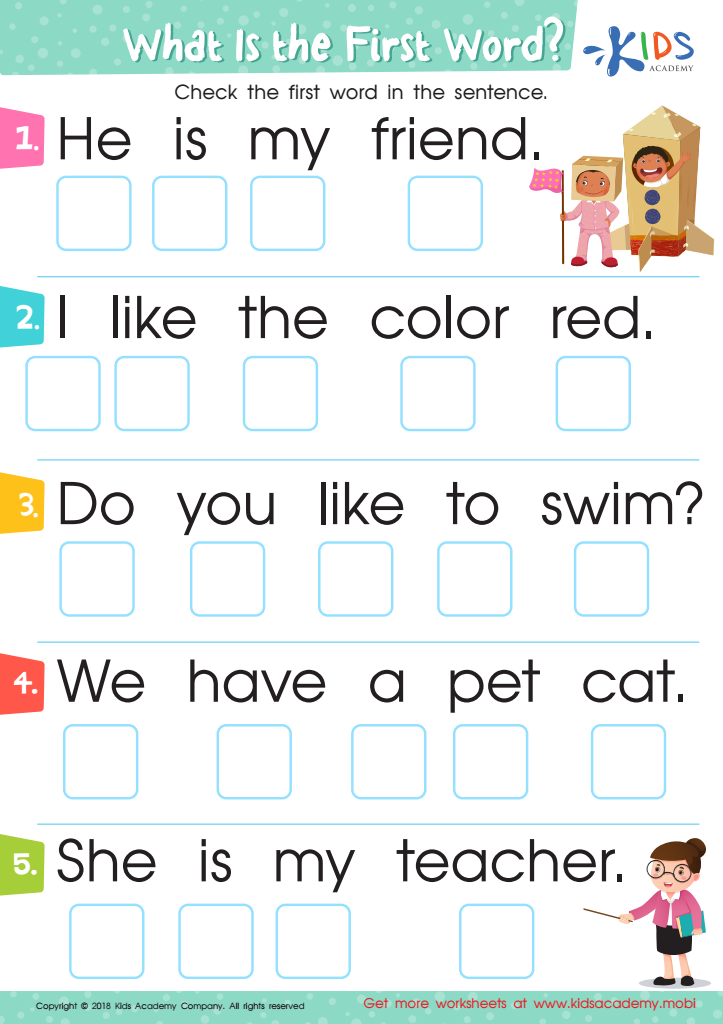
Help your students test their sentence-reading skills with this printout! After teaching the alphabet, have them identify and write the first word in each sentence. With this exercise, they'll gain reading proficiency and be better prepared to write their own sentences.
What is the First Word? Worksheet
Worksheet
Craft and Structure of Informational Texts: Assessment 1 Worksheet

Craft and Structure of Informational Texts: Assessment 1 Worksheet

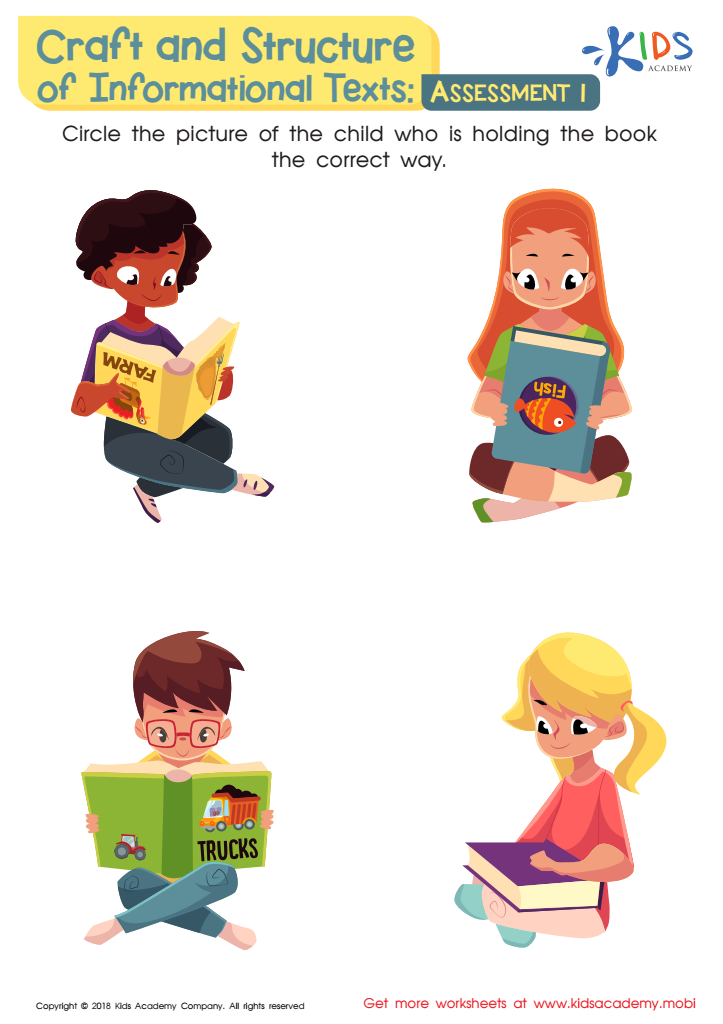
Young children need to know how to hold books correctly when they start reading. This assessment worksheet helps them show they know what to do. They'll look at the pictures and circle the child who is holding the book correctly. It's a great way to tell they are well on their way to becoming lifetime readers!
Craft and Structure of Informational Texts: Assessment 1 Worksheet
Worksheet
Who, What, Where? Worksheet


Who, What, Where? Worksheet

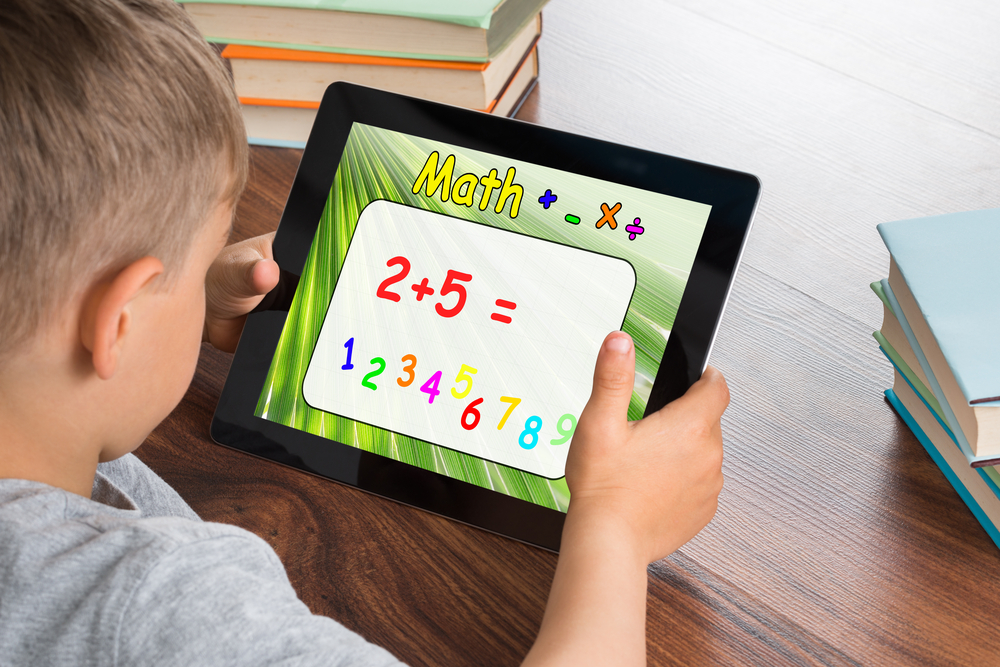
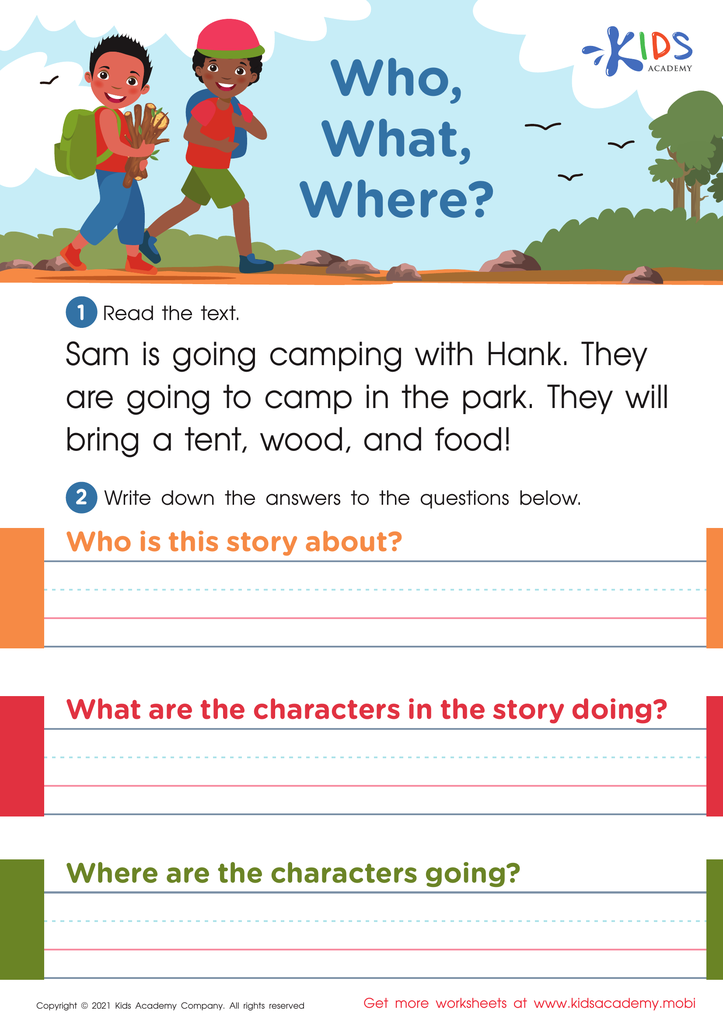
The availability of technology has changed the way students learn and interact with their environment in a very meaningful way. Technology has revolutionized learning and interaction for students. It offers an array of opportunities to engage with their surroundings, leading to a more meaningful educational experience.
Who, What, Where? Worksheet
Worksheet


Vocabulary development is crucial for children aged 3-6, as it lays the foundation for reading comprehension, which later influences academic success. During these formative years, children are rapidly learning language skills. A robust vocabulary enables them to express thoughts, engage in conversations, and understand the world around them. When parents and teachers prioritize vocabulary-building activities—such as reading aloud, playing word games, and encouraging storytelling—they enhance children's ability to decode words and grasp meanings, crucial skills for effective reading.

Reading comprehension, the ability to understand and interpret what is read, is closely tied to vocabulary knowledge. As children encounter new words in texts, their comprehension improves when they already have some foundational understanding of those terms. Early readers with advanced vocabulary skills tend to perform better in school, demonstrating higher levels of critical thinking and problem-solving.

Furthermore, strong vocabulary development fosters self-esteem and interpersonal skills, enabling children to articulate thoughts and feelings more confidently. For parents and teachers, investing time and resources in vocabulary growth is critical, as it prepares children not only for academic endeavors but also for lifelong learning and communication. Engaging in this essential area nurtures curious, capable, and expressive learners who are ready to explore their world.