Identifying story elements Reading Fiction Worksheets for Ages 3-6
3 filtered results
-
From - To
Welcome to our "Identifying Story Elements Reading Fiction Worksheets" tailored for kids aged 3-6! These engaging worksheets are designed to ignite young imaginations and enhance critical reading skills. Through colorful imagery and age-appropriate activities, children will learn to identify key story elements such as characters, settings, and plots. Each worksheet encourages creativity and comprehension, making reading an enjoyable experience for preschoolers and early learners. Perfect for home or classroom use, our resources support developmental milestones and foster a love for storytelling. Explore our collection and watch your child take their first steps into the magical world of fiction!
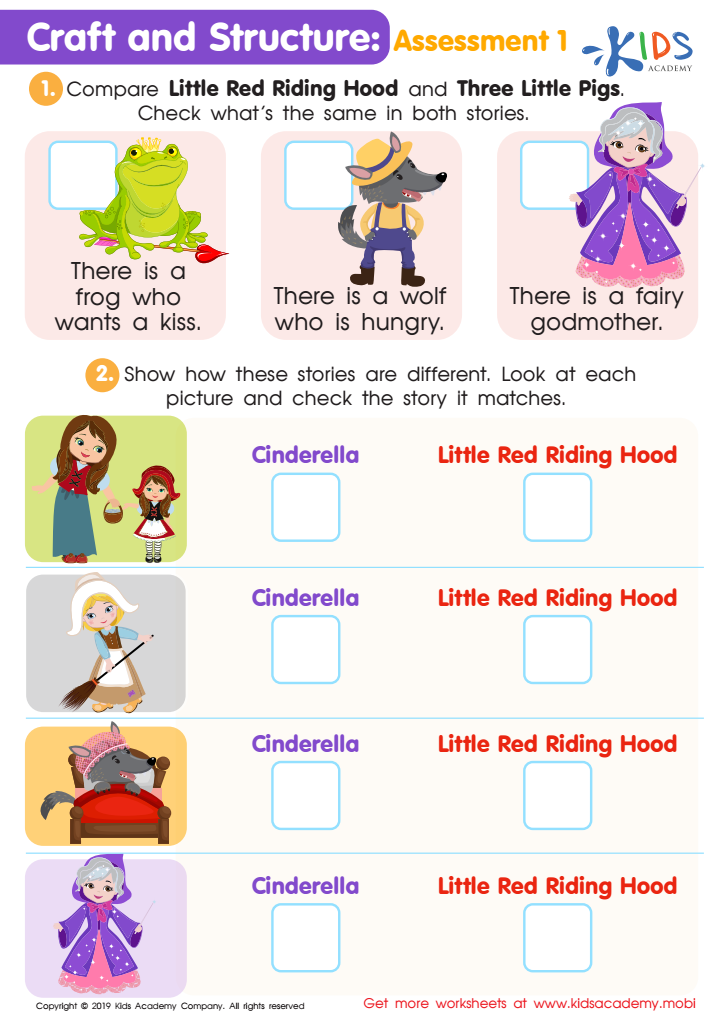
Craft and Structure: Assessment 1 Worksheet
 Assign to My Students
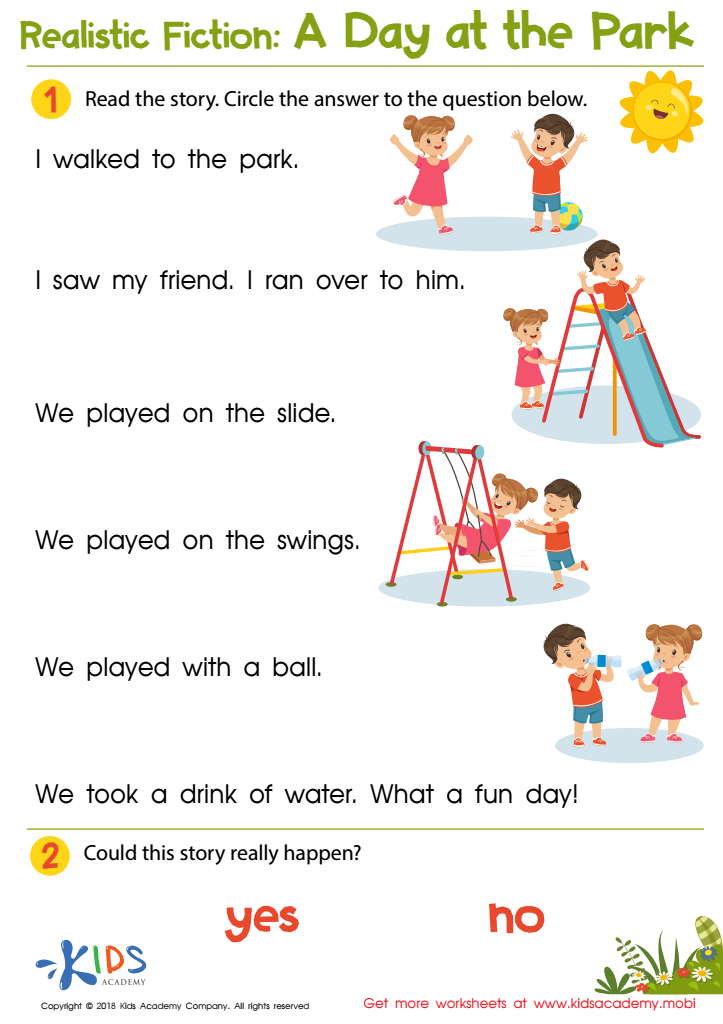
A Day at the Park Worksheet
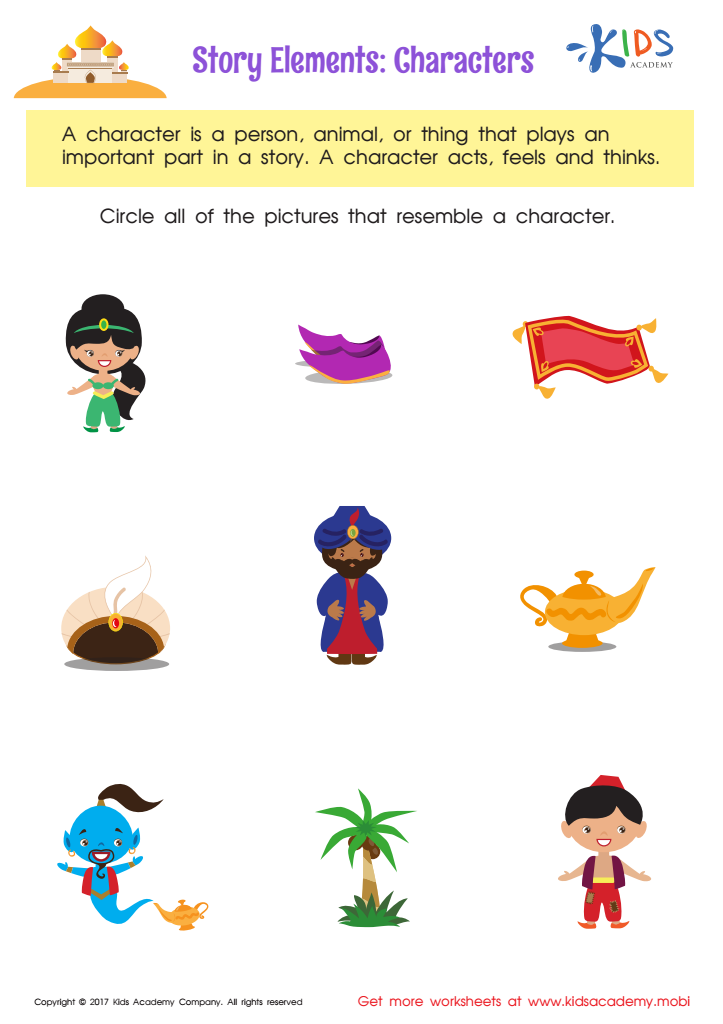
Story Elements Printable








Identifying story elements in fiction is crucial for young children aged 3-6, as it lays the foundation for strong literacy skills. For parents and teachers, understanding these elements—characters, setting, plot, conflict, and resolution—helps children engage more deeply with the stories they encounter. By recognizing characters and understanding the setting, children cultivate their ability to empathize and relate to different perspectives, fostering emotional intelligence.
Moreover, discussing plot and conflict encourages critical thinking as children learn to predict outcomes, make inferences, and understand cause-and-effect relationships. These skills are not only essential for reading comprehension but also enhance their overall problem-solving abilities. Engaging with story elements also encourages creativity and imagination, as children begin to picture their own narratives and understand the structure of storytelling.
Furthermore, consistent exposure to these elements supports vocabulary development and language skills, vital for effective communication. This early literary engagement helps motivate a future love for reading, turning stories into a meaningful part of their daily lives. Overall, recognizing and discussing story elements empowers young learners, creating a rich environment for growth and curiosity, making it an essential focus for both parents and educators.








