Sentence construction Reading Fiction Worksheets for Ages 3-6
5 filtered results
-
From - To
Welcome to our "Sentence Construction Reading Fiction Worksheets for Ages 3-6"! These engaging worksheets are designed to enhance young learners' reading and writing skills through fun, interactive activities. Targeting the foundational elements of sentence structure, our materials encourage creativity and critical thinking while exploring age-appropriate fiction. Each worksheet features delightful illustrations and simple prompts that spark imagination, making learning enjoyable. Ideal for classroom or home use, these resources promote literacy and confidence in early readers. Nurture your child's love for reading and writing while fostering essential skills with our carefully crafted sentence construction worksheets. Start the adventure in learning today!
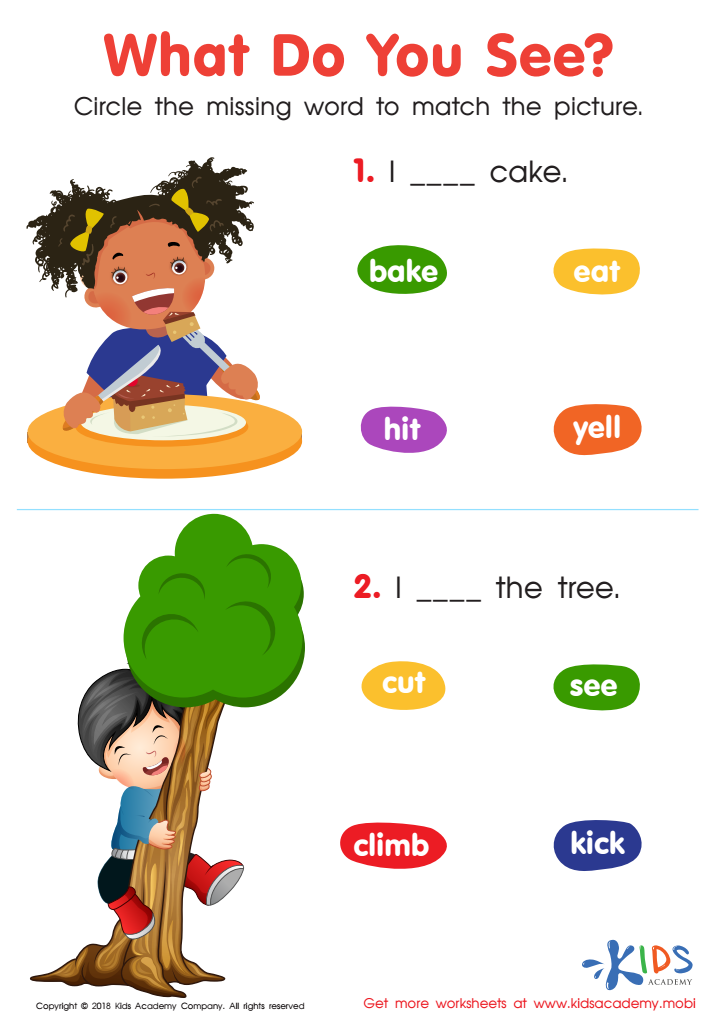
What Do You See? Reading Worksheet
 Assign to My Students
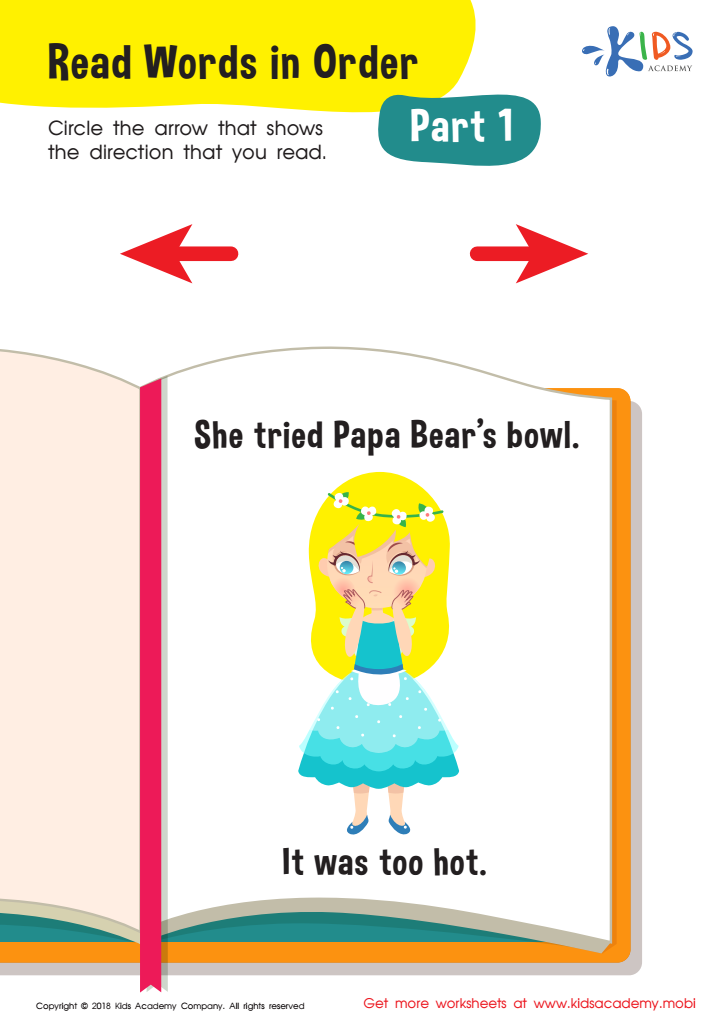
Read Words Order Part 1 Worksheet
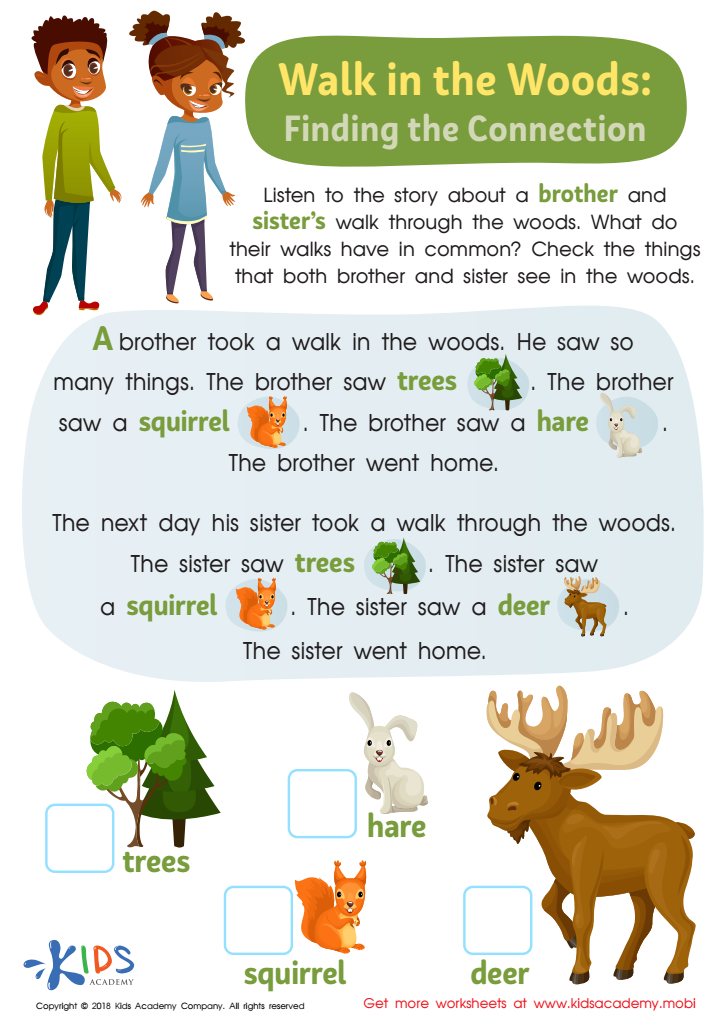
Walk In the Woods: Finding Connections Worksheet
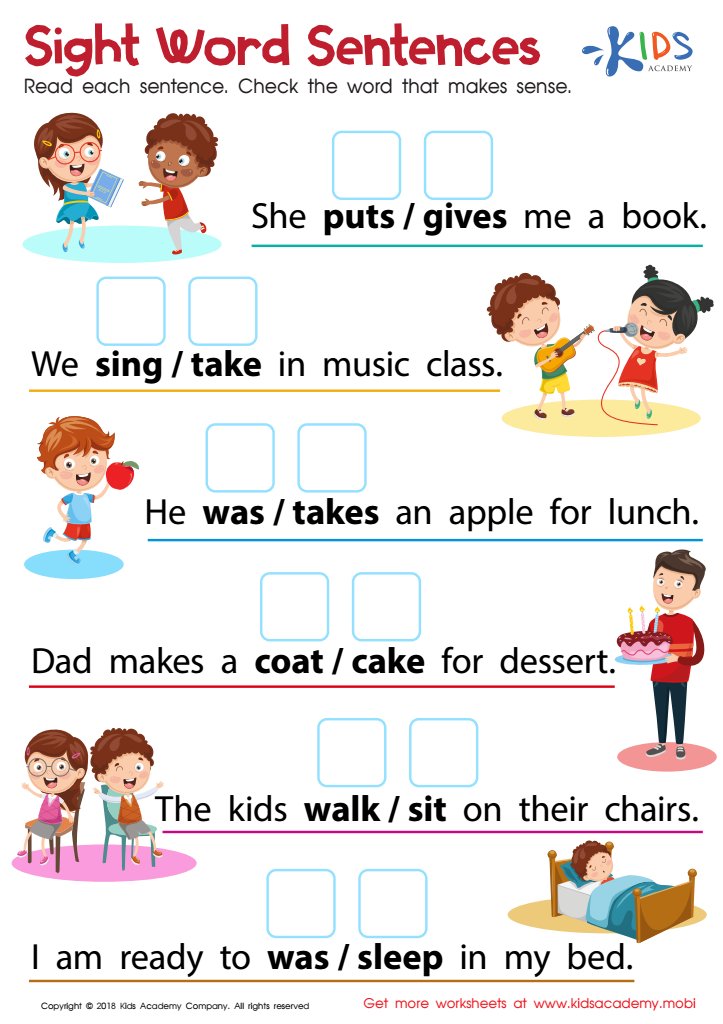
Sight Words Sentences Worksheet
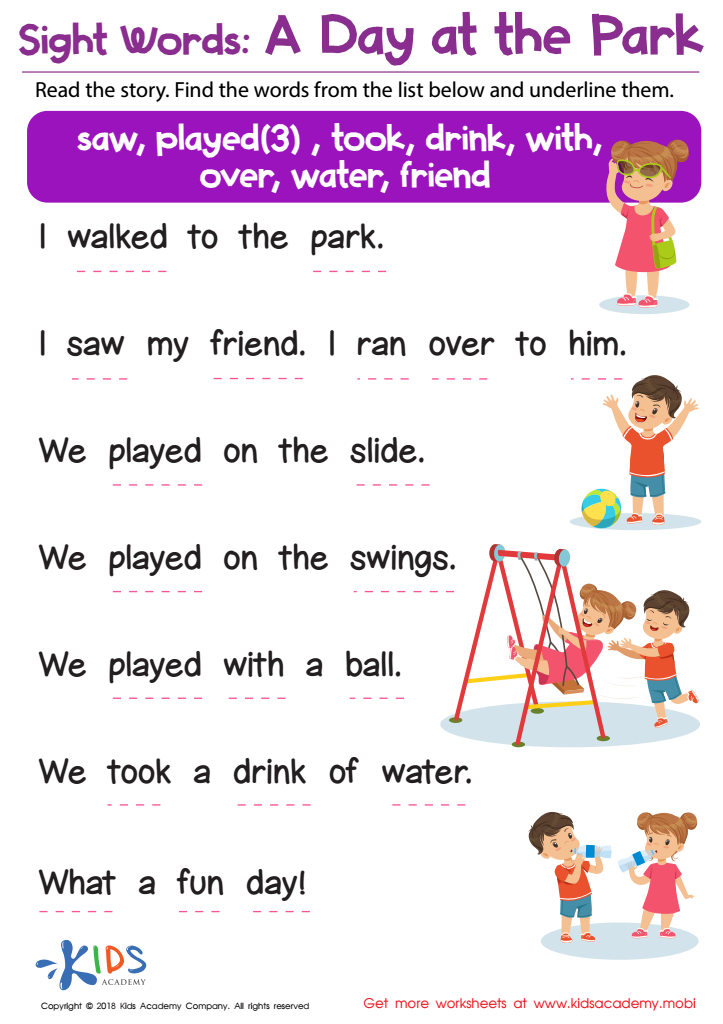
Sight Words: A Day at the Park Worksheet








Parents and teachers should prioritize sentence construction in reading fiction for ages 3-6 because it lays the foundational skills for effective communication and literacy development. At this early stage, children are incredibly receptive to language exposure and begin to grasp how sentences are formed, which enhances their vocabulary and comprehension skills. Engaging with fiction through stories allows children to see sentence structure in action, building their ability to understand the context and meaning behind words.
Reading fiction introduces diverse sentence patterns, helping children recognize and anticipate language rhythms and structures, fostering creativity and critical thinking. Additionally, crafting sentences nurtures emotional intelligence; stories often encapsulate feelings and experiences that enable children to relate to characters, monsters, and magical worlds, sparking their imagination and curiosity.
Moreover, early literacy skills correlate with later academic success. Teaching children sentence construction while immersing them in fiction promotes phonemic awareness, fluency, and decoding skills essential for reading. When parents and teachers invest time in reading fiction, they create a rich environment conducive to learning, encouraging children to express themselves freely and confidently as they embark on their lifelong journey of literacy. Enthusiastic engagement with language during these formative years sets the stage for future educational achievements.








