
Basic astronomy knowledge Science Worksheets for Ages 3-6
3 filtered results
Difficulty Level
Grade
Age
-
From - To
Subject
Activity
Standards
Explore the wonders of the universe with our Basic Astronomy Knowledge Worksheets, specially designed for children aged 3-6! These engaging, age-appropriate worksheets introduce young learners to fundamental astronomy concepts, such as the sun, moon, stars, and planets. With colorful illustrations and fun activities, kids will enjoy exploring space while enhancing their observational and critical thinking skills. Best of all, these resources align with early learning standards, making them perfect for preschool and kindergarten settings. Ignite your child's curiosity about the cosmos and foster a love for science with our expertly crafted worksheets, designed to bring the magic of astronomy into every child's learning experience!
Favorites
With answer key
Interactive
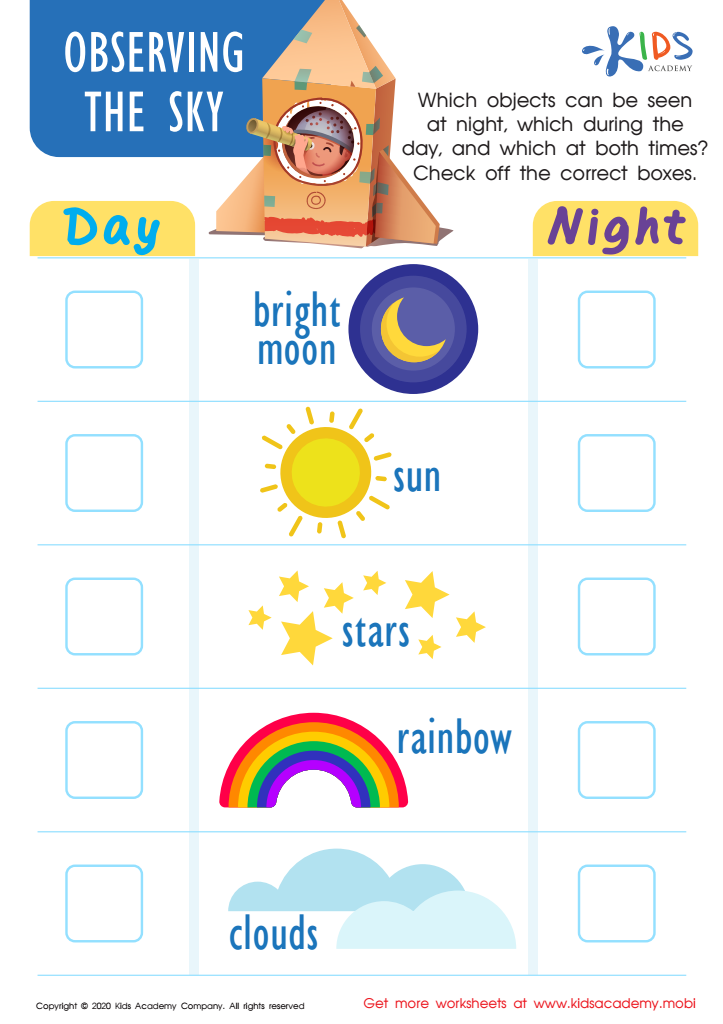
Observing the Sky Worksheet
Look up to the sky and observe day and night objects! See a rainbow or some clouds by day and stars and the moon at night. Help your little learner review this science concept with Kids Academy's fun and colorful worksheet. Have them sort and check off the objects seen by day or night, going down the column in the center.
 Assign to My Students
Observing the Sky Worksheet
Worksheet
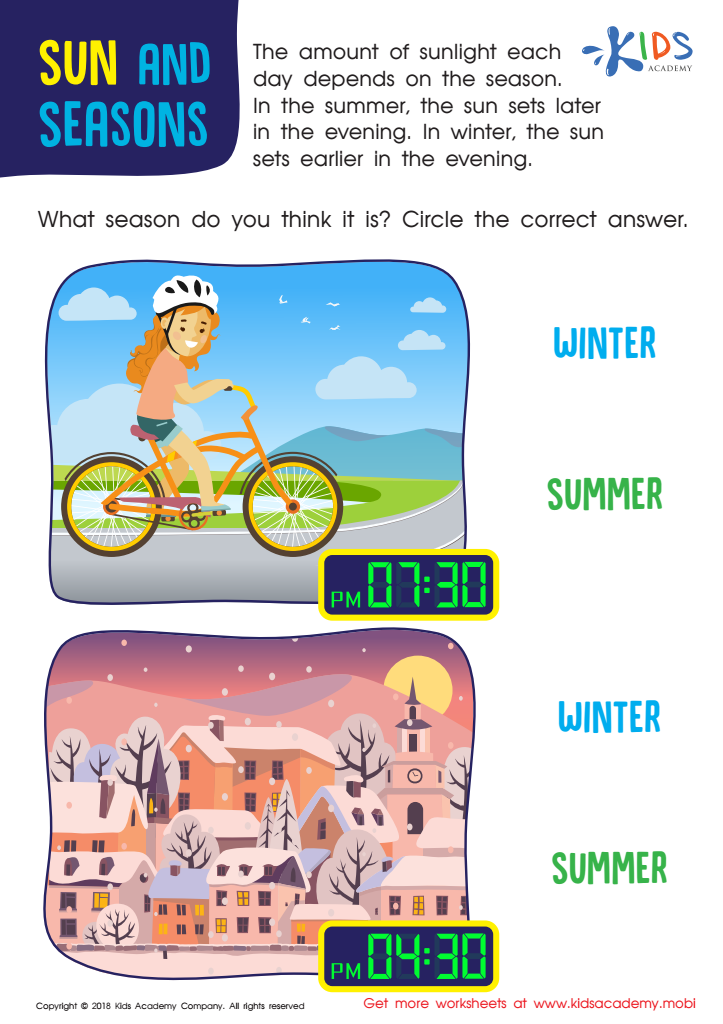
Sun and Seasons Worksheet
Help your child understand science and seasons with this Kids Academy worksheet! Discuss how the daylight varies in summer and winter with them. Guide them to note the digital clock on each page then circle the correct answers. With this sheet, your child will gain a better understanding of why days are longer in summer and shorter in winter!
Sun and Seasons Worksheet
Worksheet
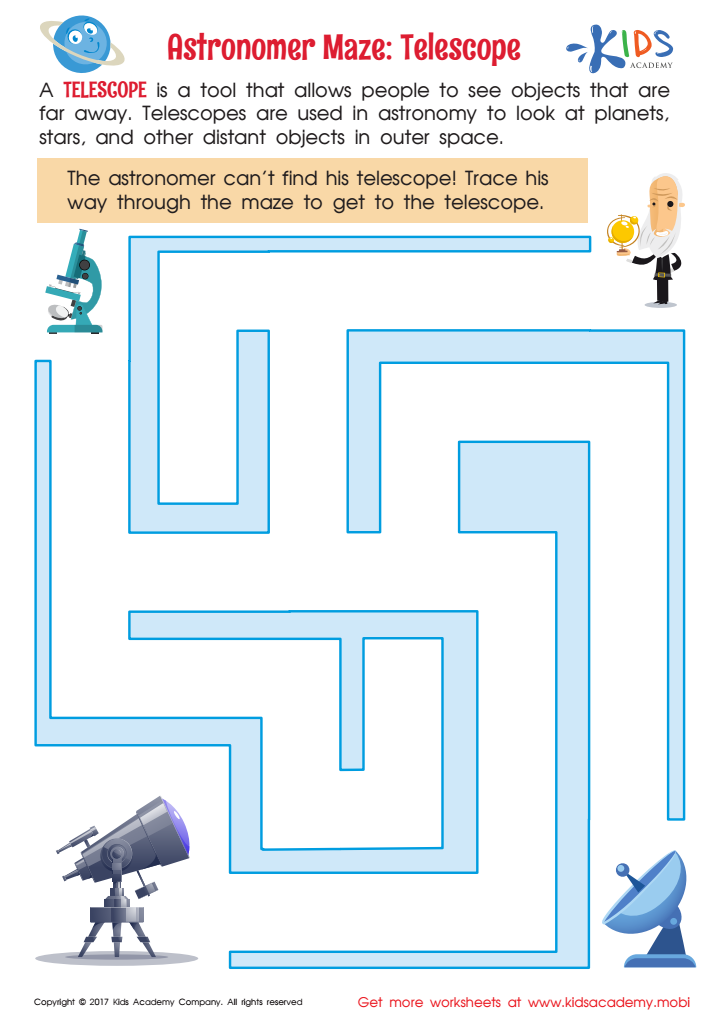
Astronomer Maze: Telescope Worksheet
Let your mini astronomer explore the galaxy with this fun and puzzling space maze worksheet – Telescope! Your child will have a great time navigating the maze, while learning how telescopes help scientists study the stars.
Astronomer Maze: Telescope Worksheet
Worksheet
Join Kids Academy for Free
Who is primarily going to use this learning content?








Parents and teachers should prioritize basic astronomy knowledge for young children aged 3-6 because it lays a foundation for curiosity and exploration of the natural world. At this developmental stage, children exhibit a strong sense of wonder and question the world around them. Introducing simple concepts such as the Sun, Moon, and stars helps stimulate their imagination and encourages observational skills.
Astronomy fosters scientific thinking as children learn to compare, categorize, and describe objects in the sky. Engaging with these concepts enhances language development, as children learn new words and terminology associated with space—such as "planet," "galaxy," and "constellation."
Additionally, teaching these concepts promotes cognitive development by encouraging critical thinking. Children learn about simple cycles, such as day and night, which can lead to discussions about time, seasons, and weather. These concepts integrate well with early math skills, as they can practice counting stars or recognizing shapes in the sky.
Ultimately, instilling an interest in astronomy can lead to a lifelong passion for science, inspiring future generations to explore and contribute to our understanding of the universe. Early exposure to astronomy not only supports academic growth but also nurtures children's innate curiosity and creativity.







