Categorization skills Science Worksheets for Ages 3-6
5 filtered results
-
From - To
Enhance your child's learning journey with our "Categorization Skills Science Worksheets" designed specifically for ages 3-6. These interactive worksheets provide engaging activities that teach young learners to grouping objects based on similarities and differences. As children explore various themes—such as animals, plants, and weather—they develop critical thinking and observation skills while having fun. Our worksheets not only foster scientific curiosity but also promote fine motor skills through coloring and tracing. Perfect for preschool and kindergarten classrooms or home learning, these resources make complex concepts accessible and entertaining. Help your child build a strong foundation in science with our thoughtfully crafted worksheets today!
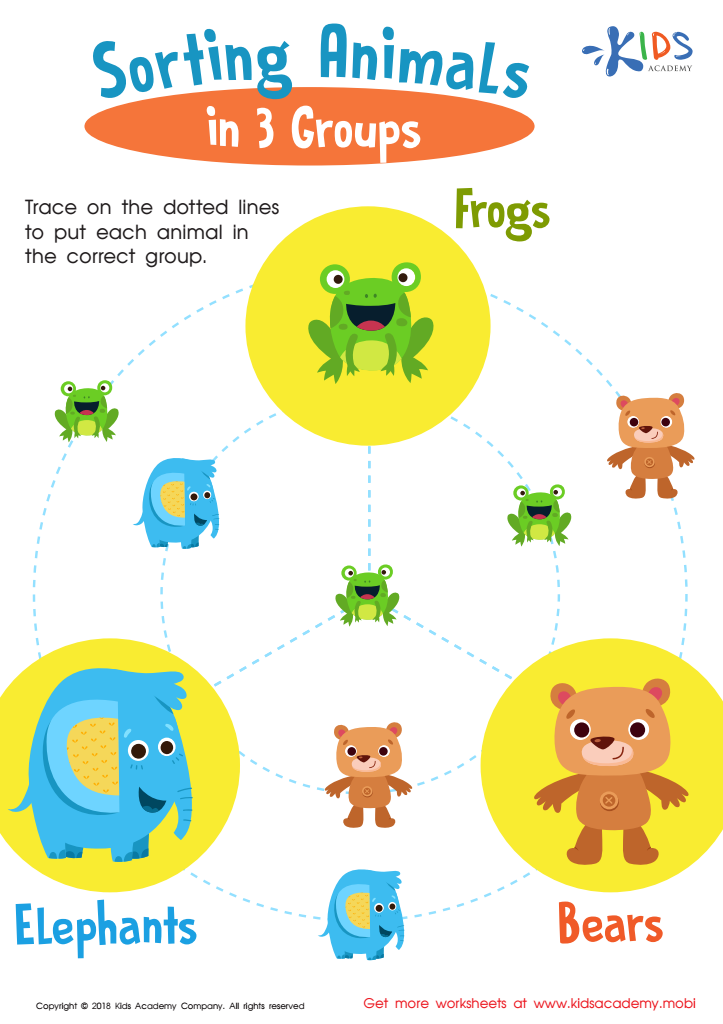
Sorting Animals in 3 Groups Worksheet
 Assign to My Students
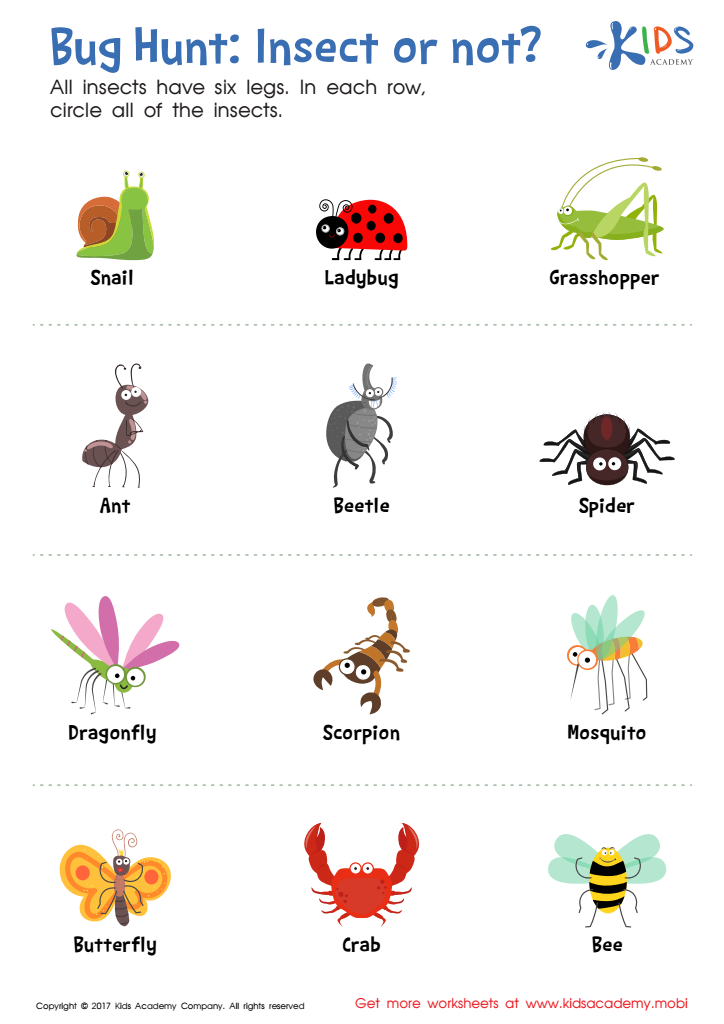
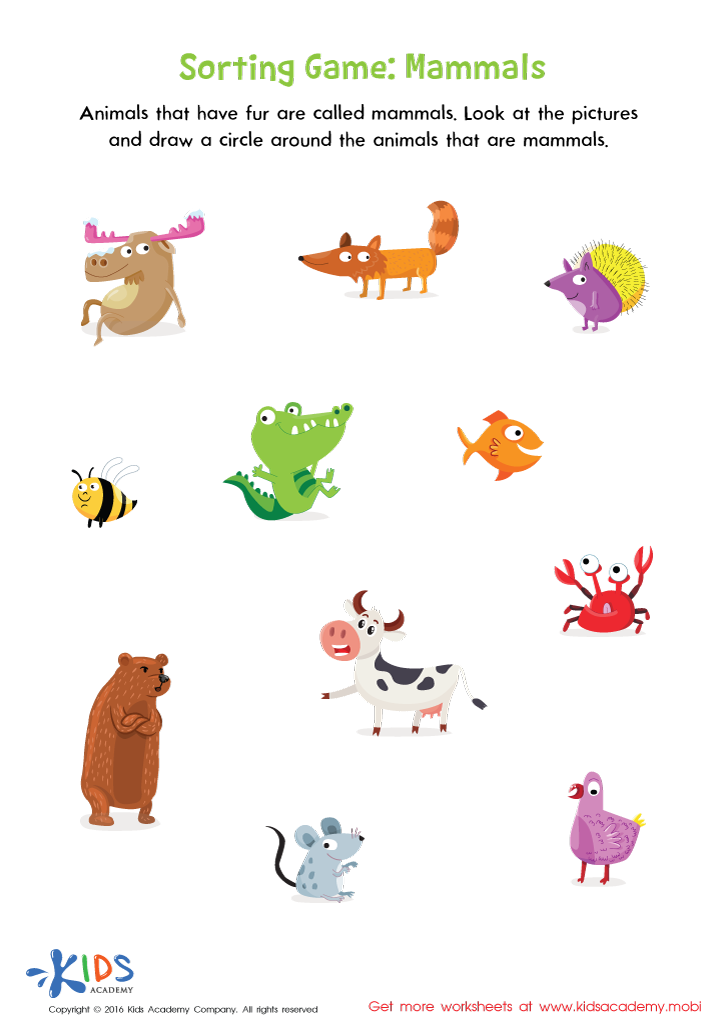
Mammals Sorting Worksheet
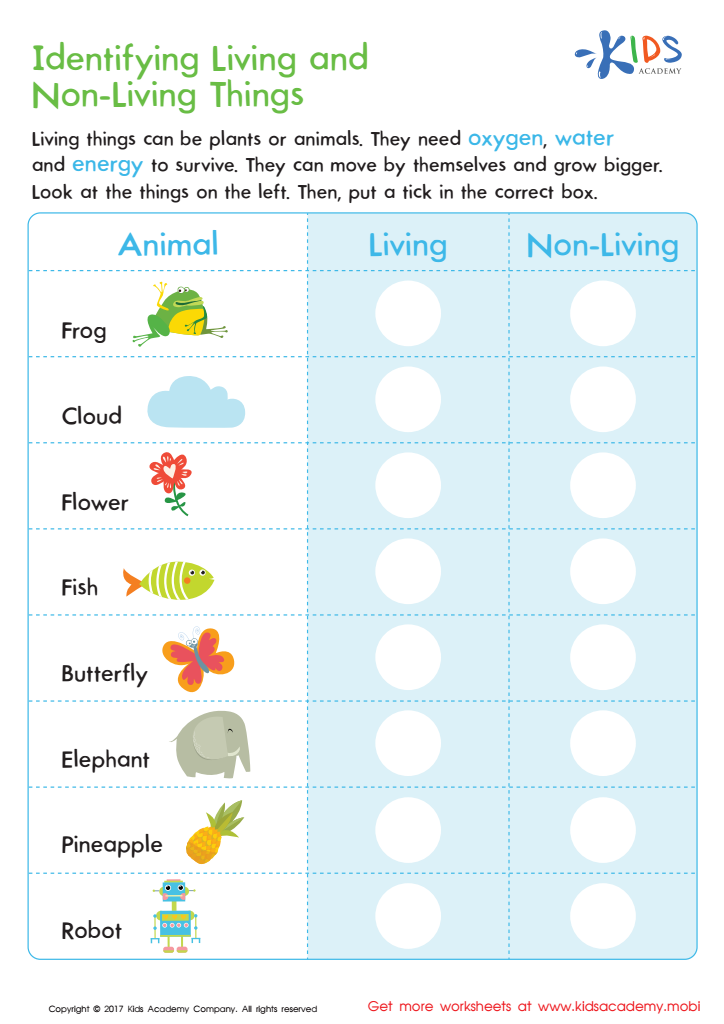
Identifying Living or Non–living Worksheet
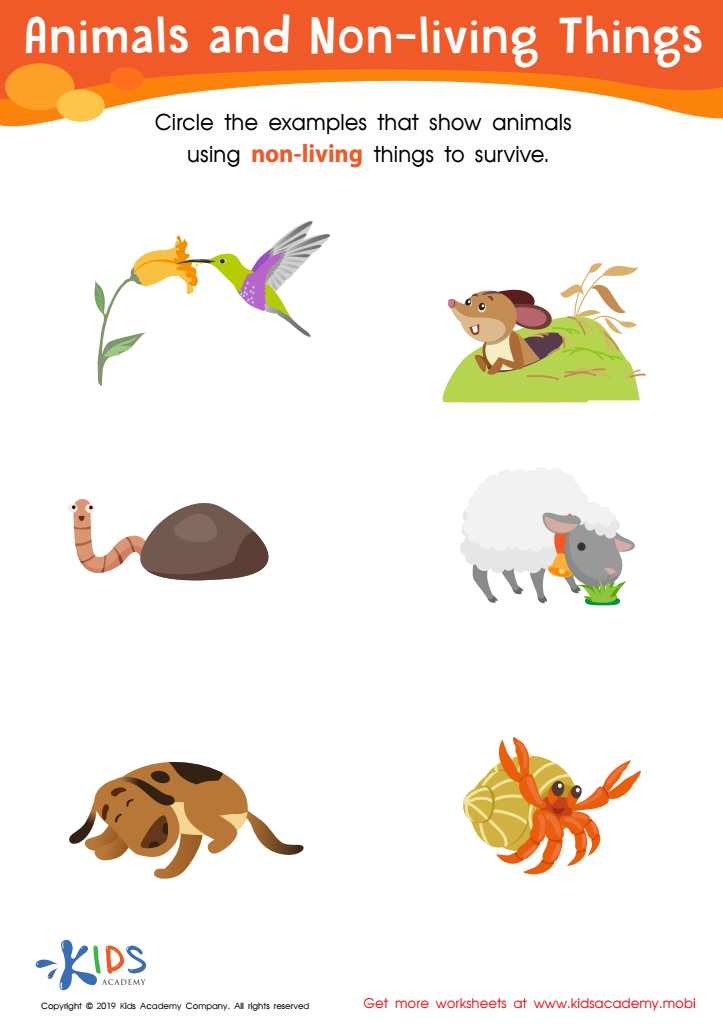
Animals and Non-Living Things Worksheet






Categorization skills are fundamental for children aged 3-6, influencing their cognitive development, problem-solving abilities, and academic success. Parents and teachers should care about fostering these skills as they serve as building blocks for higher-order thinking. Through categorization, children learn to sort and group objects, animals, shapes, and ideas, which helps them understand relationships and differences among items in their environment.
These skills also enhance vocabulary development, as children learn to describe and label different categories, facilitating language acquisition. Additionally, categorization promotes critical thinking, allowing children to analyze similarities and differences, and to make connections across various concepts. For instance, sorting fruits from vegetables lays the groundwork for understanding nutrition and biology.
In science, categorization introduces young learners to essential scientific principles, such as the classification of living organisms or sorting materials based on their properties. These early experiences help nurture curiosity and a lifelong love of learning, essential traits for future academic pursuits.
Moreover, strong categorization skills support successful social interactions as children learn to integrate and organize information about their peers and environments. Encouraging these skills in early childhood contributes significantly to holistic development, ultimately setting the stage for informed, analytical, and conscientious future citizens.







