Understanding directions Science Worksheets for Ages 3-6
4 filtered results
-
From - To
Unlock your child's potential with our "Understanding Directions Science Worksheets," specifically designed for ages 3-6! These engaging worksheets help young learners develop essential directional skills while exploring the wonders of science. Each printable activity encourages kids to navigate concepts such as up, down, left, and right, fostering spatial awareness and critical thinking. Perfect for at-home learning or classroom integration, these worksheets make learning fun and interactive. Nurture your child's curiosity about the world around them as they discover and apply directional understanding in various scientific contexts. Explore our collection today and empower your little ones on their educational journey!
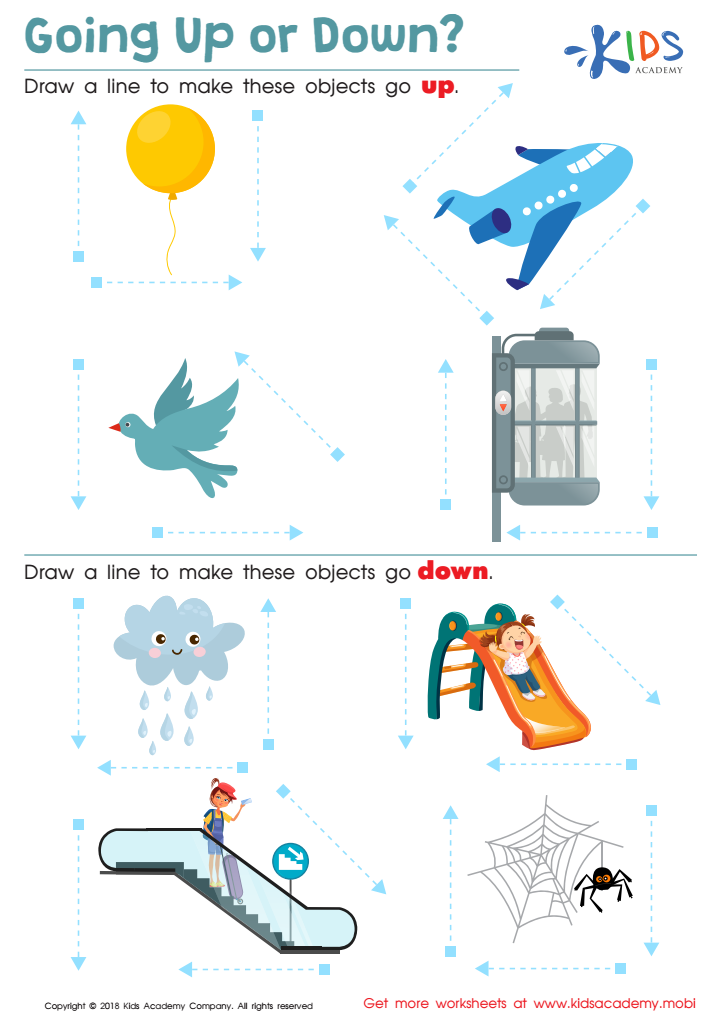
Going up or Down? Worksheet
 Assign to My Students
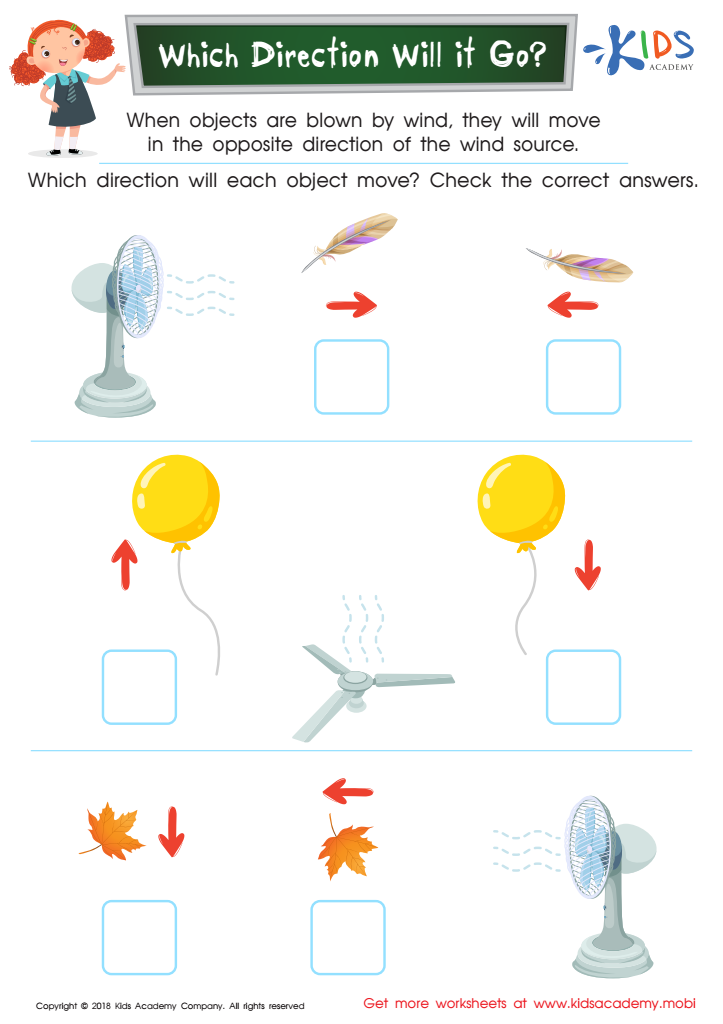
Which Direction Will it Go? Worksheet
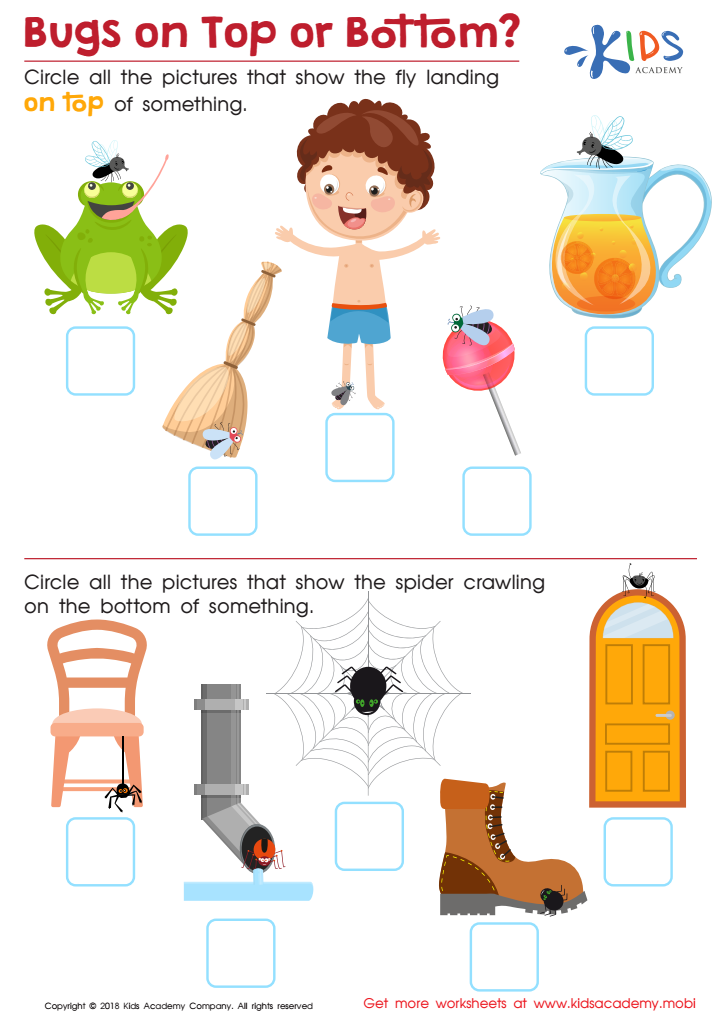
Bugs on Top or Bottom? Worksheet
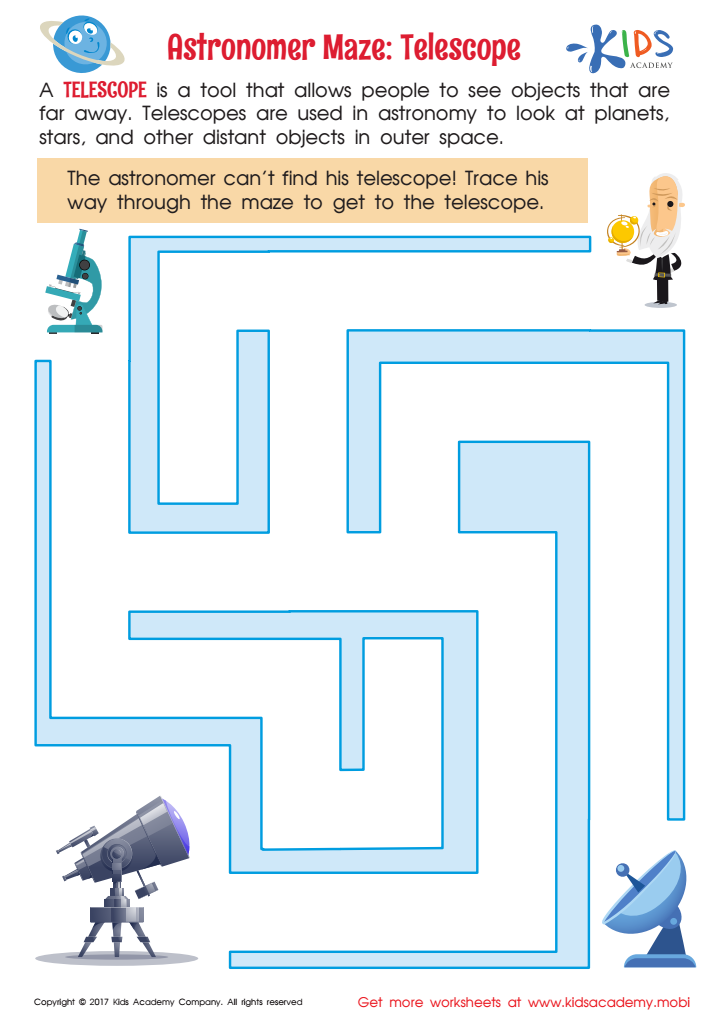
Astronomer Maze: Telescope Worksheet







Understanding directions in science is vital for children aged 3-6, as it lays the foundation for critical thinking and exploration. At this young age, children are naturally curious and keen to learn about the world around them. By engaging them in scientific inquiry and helping them understand basic directions—such as "light" or "heavy," "growing" or "changing"—parents and teachers can foster a love for learning and encourage a sense of wonder.
Moreover, grasping scientific directions promotes essential skills like problem-solving and decision-making. Children learn to follow, interpret, and give directions, which enhances their language development and cognitive abilities. This early exposure to scientific concepts not only supports academic growth but also cultivates imagination and creativity, as children experiment and make discoveries.
Furthermore, incorporating science in everyday activities can make learning dynamic and enjoyable. It creates opportunities for hands-on experiences and encourages exploration, which can lead to lasting interest and resilience in the face of challenges. Therefore, prioritizing an understanding of directions in science at this formative age nurtures inquisitive minds, equipping them with the tools they need for future academic success and an appreciation for the complexities of the world around them.







