
Knowledge application Physical Science Worksheets for Ages 3-6
3 filtered results
Difficulty Level
Grade
Age
-
From - To
Subject
Activity
Standards
Discover our engaging "Knowledge Application Physical Science Worksheets" designed specifically for children ages 3-6. These worksheets provide a fun and interactive way for young learners to explore essential physical science concepts. With colorful illustrations and age-appropriate questions, children will enhance their critical thinking and observation skills while learning about topics like matter, motion, and simple machines. Each worksheet promotes hands-on learning and curiosity, making science accessible and exciting for your little ones. Ideal for teachers and parents, these resources support early childhood education and lay a strong foundation for future scientific exploration. Start your child's adventure in learning today!
Favorites
With answer key
Interactive
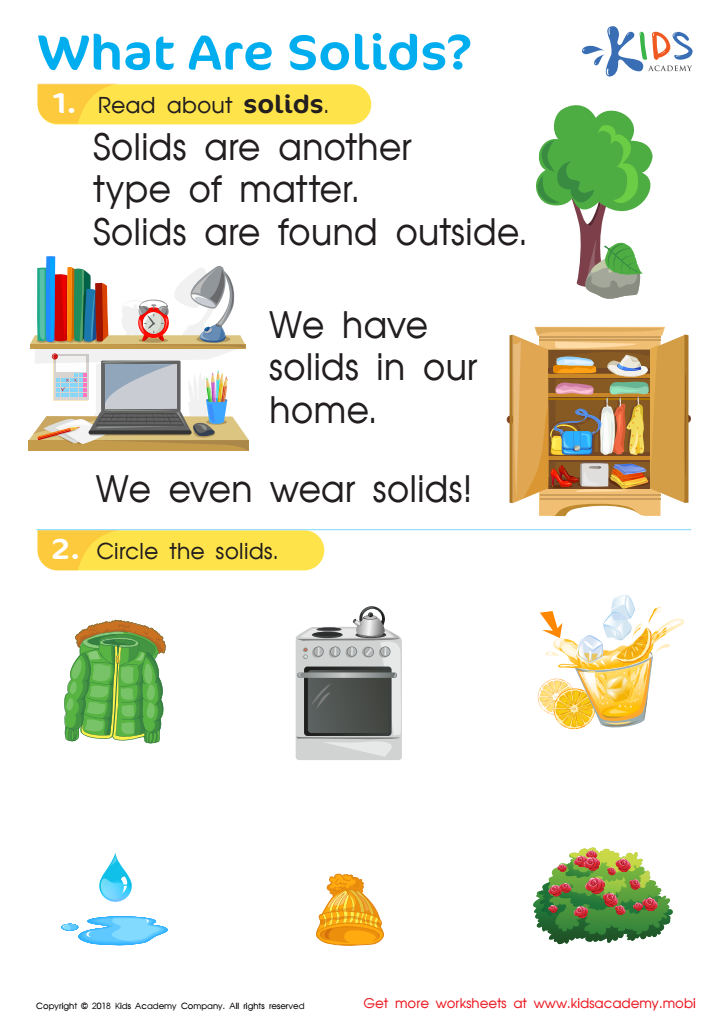
What Are Solids? Worksheet
Help your kids understand matter's three forms - solid, liquid, and gas - with examples. Ask them to give their own and where to find them. Then, read and discuss the worksheet's facts about solids. Afterward, have them circle the solids among the provided objects.
 Assign to My Students
What Are Solids? Worksheet
Worksheet
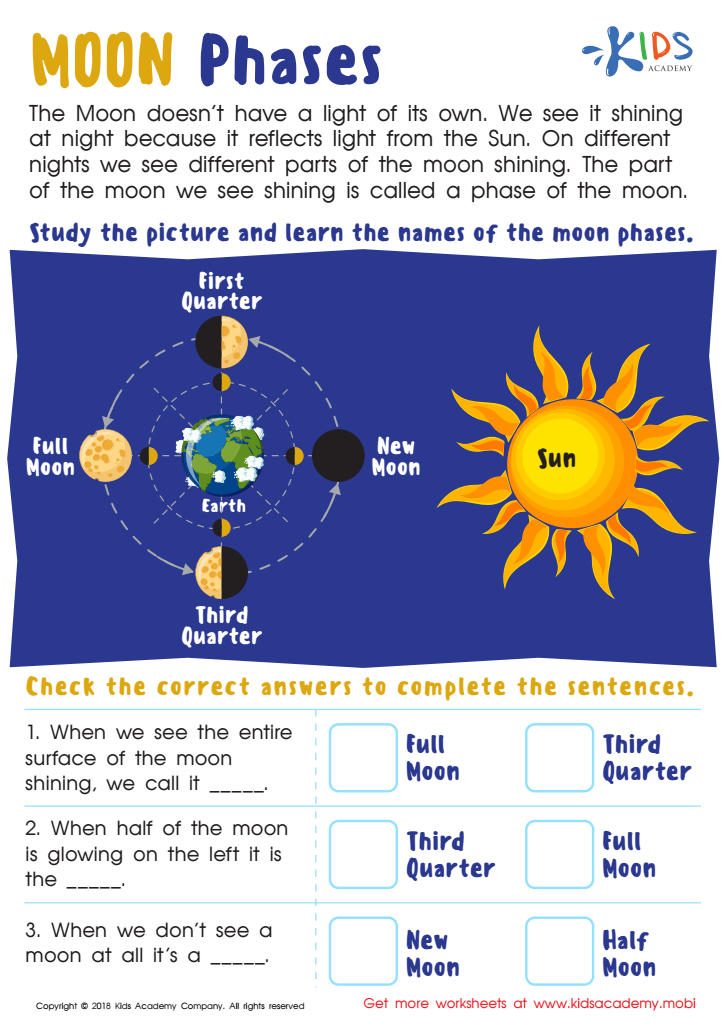
Moon Phases Worksheet
Gaze up at the night sky and the moon's appearance may change from night to night. Encourage your child to learn more about the sun, the moon, and space with this science worksheet. Have them read the text then study the picture. Finally, read the sentences and check the answers to identify the moon's phases.
Moon Phases Worksheet
Worksheet
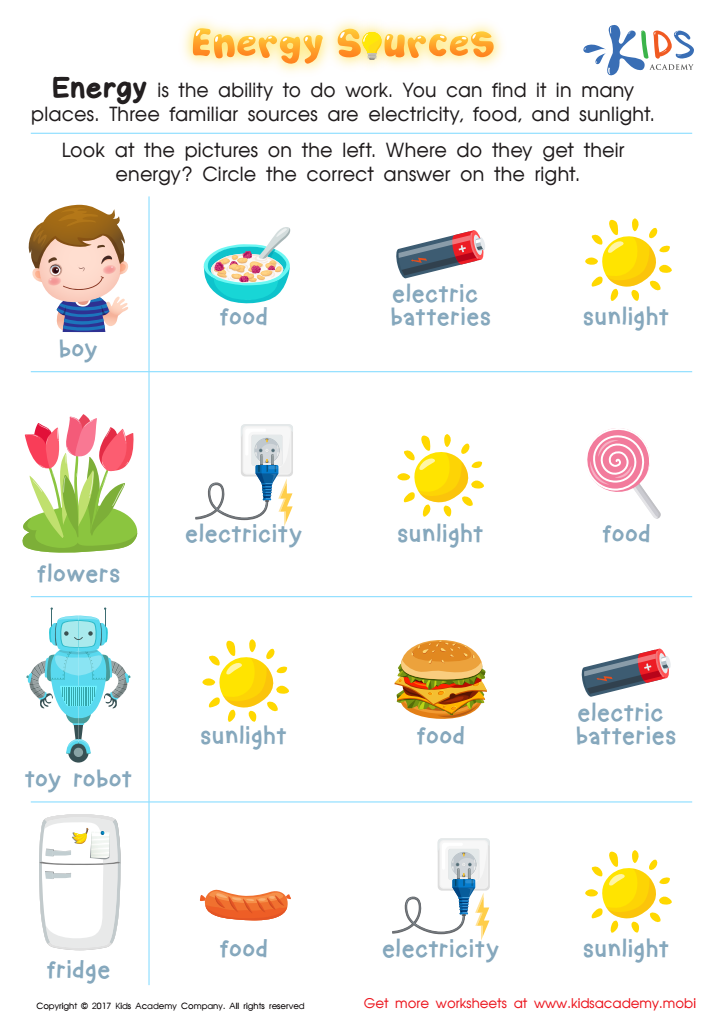
Energy Sources Printable
Introduce energy sources with this worksheet PDF — explore the sun, batteries, and more! Get your mini scientist excited about energy and power up their learning.
Energy Sources Printable
Worksheet
Join Kids Academy for Free
Who is primarily going to use this learning content?






.jpg)

Parents and teachers should prioritize knowledge application in physical science for ages 3-6 because it lays the foundation for critical thinking and problem-solving skills. At this early age, children are naturally curious and eager to explore their environment. Engaging them in physical science activities allows them to investigate concepts like gravity, motion, and materials through hands-on experiences. This practical application reinforces their understanding of scientific principles in a concrete way.
Moreover, incorporating physical science into early education encourages creativity and innovation. Children learn to ask questions, formulate hypotheses, and experiment, fostering a mindset of inquiry. By using everyday objects and situations, adults can help children relate scientific concepts to their daily lives, enhancing their cognitive development.
Additionally, knowledge application in physical science supports other areas of learning, including math and language skills, as children learn vocabulary related to scientific processes and measurements.
Promoting early science education also prepares children for future educational success and cultivates a lifelong love of learning. By supporting young children's exploration of physical science, parents and teachers contribute to their overall intellectual growth, ensuring they become confident, informed individuals capable of navigating complex scientific ideas in the future.







