Shape Recognition Physical Science Worksheets for Ages 3-6
3 filtered results
-
From - To
Explore our engaging Shape Recognition Physical Science Worksheets designed specifically for children aged 3-6! These worksheets are perfect for early learners to develop essential shape identification skills while nurturing their curiosity about the world around them. With vibrant illustrations and interactive activities, your little ones will enjoy hands-on learning experiences that reinforce their understanding of shapes and how they relate to the physical sciences. Ideal for both home and classroom use, our printable worksheets help support cognitive growth, fine motor skills, and critical thinking. Start your child's journey of discovery in physical science with our fun and educational resources today!
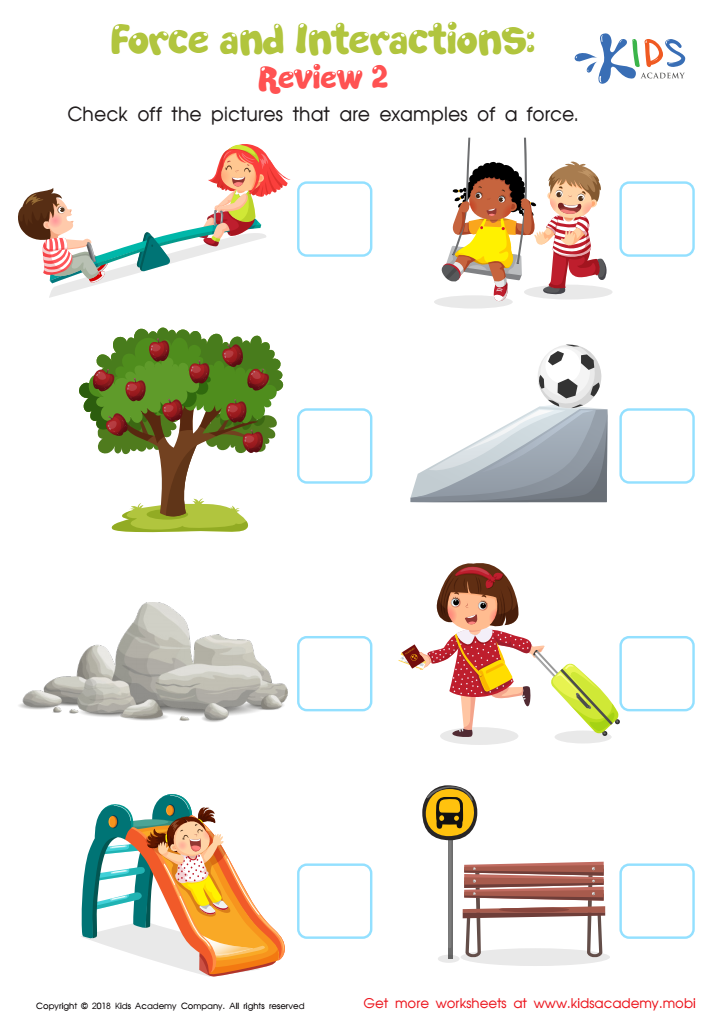
Force and Interactions: Review 2 Worksheet
 Assign to My Students
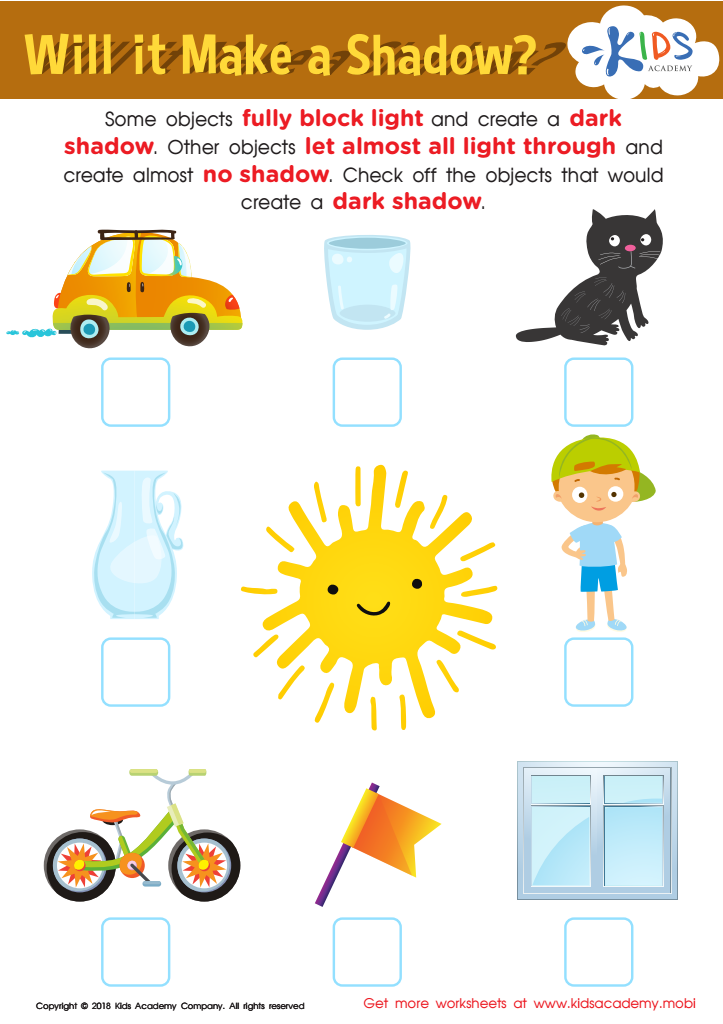
Will It Make a Shadow? Worksheet
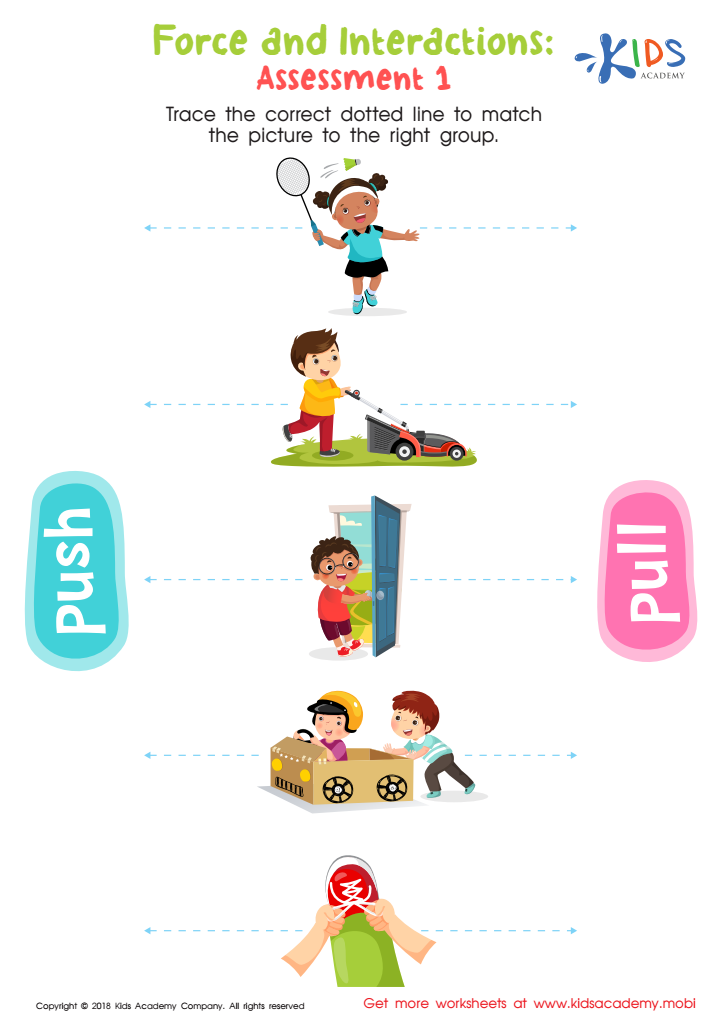
Force and Interactions: Assessment 2 Worksheet








Shape recognition is a fundamental aspect of a child's early development, particularly in the ages 3-6. It provides the building blocks for numerous cognitive skills and fosters a child's ability to perceive and interact with their environment. Parents and teachers should care about shape recognition in physical science as it facilitates critical foundational learning in mathematics and geometry. By identifying shapes, children enhance their problem-solving skills, develop spatial awareness, and improve their logical reasoning.
Moreover, engaging in shape-related activities promotes fine motor skills through hands-on play, such as puzzles or building blocks. These activities not only make learning enjoyable but also encourage collaboration and communication among peers. As children explore shapes in physical science, they begin to understand concepts related to measurement, area, and volume which are gradually built upon in later education.
Additionally, early shape recognition connects to broader themes in science, such as symmetry and patterns, leading to a greater comprehension of the world around them. By prioritizing shape recognition, caregivers will empower children with critical skills that interlace across subjects, preparing them for future academic success and encouraging a lifelong love for learning. Consequently, nurturing this aspect of development contributes holistically to a child's growth.







