Spatial awareness Physical Science Worksheets for Ages 3-6
3 filtered results
-
From - To
Unlock your child's potential with our Spatial Awareness Physical Science Worksheets designed for ages 3-6! These engaging worksheets offer interactive activities that help young learners grasp essential spatial concepts through fun exercises. Children will explore relationships between objects, learn about positions, and develop essential navigational skills while enhancing their understanding of physical science. Crafted to ignite curiosity and foster creativity, our resources are perfect for at-home learning or classroom environments. Watch as your little ones gain confidence in their spatial awareness, laying a strong foundation for future STEM learning. Start your journey in discovery today!
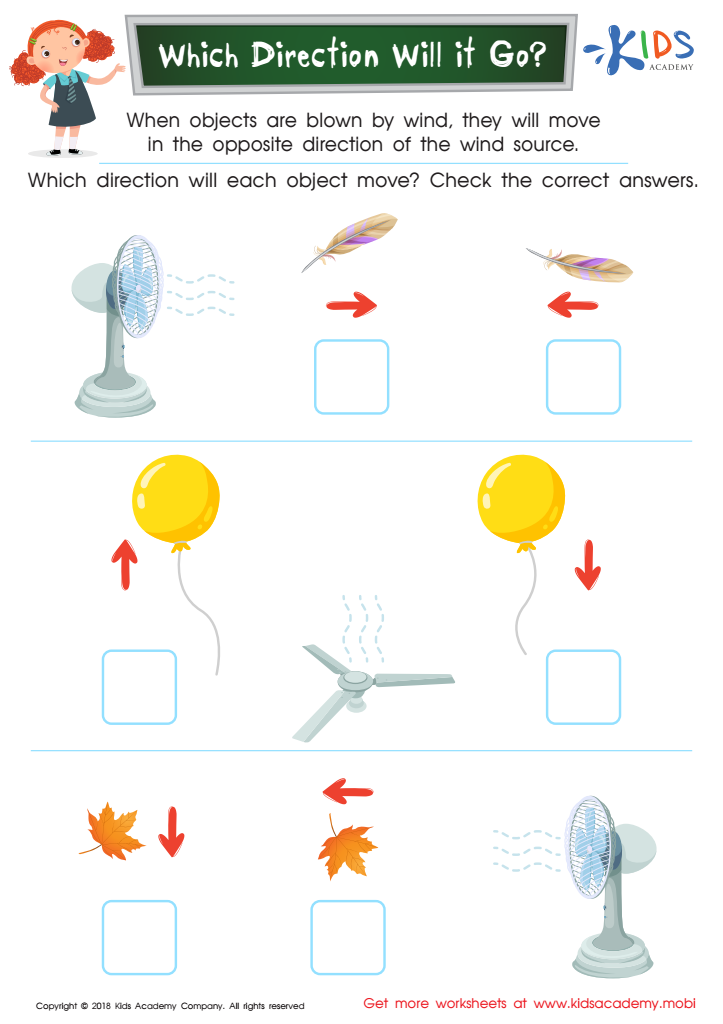
Which Direction Will it Go? Worksheet
 Assign to My Students
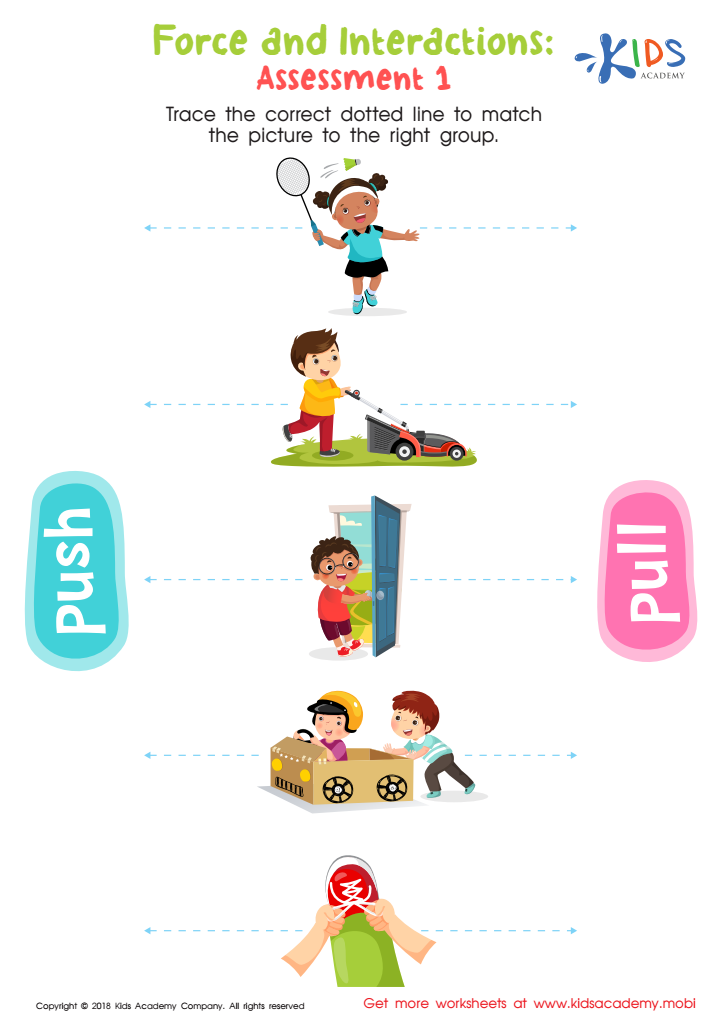
Force and Interactions: Assessment 2 Worksheet
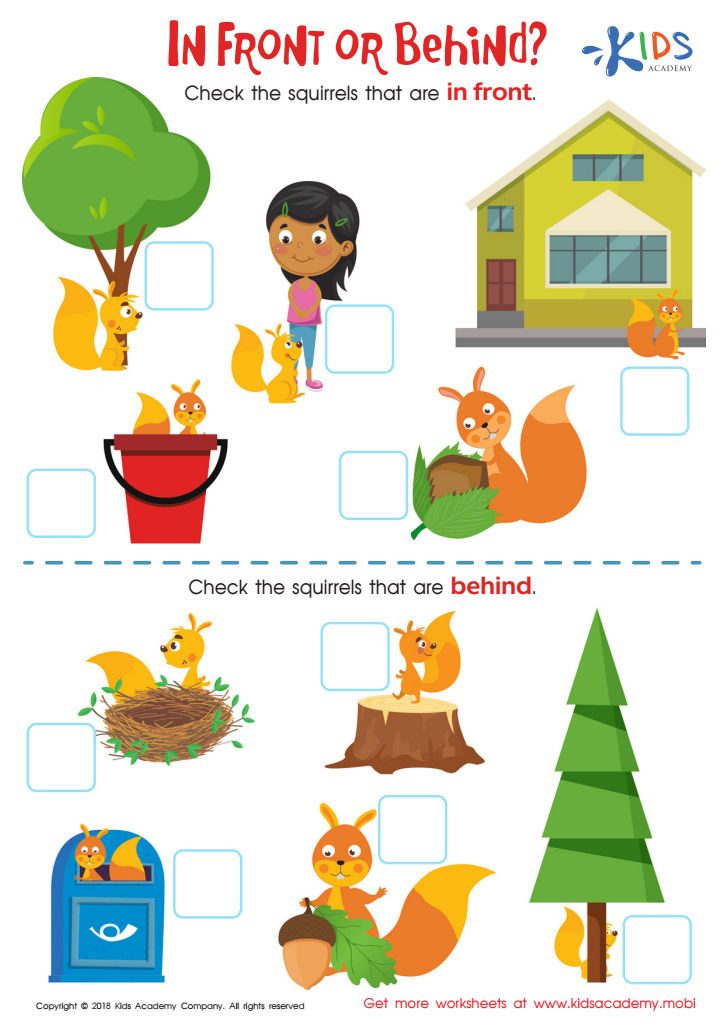
In Front or Behind: Part 2 Worksheet







Spatial awareness in young children, particularly ages 3-6, is a crucial foundation for their overall development. This skill involves understanding where objects are in relation to themselves and each other, which is pivotal in everyday life and future academic pursuits. Parents and teachers should prioritize spatial awareness because it is linked to various cognitive and physical skills, including problem-solving, mathematics, and even reading comprehension.
Engaging in spatial awareness activities—such as building with blocks, puzzles, or simple mazes—can enhance children's ability to visualize and manipulate objects mentally. This foundational skill is particularly important for understanding concepts in physical science, such as gravity, balance, and motion.
Moreover, high spatial awareness fosters creativity and critical thinking. Children who can navigate space effectively are better equipped to experiment and engage in scientific exploration. When parents and teachers actively incorporate spatial awareness into play and learning, they are helping children develop essential foundational skills that will enhance their confidence and competence in future academic settings. Investing in these early experiences prepares children not just for academic success but also for social interactions and real-world problem-solving, making it vital for their holistic growth.







