
Vocabulary enhancement Physical Science Worksheets for Ages 3-6
5 filtered results
Difficulty Level
Grade
Age
-
From - To
Subject
Activity
Standards
Enhance your child’s vocabulary and understanding of physical science with our exclusive worksheets, meticulously designed for ages 3-6. These engaging activities help young learners explore fundamental scientific concepts, promoting curiosity and foundational knowledge. Each worksheet features age-appropriate vocabulary enhancements, ensuring a seamless blend of language development and scientific inquiry. Encourage your child to discover the fascinating world of matter, energy, and forces through vibrant visuals and interactive tasks. Ideal for homeschooling or classroom use, support your child’s educational journey with our fun and informative physical science vocabulary worksheets from Kids Academy.
Favorites
With answer key
Interactive
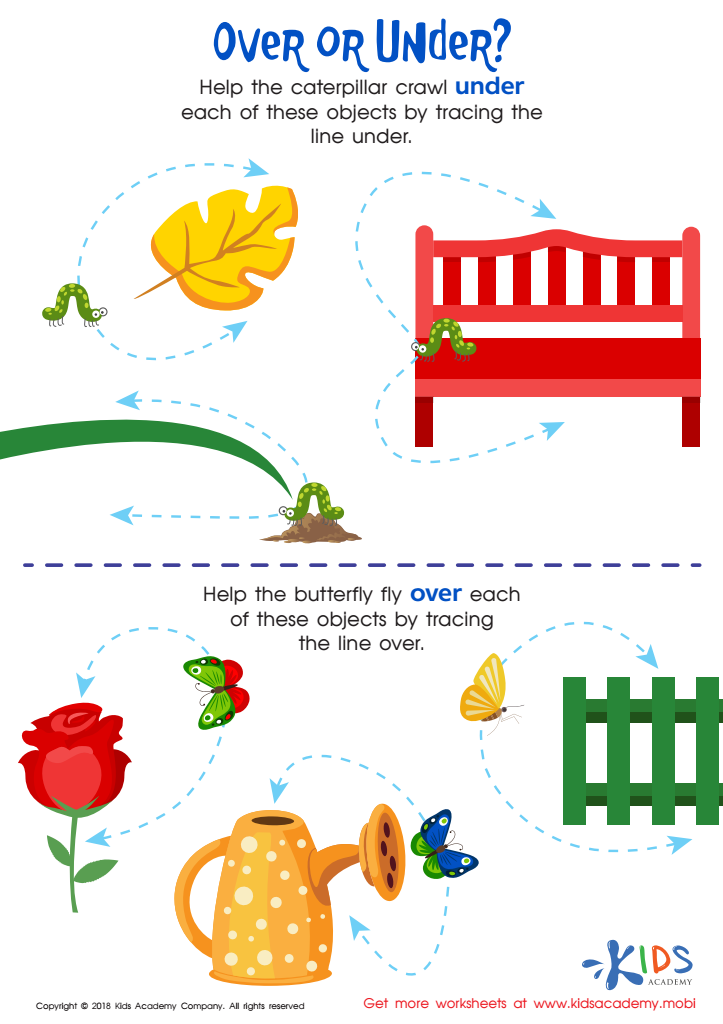
Over or Under? Worksheet
Math for young kids isn't just about numbers and counting, but also spatial concepts like geometry. This worksheet helps students learn "over" and "under" by tracing the movement of caterpillars and butterflies. Downloadable for free, it's an effective teaching tool for early learners.
 Assign to My Students
Over or Under? Worksheet
Worksheet
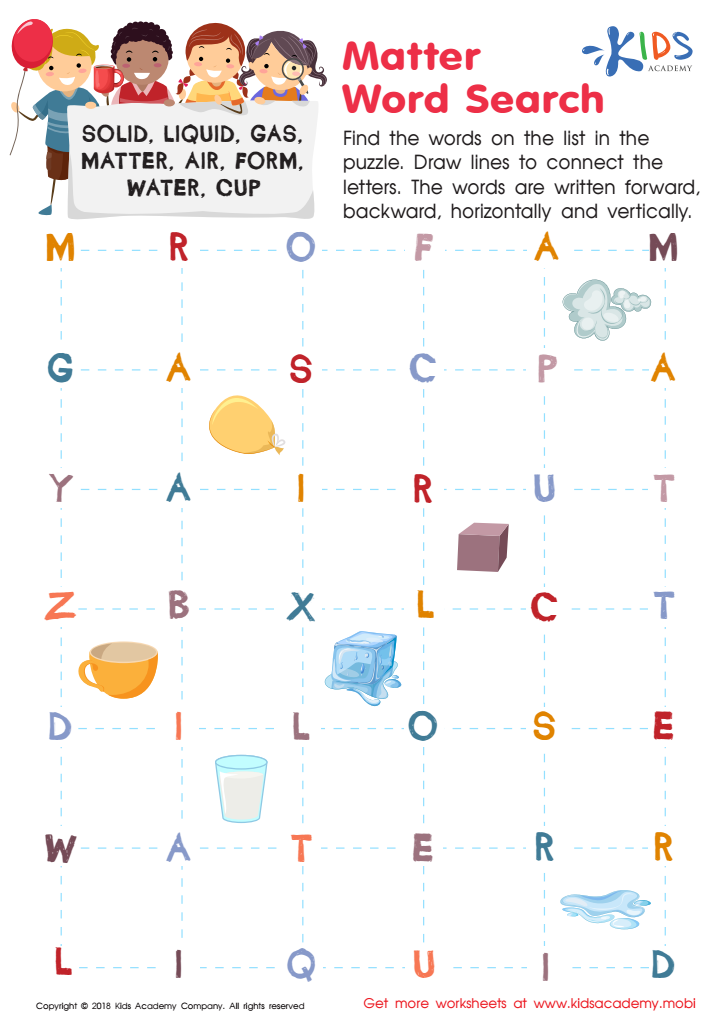
Matter Word Search Worksheet
Matter is anything with weight and taking up space. It exists in three forms: solid, gas and liquid. Examples of these are ice, air and water. Help kids find the words in the puzzle, which are written forward, backward, horizontally and vertically. Connect the letters!
Matter Word Search Worksheet
Worksheet
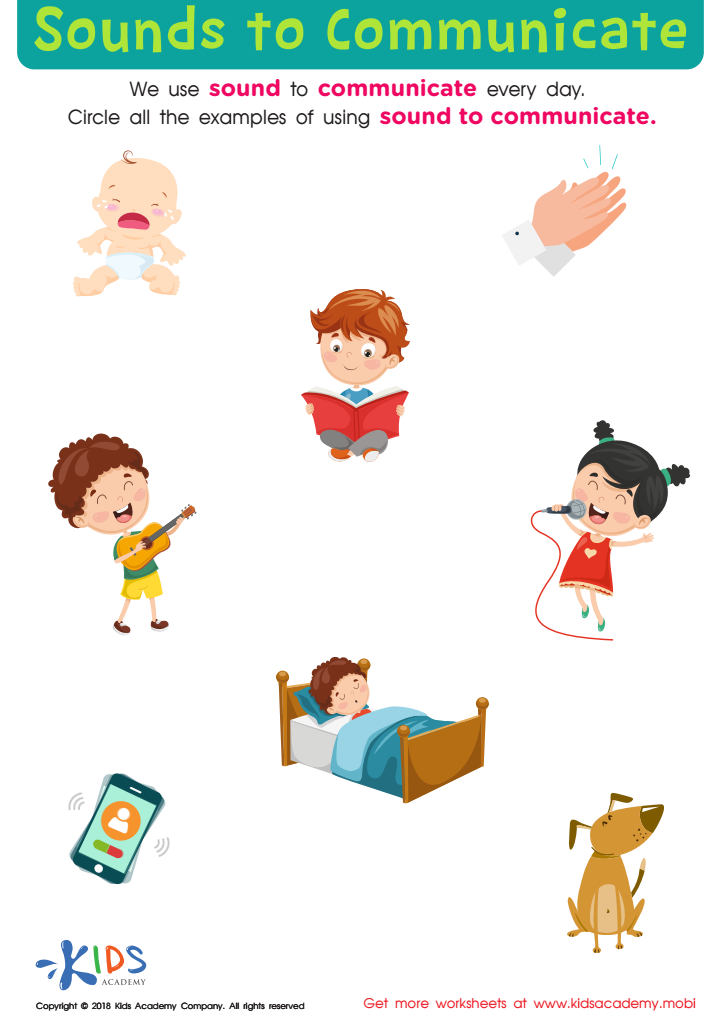
Sounds to Communicate Worksheet
Sounds are important for communication. Ask your students to name sounds people, animals and things make. Then, review this worksheet with them and see if they can identify the activities. Ask them to circle examples of sounds used to communicate.
Sounds to Communicate Worksheet
Worksheet
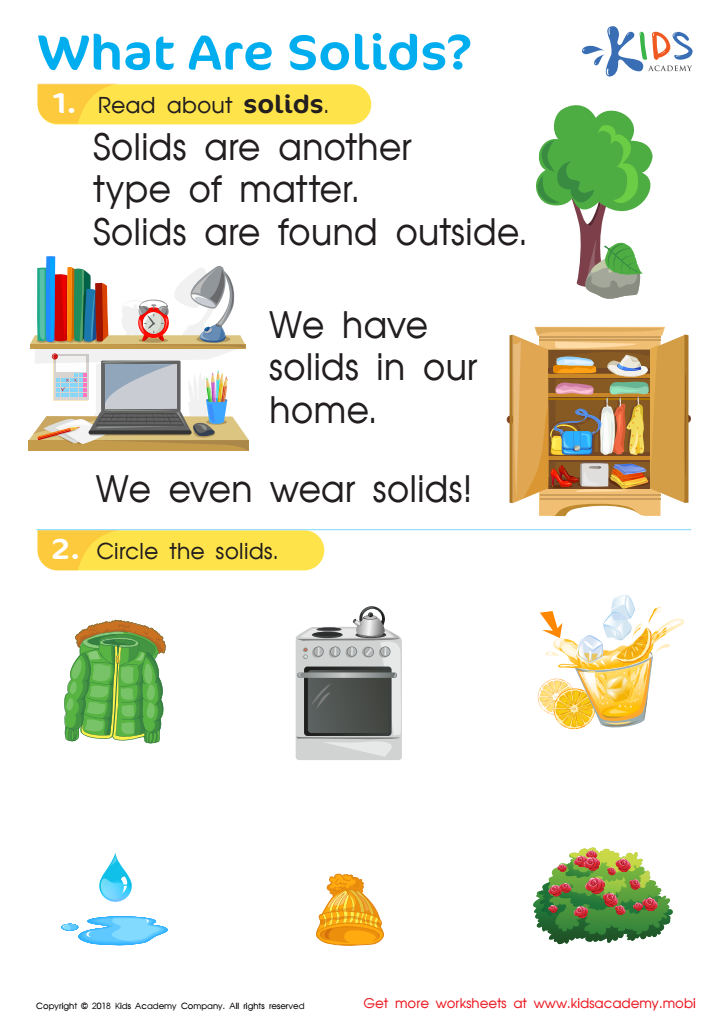
What Are Solids? Worksheet
Help your kids understand matter's three forms - solid, liquid, and gas - with examples. Ask them to give their own and where to find them. Then, read and discuss the worksheet's facts about solids. Afterward, have them circle the solids among the provided objects.
What Are Solids? Worksheet
Worksheet
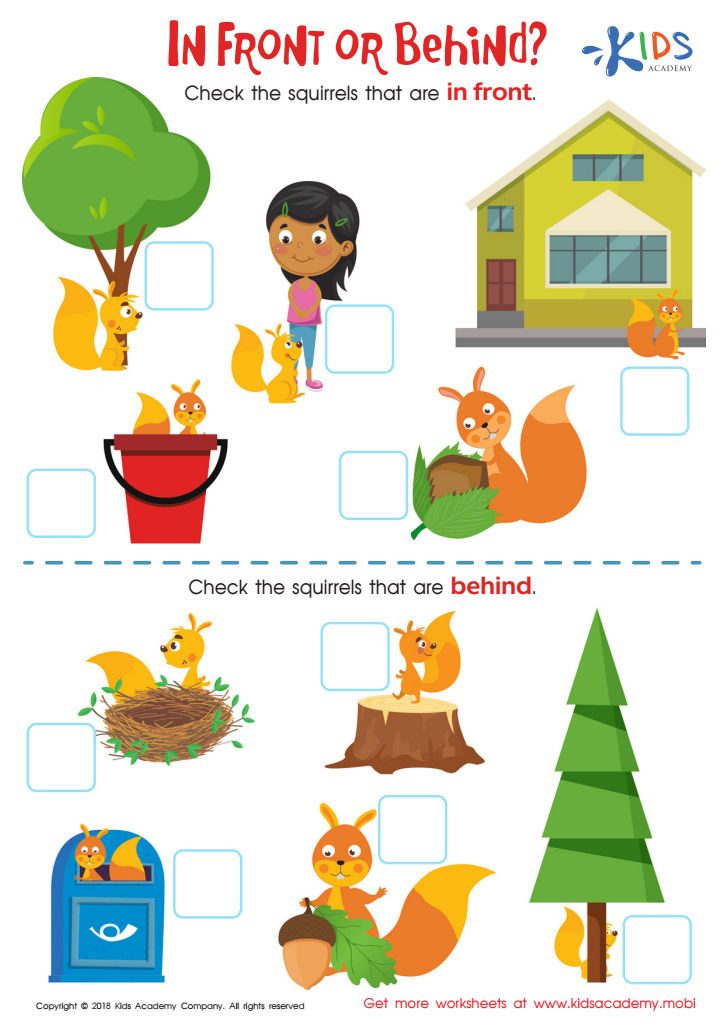
In Front or Behind: Part 2 Worksheet
Teach positional words "front" and "behind" with this fun worksheet! Students identify where the squirrel is in relation to the object - in front or behind. It's a great exercise to practice early geometry skills and understanding object movement.
In Front or Behind: Part 2 Worksheet
Worksheet
Join Kids Academy for Free
Who is primarily going to use this learning content?








Vocabulary enhancement in physical science is crucial for young children aged 3-6 as it lays the foundation for future learning and cognitive development. Early exposure to scientific terms helps kids grasp complex concepts more easily later on, fostering a love for science from a young age. By integrating physical science vocabulary into everyday activities, parents and teachers can boost children's language skills, critical thinking, and curiosity about the world around them.
When children learn words like "magnet," "gravity," "force," and "experiment," they start making connections between language and their environment. This not only enriches their vocabulary but also supports their ability to observe, describe, and question how things work. Such skills are essential for problem-solving and analytical thinking, which are indispensable in many areas of learning and life.
Moreover, early vocabulary enhancement in physical science encourages children to communicate their thoughts and ideas more effectively. It promotes confidence in their ability to describe phenomena and engage in discussions, both with peers and adults. Lastly, fostering an early interest in science can lead to a lifelong passion for learning, paving the way for future educational and career opportunities in STEM (Science, Technology, Engineering, and Mathematics) fields. In essence, a strong vocabulary in physical science is a gift that keeps on giving, benefiting children far beyond their early years.







