Following instructions Community Worksheets for Ages 3-6
4 filtered results
-
From - To
Introducing our "Following Instructions Community Worksheets for Ages 3-6"! These engaging and educational worksheets are designed to help young learners develop crucial listening and following instruction skills. Perfect for preschool to first grade, each worksheet features fun activities that are set within the context of community and social studies. Children will learn about various community helpers and situations while honing their ability to understand and execute instructions. Our worksheets support cognitive development and prepare kids for classroom success. Easy to download and print, they are a valuable resource for parents and teachers alike. Start fostering essential life skills today!

 Assign to My Students
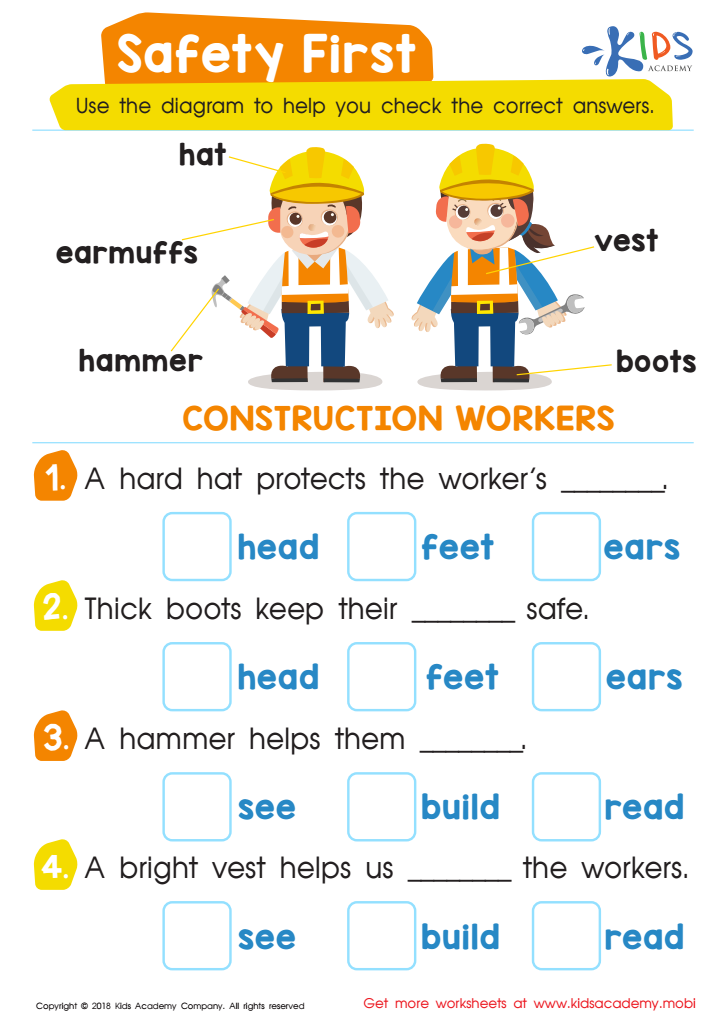
Safety First Worksheet

Playground Worksheet
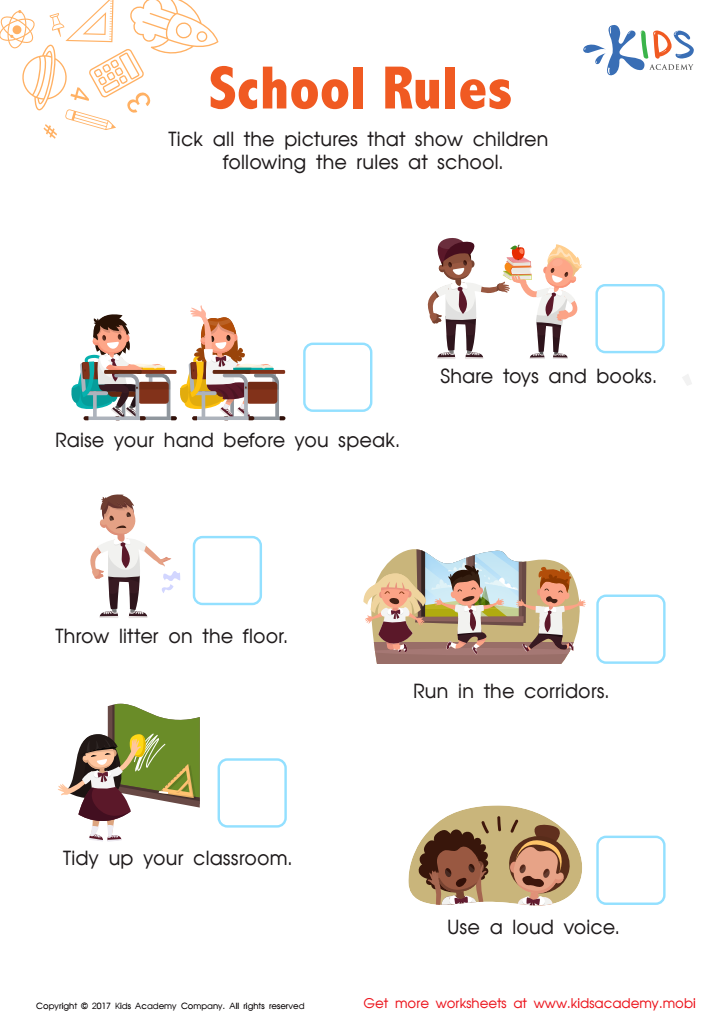
School Rules Worksheet








Following instructions is a critical skill for young children, particularly those aged 3-6, as it lays foundational groundwork for both cognitive and social development. This age group is at a crucial stage where they are beginning to understand and navigate the world around them, and following instructions helps them streamline this process.
Parents and teachers should care deeply about fostering this skill because it contributes significantly to a child's sense of safety and independence. Being able to follow instructions means children can more safely interact with their environment, avoid dangers, and take care of simple tasks by themselves.
Moreover, following instructions is tied to a child’s ability to process and retain information, essential for successful learning. It cultivates attention to detail, listening skills, and memory retention, which are all crucial for academic achievement. Children who can follow instructions tend to have smoother transitions in structured environments like classrooms, making them more receptive to new knowledge and collaborative activities.
Socially, the ability to follow instructions aids in developing respect for rules and authority, which is important in building respectful and amicable relationships. It also enhances their capability to work in teams, resolve conflicts, and contribute positively to group dynamics. Thus, caring about this community skill from an early age solidifies a child's ability to thrive academically and socially.








