
Vocabulary development Community Worksheets for Ages 3-6
6 filtered results
Difficulty Level
Grade
Age
-
From - To
Subject
Activity
Standards
Enhance your child's vocabulary with our engaging Community Worksheets, specially designed for ages 3-6. These interactive printables focus on key concepts about community life, helping young learners recognize familiar words and phrases. Through colorful activities, children will explore various community roles and environments while improving their language skills. Each worksheet promotes fun learning experiences that stimulate curiosity and creativity, making vocabulary development enjoyable. Perfect for parents and teachers, our resources support early language acquisition and social understanding. Equip your child with the essential vocabulary needed to navigate their world and connect with others in their community today!
Favorites
With answer key
Interactive

Let's Go to the Library! Worksheet
How often does your child visit the library? If they're a frequent visitor, they'll breeze through this worksheet. It requires them to look at pictures that depict activities done in the library and activities not allowed. Ask them to circle the correct picture. It's a fun way to reinforce library knowledge.
 Assign to My Students
Let's Go to the Library! Worksheet
Worksheet


What Do Teachers Need Worksheet
This interactive worksheet tasks kindergarten students with identifying essential items a teacher needs in a classroom. They will be asked to circle items, helping them learn what teachers need to have in their classrooms.
What Do Teachers Need Worksheet
Worksheet
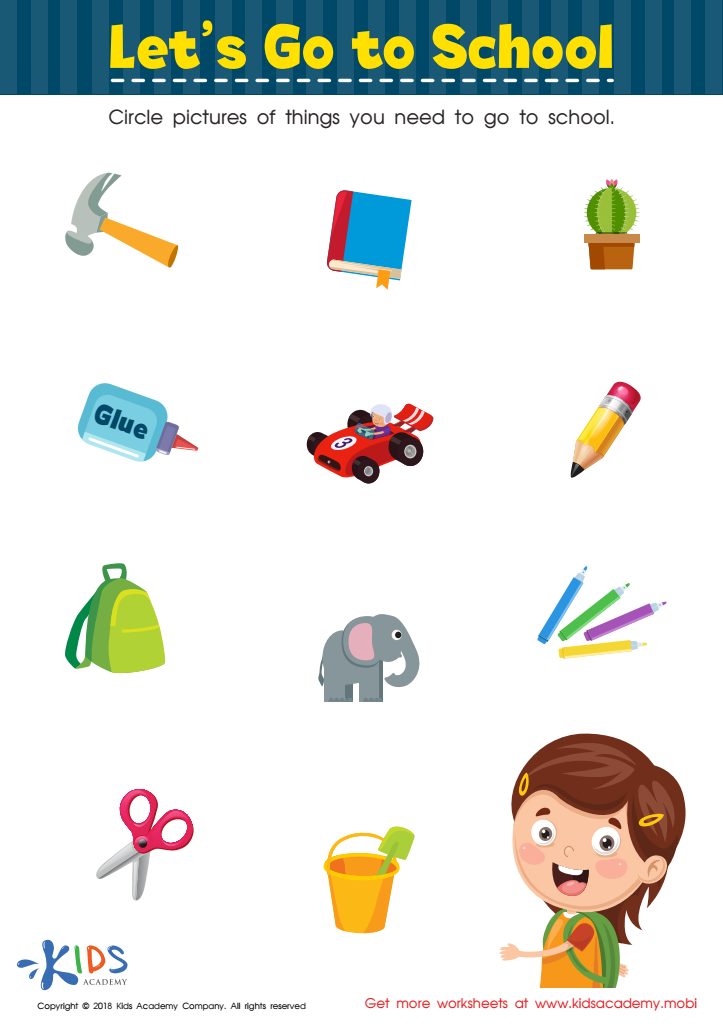
Let's Go to School! Worksheet
Ask your kids to circle the objects they need for school on this worksheet. It contains pictures of different objects - some needed and some not related to school. This should be easy for them as they're already enrolled or homeschooled.
Let's Go to School! Worksheet
Worksheet
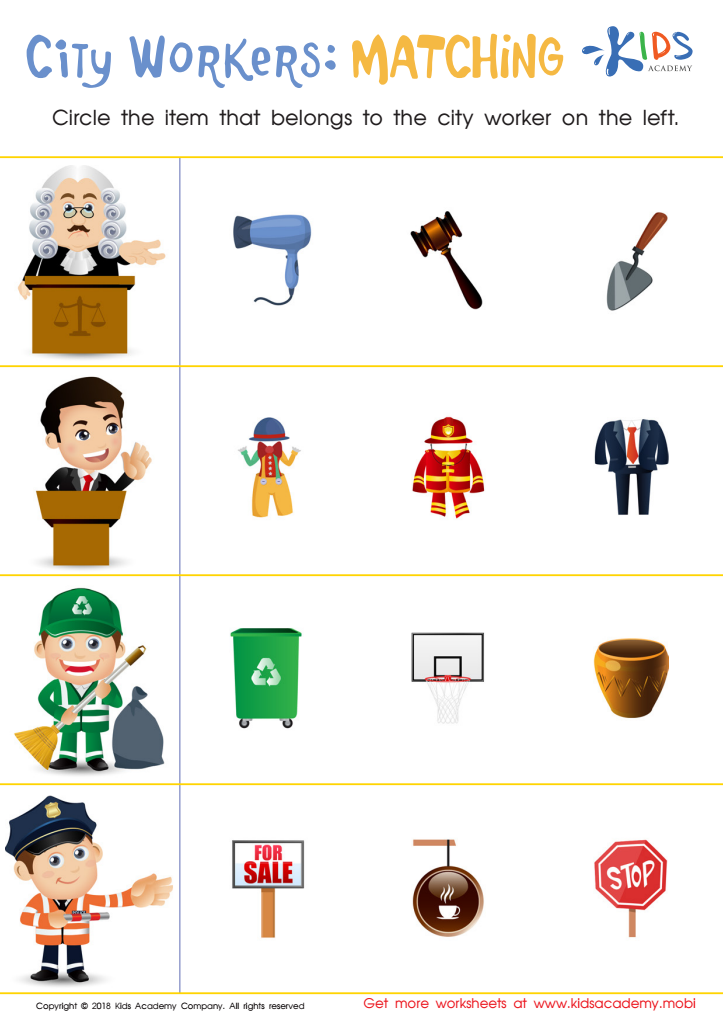
City Workers: Matching Worksheet
Examine the worksheet with your kid. Identify the individuals on the left and their jobs. Have your child circle the correct items on the right that pertain to the city workers. Help your child learn about city workers with this activity.
City Workers: Matching Worksheet
Worksheet
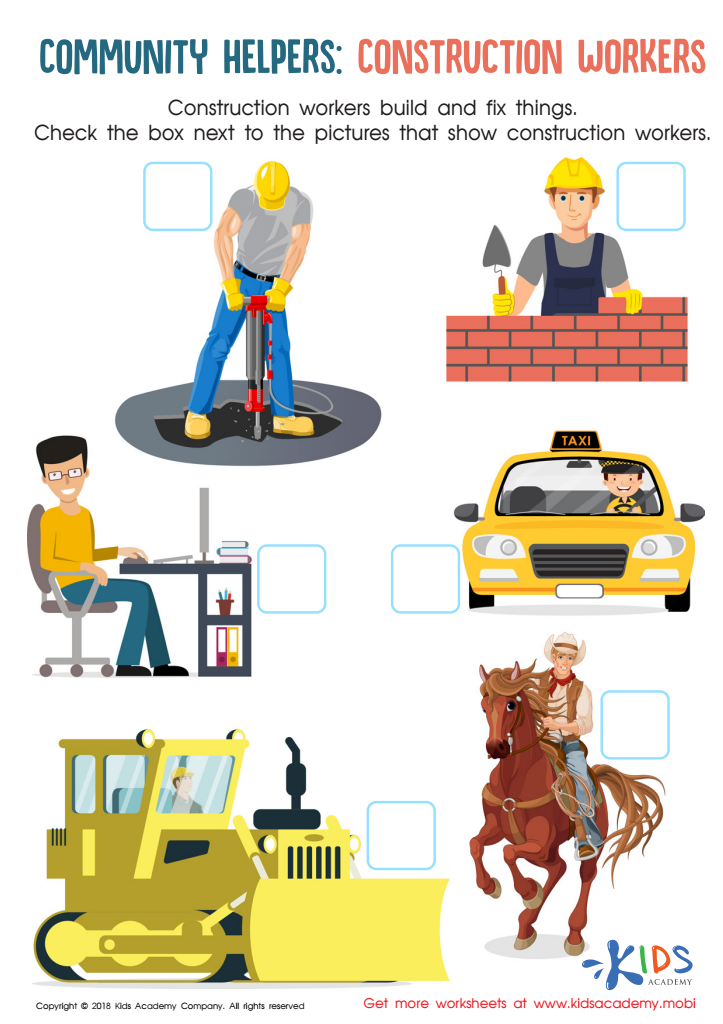
Construction Workers Community Helpers Worksheet
Construction workers build and repair roads, keeping them accessible for the community. Ask your child if they've ever seen one at work, and talk about what they do. Go through the worksheet together and check the pictures that show construction workers in action.
Construction Workers Community Helpers Worksheet
Worksheet
Join Kids Academy for Free
Who is primarily going to use this learning content?








Vocabulary development in early childhood, particularly for children aged 3-6, is crucial for several reasons, making it vital for parents and teachers to prioritize. At this age, children's brains are incredibly receptive to language, and developing a rich vocabulary forms the foundation for effective communication, literacy, and overall cognitive development. A robust vocabulary aids in their ability to express thoughts, emotions, and needs, which can foster social skills and nurture confident self-expression.
Furthermore, vocabulary knowledge is directly linked to reading proficiency. Children with a strong vocabulary are more likely to comprehend age-appropriate texts, paving the way for academic success later on. Early vocabulary development also enhances critical thinking and problem-solving skills, encouraging children to engage with their environments more creatively and thoughtfully.
Moreover, families and classrooms are often a child's first communities; fostering a healthy vocabulary development community promotes collaboration, support, and engagement among caregivers and educators. Activities like storytelling, interactive games, and discussions can introduce new words organically, making language learning enjoyable. Prioritizing vocabulary development enriches children’s lives, setting them up for lifelong learning and personal growth, thereby benefitting the entire community as children grow and contribute more effectively to society.








