Problem-Solving Skills History Worksheets for Ages 3-6
3 filtered results
-
From - To
Our Problem-Solving Skills History Worksheets for Ages 3-6 are designed to spark curiosity and develop critical thinking in young learners. These engaging activities introduce children to historical concepts and events through fun, play-based exercises. By solving age-appropriate problems, kids enhance their logical reasoning, pattern recognition, and decision-making skills. Our worksheets encourage independent learning and collaborative discussion, making history exciting and accessible for preschoolers and kindergartners. Empower your child’s educational journey with our expertly-crafted resources that blend learning and enjoyment seamlessly. Foster a love for history while building foundational problem-solving abilities that last a lifetime. Explore our collection today!
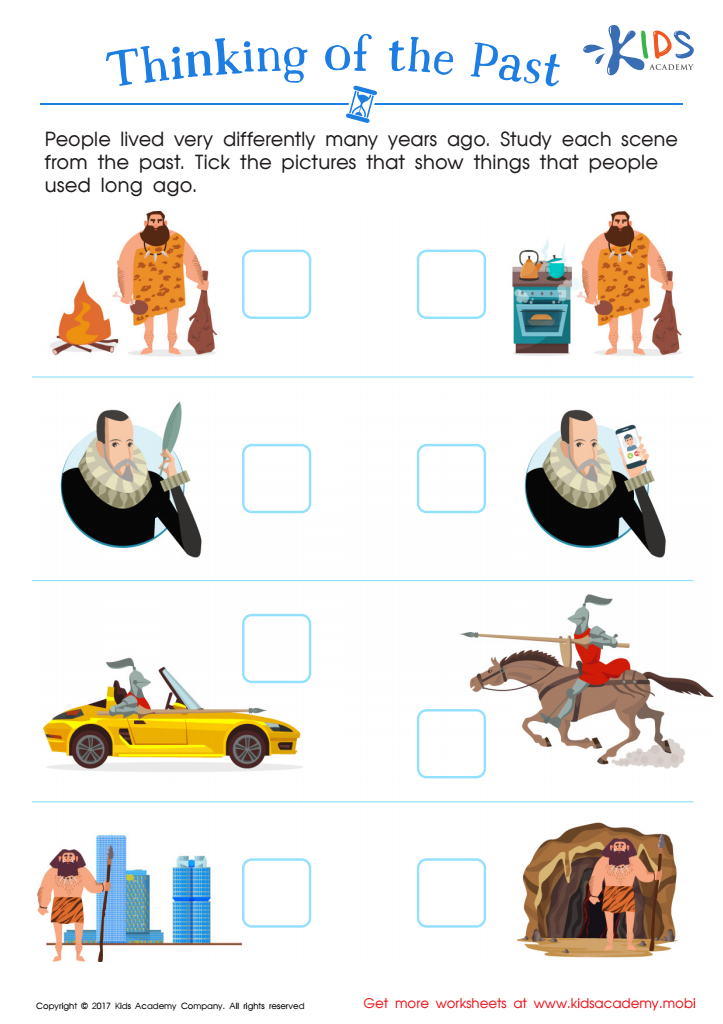
Thinking Past Printable
 Assign to My Students
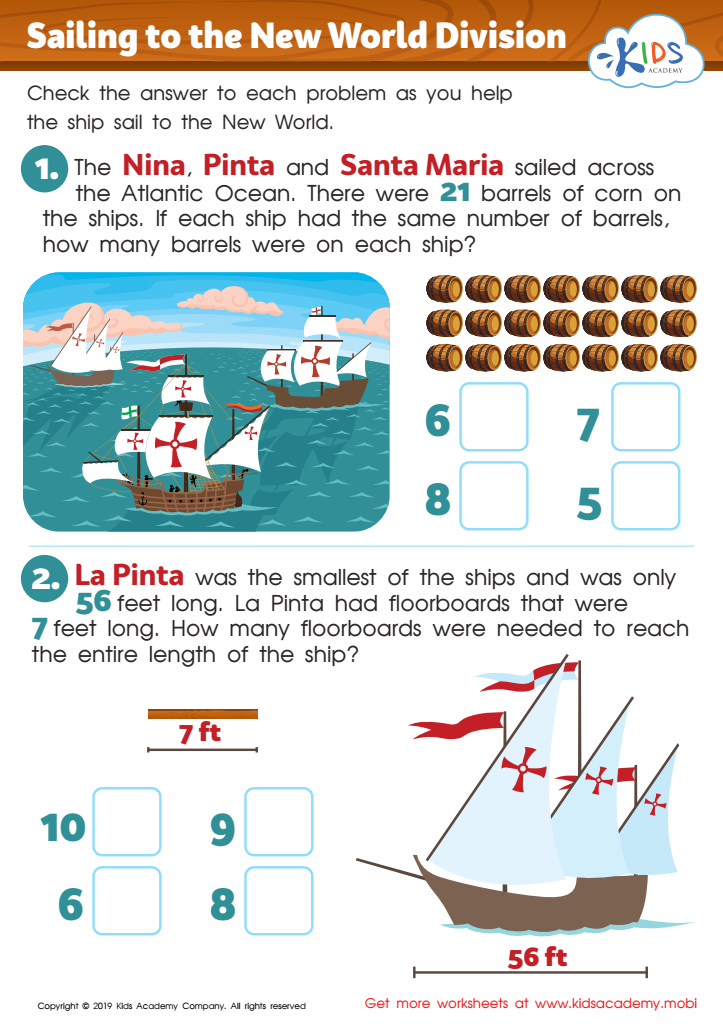
Sailing to the New World Division Worksheet
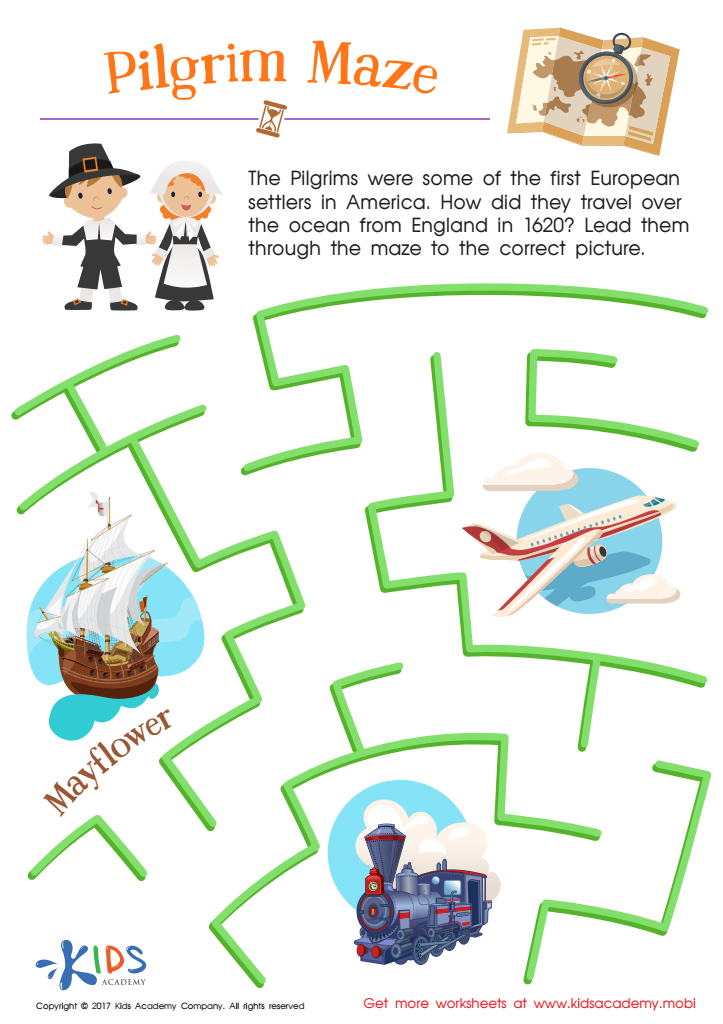
Pilgrim Maze Worksheet







Understanding the history of problem-solving skills for ages 3-6 is crucial for both parents and teachers, as it serves as a foundation for a child’s cognitive and emotional development. Historically, early childhood has been recognized as a critical period for shaping problem-solving abilities, which encompass more than just finding solutions; they also involve critical thinking, creativity, and resilience.
Years of educational research underline that children develop these skills through play, exploration, and guided learning experiences. Storytelling has been used for centuries to instill problem-solving and moral lessons, helping children think through scenarios and different outcomes. In the contemporary context, historical insight tells us that hands-on activities, such as puzzles and building blocks, encourage young learners to experiment, hypothesize, and learn from mistakes.
This historical perspective validates the importance of nurturing problem-solving skills at a young age. It implies that integrating these practices into early childhood education isn't just beneficial—it's foundational. For parents and teachers, this means creating an environment rich with diverse challenges and supportive guidance, using a time-tested, evidence-backed approach.
By valuing the historical evolution of problem-solving methodologies, today's educators can craft more effective curricula and parenting strategies that provide children with the tools they need to face future challenges confidently and creatively.