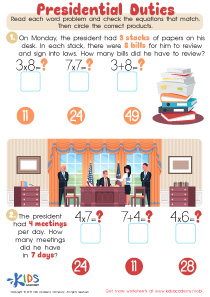
Color Identification Social Studies Worksheets for Ages 3-6
3 filtered results
-
From - To
Explore our engaging Color Identification Social Studies Worksheets designed for children ages 3-6! These interactive resources help young learners connect colors with their surrounding world while developing essential social skills. Each worksheet encourages creativity and critical thinking as kids identify, sort, and match colors in various contexts. Perfect for homeschool, preschool, or classroom settings, our worksheets promote cognitive development through colorful visuals and fun activities. Instill the excitement of discovery as your little ones learn about diversity and the role colors play in everyday life. Download the worksheets today and watch your child's color recognition skills bloom!

Fireman Worksheet
 Assign to My Students
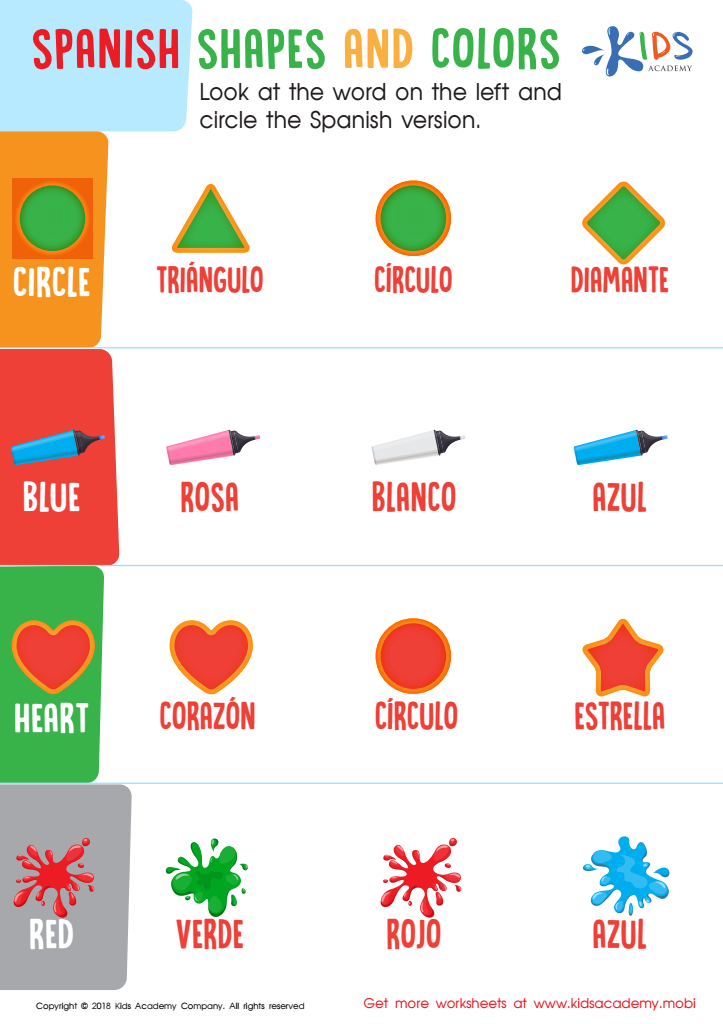
Spanish Shapes and Colors Worksheet
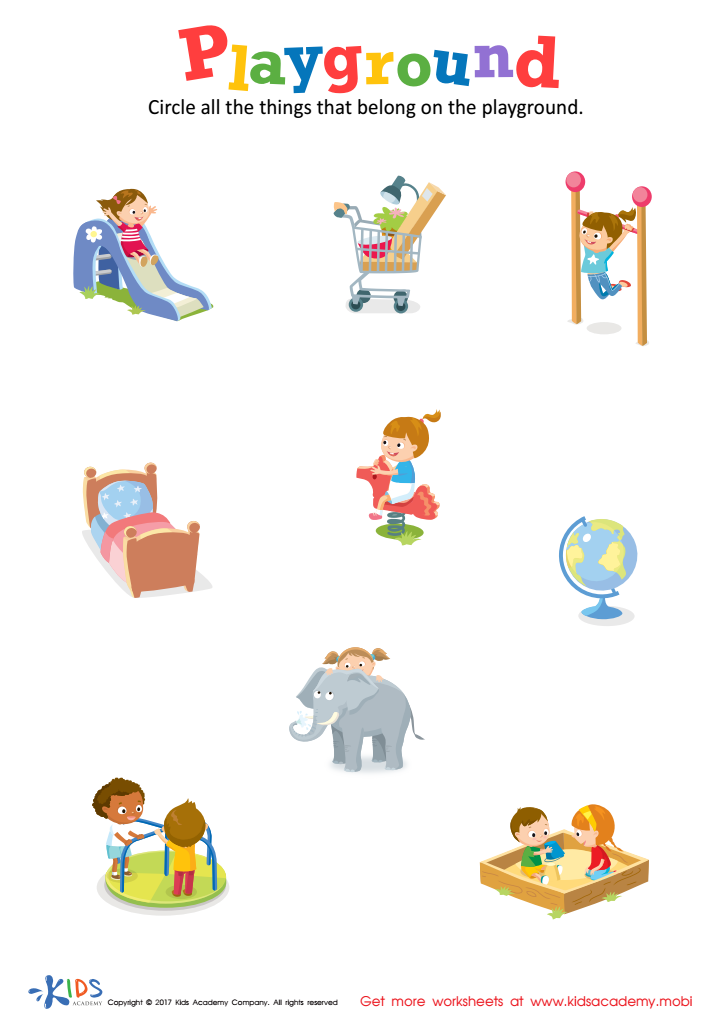
Playground Worksheet







Color identification is a crucial part of early childhood education, particularly in social studies, as it helps young children understand and navigate their world. For children ages 3-6, recognizing colors enhances their cognitive skills and lays the groundwork for more complex learning. Parents and teachers should care about this foundational skill for several reasons.
Firstly, color identification aids in expression and communication. Children learn to articulate their feelings and preferences through colors, fostering social interactions and exchanges. Secondly, it plays a significant role in promoting observational skills, enabling children to notice and categorize everyday objects and their environments, bridging their personal experiences with broader social contexts.
Additionally, colors often hold cultural significance; understanding them can foster inclusiveness and appreciation of diversity among peers. Organizing activities or discussions around colors can spark children's interest in art, nature, and even history, deepening their connections to the content.
Moreover, learning colors supports the development of essential literacy and numeracy skills. Engaging with color-related tasks can enhance memory and attention, promoting overall cognitive growth. Ultimately, recognizing and discussing colors can enrich a child’s social studies experience, shaping future learners who are observant, expressive, and culturally aware citizens.