Verb identification Writing Worksheets for Ages 3-6
3 filtered results
-
From - To
Discover the perfect resource to enhance your child's early writing skills with our Verb Identification Writing Worksheets, specially designed for ages 3-6. These engaging worksheets make learning verbs fun and interactive, helping young learners identify and use action words seamlessly. Each activity combines colorful visuals and simple instructions to keep little ones motivated and attentive. Parents and teachers will adore the ease with which kids grasp new vocabulary and improve sentence structure. Our printable worksheets are perfect for early education, setting a strong foundation for language development and future academic success. Nurture your child's learning journey today!
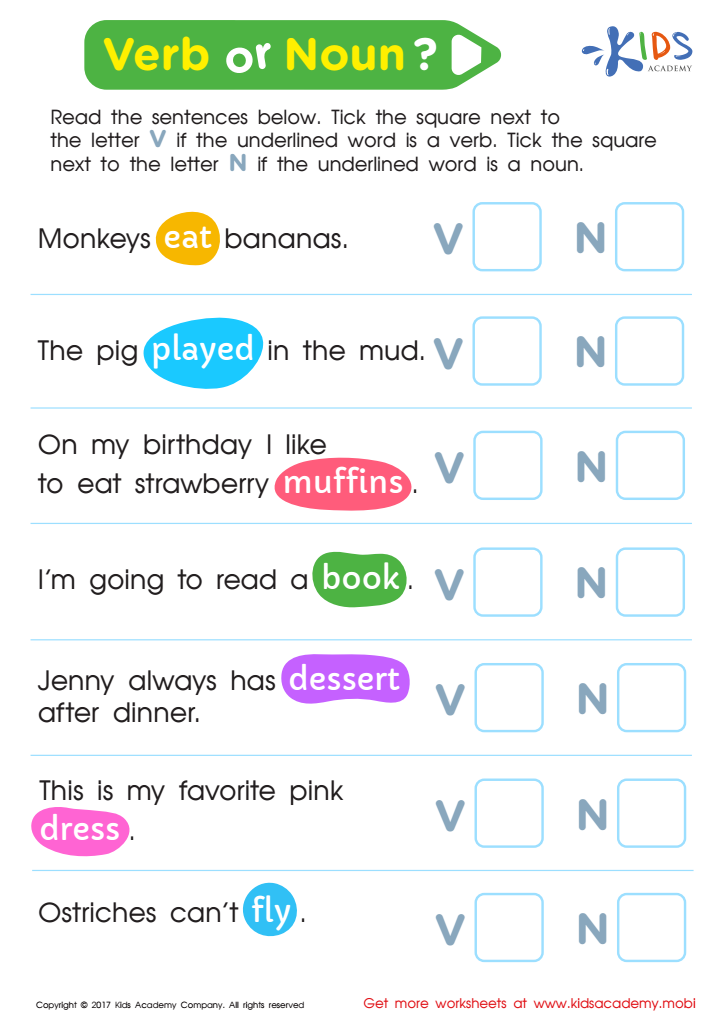
Verb or Noun Worksheet
 Assign to My Students
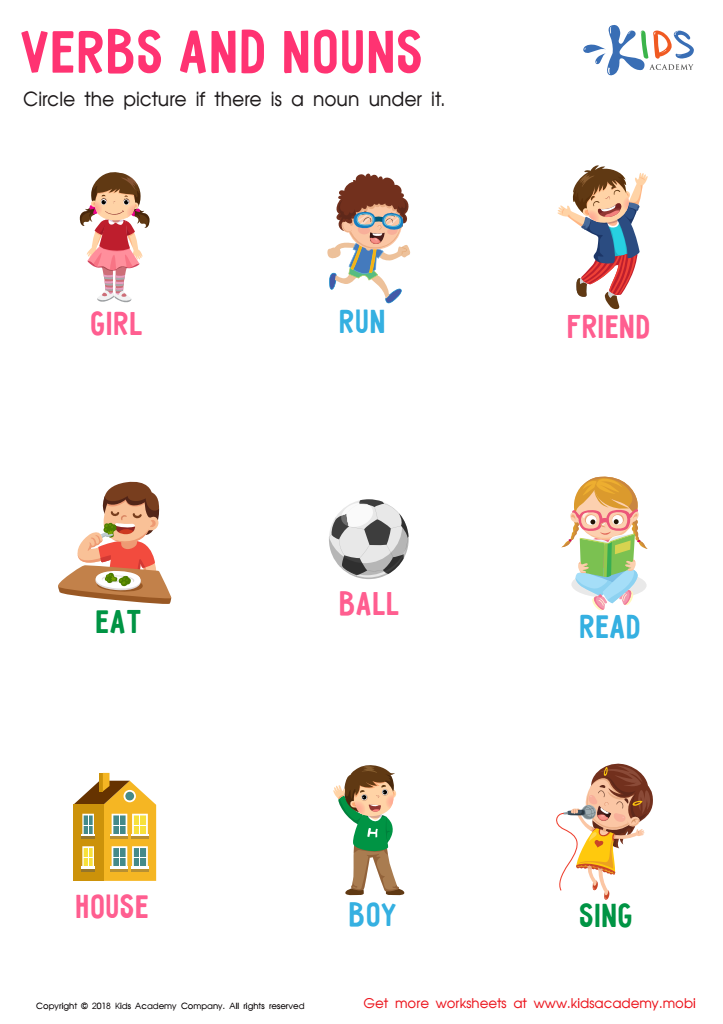
Verbs and Nouns Worksheet
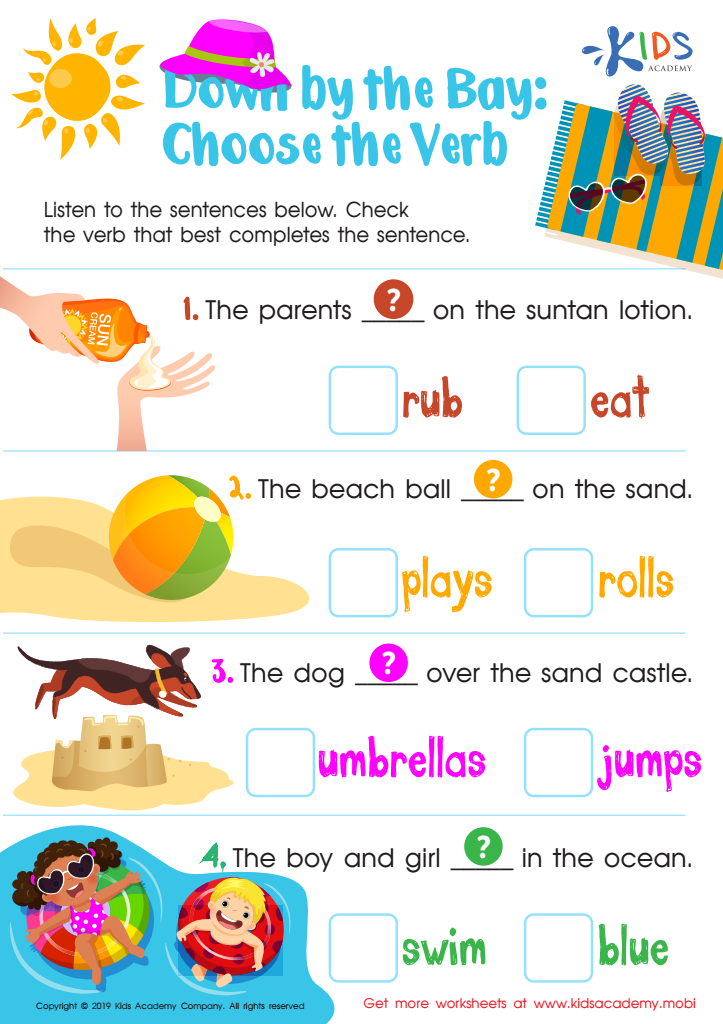
Down by the Bay: Choose the Verb Worksheet








Verb identification is fundamental for young children ages 3-6 because it lays the groundwork for effective communication and literacy development. At this age, children are in a critical period for language acquisition. Recognizing and understanding verbs, which are action words, helps children express their needs, thoughts, and emotions more accurately. This skill is crucial for both speaking and writing.
For parents and teachers, supporting verb identification plays a significant role in expanding a child’s vocabulary. By practicing this skill, children learn to identify and use a variety of verbs, enabling them to construct more complex and meaningful sentences. This not only boosts their linguistic skills but also enhances their cognitive abilities, such as thinking, reasoning, and problem-solving.
Moreover, verb identification directly supports reading comprehension. When children recognize verbs in a sentence, they can better understand the action and overall narrative. This, in turn, nurtures their joy of reading, which is foundational for lifelong learning.
Incorporating fun and engaging activities like storytelling, interactive games, and songs that highlight verbs can make learning enjoyable. By investing time in this foundational aspect of language development, parents and teachers can help set children on a path to confident and competent communication skills.








