
Sound recognition Consonants Worksheets for Ages 3-7
5 filtered results
Difficulty Level
Grade
Age
-
From - To
Subject
Activity
Standards
Our Sound Recognition Consonants Worksheets for ages 3-7 offer a fun and educational approach to help young learners identify and differentiate consonant sounds. Engaging activities and vibrant illustrations keep children captivated as they practice recognizing, tracing, and matching consonant sounds. These worksheets are designed to build phonemic awareness, foundational reading, and listening skills, crucial for early language development. Ideal for preschool and early elementary students, these resources provide a structured learning experience both in the classroom and at home. Foster your child's phonics journey with our expertly crafted consonant sound recognition worksheets today.
Favorites
With answer key
Interactive
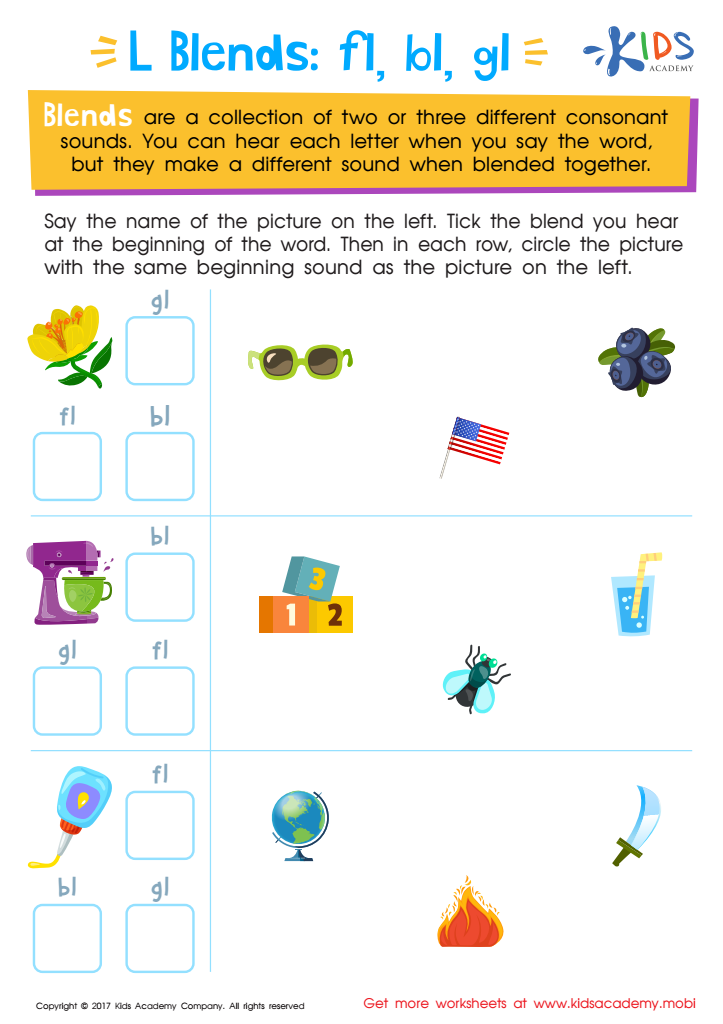
Blending Consonants: "Fl", "Bl" and "Gl" Printable
Help your child master consonant blends Fl, Bl, and Gl with this printable worksheet. Find words associated with the pictures and learn to better understand the difference between consonant blends. Vibrant images motivate and aid in learning. Download now for improved phonics success!
 Assign to My Students
Blending Consonants: "Fl", "Bl" and "Gl" Printable
Worksheet
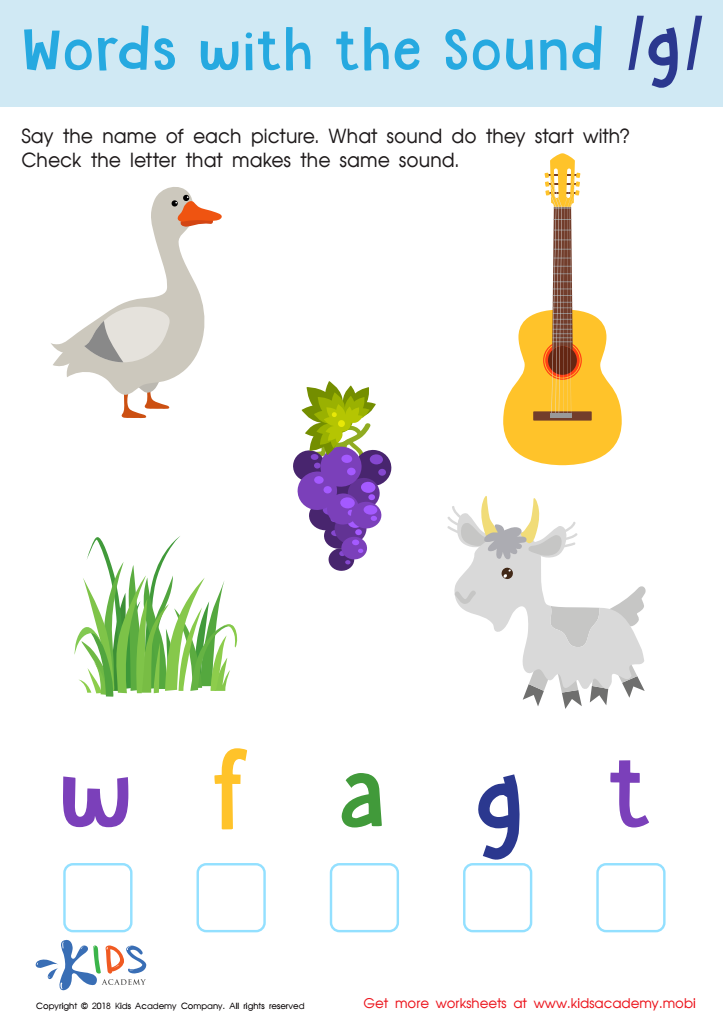
Words with sound g Reading Worksheet
Help your child learn the soft "g" sound with this phonics worksheet. Ask them to name each picture, then identify the letter sound it begins with. If it's "g", they can check the box. Have them repeat each word, listening for the soft "g" sound before moving on to the next page.
Words with sound g Reading Worksheet
Worksheet
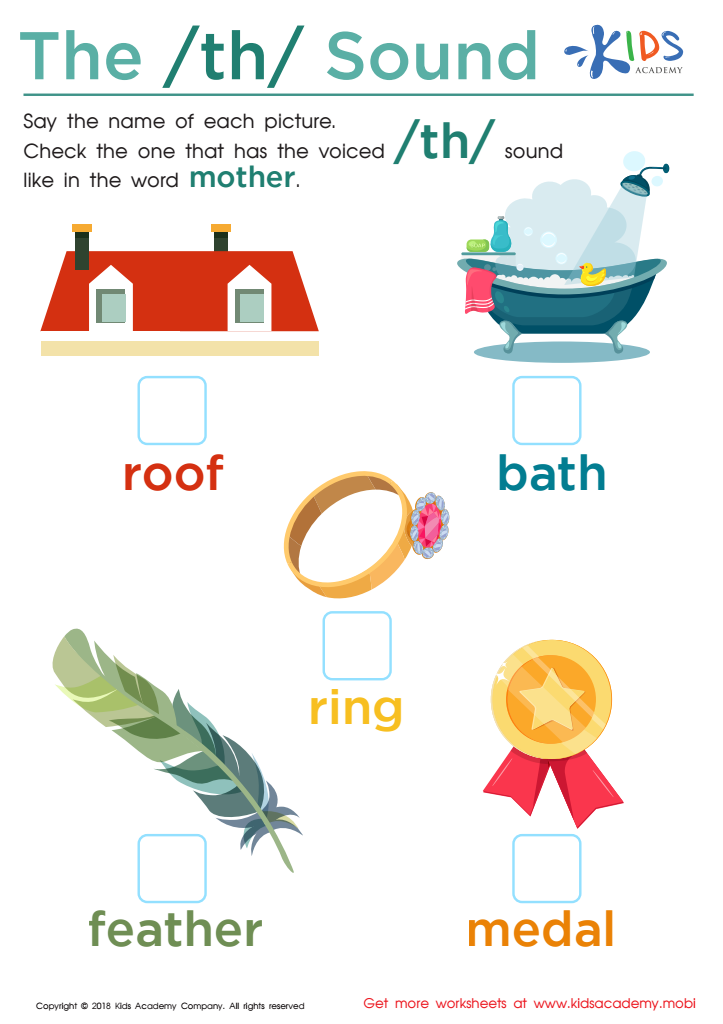
The /th/ Sound Worksheet
Confuse your students no more: have them use this worksheet to understand the /th/ sound and its two variants. With pictures, ask them to say the name of each one. Help them identify the voiced /th/ sound, like in 'mother', by having them say it aloud. Download the pdf to get started.
The /th/ Sound Worksheet
Worksheet
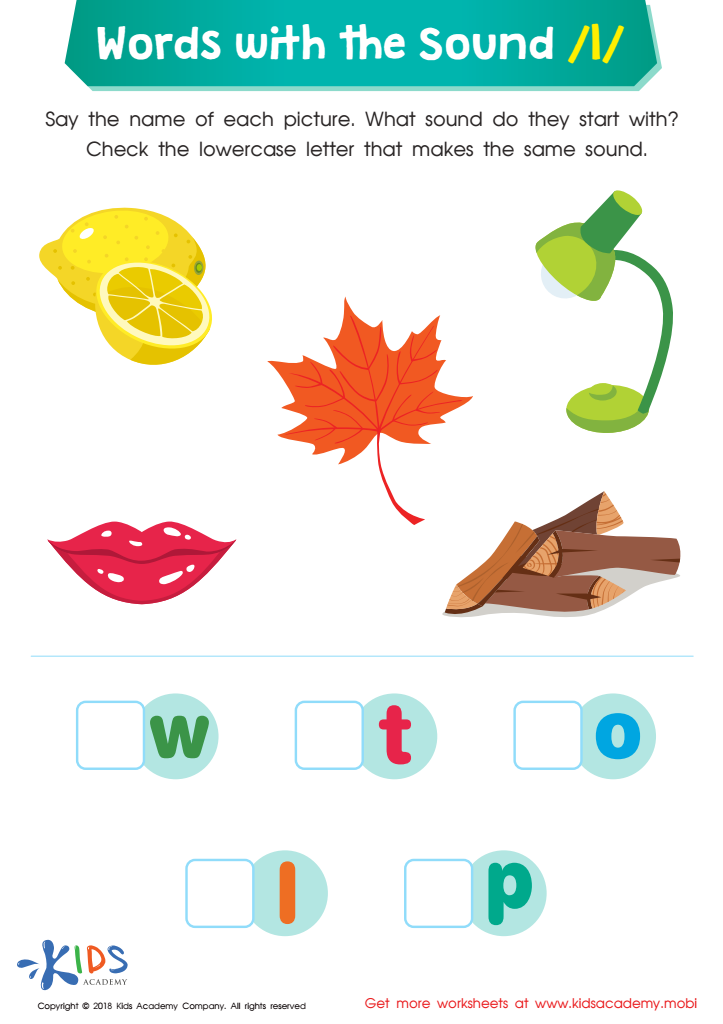
Words with Sound L Reading Worksheet
This PDF worksheet is great for helping emerging readers isolate initial sounds. Kids name familiar pictures, then identify the correct letter for the "l" sound. This worksheet strengthens fine motor skills, plus builds visual discernment. It's fun and colorful too!
Words with Sound L Reading Worksheet
Worksheet
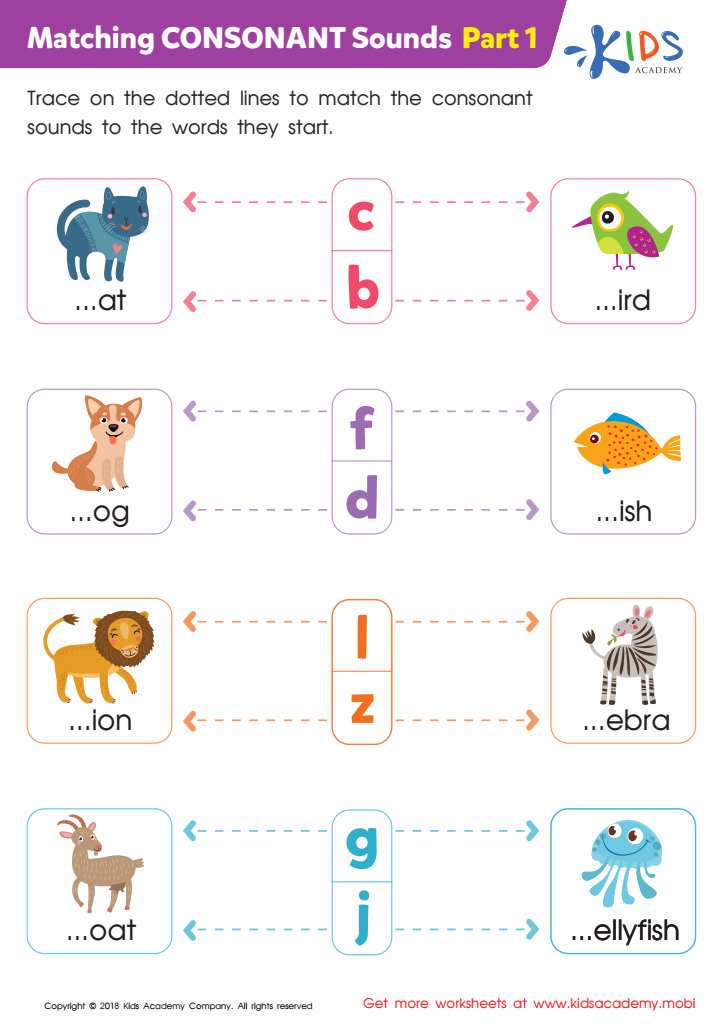
Matching Consonant Sounds: Part 1 Worksheet
Decide which letter matches each word and picture in this fun phonics worksheet. Slide your finger over each word, trying out each letter to check for matches. Once each pair is solved, trace the dotted lines with pencil to complete the printable. Who knew learning could be so enjoyable?
Matching Consonant Sounds: Part 1 Worksheet
Worksheet
Join Kids Academy for Free
Who is primarily going to use this learning content?



Sound recognition, particularly for consonants, is crucial for children ages 3-7 as it lays the foundation for reading and language development. During this formative period, children are like sponges, absorbing language skills that will impact their future academic growth and communication abilities.
First, distinguishing consonant sounds helps children decode words when they start learning to read. Recognizing the difference between similar sounds like "b" and "d" or "p" and "t" is essential for accurate reading and spelling. This recognition allows them to sound out words, an early reading strategy that builds confidence and fluency.
Second, sound recognition supports phonemic awareness, a critical pre-reading skill. By identifying and manipulating sounds, children develop an understanding of how words are constructed, which is necessary for both reading and writing. Without this skill, children may struggle to comprehend more complex literacy tasks in the future.
Third, strong auditory discrimination enhances listening skills and overall communication. As children better understand and produce precise speech sounds, their verbal interactions become clearer, fostering stronger relationships and more effective classroom participation.
By prioritizing consonant sound recognition, parents and teachers set children on a path to literacy success, fostering a love for reading and learning that will benefit them throughout their entire lives.







