
Vocabulary enhancement Consonants Worksheets for Ages 3-7
8 filtered results
Difficulty Level
Grade
Age
-
From - To
Subject
Activity
Standards
Boost your child's vocabulary with our engaging Consonants Worksheets, tailored for ages 3-7! These interactive activities focus on the essential consonant sounds that form the foundation of language learning. Each worksheet is designed to stimulate young minds with fun and creative tasks that enhance vocabulary through games, matching exercises, and coloring activities. Perfect for at-home learning or classrooms, these worksheets aid phonemic awareness and foster a love for words. By mastering consonants, children build essential reading and speaking skills in a playful manner. Watch your little ones thrive as they explore the world of language with our exciting resources!
Favorites
With answer key
Interactive
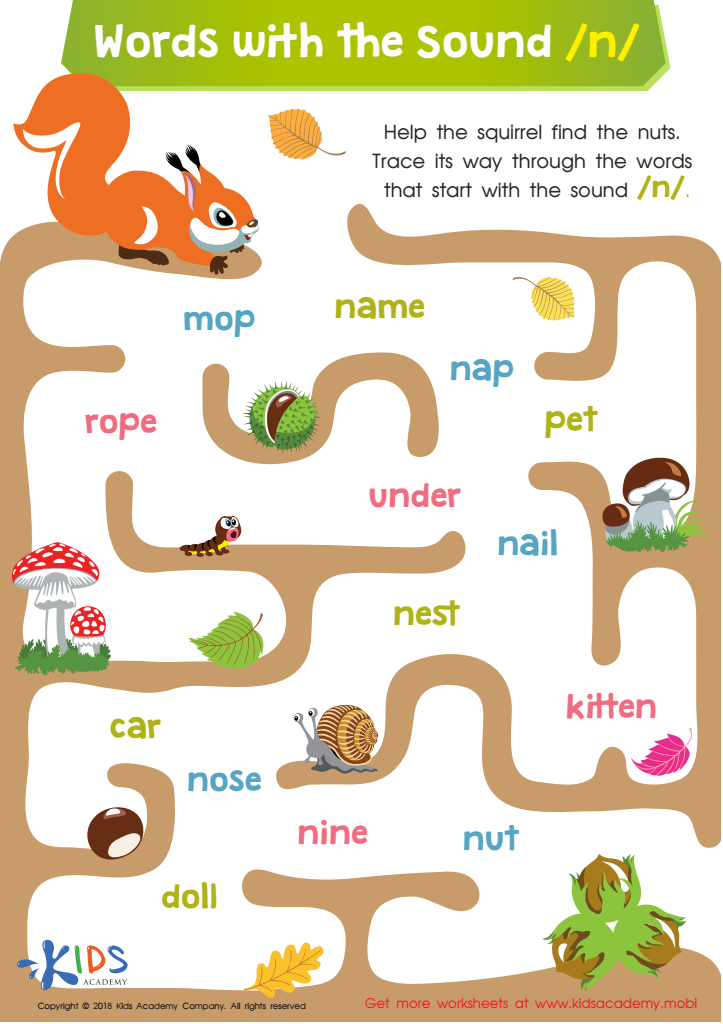
Words with Sound N Reading Worksheet
Young readers will love the colourful pictures and simple sight words on this download worksheet. They can trace their way through the maze as they help the cute squirrel reach his acorns, finding words with the sound "n" as they go. It's a fun way to work on reading skills - they won't even realise they're learning!
 Assign to My Students
Words with Sound N Reading Worksheet
Worksheet
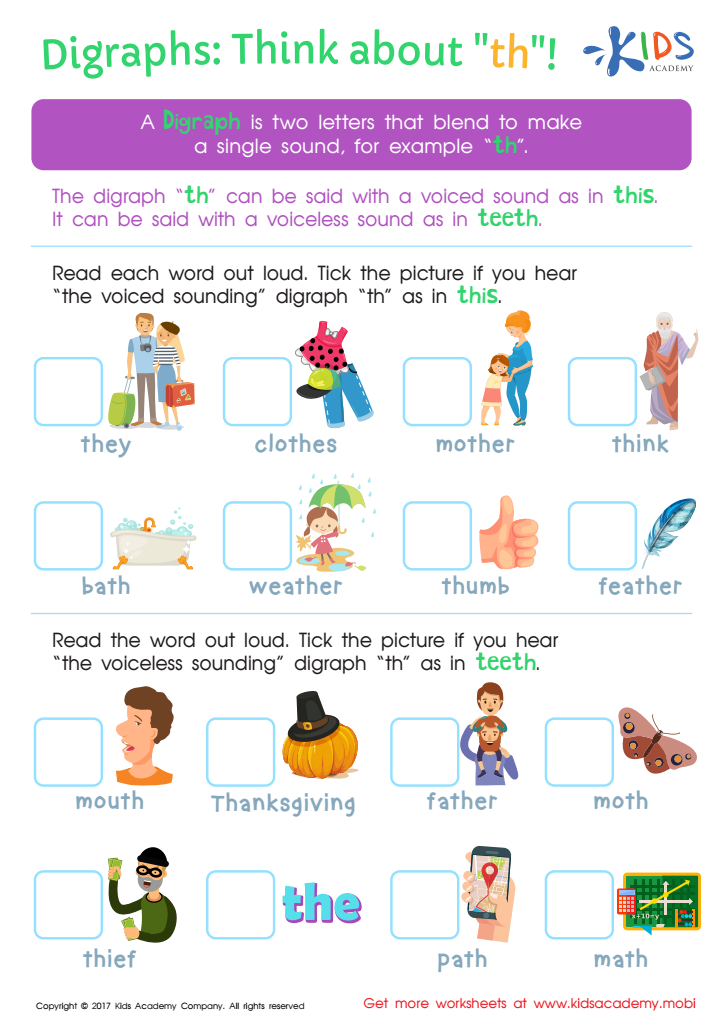
Digraphs: Think About "th" Worksheet
Help your child master phonics with this illustrated digraph Th printable worksheet. It will help recognize "Th" words, differentiate voiced and voiceless sounds and understand key concepts. Use similar words while they work to reap its full benefits!
Digraphs: Think About "th" Worksheet
Worksheet
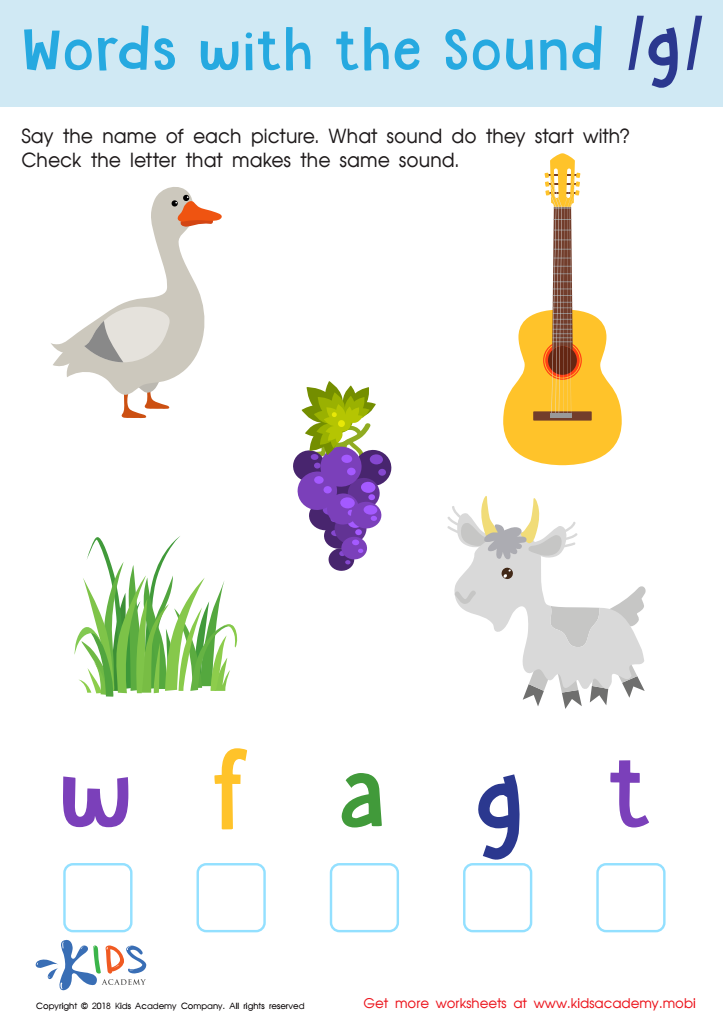
Words with sound g Reading Worksheet
Help your child learn the soft "g" sound with this phonics worksheet. Ask them to name each picture, then identify the letter sound it begins with. If it's "g", they can check the box. Have them repeat each word, listening for the soft "g" sound before moving on to the next page.
Words with sound g Reading Worksheet
Worksheet
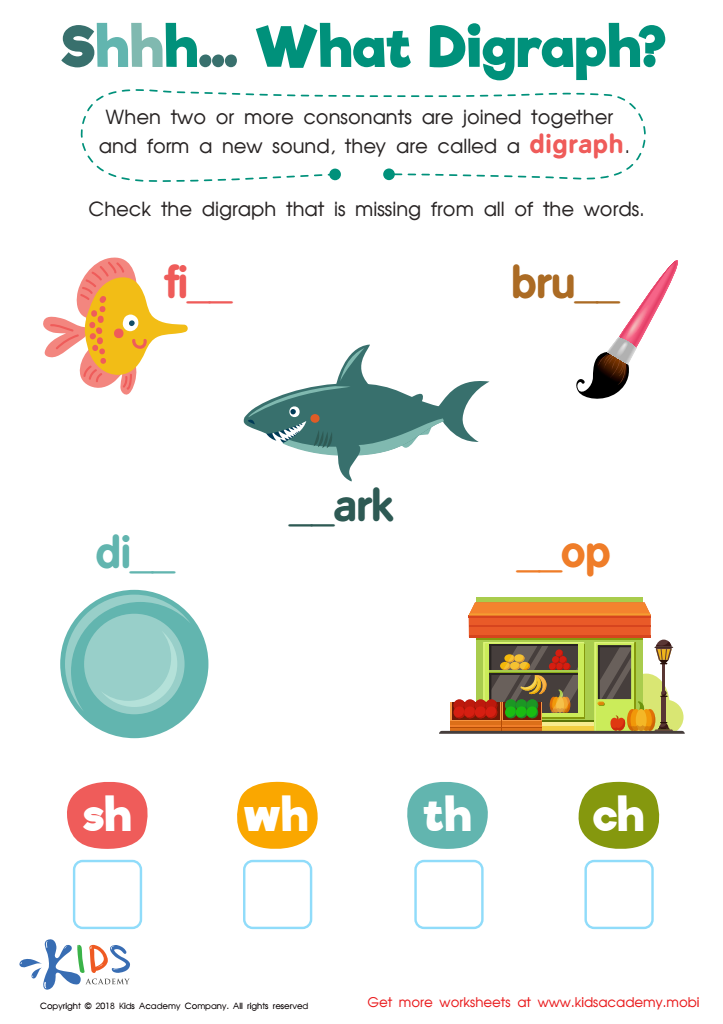
Shhh... What Digraph? Worksheet
Phonetics sounds can be combined to create a new sound - like a digraph. A great example is the /sh/ sound. Words like 'brush' and 'fish' can be heard. Ask your child to provide more examples. Look at the pictures in the PDF and see if they can identify the objects. Additionally, help them find the digraph missing from each word.
Shhh... What Digraph? Worksheet
Worksheet
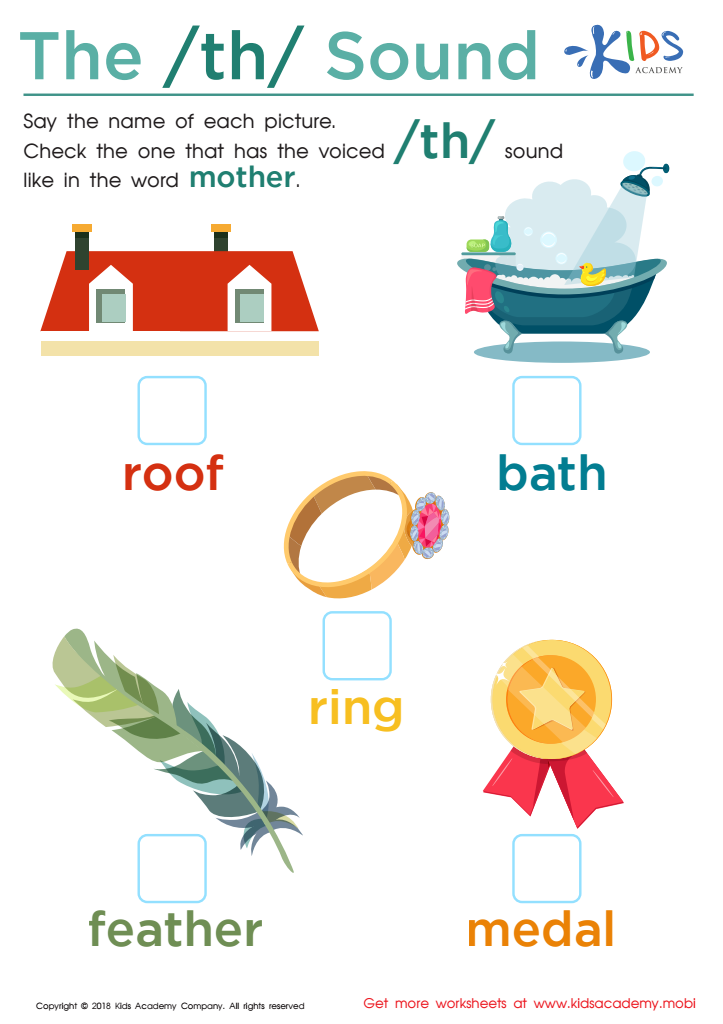
The /th/ Sound Worksheet
Confuse your students no more: have them use this worksheet to understand the /th/ sound and its two variants. With pictures, ask them to say the name of each one. Help them identify the voiced /th/ sound, like in 'mother', by having them say it aloud. Download the pdf to get started.
The /th/ Sound Worksheet
Worksheet
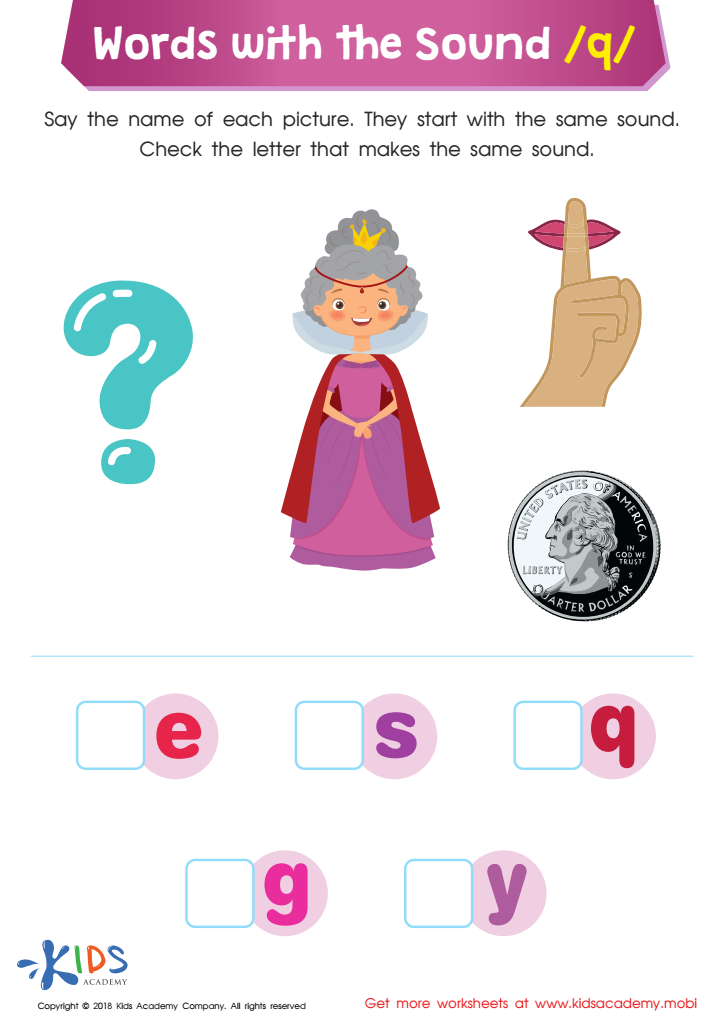
Words with Sound Q Reading Worksheet
Beginning readers will love this free PDF worksheet! Bright colors and familiar pictures make it fun, as they say the name of each image and work on fine motor skills. Letters “q” is featured among others, helping to recognize and isolate its sound, which is often seen with a “u” behind it.
Words with Sound Q Reading Worksheet
Worksheet
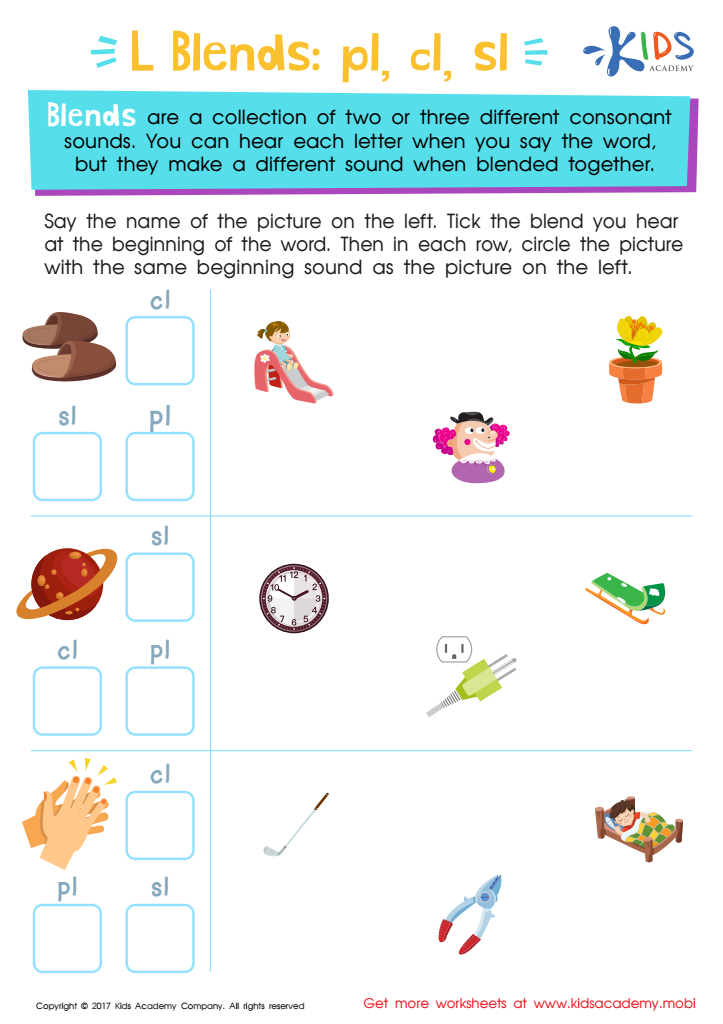
L Blends: "Pl", "Cl" and "Sl" Printable
This printable worksheet will help your child recognize and identify the Pl, Cl, and Sl consonant blends, sound them out, and identify them in print. Improve your child's reading and writing skills with fun and colorful phonics practice!
L Blends: "Pl", "Cl" and "Sl" Printable
Worksheet
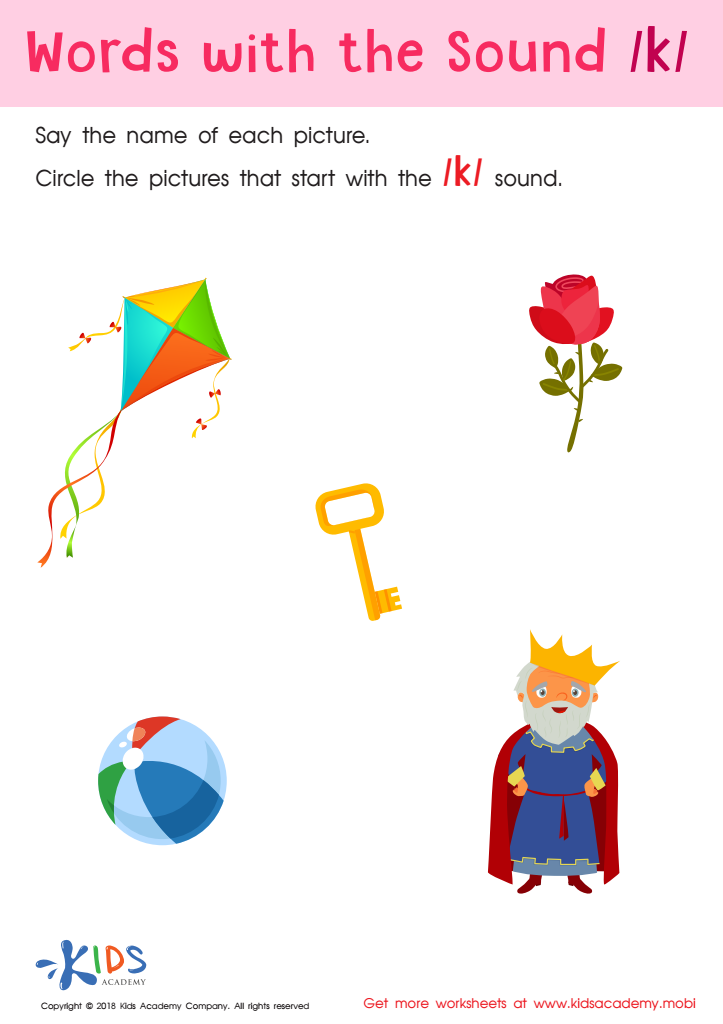
Words with sound k Reading Worksheet
Help your preschooler master the hard "k" sound with this fun worksheet from Kids Academy! Ask your child to say each picture aloud and circle only the pictures that start with "k". This early reading exercise will boost phonics skills and is sure to be loved by your little learner!
Words with sound k Reading Worksheet
Worksheet
Join Kids Academy for Free
Who is primarily going to use this learning content?



Vocabulary enhancement is crucial for children aged 3-7 as it lays the foundation for their language development, cognitive skills, and overall academic success. At this age, children are rapidly expanding their word knowledge and learning to communicate effectively. Emphasizing consonant sounds can significantly contribute to this process.
Firstly, consonants are essential components of words and their sounds play a vital role in developing phonemic awareness. Recognizing and articulating consonant sounds helps children decode words, ultimately building their reading skills. Furthermore, a robust vocabulary enhances comprehension, enabling children to better understand stories, instructions, and concepts they encounter in daily life.
Secondly, enriching vocabulary cultivates effective communication skills. When children can express themselves clearly and appropriately, they engage more confidently in conversations, contributing better to social interactions and building relationships with peers and adults.
Lastly, a strong vocabulary promotes literacy and academic achievement in later years. Proficient readers tend to perform better in various subjects, leading to increased self-esteem and a love for learning. Thus, parents and teachers should actively engage in vocabulary enhancement through fun activities, storytelling, and consistent interaction, ensuring children develop strong linguistic foundations for their future.







