
Word Recognition Elementary Phonics Worksheets for Ages 3-7
7 filtered results
Difficulty Level
Grade
Age
-
From - To
Subject
Activity
Standards
Our "Word Recognition Elementary Phonics Worksheets for Ages 3-7" are designed to enhance your child's early reading skills in a fun and engaging way. Perfectly crafted for young learners, these worksheets help children recognize and identify words through interactive activities and colorful illustrations. By focusing on phonics, our worksheets support the development of essential literacy skills, including sounding out words and understanding letter patterns. Ideal for both classroom and home use, these resources provide a strong foundation for reading fluency and comprehension. Boost your child's confidence and success in reading with our expertly created phonics worksheets!
Favorites
With answer key
Interactive
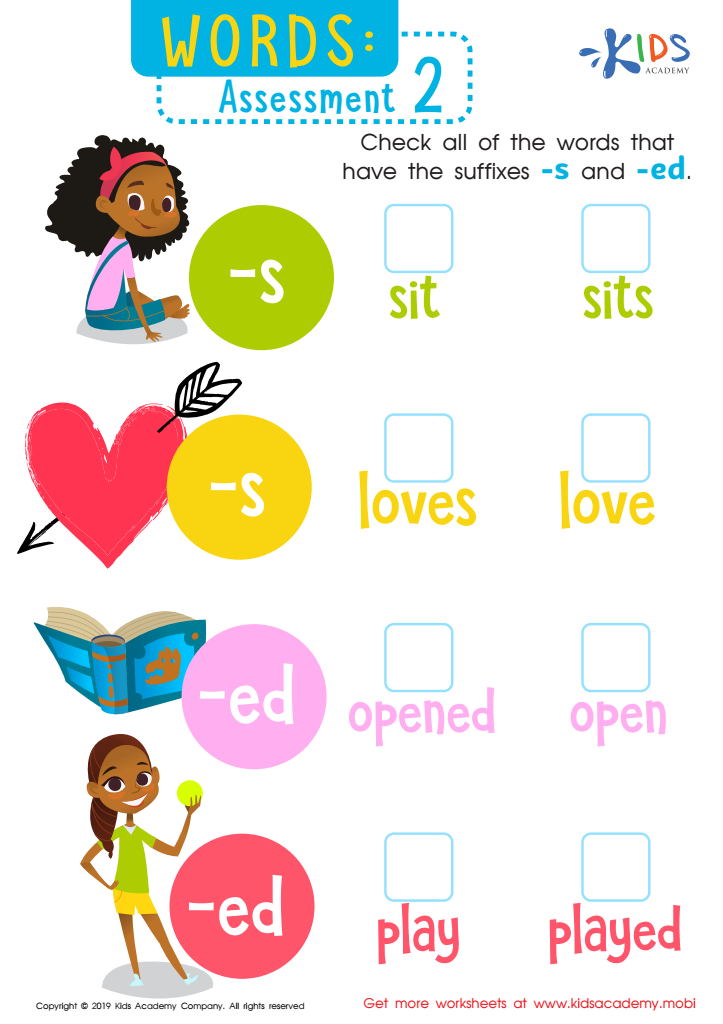
Words: Assessment 2 Worksheet
Test your child’s knowledge of -s and -ed word endings with this fun worksheet! They'll look at images and read the words, then choose the correct suffix to finish each one. Vivid illustrations make this an enjoyable learning experience!
 Assign to My Students
Words: Assessment 2 Worksheet
Worksheet
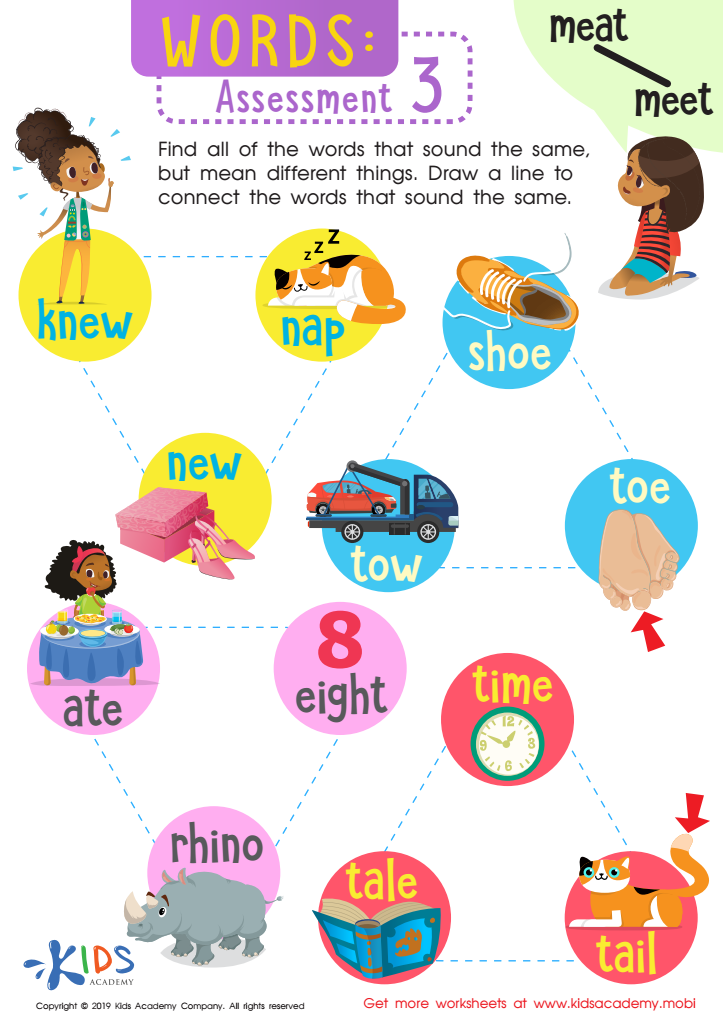
Words: Asessment 3 Worksheet
Assess your child's knowledge of homonyms with words like "toe" and "tow". This fun worksheet helps find words that sound the same but have different meanings and spellings. Use it to introduce homographs--words spelled the same with different meanings!
Words: Asessment 3 Worksheet
Worksheet
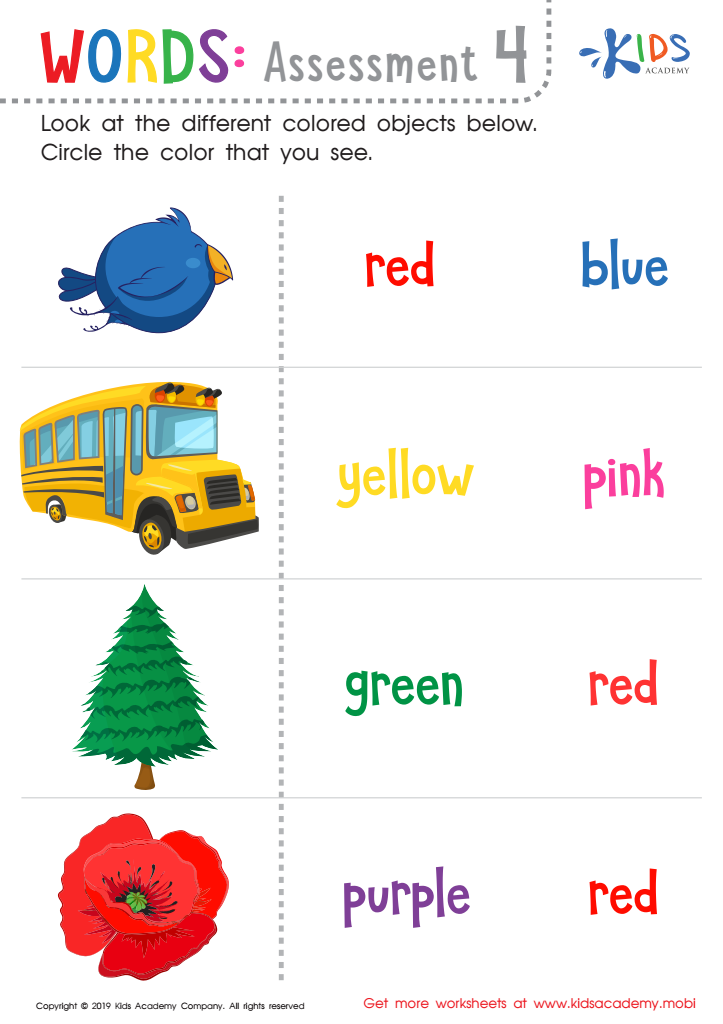
Words: Assessment 4 Worksheet
Look at the pictures and have your child circle the color they see. This free worksheet is great for assessing their knowledge of vocabulary words. It offers familiar images with words for kids to read and match with the colors. Help your child build their reading and understanding skills with this fun activity!
Words: Assessment 4 Worksheet
Worksheet
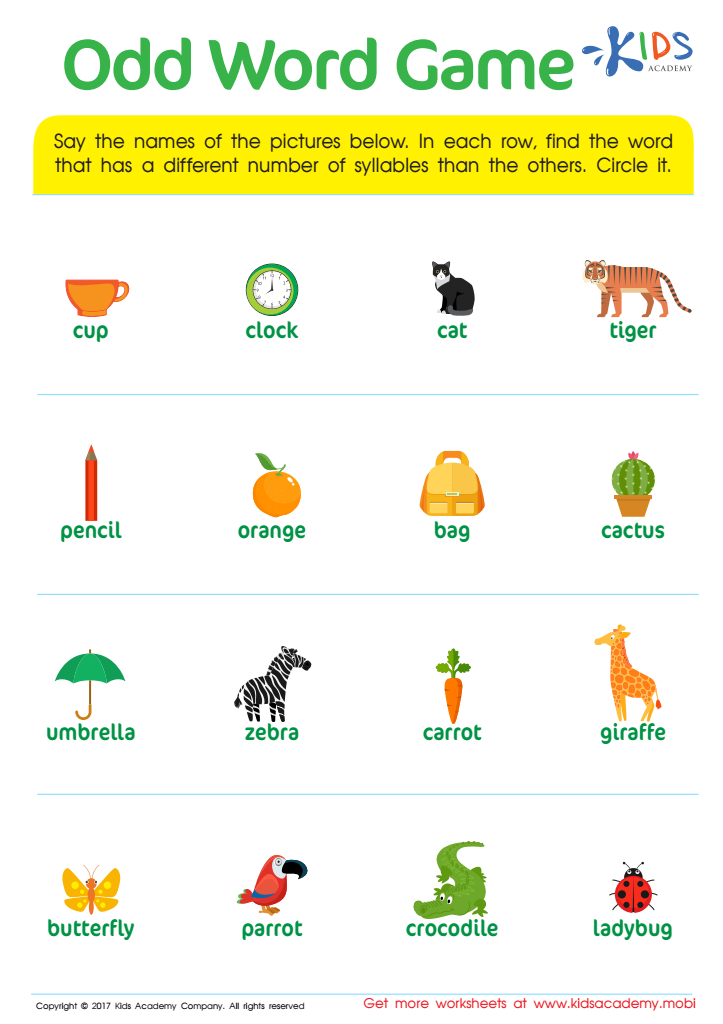
Count Syllables: Odd Word Game Worksheet
Counting syllables strengthens kids' decoding skills. This printable helps them say common item names and chunk words for fluency and accuracy. They don't even realize they're working on their reading! Bright colors make it fun, so it's a fast and easy way to practice.
Count Syllables: Odd Word Game Worksheet
Worksheet
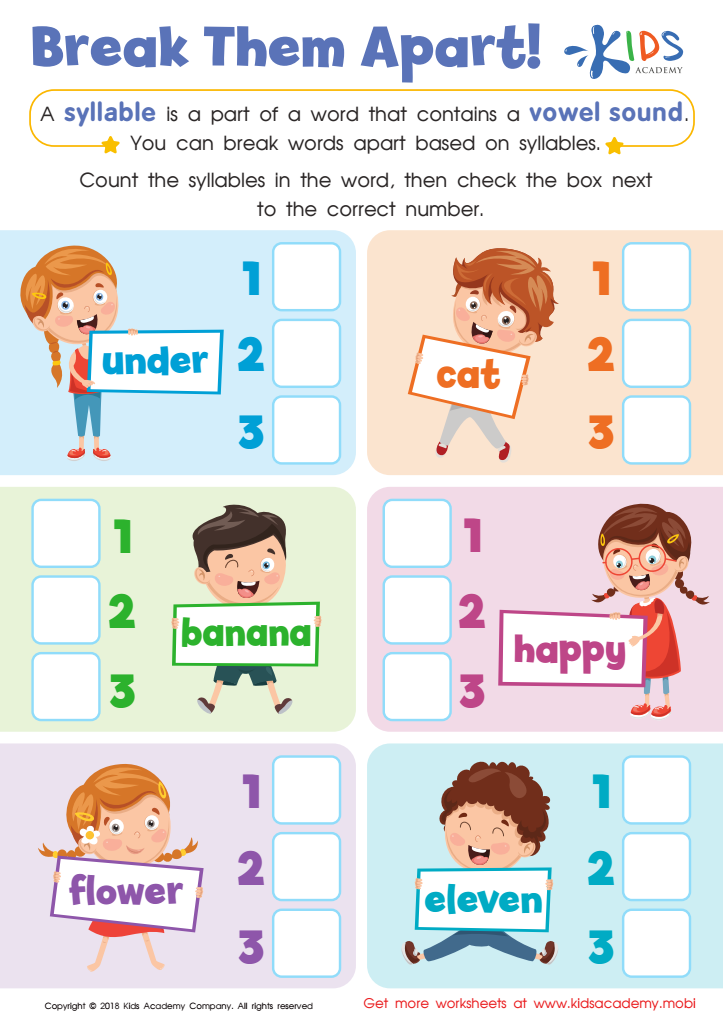
Reading: Break Them Apart Worksheet
See if students understand syllables with this fun worksheet. It teaches them that a syllable is a word part with a vowel sound. Kids read each word and choose how many parts it has. Doing this often helps them decode new words and gain confidence.
Reading: Break Them Apart Worksheet
Worksheet
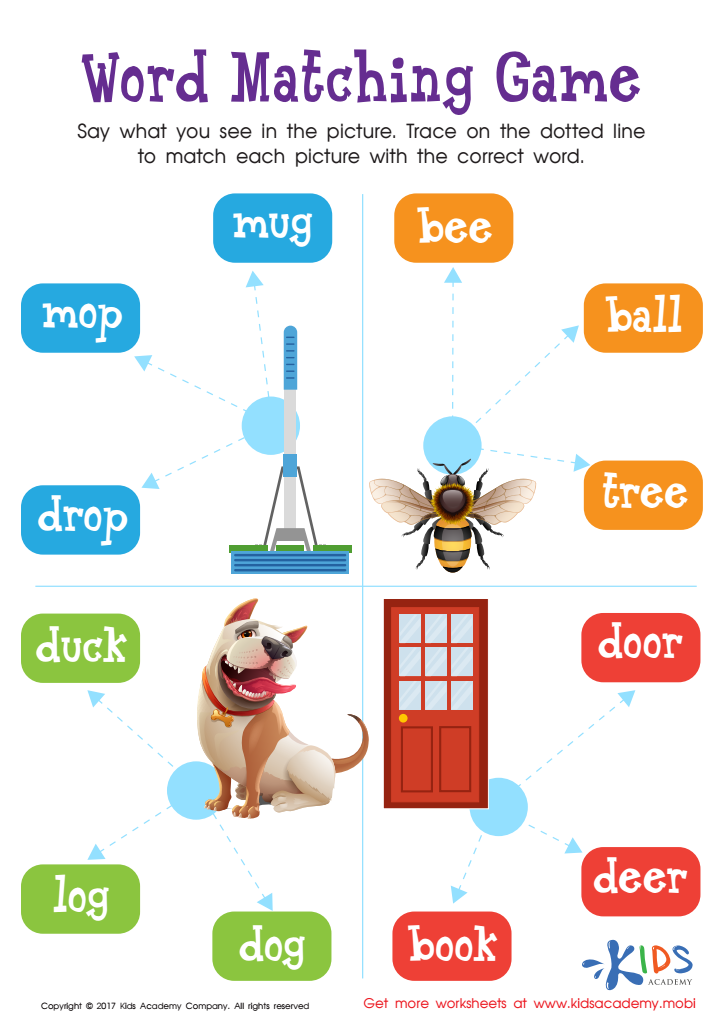
Word Matching Game Worksheet
Help your early reader develop prereading skills with this fun matching worksheet! Visual cues help them learn sight words, decode words in word families, and identify phonetic patterns. They'll practice discerning sounds past initial consonants while saying the name of the picture and finding the matching word - and reading at the same time!
Word Matching Game Worksheet
Worksheet
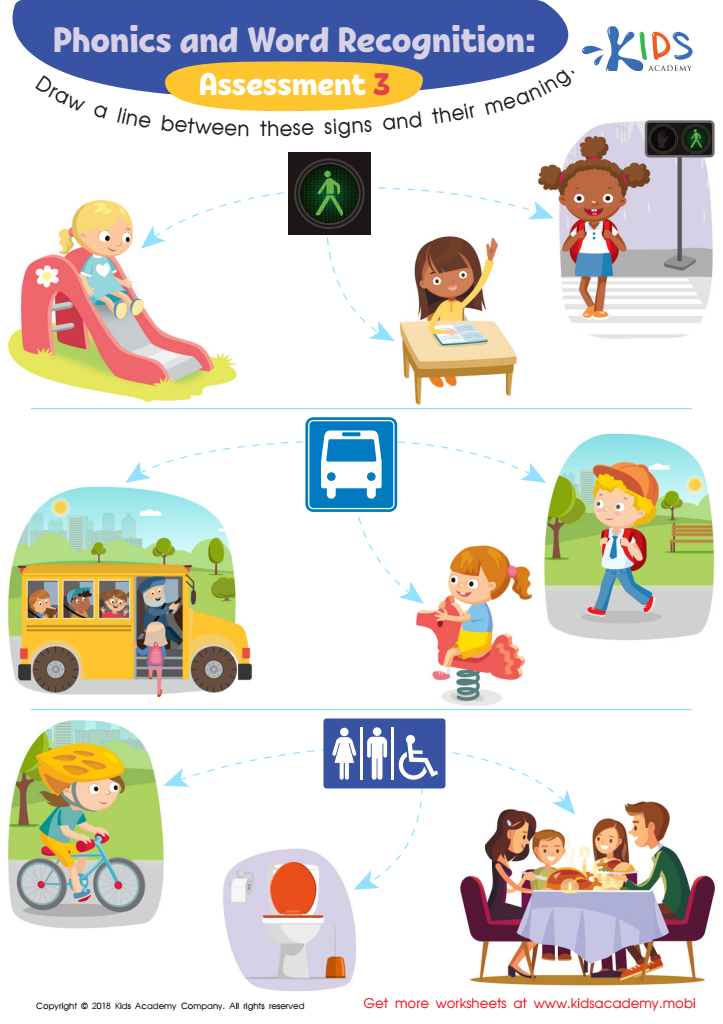
Phonological Awareness: Assessment 3 ELA Worksheet
Want to test your preschooler's language skills, phonetic decoding and word recognition? This worksheet uses their knowledge of community helpers to match signs with depictions. It also works on fine motor skills, a key pre-reading skill.
Phonological Awareness: Assessment 3 ELA Worksheet
Worksheet
Join Kids Academy for Free
Who is primarily going to use this learning content?




Word recognition and elementary phonics are foundational skills crucial for children aged 3-7 for several reasons. At this age, children are highly receptive to learning and setting strong literacy foundations will benefit them significantly in later years. Phonics, the relationship between sounds and their spellings, is essential for decoding words. This skill allows children to sound out unfamiliar words, fostering independent reading skills.
Word recognition, or the ability to quickly recognize common words without needing to decode them, increases reading fluency and comprehension. When young learners can effortlessly recognize words, they can devote cognitive resources to understanding the text rather than focusing on decoding.
During these formative years, positive experiences with reading can instill a lifelong love of learning. Mastery of phonics and word recognition boosts children’s confidence, encourages curiosity, and enhances cognitive development. Moreover, strong literacy skills are linked to better academic performance across all subjects, as reading is integral to understanding curricular content.
Parents and teachers should note that struggling with these skills early on can lead to frustration and disinterest in reading. Therefore, supporting literacy development through activities, books, and games not only aids academic success but also nurtures a joyful, lifelong engagement with reading. Investing in phonics and word recognition during the elementary years is, thus, crucial for children's holistic educational development.







