Alphabet Learning Alphabet Worksheets for Ages 3-7
5 filtered results
-
From - To
Welcome to our alphabet learning worksheets designed specifically for children ages 3-7! Our engaging and colorful worksheets help young learners master their alphabet skills through activities that promote letter recognition, phonics, and handwriting fluency. Each worksheet is tailored to cultivate essential early literacy skills, featuring fun illustrations and interactive exercises that keep students motivated. From tracing letters to matching games, these resources are perfect for both classroom settings and home learning. Equip your little ones with the confidence they need to succeed in reading and writing. Explore our collection today and watch their alphabet skills flourish!
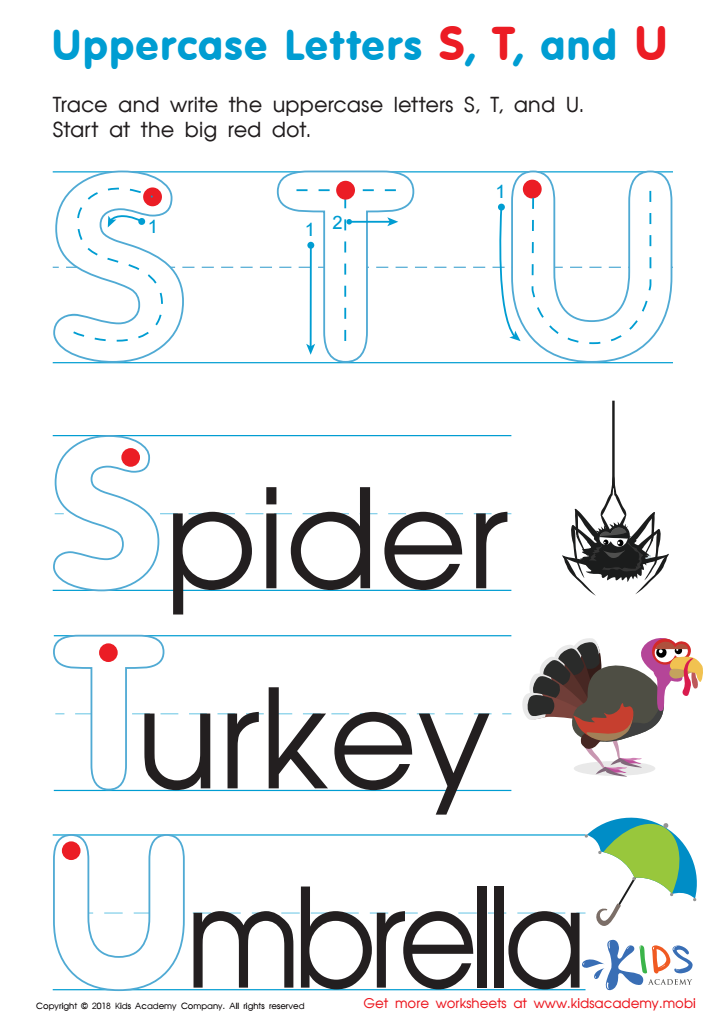
Uppercase Letters S, T, and U Worksheet
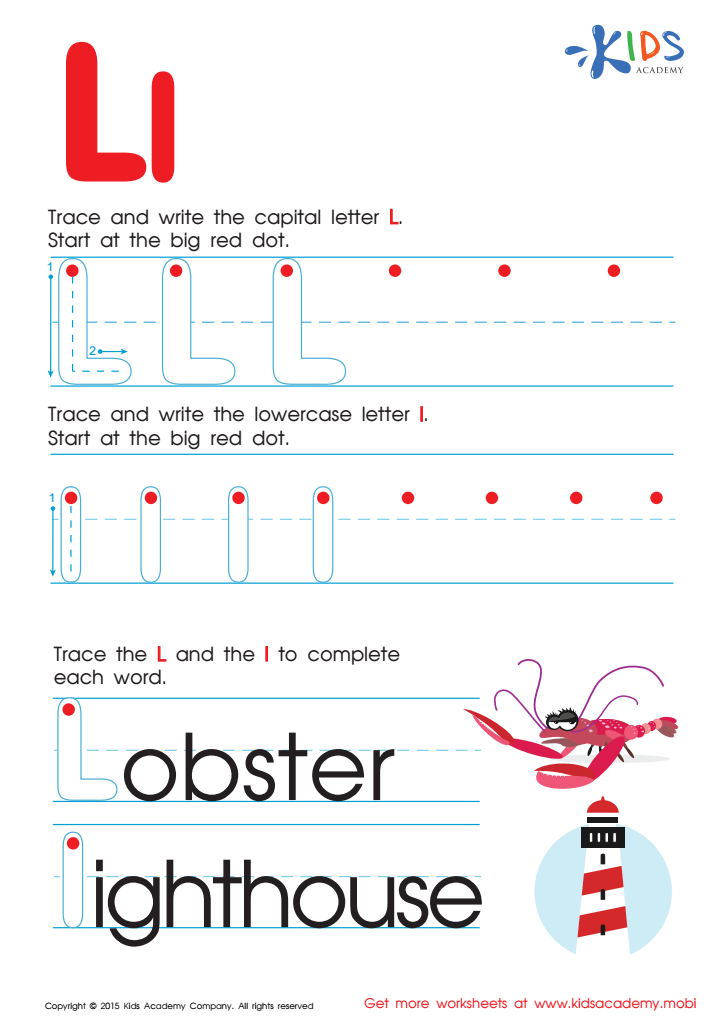
Letter L Tracing Page
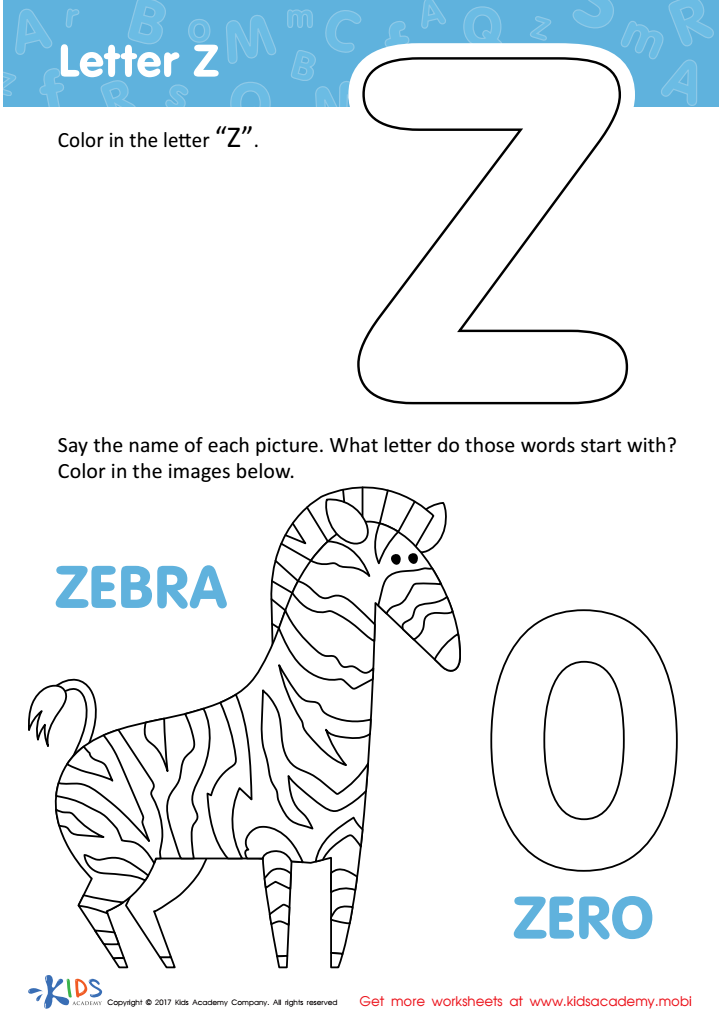
Letter Z Coloring Sheet
 Assign to My Students
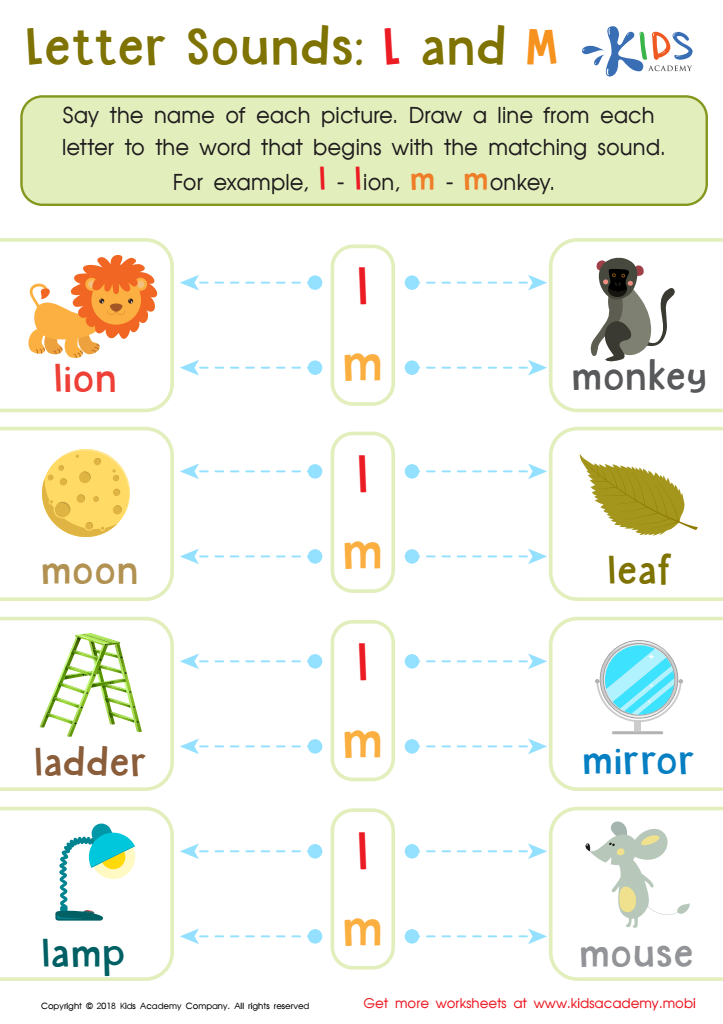
Letter l and M Sounds Worksheet

Letter F Tracing Page








Alphabet learning is foundational for children aged 3-7, as it sets the stage for literacy and overall academic success. Parents and teachers should prioritize this because mastering the alphabet aids in developing crucial language skills. Children who recognize letters can begin to decode words, read, and write, which are vital skills they will utilize throughout their education and beyond.
Furthermore, early alphabet learning boosts cognitive and motor skills. Activities involving letters—like tracing or playing with letter-shaped toys—enhance fine motor development while simultaneously reinforcing letter recognition. This interaction fosters a child's ability to learn, encouraging curiosity and a love for reading.
Moreover, introducing letters through engaging methods—such as songs, games, and storytelling—creates a joyful learning environment. This fun approach not only aids memory retention but fosters a positive attitude towards learning, setting children up for a lifelong love of literacy.
Finally, understanding the alphabet supports communication skills and confidence. Children who can recognize and write letters are more likely to express their thoughts effectively and engage in social interactions. By focusing on alphabet learning, parents and teachers significantly influence children’s developmental achievements and their future educational trajectories.







