
Fine motor skills development Alphabet Worksheets for Ages 3-7
8 filtered results
Difficulty Level
Grade
Age
-
From - To
Subject
Activity
Standards
Unlock your child's potential with our Fine Motor Skills Development Alphabet Worksheets for ages 3-7. Designed to foster early childhood education, these engaging worksheets combine alphabet learning with fun, hands-on activities. Each worksheet promotes fine motor coordination through tracing, coloring, and drawing, seamlessly integrating literacy and skill development. Perfect for preschoolers and early elementary students, our worksheets offer an excellent foundation for handwriting, dexterity, and cognitive growth. Transform your child’s learning journey with resources that make mastering the alphabet enjoyable and beneficial. Explore more to give your child a head start in both literacy and essential motor skills.
Favorites
With answer key
Interactive
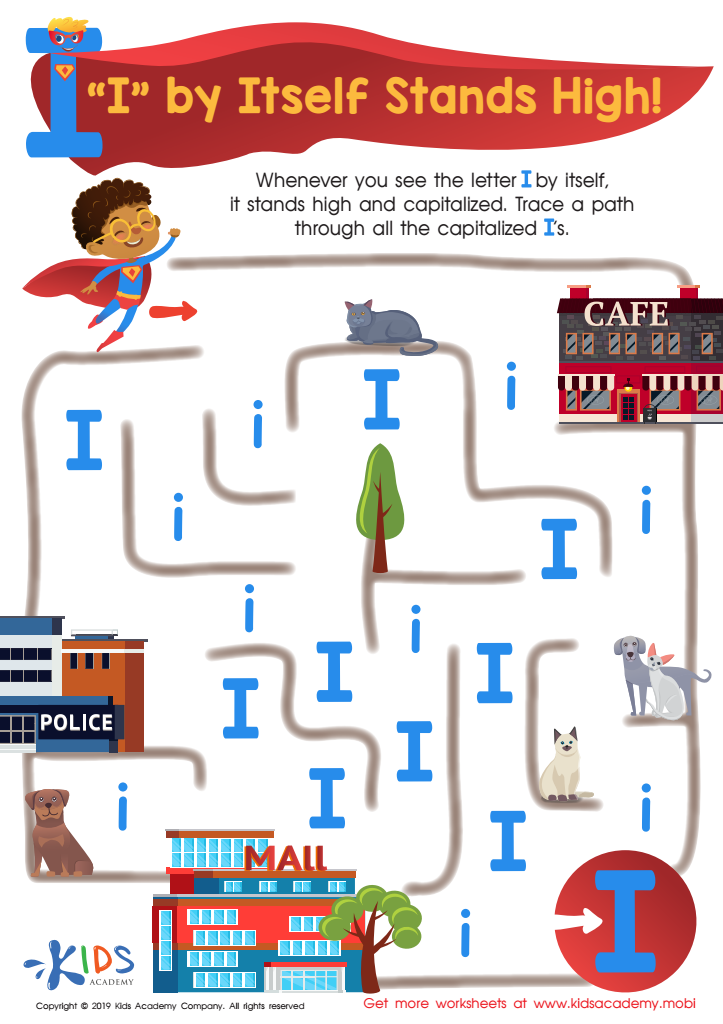
I Stands High Worksheet
Kids can use their imagination to help a superhero find the uppercase 'I's on the 'I By Itself Stands High' worksheet. This helps children learn capitalization, and they can join the superhero in flying over a city of cats, dogs and buildings to locate the needed letters.
I Stands High Worksheet
Worksheet
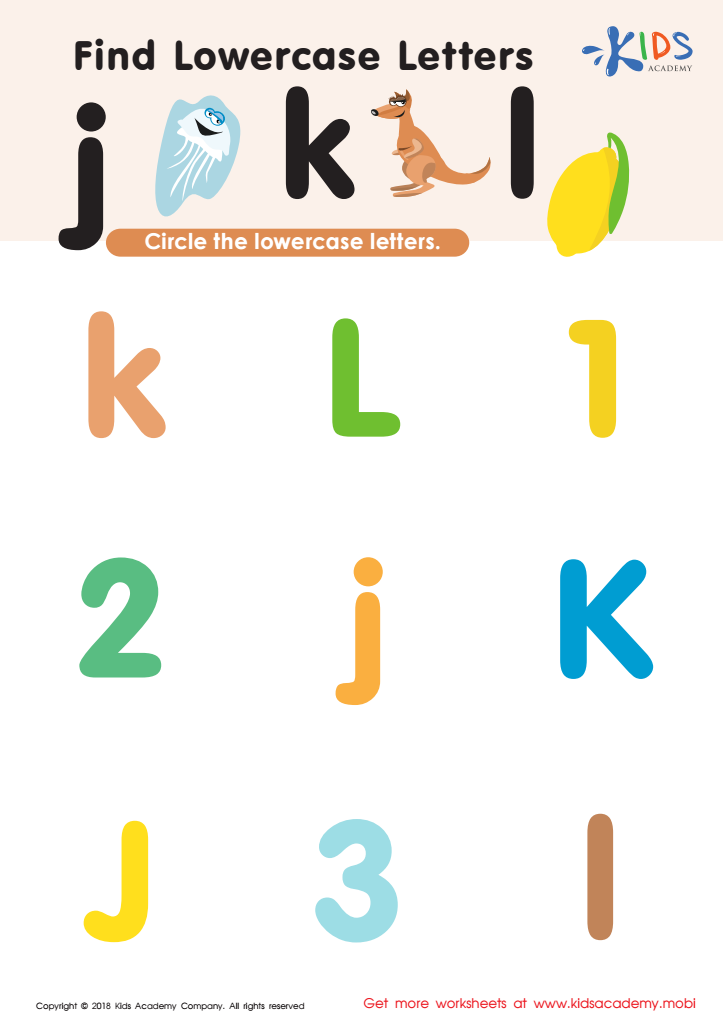
Find Lowercase Letters j k l Worksheet
Help your child's brain develop and have fun at the same time! Find and circle the lowercase letters jkl in the worksheet full of uppercase letters and numbers. Colorful drawings and bright colors make this an engaging learning activity.
Find Lowercase Letters j k l Worksheet
Worksheet
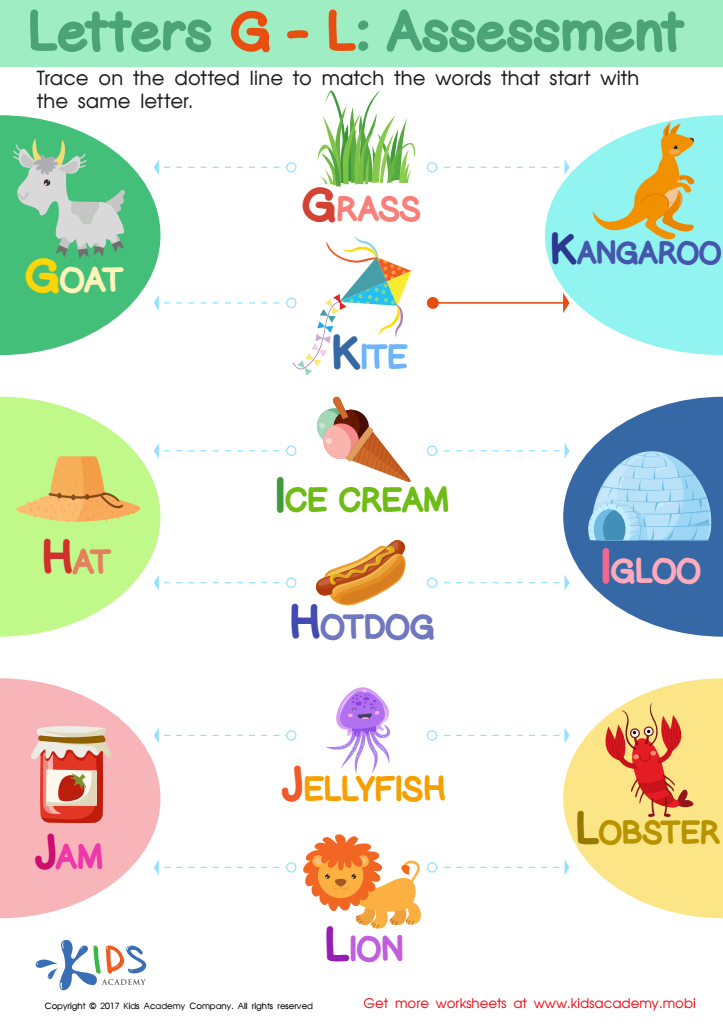
Letters G-L Worksheet
This fun worksheet helps preschoolers develop reading and phonics skills. It gets kids to match G-L words that start with the same letter, making it engaging and educational.
Letters G-L Worksheet
Worksheet
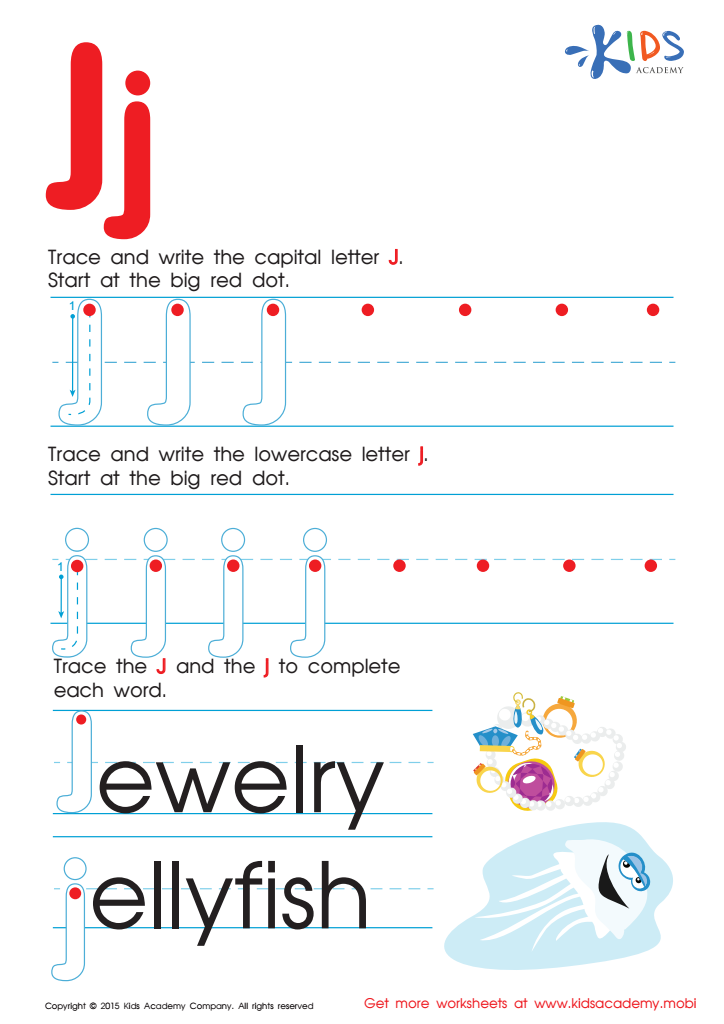
Letter J Tracing Page
Trace and write the letter "J" with our ABC worksheet - start at the big red dot! Have fun completing words like jewelry, jellyfish and more. Check out our kindergarten activities for more alphabet practice.
Letter J Tracing Page
Worksheet
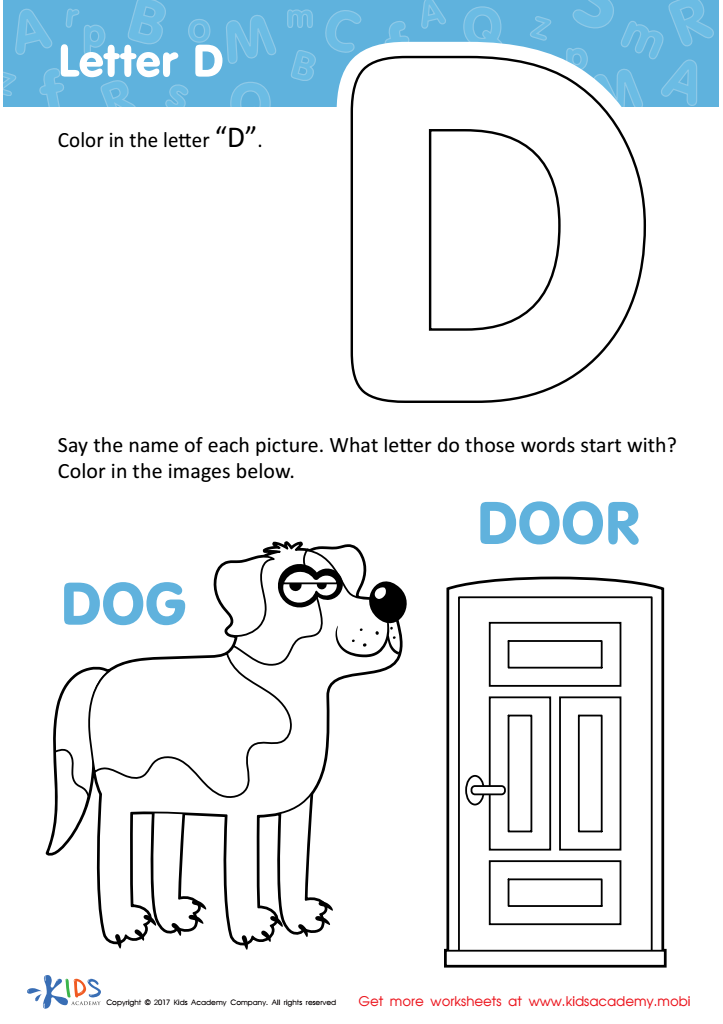
Letter D Coloring Sheet
Coloring with this letter "D" page is a great way to encourage your child's creativity while they learn the letter "D" and its sound. It's a fun activity to stimulate their imagination!
Download (PDF)
 Assign to My Students
Assign to My Students
Letter D Coloring Sheet
Worksheet
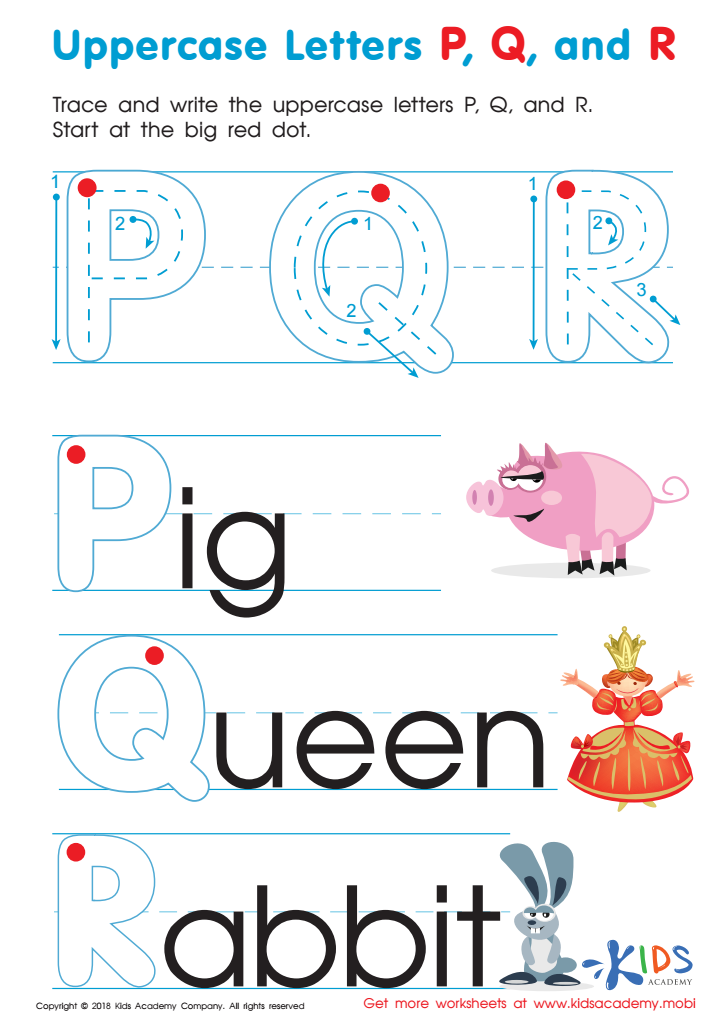
Uppercase Letters P, Q, and R Worksheet
Cute images of a pig, queen and rabbit make it fun to learn letter sounds. Follow the arrows to learn the strokes, then trace each letter from the big red dot. Perfect for kids to learn how to read and write P, Q, and R!
Uppercase Letters P, Q, and R Worksheet
Worksheet
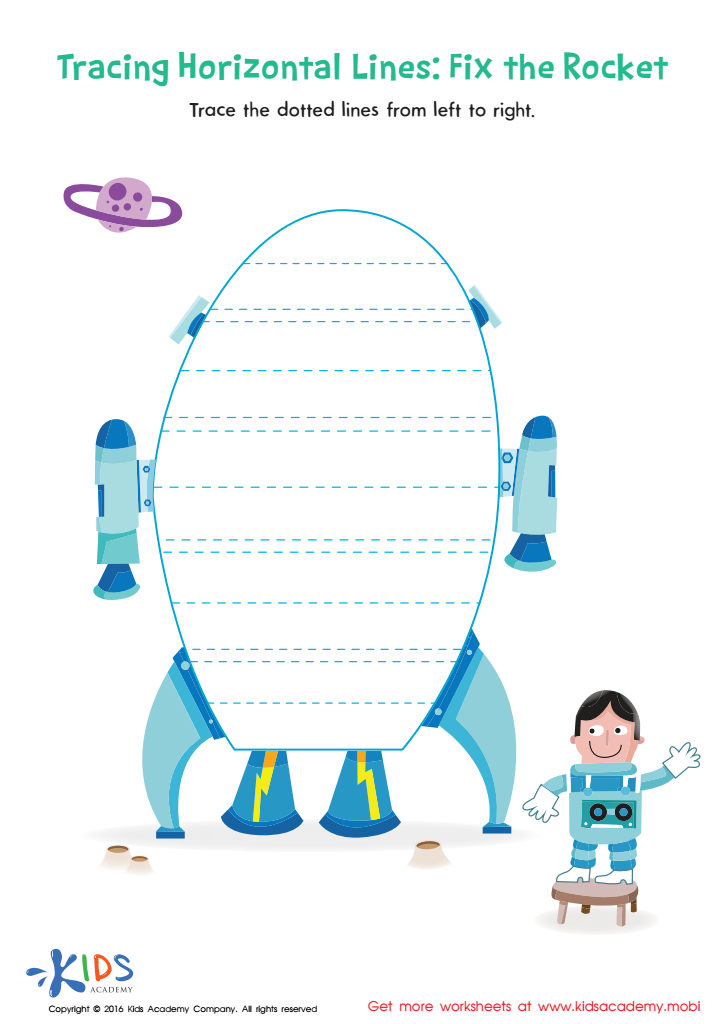
Tracing Horizontal Lines Worksheet
Your child can improve hand-to-eye coordination and pencil grip by tracing horizontal lines on this worksheet. They will have fun drawing lines on the rocket ship, tracing the dotted lines, and then coloring it in. Encourage them to keep going for even more enjoyment!
Tracing Horizontal Lines Worksheet
Worksheet
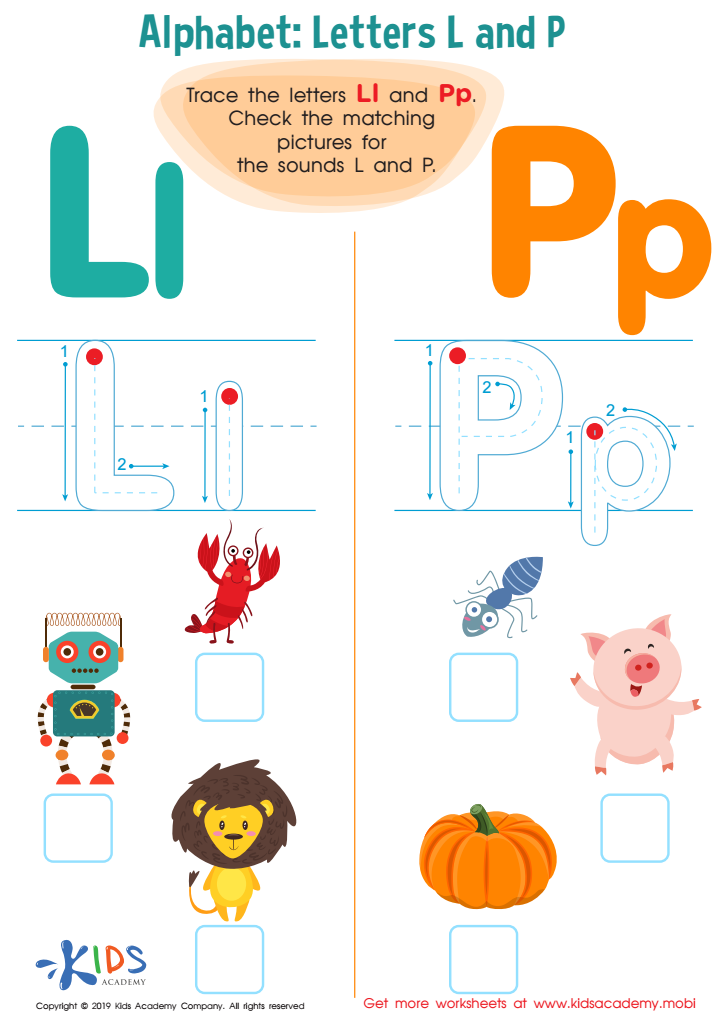
Letter L and P Tracing Worksheet
This traceable worksheet can motivate your students to learn and practice core skills. They'll trace the letters 'L' and 'P' and identify the pictures next to them. With this exercise, they'll unlock their learning abilities and excel in the subject!
Letter L and P Tracing Worksheet
Worksheet
Join Kids Academy for Free
Who is primarily going to use this learning content?







Fine motor skills development is crucial for children aged 3-7 because it directly impacts their ability to perform essential everyday tasks and lays a strong foundation for academic success. Fine motor skills involve the coordination of small muscles, particularly in the hands and fingers, which children use for various activities like writing, drawing, cutting with scissors, and buttoning clothes.
For parents and teachers, focusing on the development of fine motor skills at this age is especially important in the context of learning the alphabet. The alphabet is the building block of literacy. When children practice writing letters, they refine their hand-eye coordination, finger dexterity, and overall hand control. Improved fine motor skills make it easier for children to write legibly and comfortably, which can boost their confidence and enthusiasm for learning. Without developed fine motor skills, tasks such as writing may become frustrating and discourage children from academic pursuits.
In addition, engaging in alphabet-based fine motor activities, like tracing letters or manipulating alphabet puzzles, can enhance cognitive skills such as memory and attention to detail. Strong fine motor skills facilitate a smoother progression through key educational milestones, thereby positively impacting a child's overall development and future learning experiences. Therefore, both parents and teachers should prioritize fine motor skills activities to support children's growth and school readiness.







