Filters

15 filtered results

Clear all filters
Favorites
With answer key
Interactive

15 filtered results

Difficulty Level

Grade


Enhance your child's fine motor skills with our expertly designed Alphabet Worksheets for Ages 6-8. These engaging, printable activities combine alphabet learning with fine motor exercises, promoting hand-eye coordination, dexterity, and writing proficiency. Each worksheet features fun, interactive tasks like tracing letters, coloring, and drawing lines that captivate young minds while fostering essential motor skill development. Perfect for both classroom and home use, our worksheets align with educational standards, ensuring your child builds a strong foundation in literacy and motor skills. Help your child excel academically and develop crucial lifelong skills with our Alphabet Worksheets today!

Check out this FREE Trial Lesson on Alphabet for age 6-8!

Identify Lowercase Letters j-l

Favorites
With answer key
Interactive
  • 6-8
  • Fine motor skills development
  • Alphabet
I Stands High Worksheet Preview

I Stands High Worksheet

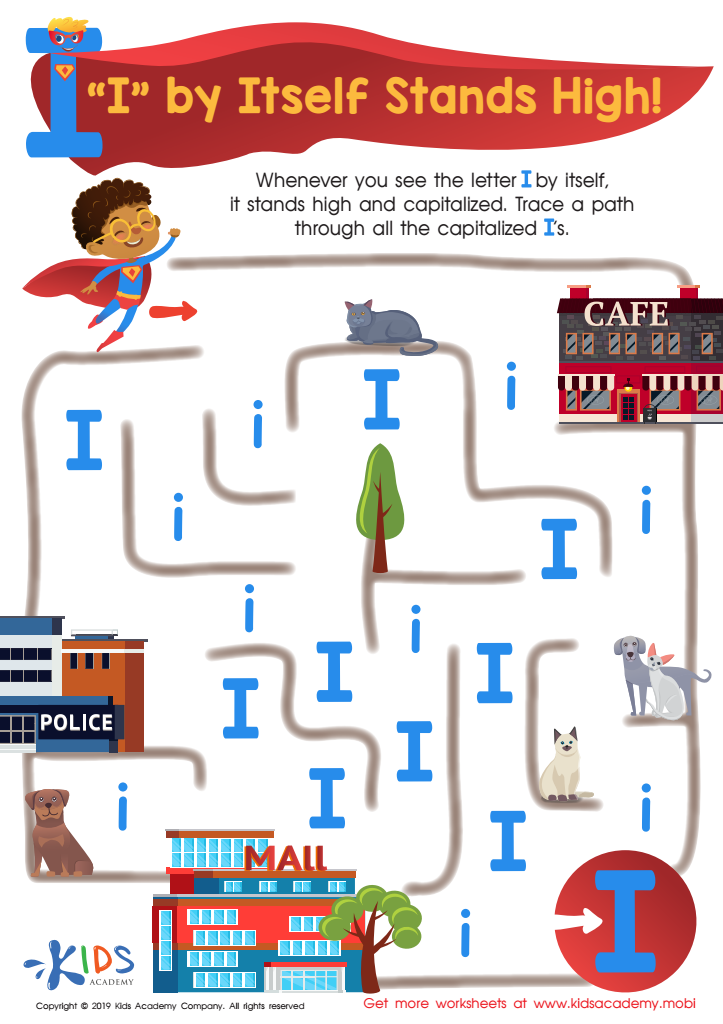
Kids can use their imagination to help a superhero find the uppercase 'I's on the 'I By Itself Stands High' worksheet. This helps children learn capitalization, and they can join the superhero in flying over a city of cats, dogs and buildings to locate the needed letters.
I Stands High Worksheet
Worksheet
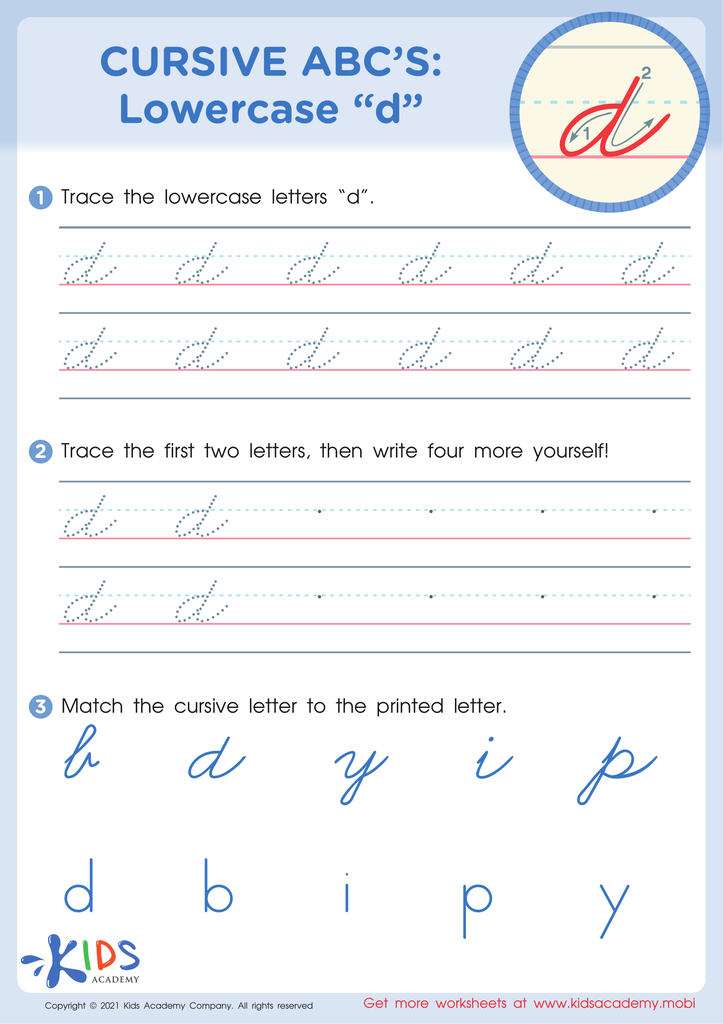
Cursive ABCs: Lowercase d

Cursive ABCs: Lowercase d

To make learning fun, introduce colorful worksheets! These help young learners perfect their cursive lowercase 'd'. By the end, they'll be better at writing and identifying the letter. It's an easy and enjoyable exercise for kids!
Cursive ABCs: Lowercase d
Worksheet
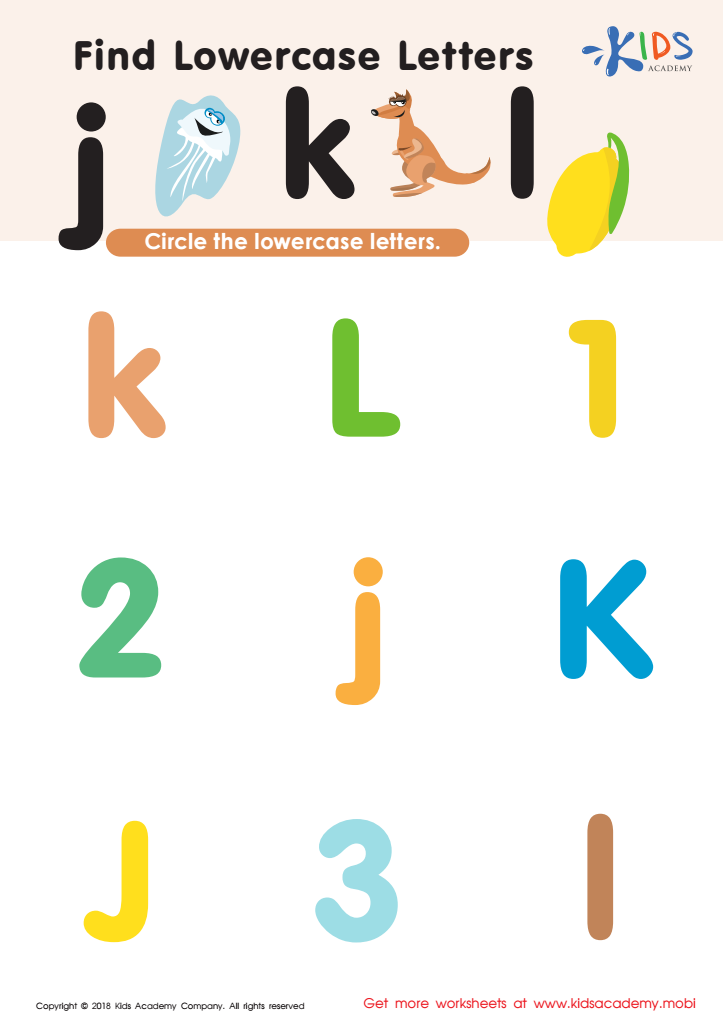
Find Lowercase Letters j k l Worksheet

Find Lowercase Letters j k l Worksheet

Help your child's brain develop and have fun at the same time! Find and circle the lowercase letters jkl in the worksheet full of uppercase letters and numbers. Colorful drawings and bright colors make this an engaging learning activity.
Find Lowercase Letters j k l Worksheet
Worksheet
Cursive ABCs: Lowercase a

Cursive ABCs: Lowercase a

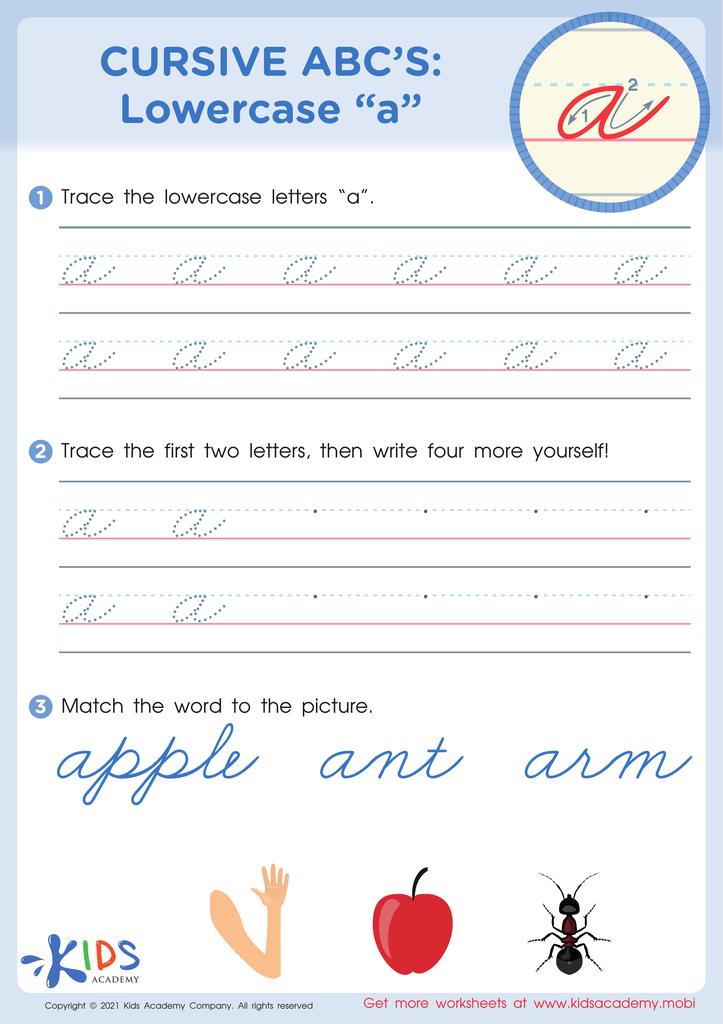
Help your children learn to write cursive letters with these free tracing sheets. They'll practice their handwriting, develop printing skills and build vocabulary. By tracing the lowercase letter “a” multiple times, they'll learn how it's formed and be ready to write it on their own. The colorful pictures at the bottom of each page also offer new words beginning with the letter 'a'.
Cursive ABCs: Lowercase a
Worksheet
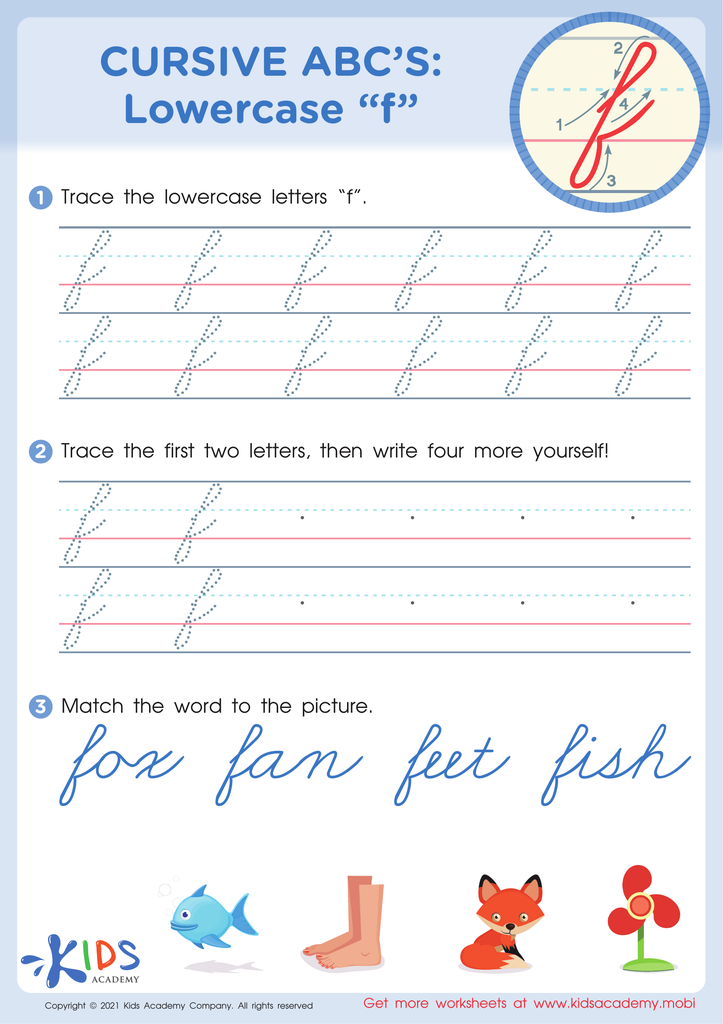
Cursive ABCs: Lowercase f

Cursive ABCs: Lowercase f

This worksheet helps your child improve letter writing and recognition. Each letter has its own form, so teaching is important. Practicing the lowercase letter 'f' helps kids memorize its shape and recognize it in words. With practice, they'll be able to write the letter correctly and identify it quickly.
Cursive ABCs: Lowercase f
Worksheet
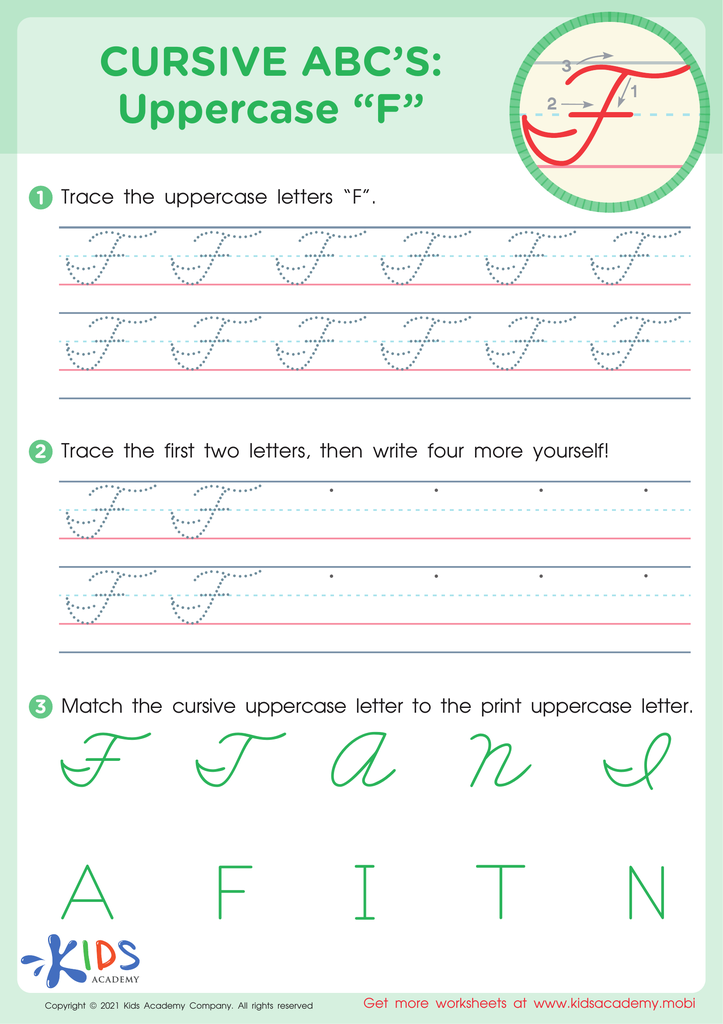
Cursive ABCs: Uppercase F

Cursive ABCs: Uppercase F

Help your kids trace the letters in these worksheets and watch their confidence grow as they learn to write cursive uppercase and lowercase letters. Ask them to identify the letters in words and give examples of words that start with an uppercase 'F', then have them write some letters on their own and assess their progress.
Cursive ABCs: Uppercase F
Worksheet
Letter J worksheets
Letter J worksheets

Letter J Tracing Page

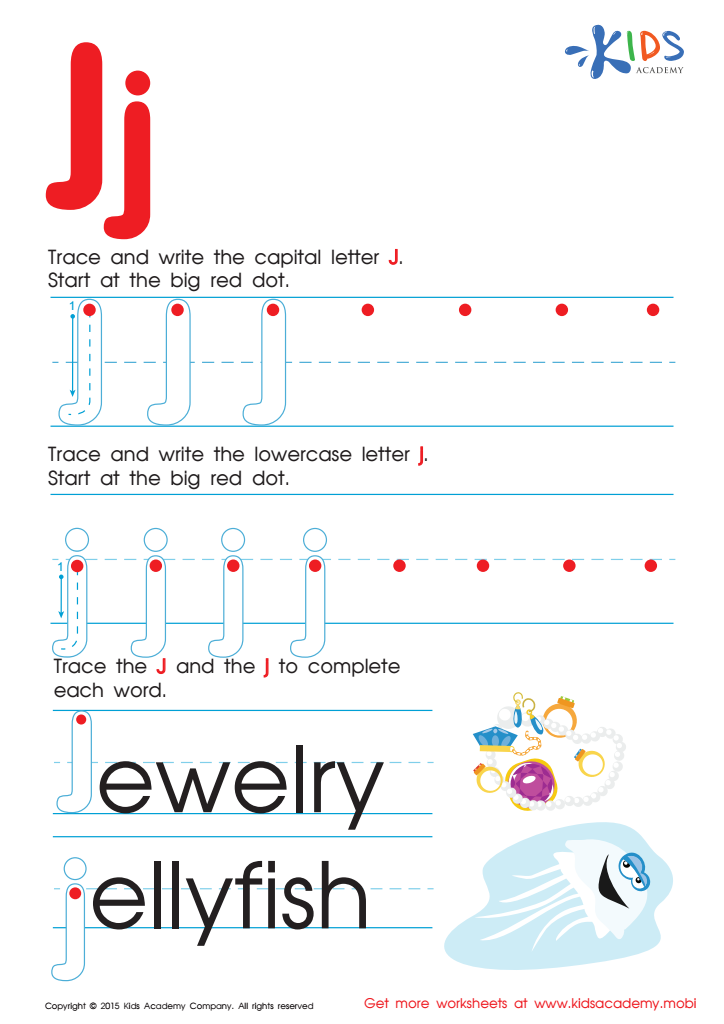
Trace and write the letter "J" with our ABC worksheet - start at the big red dot! Have fun completing words like jewelry, jellyfish and more. Check out our kindergarten activities for more alphabet practice.
Letter J Tracing Page
Worksheet
Cursive ABCs: Uppercase G

Cursive ABCs: Uppercase G

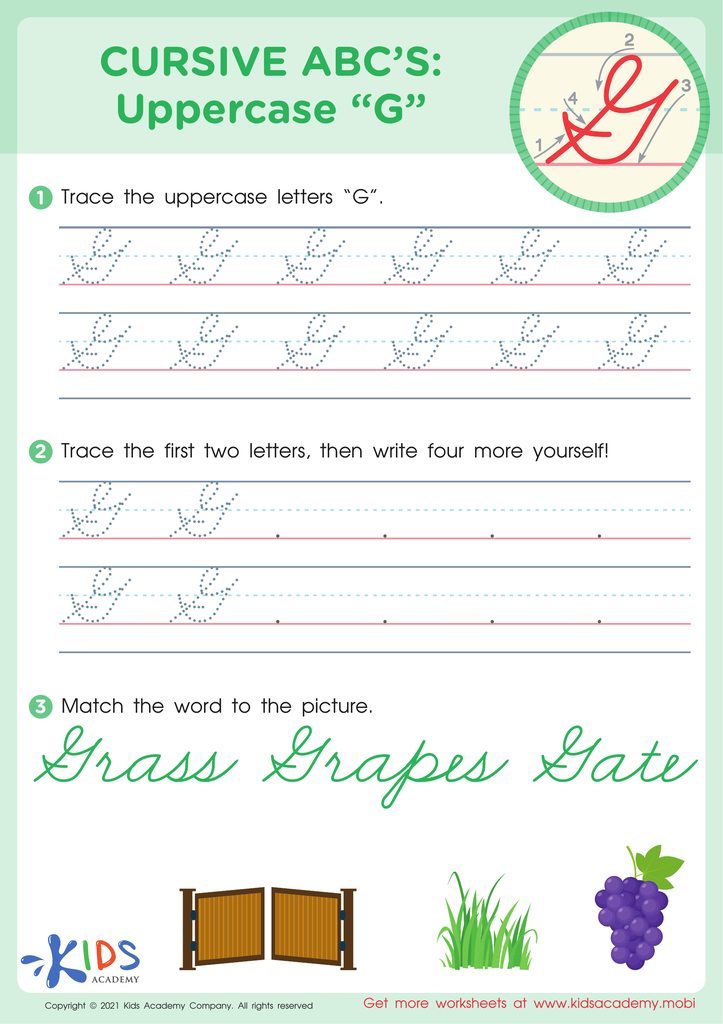
Remind your kids of words beginning with 'G' like 'girl' and 'goat'. Ask them to give examples too. Use this tracing worksheet to help your kids practice writing the cursive uppercase 'G'. It'll help them perfect their motor skills and get better at cursive letters.
Cursive ABCs: Uppercase G
Worksheet
Letter D Coloring Page

Letter D Coloring Sheet

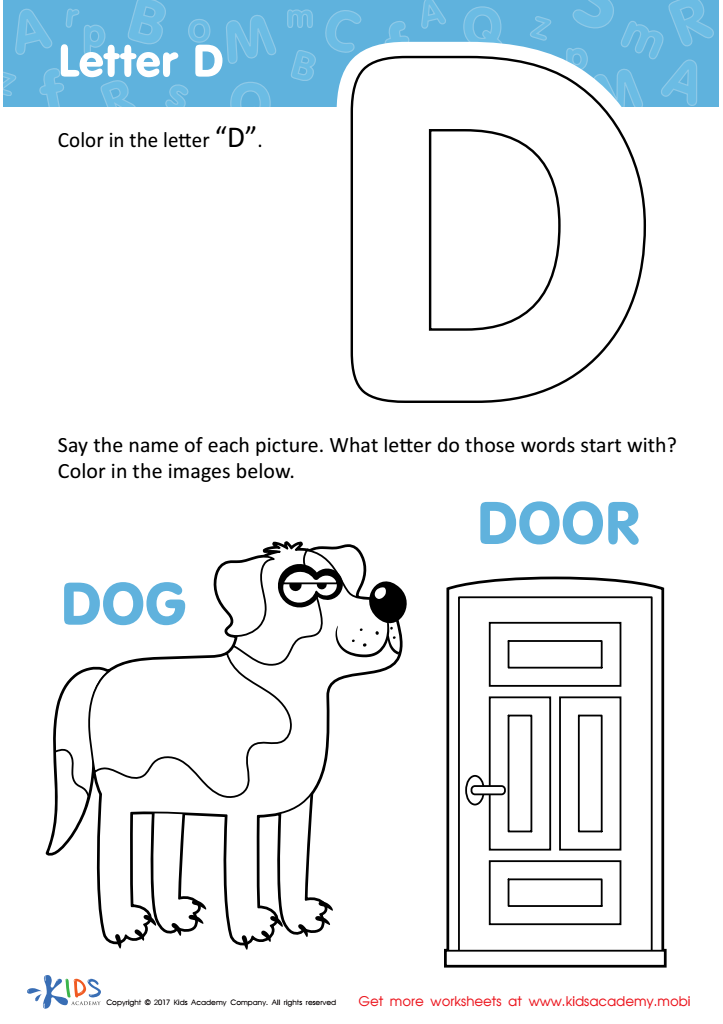
Coloring with this letter "D" page is a great way to encourage your child's creativity while they learn the letter "D" and its sound. It's a fun activity to stimulate their imagination!
Download (PDF)
Assign to My Students
Letter D Coloring Sheet
Worksheet
Cursive ABCs: Uppercase D

Cursive ABCs: Uppercase D

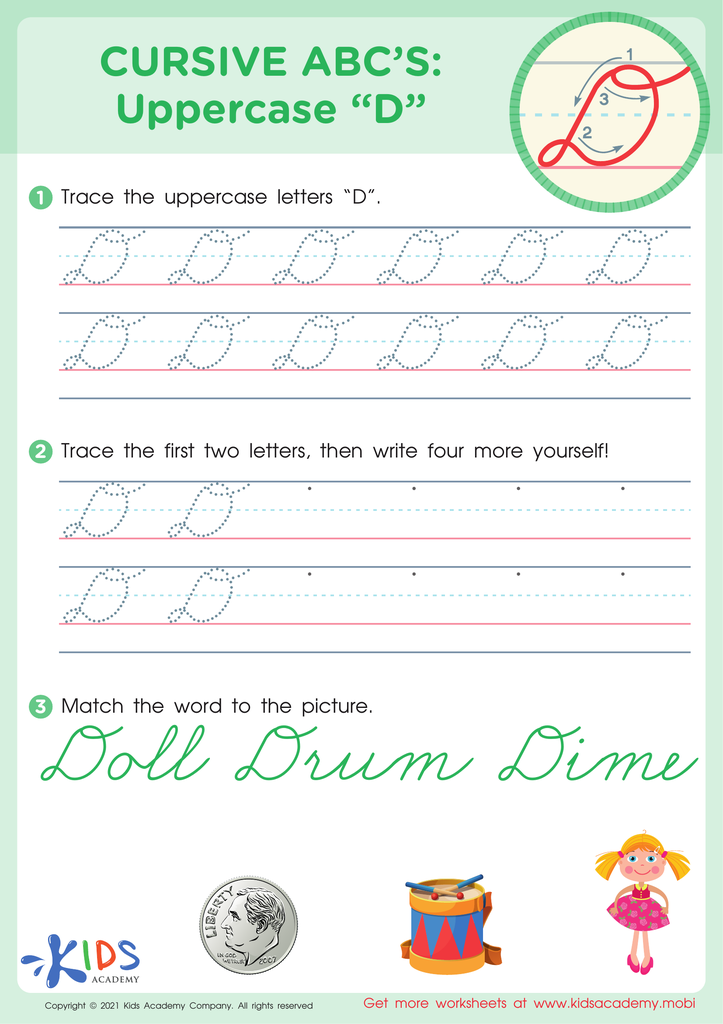
Help your kids learn to write the uppercase letter 'D' in cursive with the help of this tracing worksheet. Show them how to trace it over and over. When they're ready, let them write the letter on their own. Match pictures to words that start with 'D' and your kids will be pros in no time!
Cursive ABCs: Uppercase D
Worksheet
Uppercase Letters P, Q, and R Worksheet Preview

Uppercase Letters P, Q, and R Worksheet

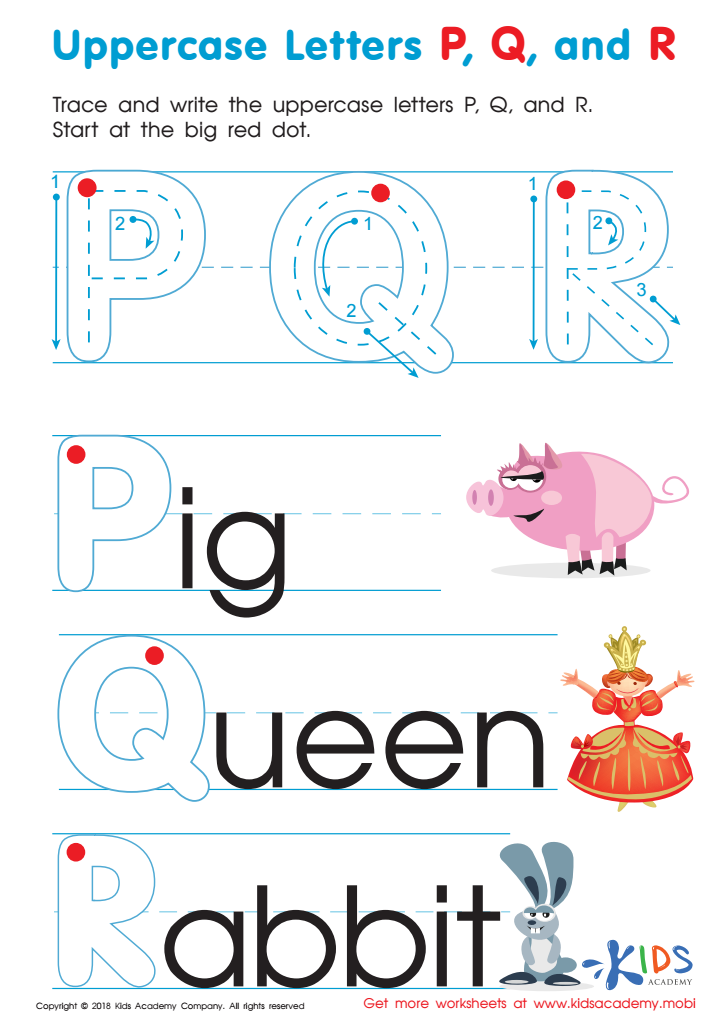
Cute images of a pig, queen and rabbit make it fun to learn letter sounds. Follow the arrows to learn the strokes, then trace each letter from the big red dot. Perfect for kids to learn how to read and write P, Q, and R!
Uppercase Letters P, Q, and R Worksheet
Worksheet
Cursive ABCs: Lowercase c

Cursive ABCs: Lowercase c

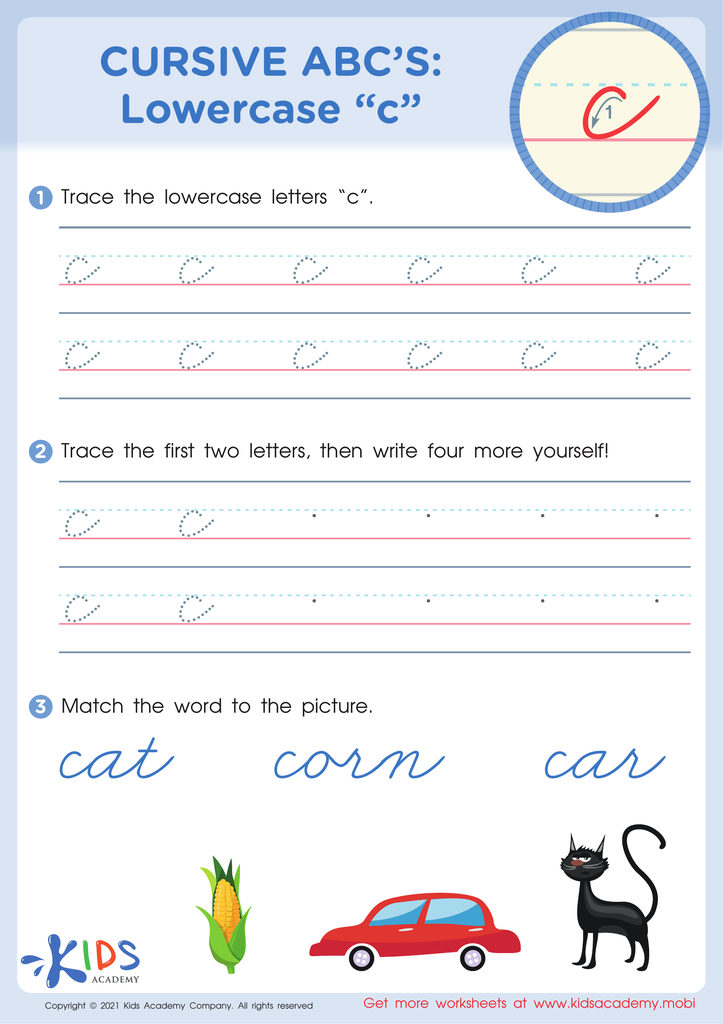
Once your child has successfully printed their letters, help them learn to recognize and write the alphabet in cursive. Struggling? This worksheet is perfect to assist them. Writing is an essential skill for kids to learn, so do all you can to help them. Use these tracing worksheets and guide them as they write the lowercase letter 'c' in cursive.
Cursive ABCs: Lowercase c
Worksheet
Cursive ABCs: Lowercase h

Cursive ABCs: Lowercase h

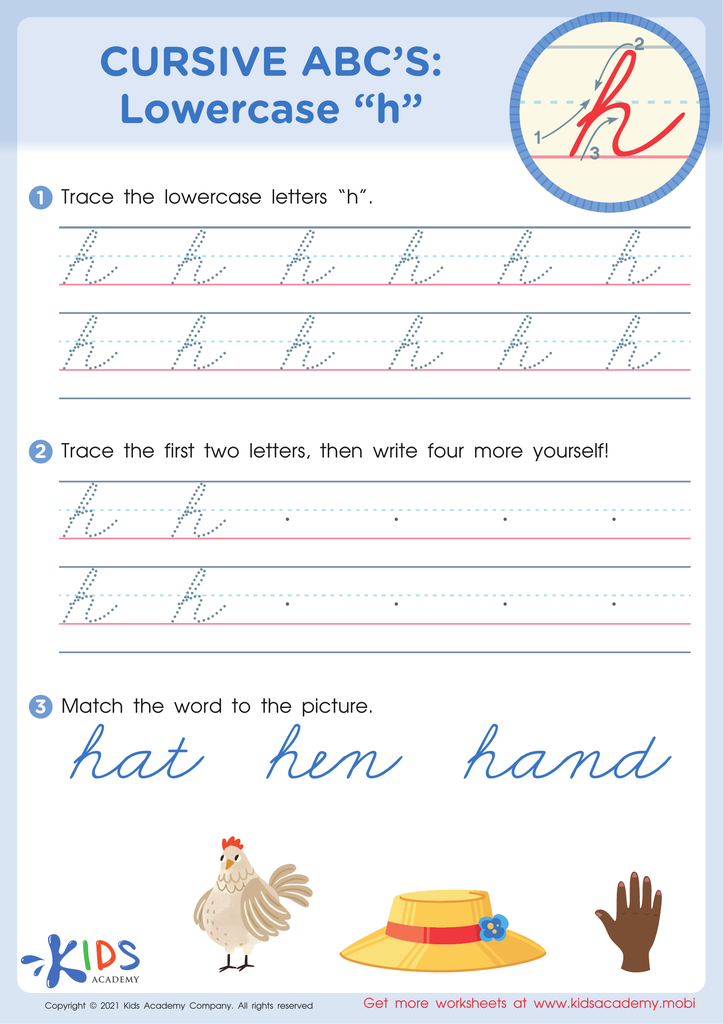
Your children will need more than just reciting the alphabet; they need to learn how to identify and write it. Cursive writing helps with neatness, and these tracing worksheets are great learning aids and offer exercises to practice writing lowercase 'h'. With these, your children get better writing skills and learn new words.
Cursive ABCs: Lowercase h
Worksheet
Letter L and P Tracing Worksheet Preview

Letter L and P Tracing Worksheet

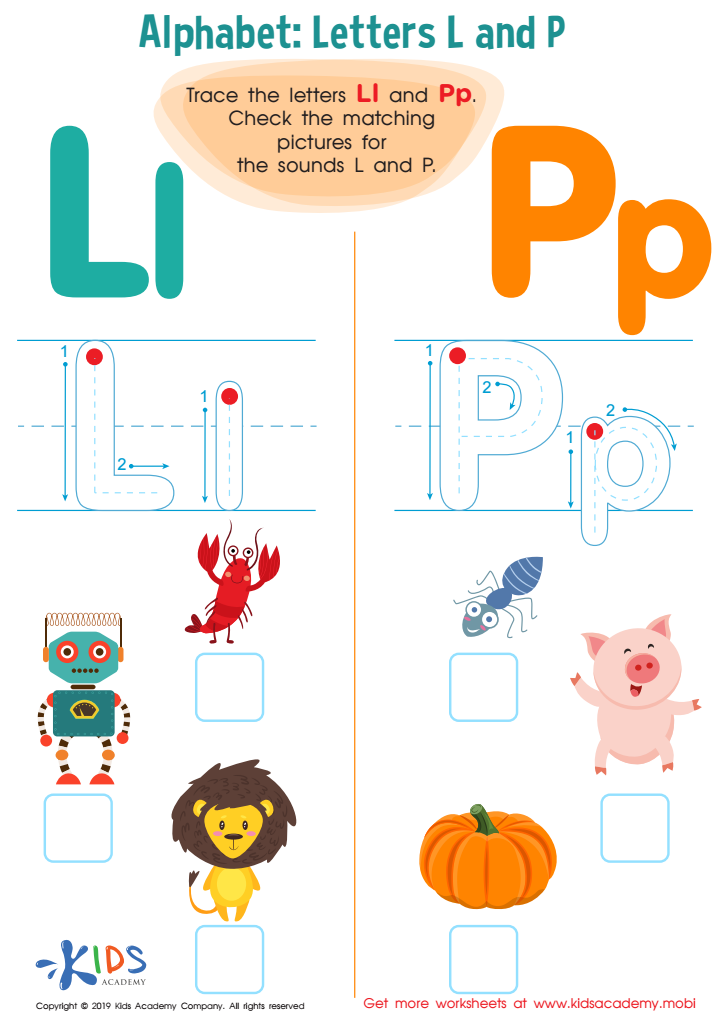
This traceable worksheet can motivate your students to learn and practice core skills. They'll trace the letters 'L' and 'P' and identify the pictures next to them. With this exercise, they'll unlock their learning abilities and excel in the subject!
Letter L and P Tracing Worksheet
Worksheet
Cursive ABCs: Lowercase b


Cursive ABCs: Lowercase b

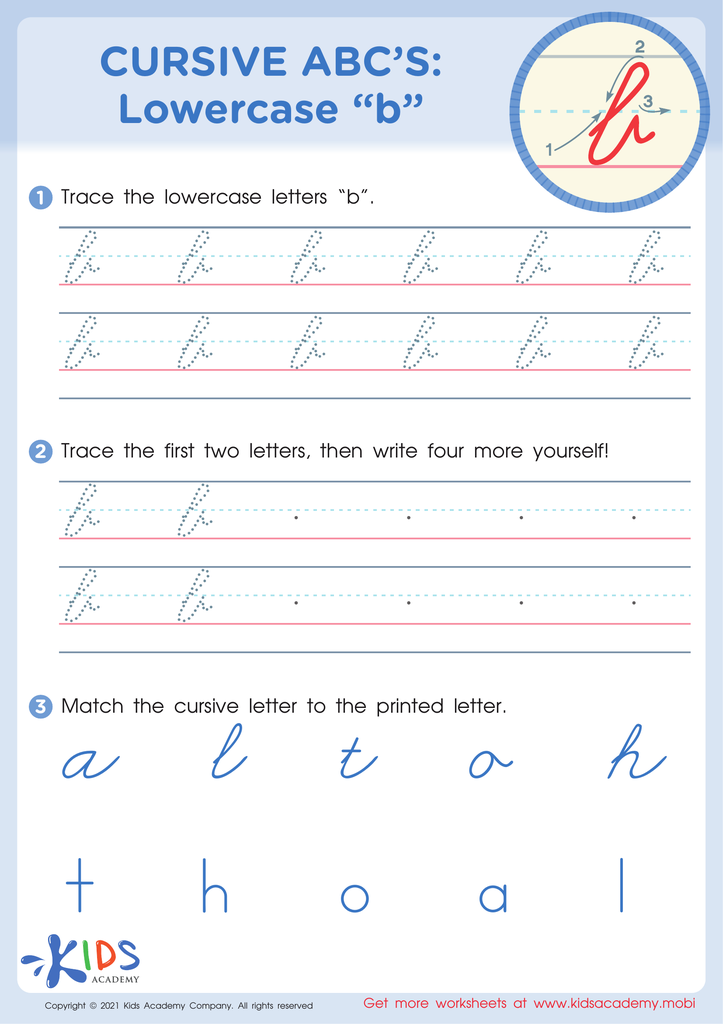
Trace two lines of lowercase b's with your kids. Guide them through the loops and swirls to help them learn cursive handwriting. Then let them practice writing the letter b themselves in the last two lines. With this exercise, your kids should become better at writing and recognizing the lowercase cursive b.
Cursive ABCs: Lowercase b
Worksheet


Parents and teachers should prioritize the development of fine motor skills in children ages 6-8 because these skills are fundamental to academic and daily life success. Fine motor skills involve the coordination of small muscles in actions like writing, cutting, and buttoning clothes. At this age, children are expected to begin mastering the alphabet, which requires precise finger and hand movements. Proficiency in these skills is critical for legible handwriting, a key component of effective written communication and academic achievement.

Moreover, the act of writing the alphabet aids cognitive development. As children practice letter shapes and forms, they simultaneously enhance their memory, visual-spatial understanding, and attention to detail. Fine motor skills also boost self-esteem and independence; kids are more likely to develop a sense of accomplishment as they successfully write, draw, and complete tasks on their own.

Deficiencies in fine motor skills can lead to frustration and reluctance in school tasks, impacting overall academic performance and even social interactions. Therefore, integrating practices that strengthen these skills through engaging and playful activities can set a child up for lifelong success both in and out of the classroom. Investments made in these early years pave the way for smoother educational journeys and more confident, capable individuals.