Filters

55 filtered results

Clear all filters
Favorites
With answer key
Interactive

55 filtered results

Difficulty Level

Grade


Check out this FREE Trial Lesson on Alphabet for age 3-7!

N

Favorites
With answer key
Interactive
  • 3-7
  • Handwriting practice
  • Alphabet
Lowercase Letters g h i Worksheet

Lowercase Letters g h i Worksheet

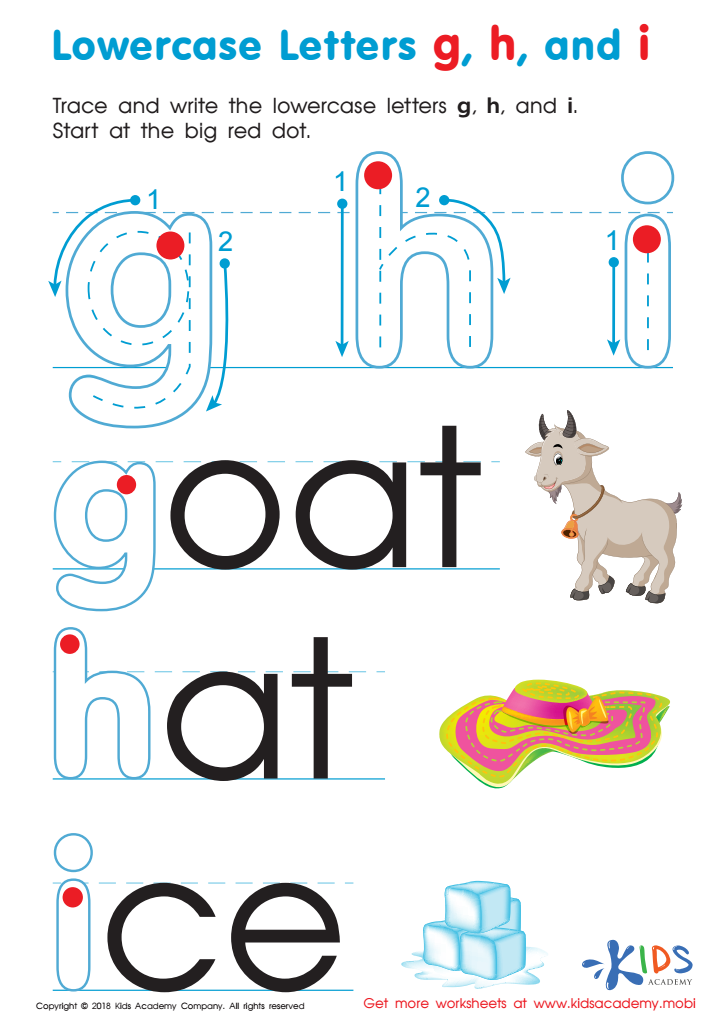
Learning is fun for your youngster with color and an enjoyable exercise. Help them build their understanding of the alphabet by starting at the big red dot drawn on each letter and carefully following the dotted lines to draw g, h, and i.
Lowercase Letters g h i Worksheet
Worksheet
Lowercase Letters a b c Worksheet

Lowercase Letters a b c Worksheet

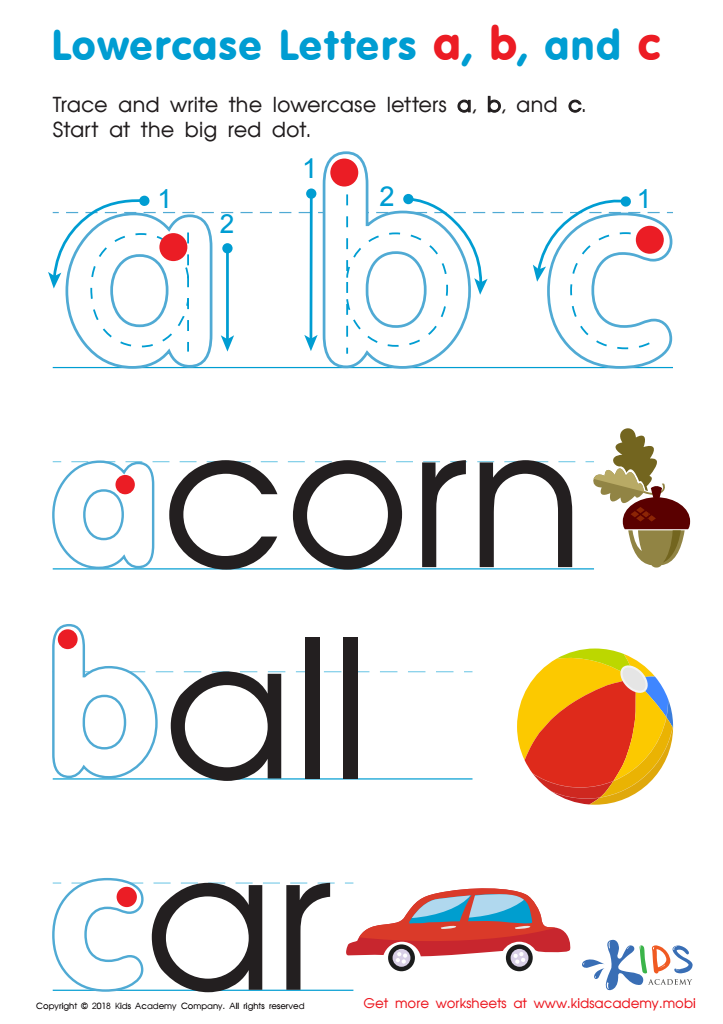
Help your child trace and write the lowercase letters of the alphabet with this fun worksheet. Start by following the arrows and directions from the red dot, and watch them improve their writing skills! Vibrant illustrations make it easy and enjoyable.
Lowercase Letters a b c Worksheet
Worksheet
Lowercase Letters v w x Worksheet

Lowercase Letters v w x Worksheet

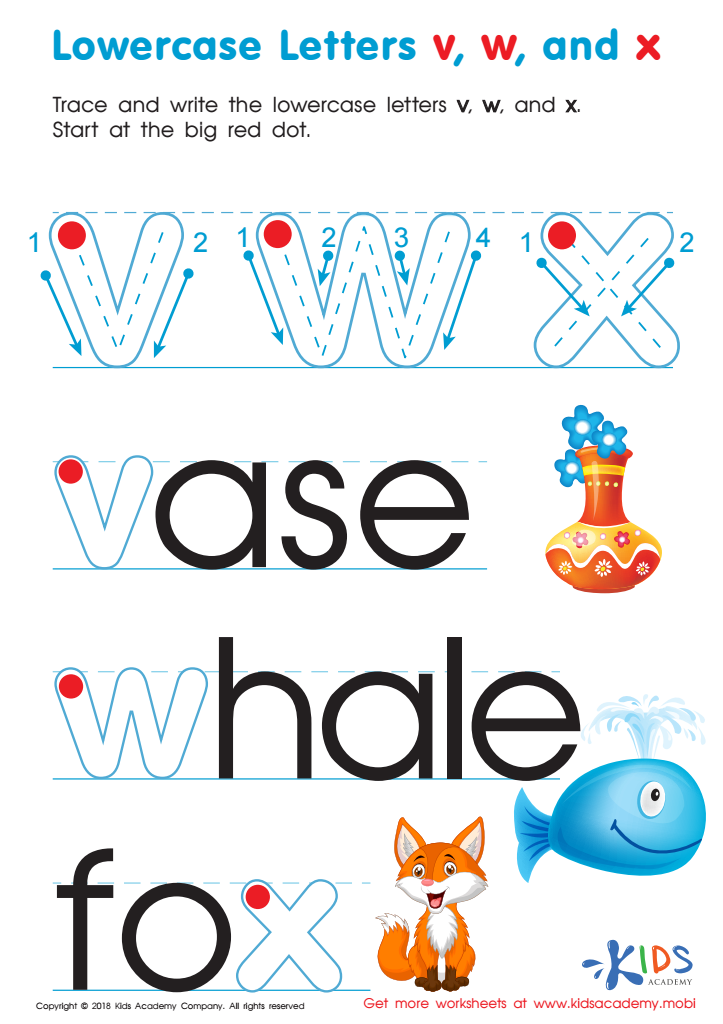
Help your child learn to write lowercase letters v, w, and x, starting at the big red dot. This activity will help them develop writing skills and correctly identify the letters. Guide them as they trace the letters and enjoy watching them improve!
Lowercase Letters v w x Worksheet
Worksheet
Letter N Coloring Page

Letter N Coloring Sheet

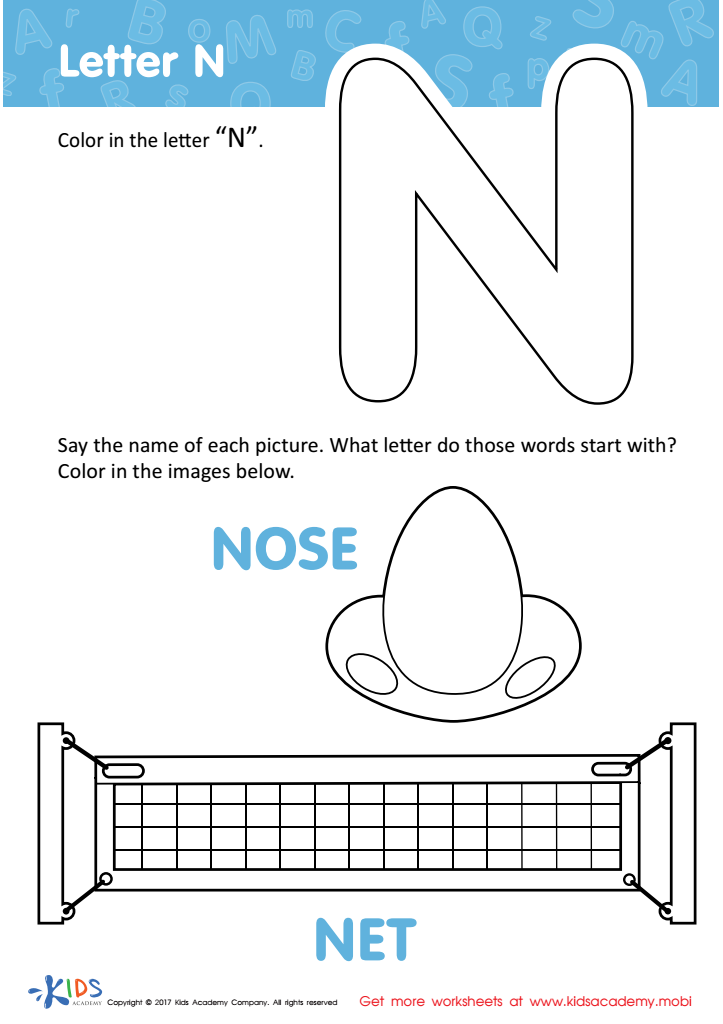
Let your child get creative and learn the alphabet with this letter "N" coloring page! It's a fun way to recognize the letter, featuring a body part all kids know. Coloring and reinforcing recognition of "N" will help your child have fun while learning!
Download (PDF)
Assign to My Students
Letter N Coloring Sheet
Worksheet
My Name: Cheerful Balloons Worksheet

My Name: Cheerful Balloons Worksheet

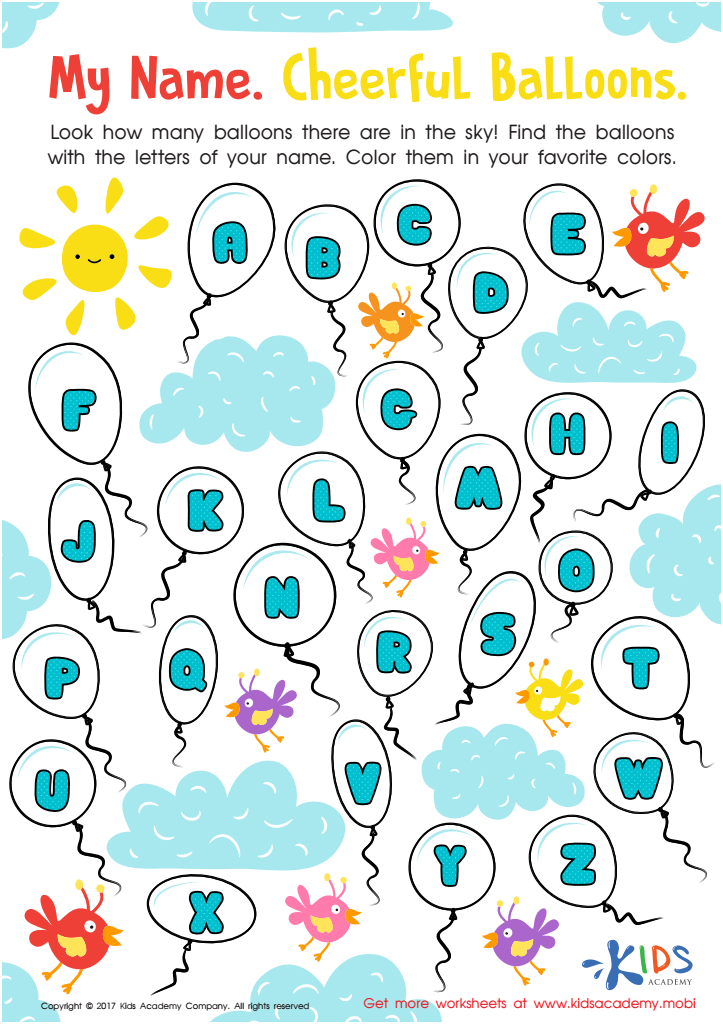
Encourage toddlers and preschoolers to soar with this fun worksheet! Find the letters in the balloons and help your child find the letters of their name. Then, fill in each balloon with their favorite colors and turn the paper over to write their name on the back. A great way to give imaginations wings!
Download (PDF)
Assign to My Students
My Name: Cheerful Balloons Worksheet
Worksheet
Letter D and E Sounds Worksheet

Letter D and E Sounds Worksheet

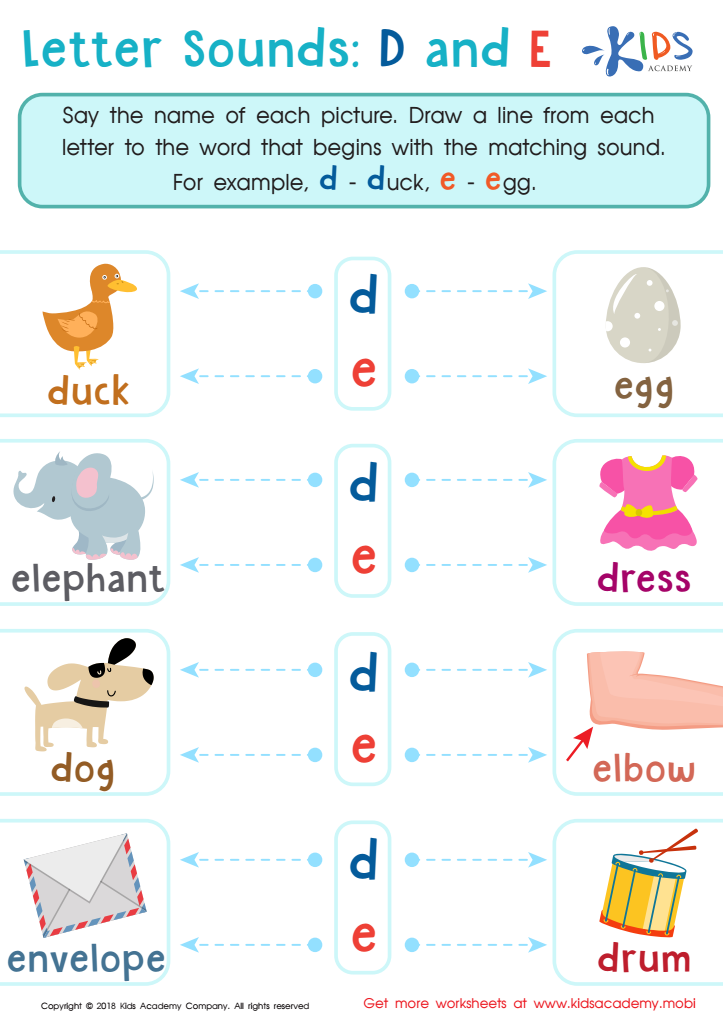
Kids can use picture clues and visual discrimination to name cheerful pics and isolate the beginning sound. This free PDF worksheet will help them develop phonological awareness, differentiate between "D" and "E", and hone fine-motor skills. It'll also boost their confidence as they become readers.
Letter D and E Sounds Worksheet
Worksheet
Uppercase Letters V, W, and X Worksheet


Uppercase Letters V, W, and X Worksheet

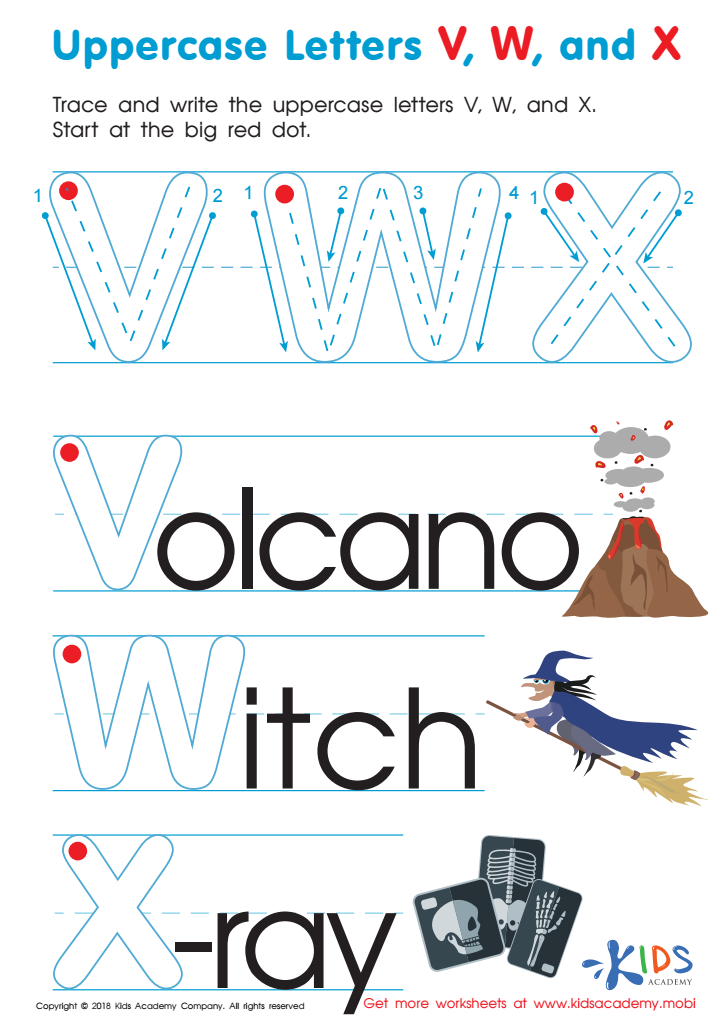
This worksheet is perfect for kids struggling to write uppercase letters V, W, and X. Warm up their brains first by having them name words starting with these letters. Then, help them trace and write each letter from the big red dot. With your assistance, they will quickly sharpen their writing skills.
Uppercase Letters V, W, and X Worksheet

Worksheet


... 2 3

Handwriting practice, especially for children aged 3-7, is fundamentally important for several developmental and educational reasons. At this formative age, children are establishing the foundation for their future educational journey, and handwriting is a critical component of this early stage. Learning to write the alphabet enhances fine motor skills, as it requires precise finger and hand movements. These skills are not only essential for writing but also for other daily tasks like buttoning a shirt or tying shoelaces.

Additionally, handwriting practice helps children understand letter formation and association, which aids in developing literacy skills. This learning phase helps reinforce letter recognition and phonemic awareness, crucial prerequisites for reading proficiency. Also, the act of forming letters integrates visual, motor, and cognitive processes, thereby enhancing neural development and hand-eye coordination.

For teachers, ensuring students have robust handwriting skills means fewer obstacles in their learning path, allowing for smoother progression through the curriculum. Parents, on the other hand, can utilize handwriting practice as an effective way to engage in their child's educational growth, providing valuable one-on-one interaction and support.

Furthermore, perseverance developed through repeated handwriting practice teaches children concentration and patience—qualities beneficial beyond schooling. Thus, for both parents and teachers, investing time in alphabet handwriting practice profoundly supports the child's holistic development, setting them up for academic success and functional dexterity.