Phonetics understanding Alphabet Worksheets for Ages 3-7
3 filtered results
-
From - To
Discover our engaging Phonetics Understanding Alphabet Worksheets designed specifically for children ages 3-7. These interactive worksheets help young learners grasp the sounds associated with each letter of the alphabet, laying a strong foundation for reading and writing. Through fun activities and vibrant visuals, children will enhance their phonemic awareness, helping them recognize phonetic sounds and improve their language skills. Perfect for parents and educators alike, these worksheets make learning enjoyable and effective. Explore our collection and empower your child's literacy journey today!
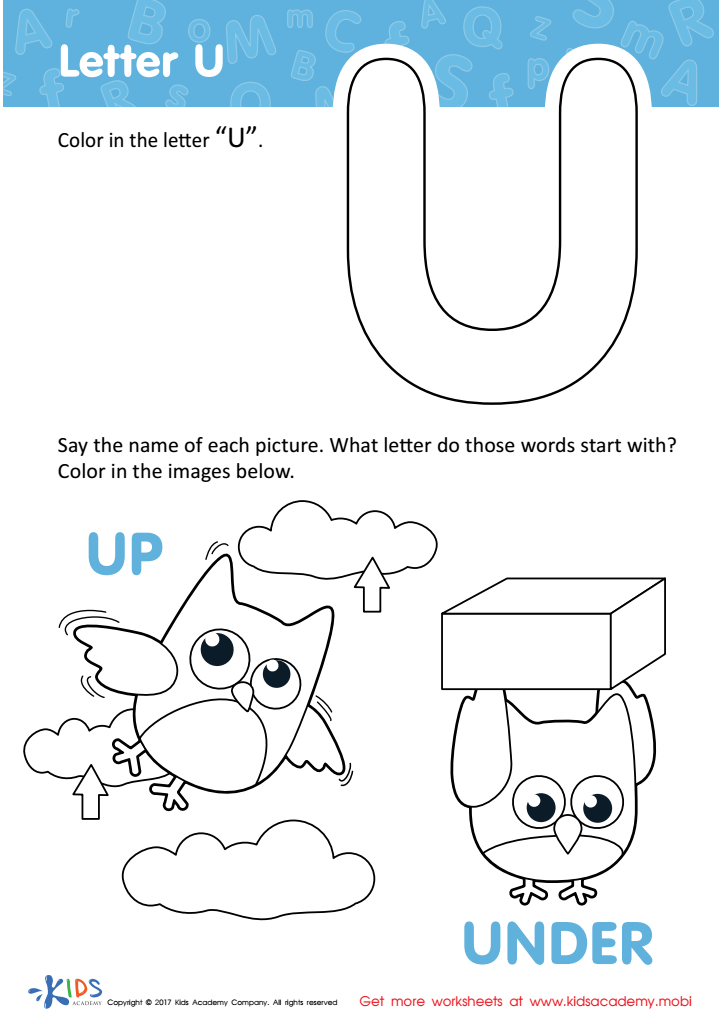
Letter U Coloring Sheet
 Assign to My Students
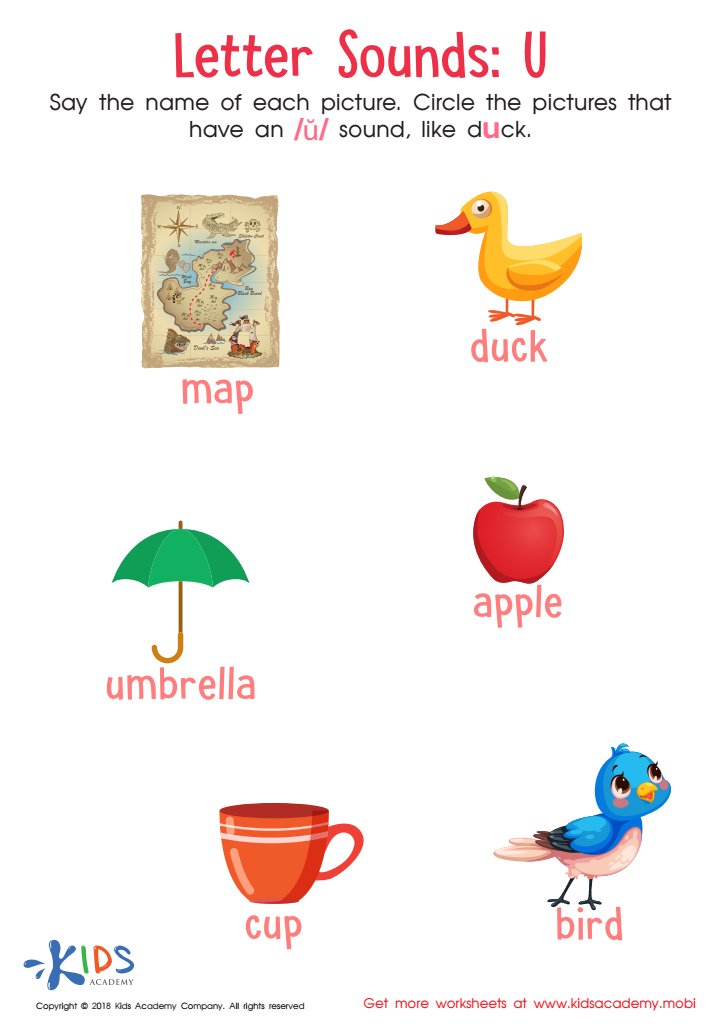
Letter U Sounds Worksheet
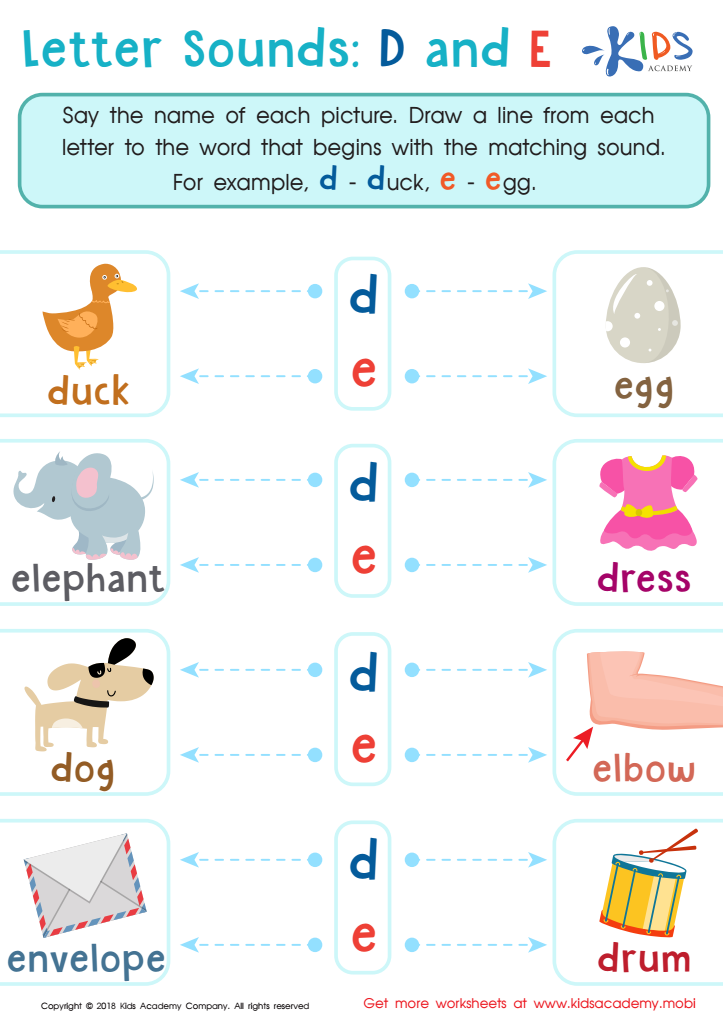
Letter D and E Sounds Worksheet




.jpg)



Understanding phonetics is crucial for parents and teachers of children aged 3-7 as it lays the foundation for literacy and language development. Phonetics involves the sounds of language, which is essential for accurate pronunciation and comprehension. When children learn the corresponding sounds of letters and letter combinations, they can decode words, making reading smoother and more enjoyable.
By emphasizing phonetic awareness in early education, parents and teachers can help kids develop strong reading skills. This understanding aids in recognizing patterns in words and improves spelling abilities. Moreover, phonetics supports language acquisition, allowing children to express themselves more effectively and boosting their vocabulary.
In addition, children who have a solid grasp of phonics tend to experience higher confidence and motivation in reading tasks. This early success can foster a lifelong love for reading and learning. Furthermore, understanding phonetics can help close the achievement gap between children from different backgrounds by providing all students with the tools necessary to succeed in literacy.
In summary, phonetics is a key component of language development that underpins reading, writing, and communication skills, making it a crucial focus for parents and educators in the early years of a child’s education.







