Rhyming skills Alphabet Worksheets for Ages 3-7
5 filtered results
-
From - To
Enhance your child's language development with our Rhyming Skills Alphabet Worksheets, specially designed for ages 3-7! These engaging and interactive worksheets help young learners build essential phonemic awareness through enjoyable rhyming activities. Perfect for preschool and early elementary classrooms, our resources promote vocabulary growth and auditory skills while making learning fun. Kids will explore rhymes with playful illustrations and captivating exercises, ensuring a lively learning experience. Foster a love for language and support literacy readiness at an early age! Download our creative worksheets today and give your child the tools they need to succeed in reading and writing!
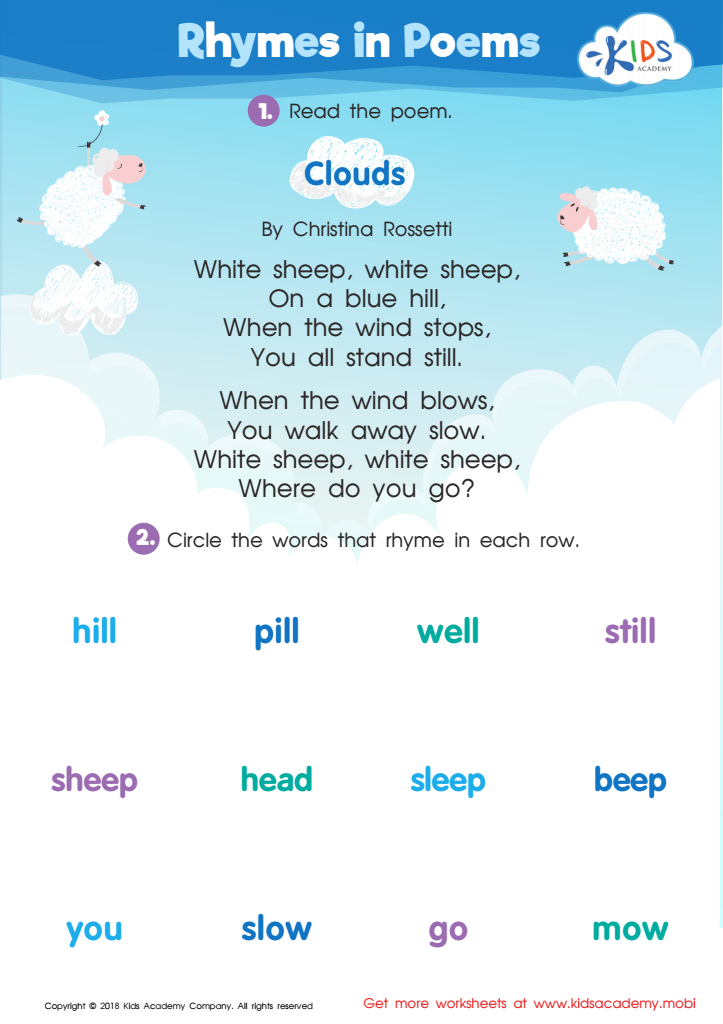
Rhymes in Poems Worksheet
 Assign to My Students
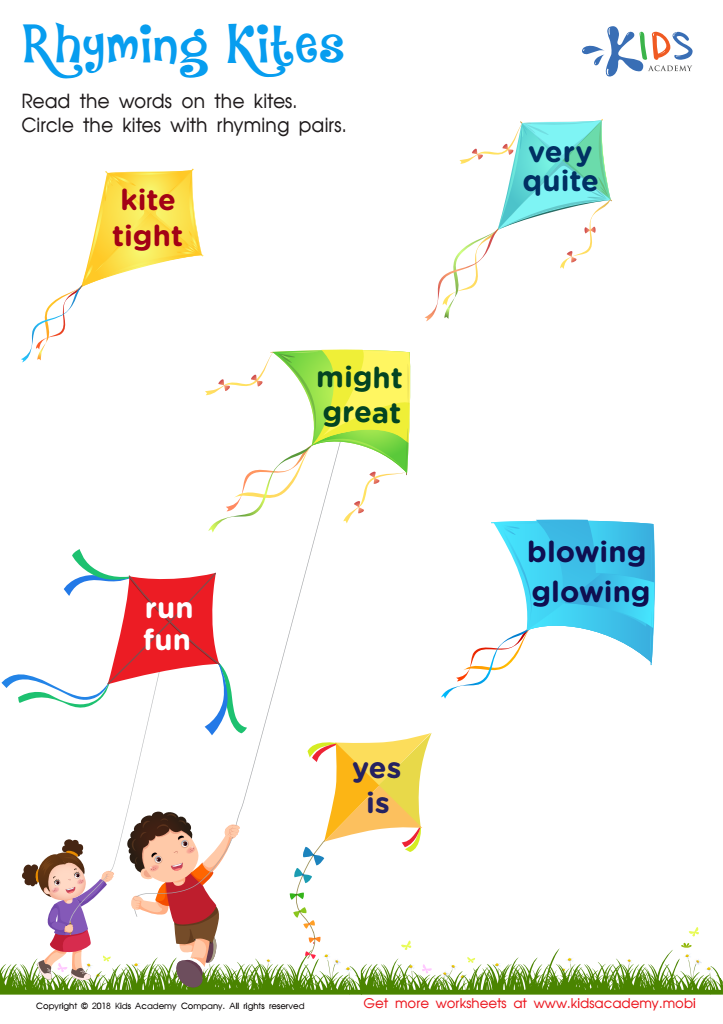
Rhyming Kites Worksheet
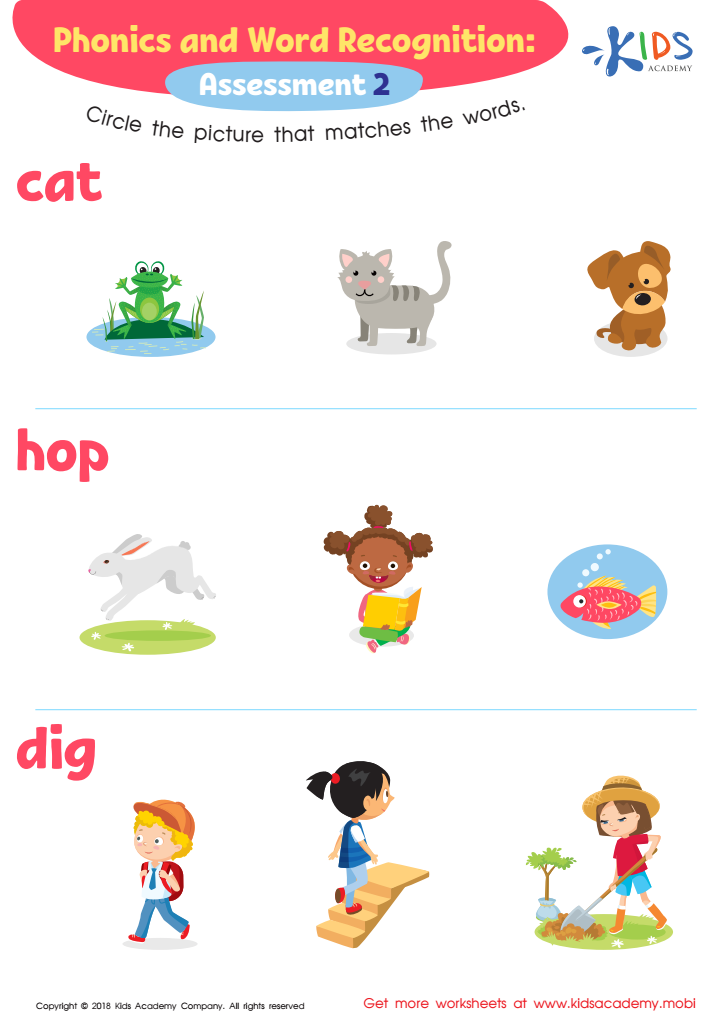
Phonological Awareness: Assessment 2 ELA Worksheet
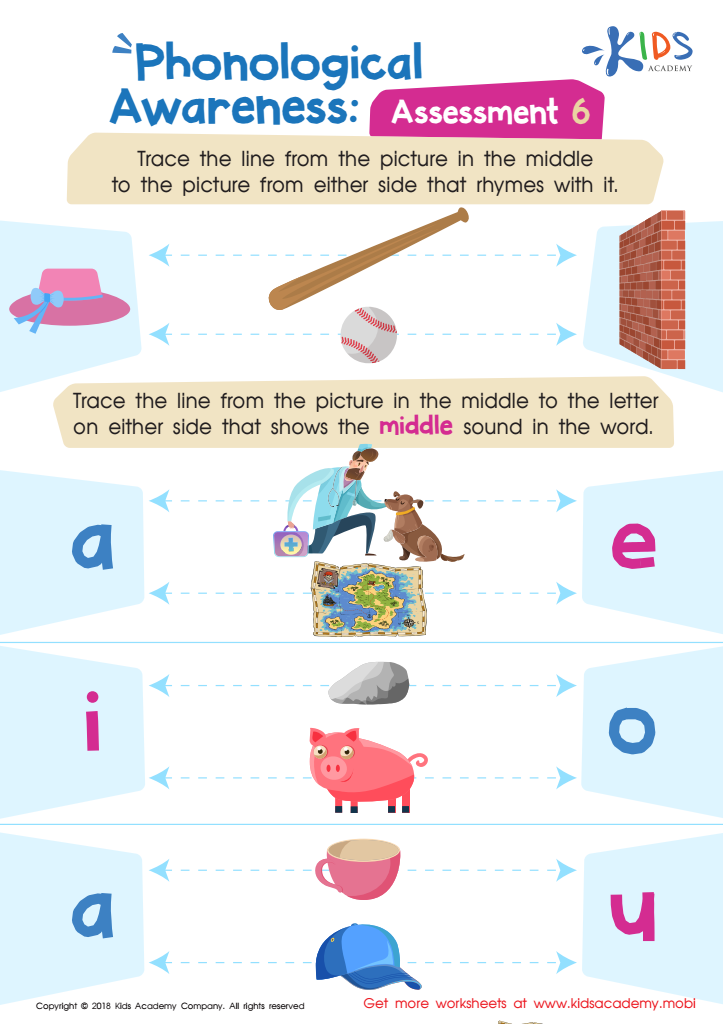
Phonological Awareness: Assessment 6 Worksheet
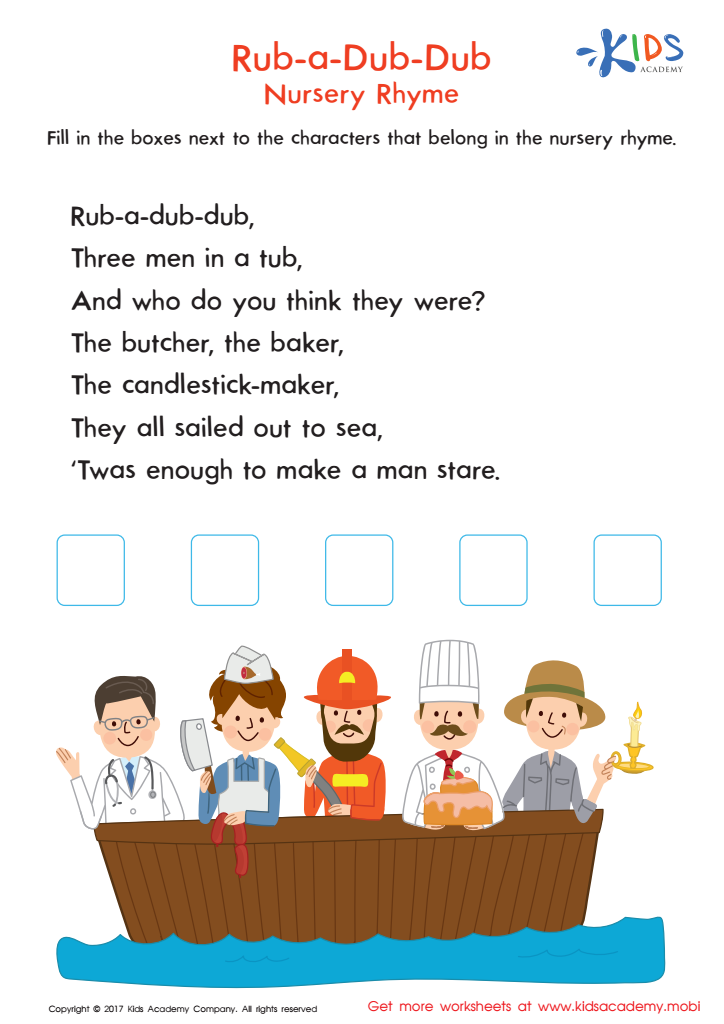
Rub a Dub Dub Printable








Rhyming skills are crucial for early literacy development in children aged 3 to 7. When parents and teachers prioritize rhyming, they lay a foundation for vocabulary acquisition, phonemic awareness, and reading readiness. Rhyming helps children recognize patterns in language, making it easier for them to decode words and understand the relationship between letters and sounds. This understanding is essential for developing strong reading skills later on.
Moreover, engaging in rhyming activities cultivates a love for language and storytelling. When children discover the playful aspect of words through songs, poems, and games, they become more excited about reading and expressing themselves. Rhyming fosters not only cognitive growth but also social development, as children often enjoy sharing and collaborating with peers during rhythmic play.
Additionally, children who have strong rhyming skills tend to perform better in early literacy evaluations, setting them on a path to academic success. By emphasizing rhyming in everyday interactions, parents and teachers can create enriching learning experiences that are both educational and enjoyable. Ultimately, nurturing rhyming skills in young learners empowers them, promotes confidence in their abilities, and equips them with the tools needed for lifelong learning while deepening their connection with language.







