
Sight word recognition Alphabet Worksheets for Ages 3-7
4 filtered results
Difficulty Level
Grade
Age
-
From - To
Subject
Activity
Standards
Introduce your child to the world of reading with our engaging sight word recognition alphabet worksheets specially designed for ages 3-7. These educational resources from Kids Academy blend fun and learning to help young learners identify, remember, and understand essential sight words early on. Each worksheet is crafted to enhance children's literacy skills by featuring a variety of activities such as tracing, matching, and coloring that make reading exciting. Perfect for preschool and kindergarten, these free, printable tools aid in developing foundational skills that set the stage for lifelong reading success. Download and start learning today!
Favorites
With answer key
Interactive
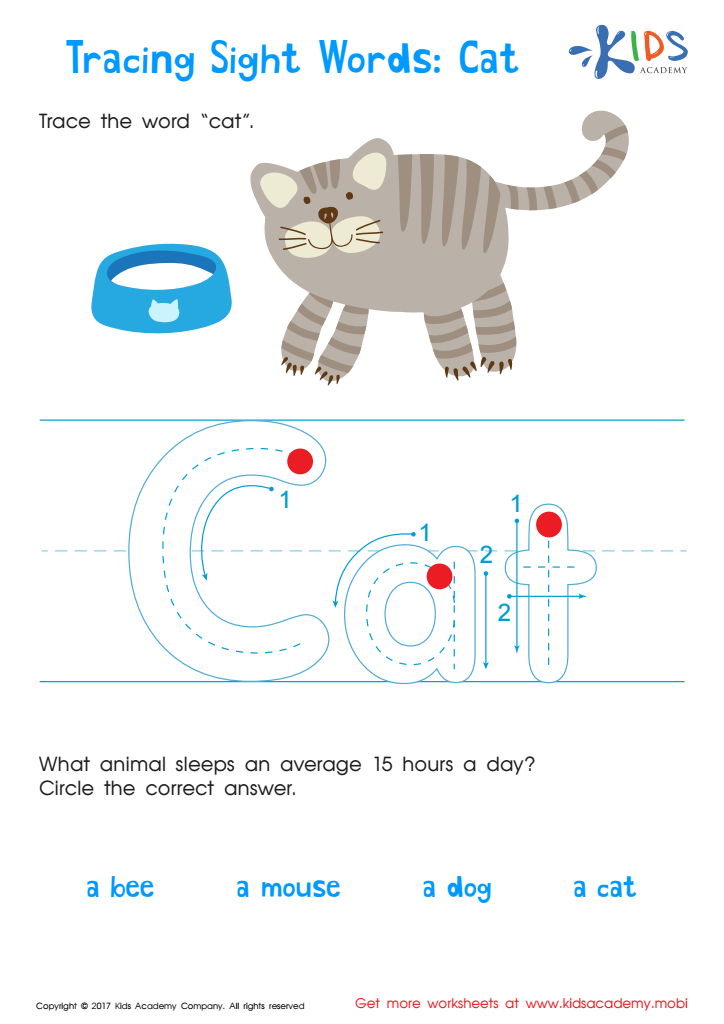
Cat Printable Sight Words Worksheet
Encourage your child's literacy with this fun sight words worksheet: cat PDF! It helps build a solid foundation for reading, featuring activities such as reading and tracing the word cat, and finding it amongst other sight words. With its cute cat, Kids Academy makes learning to read a delight!
Cat Printable Sight Words Worksheet
Worksheet
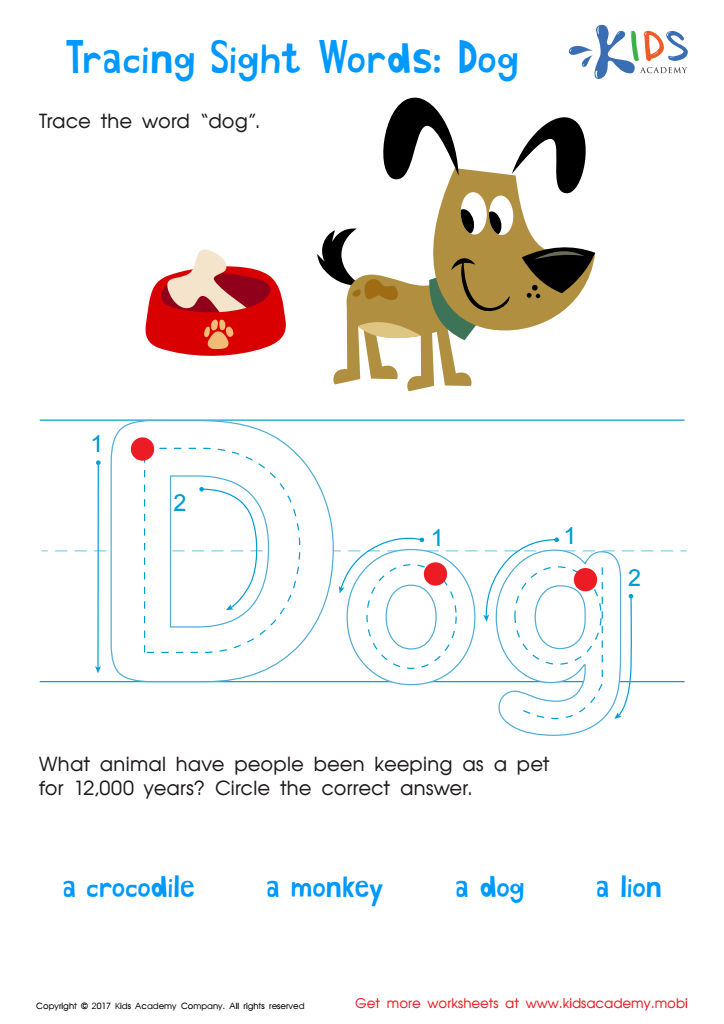
Dog Worksheet Sight Words Worksheet
Get your kids excited to read with our dog-themed sight words worksheet!
Excite your child to read with our sight words worksheet: dog edition! Featuring a lovable dog character to put a smile on any kid's face, this worksheet helps kids practice reading and writing the word "dog". Build a library of words they can read quickly and promote increasing literacy skills with early fluency! Get them ready for reading with our dog-themed sight words worksheet!
Dog Worksheet Sight Words Worksheet
Worksheet
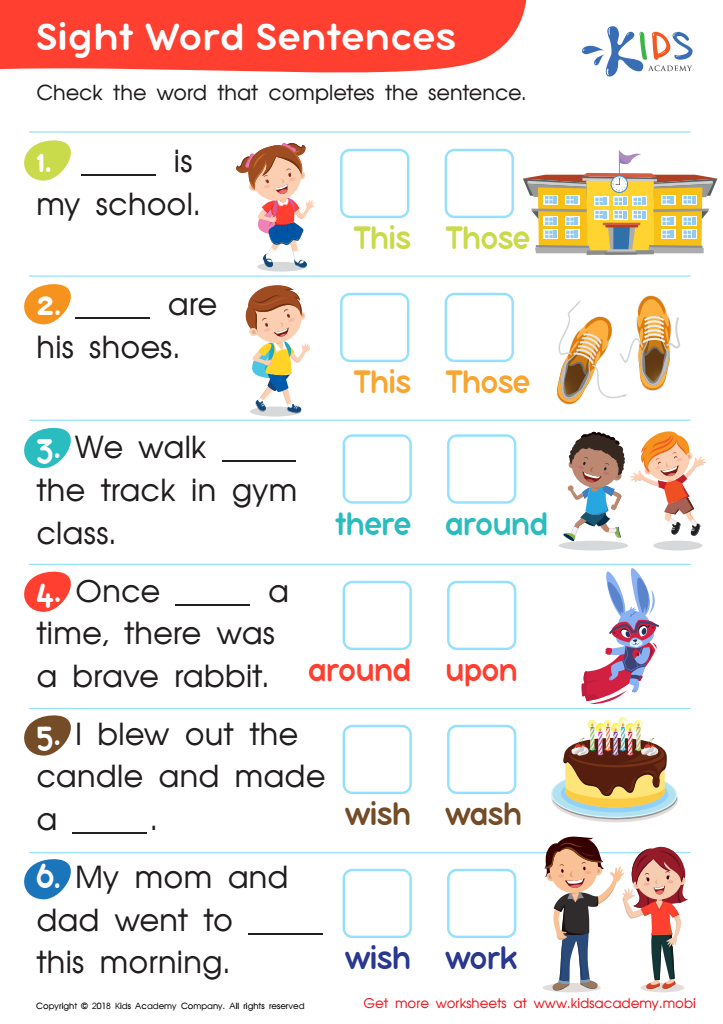
Sight Word Sentences Worksheet
Improve reading fluency! Have students fill in the blank with the correct sight word to complete sentences. Sight words are often tricky to decode - they don't follow phonics or spelling rules. To read smoothly, young learners must know them by memory. Use this printable and help kids master their sight words!
Sight Word Sentences Worksheet
Worksheet
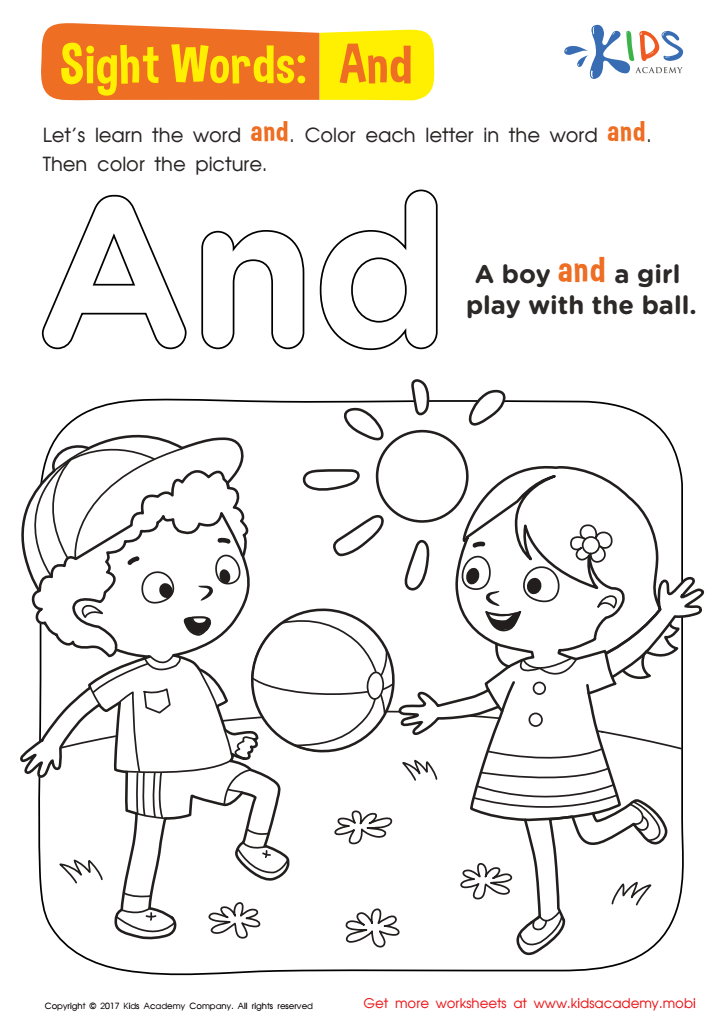
And Worksheet Sight Words Worksheet
Help your child get a jumpstart on reading with sight words! Print out this fun worksheet and get your child to read the sentence. Point out the word "and", then color the word and enjoy the rest of the scene! It's a great way to introduce sight words and get their early reading skills going!
Download (PDF)
 Assign to My Students
Assign to My Students
And Worksheet Sight Words Worksheet
Worksheet
Join Kids Academy for Free
Who is primarily going to use this learning content?







Sight word recognition and alphabet knowledge are foundational elements in early literacy development for children ages 3-7. For parents and teachers, ensuring proficiency in these areas is crucial as they set the stage for future academic success and functional literacy.
Sight words are commonly used words that children are encouraged to recognize on sight without having to decode them phonetically. Examples include "the," "and," "it," and "you." Mastering these allows young readers to read more fluently and with greater understanding because it reduces the cognitive load on decoding every single word. When children can instantly recognize sight words, they can focus their mental resources on comprehension and context, which enhances their reading confidence and enjoyment.
Learning the alphabet and letter sounds is equally important. This knowledge forms the basis of phonemic awareness, enabling children to decode new words by correlating sounds with written symbols. It is the groundwork for spelling, reading, and even writing. Without this, children can struggle with basic literacy skills, which can lead to difficulties in learning across other subjects.
By caring about and actively supporting sight word recognition and alphabet knowledge, parents and teachers empower children with the tools needed for effective communication and lifelong learning. Early intervention in these areas can greatly influence a child's educational trajectory and self-confidence.







