Sound differentiation Alphabet Worksheets for Ages 3-7
4 filtered results
-
From - To
Enhance early literacy skills with our Sound Differentiation Alphabet Worksheets, designed specifically for children aged 3-7. These engaging worksheets help young learners recognize and differentiate sounds associated with each letter, fostering a strong foundation in phonics. Activities include fun exercises that promote auditory discrimination, letter-sound correspondence, and vocabulary development. Ideal for preschool and kindergarten classrooms or at-home learning, our resources cater to various learning styles, ensuring that every child can thrive. Encourage your child's reading readiness and confidence with our vibrant, skill-building worksheets while making learning an enjoyable experience! Discover the joy of sound differentiation today!
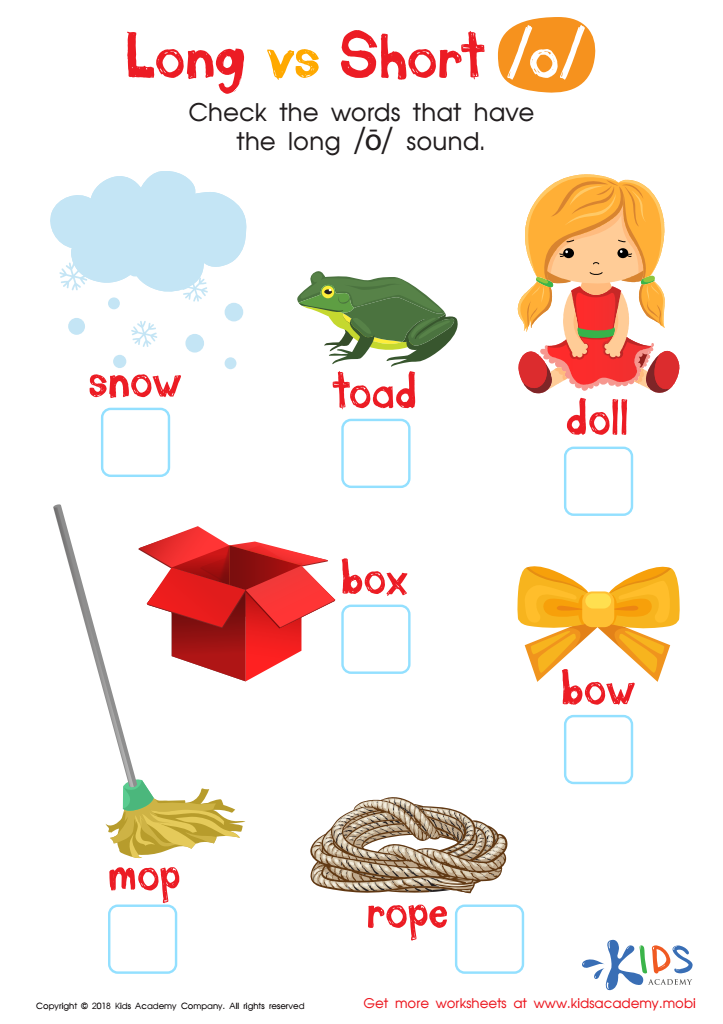
Long vs Short O Reading Worksheet
 Assign to My Students
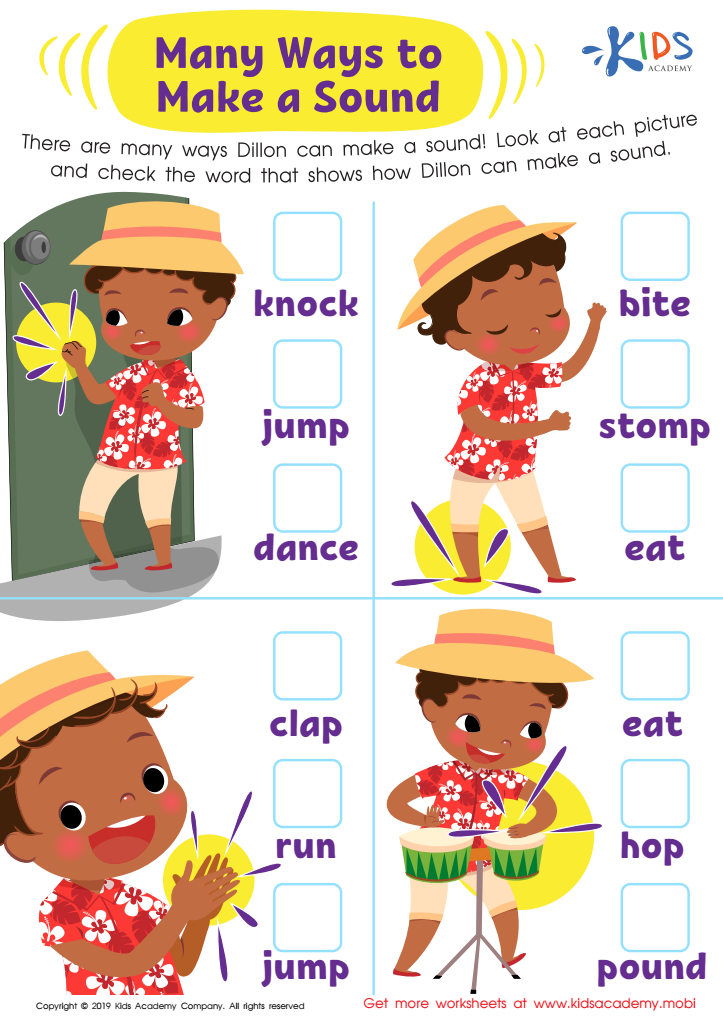
Many Ways to Make a Sound Worksheet
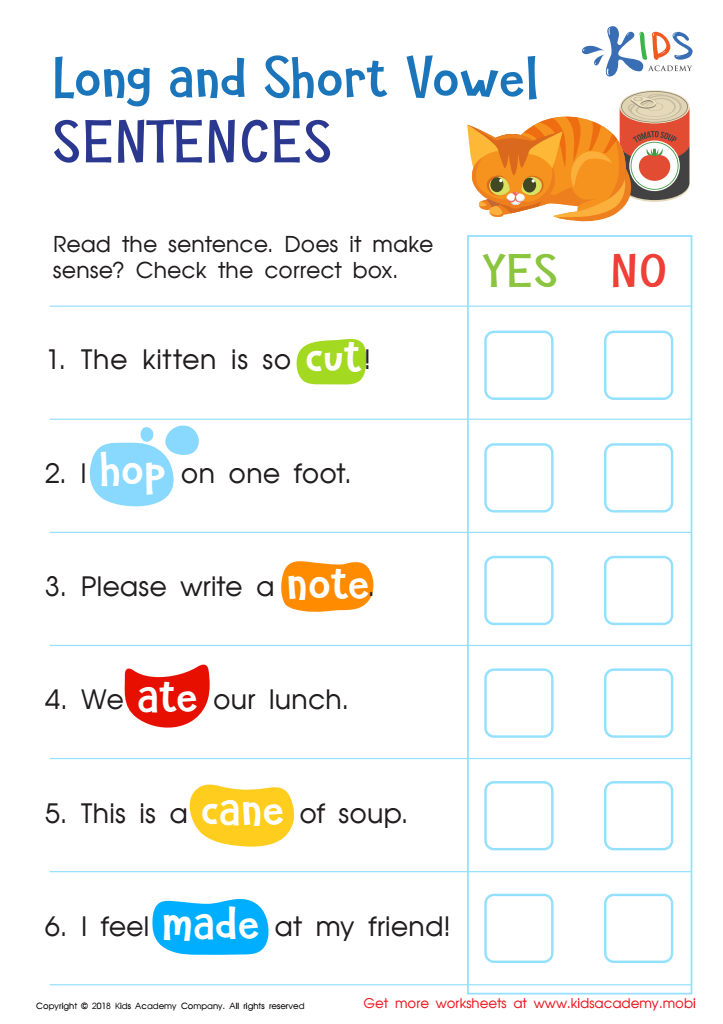
Long and Short Vowel Sentences: Assessment Worksheet
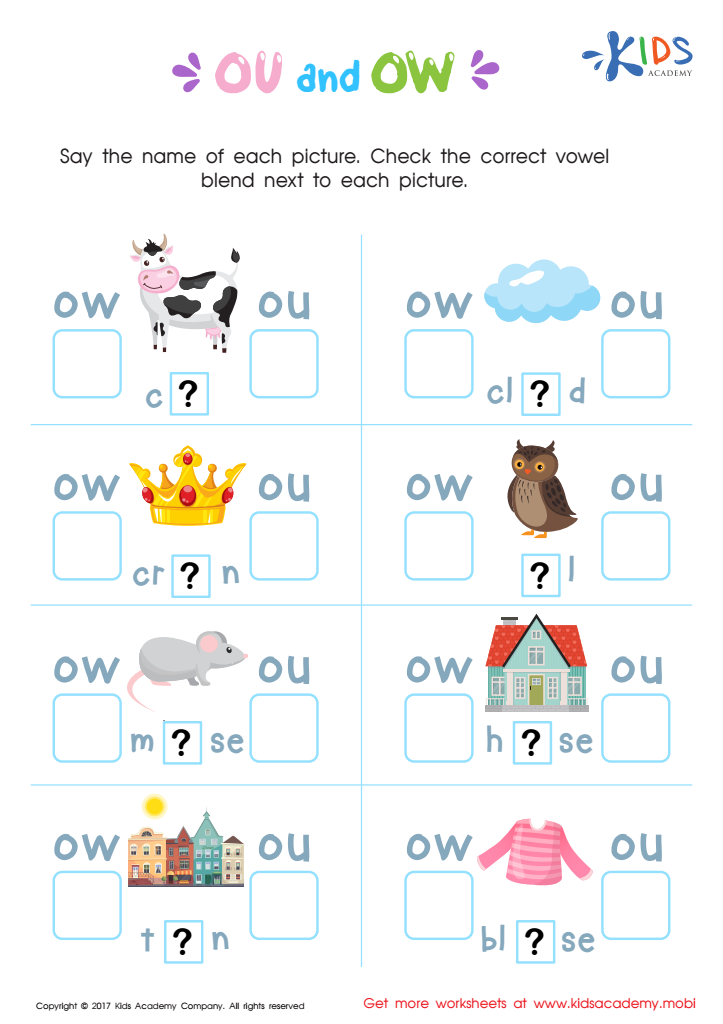
OU and OW Words Worksheet







Sound differentiation in the alphabet is crucial for children aged 3-7 as it lays the foundation for reading and writing skills. At this formative stage, children learn to recognize and distinguish between different sounds (phonemes) associated with each letter. This skill is essential for decoding words when they begin to read.
Caring about sound differentiation equips parents and teachers with strategies to support children's literacy development. Children who grasp the connection between sounds and letters are more likely to become proficient readers, leading to better academic performance across subjects. Moreover, early sound differentiation helps build phonemic awareness, which is linked to improved spelling and writing skills.
Supporting sound differentiation also encourages children’s confidence in their literacy abilities, fostering a love for reading. Engaging them in fun activities, such as rhyming games, songs, or sound matching exercises, can make learning enjoyable and effective.
In conclusion, prioritizing sound differentiation not only enhances children's language and literacy skills but also prepares them for future learning. Parents and teachers play a vital role in nurturing these skills, making it essential for them to understand and support sound differentiation efforts in young learners.







