Word identification Alphabet Worksheets for Ages 3-7
7 filtered results
-
From - To
Introduce your young learners to the joy of reading with our Word Identification Alphabet Worksheets, specially designed for children aged 3-7. These engaging worksheets help kids recognize letters, enhance phonics skills, and develop early word identification abilities. Each sheet features fun activities that make learning enjoyable, fostering a love for reading and literacy. Perfect for home or classroom use, our worksheets provide a solid foundation for young readers. Watch as your child's confidence grows while they explore the exciting world of words and letters. Make reading a magical journey with our Alphabet Worksheets today!
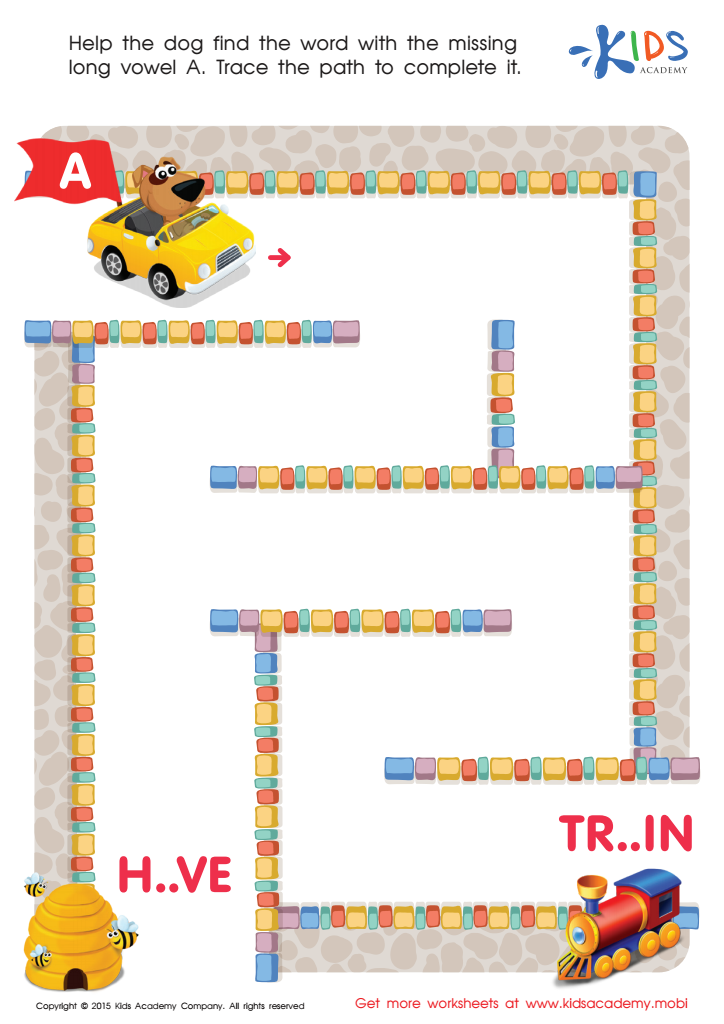
Long Vowel Sound A Worksheet
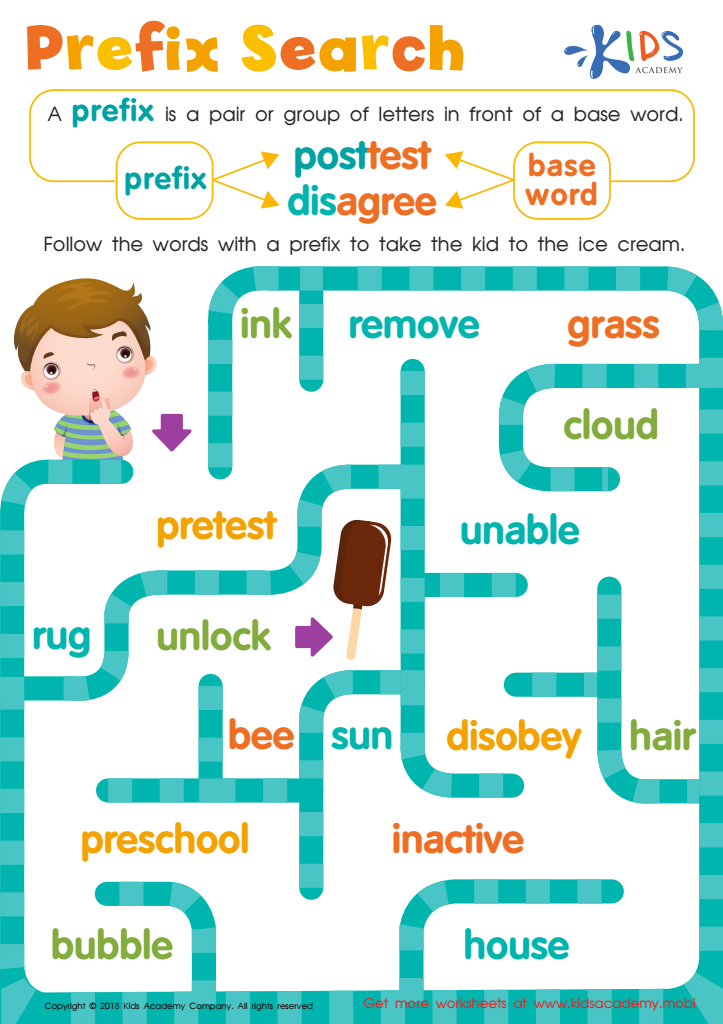
Reading: Prefix Search Worksheet
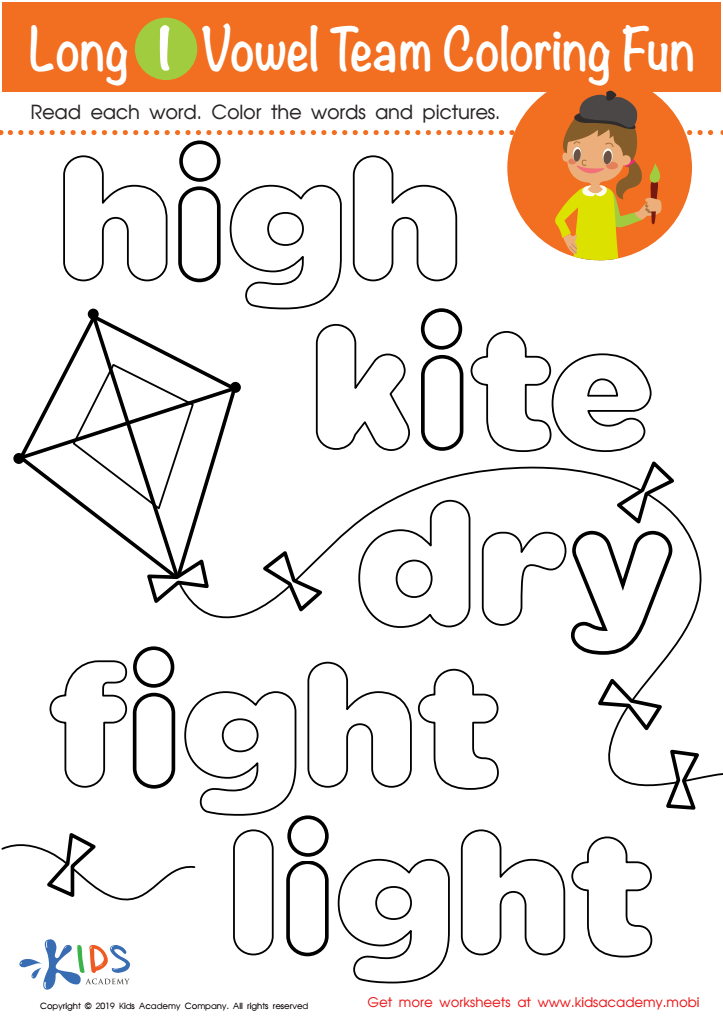
Long I Vowel Team Coloring Worksheet
 Assign to My Students
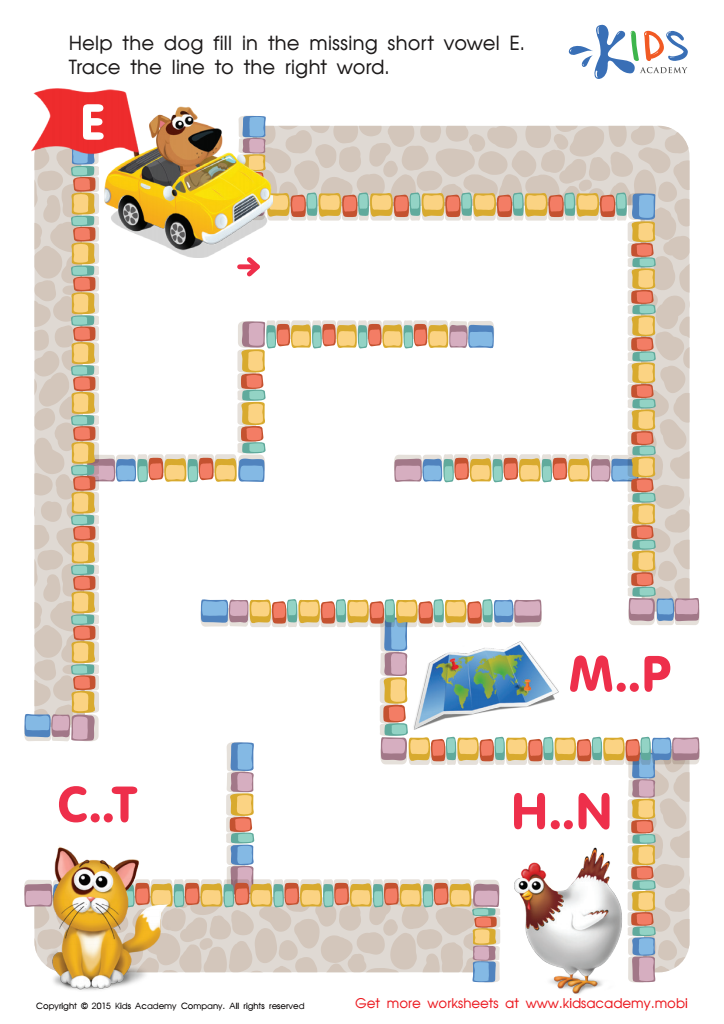
Short Vowel Sound E Worksheet
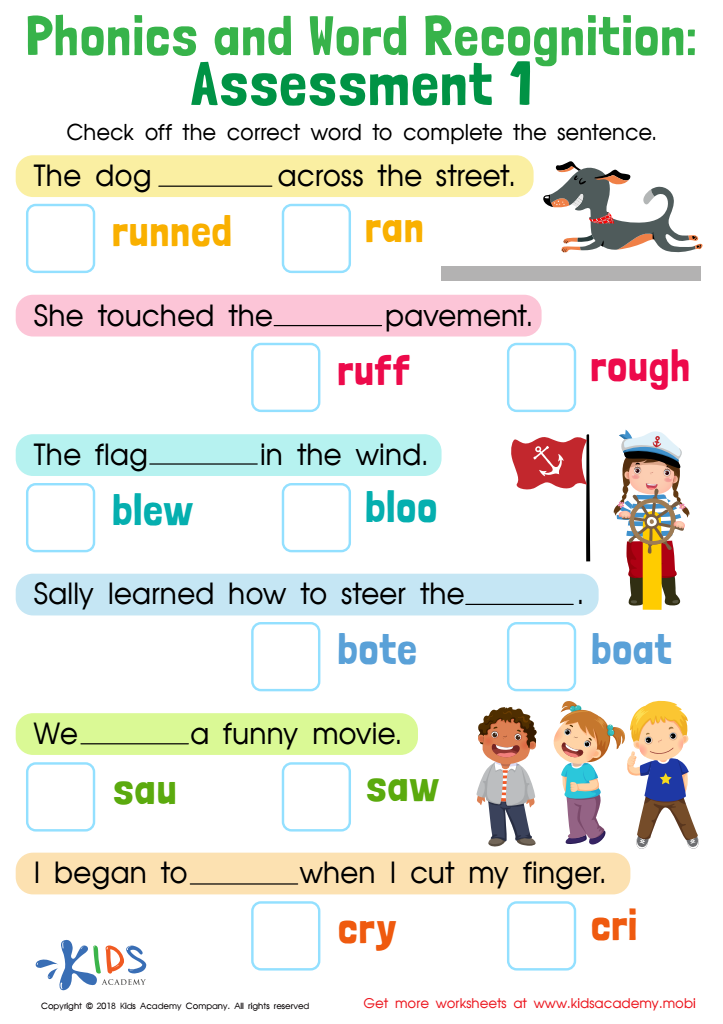
Phonics and Word Recognition: Assessment 1 Worksheet
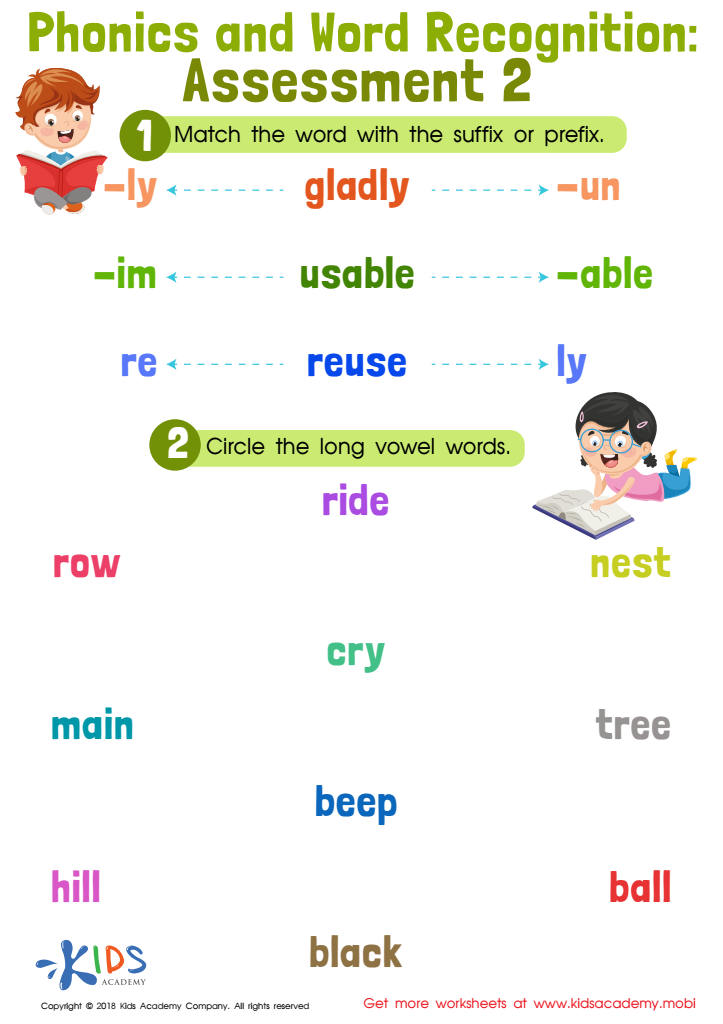
Phonics and Word Recognition: Assessment 2
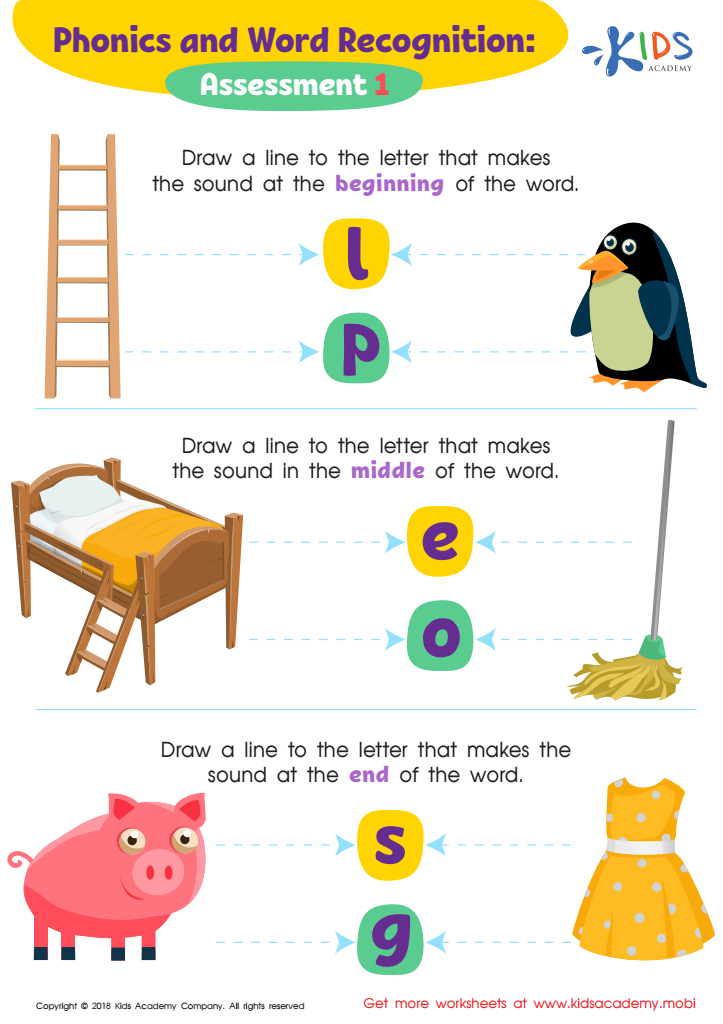
Phonics and Word Recognition: Assessment 1 ELA Worksheet








Parents and teachers should care about word identification using the alphabet for children ages 3-7 because it forms the foundation of literacy. At this crucial developmental stage, young children are not just learning to recognize letters, but also understanding the sounds associated with each letter, a skill known as phonemic awareness. This is a critical step toward reading fluency.
When children can identify letters and their corresponding sounds, they begin to connect these sounds to form words. This ability to recognize and form words positions them to start reading simple text, fostering early reading skills and building confidence in their abilities. Strong word identification skills contribute to a successful reading experience, essential for academic success because reading underpins learning across all subjects.
Moreover, engaging with the alphabet and word identification activities helps in vocabulary development and comprehension skills, which are vital for meaningful communication and understanding in everyday life. By prioritizing word identification, parents and teachers support not only literacy but also broader cognitive skills such as memory, concentration, and critical thinking.
Investing time in these foundational skills pays dividends throughout a child's educational journey, making word identification using the alphabet a vital part of early childhood education. It ensures children are well-prepared and enthusiastic lifelong learners.







